2026
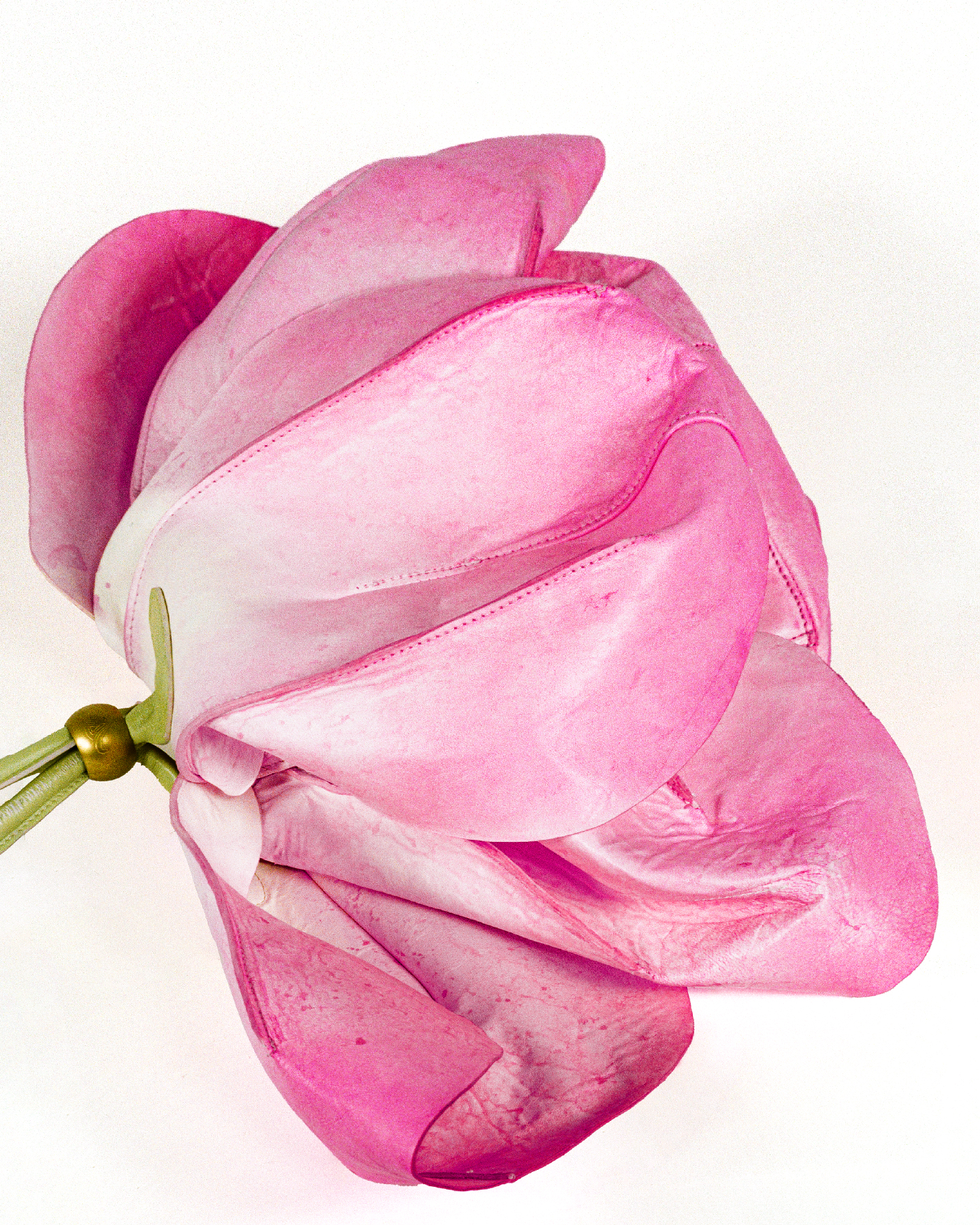
peony
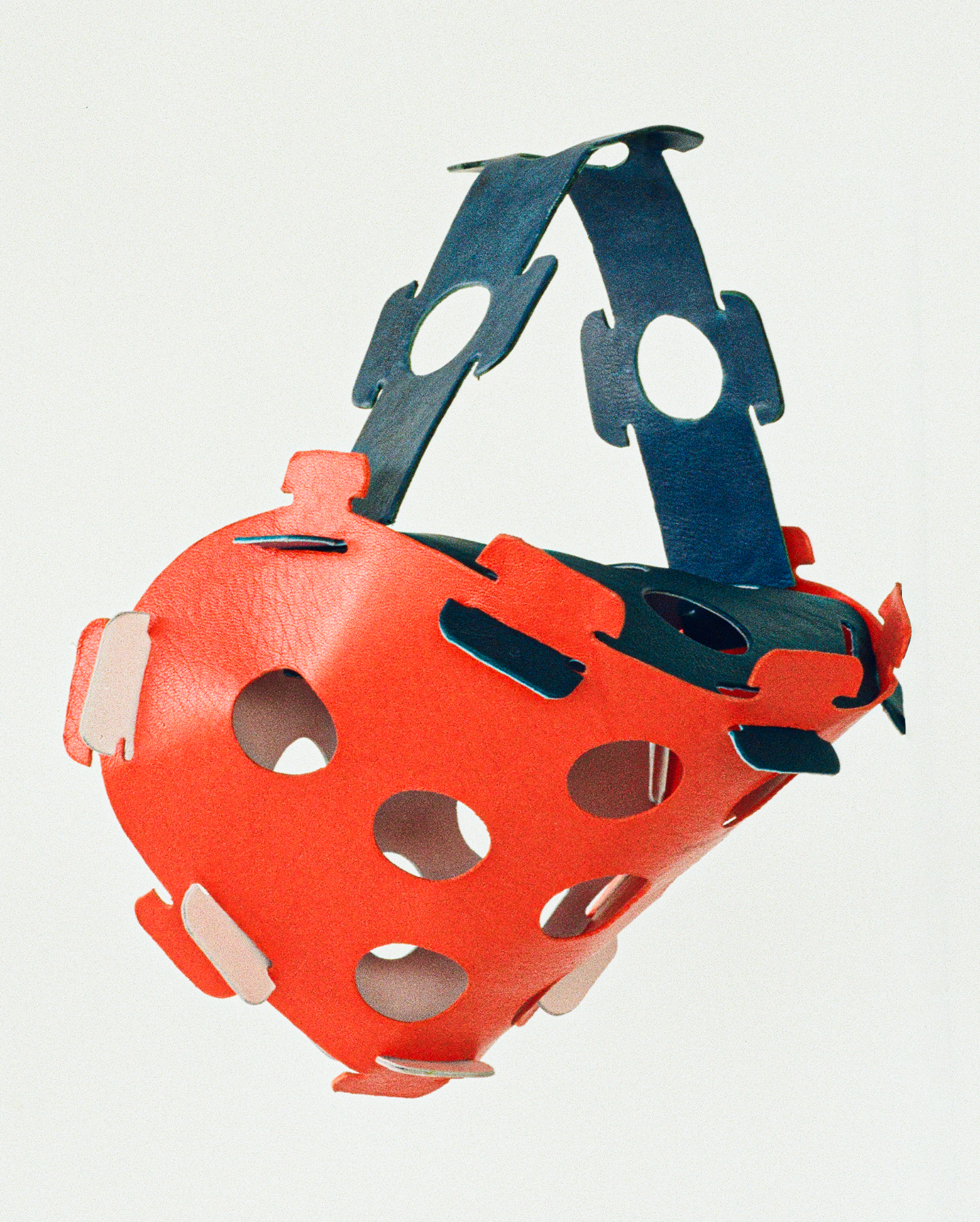
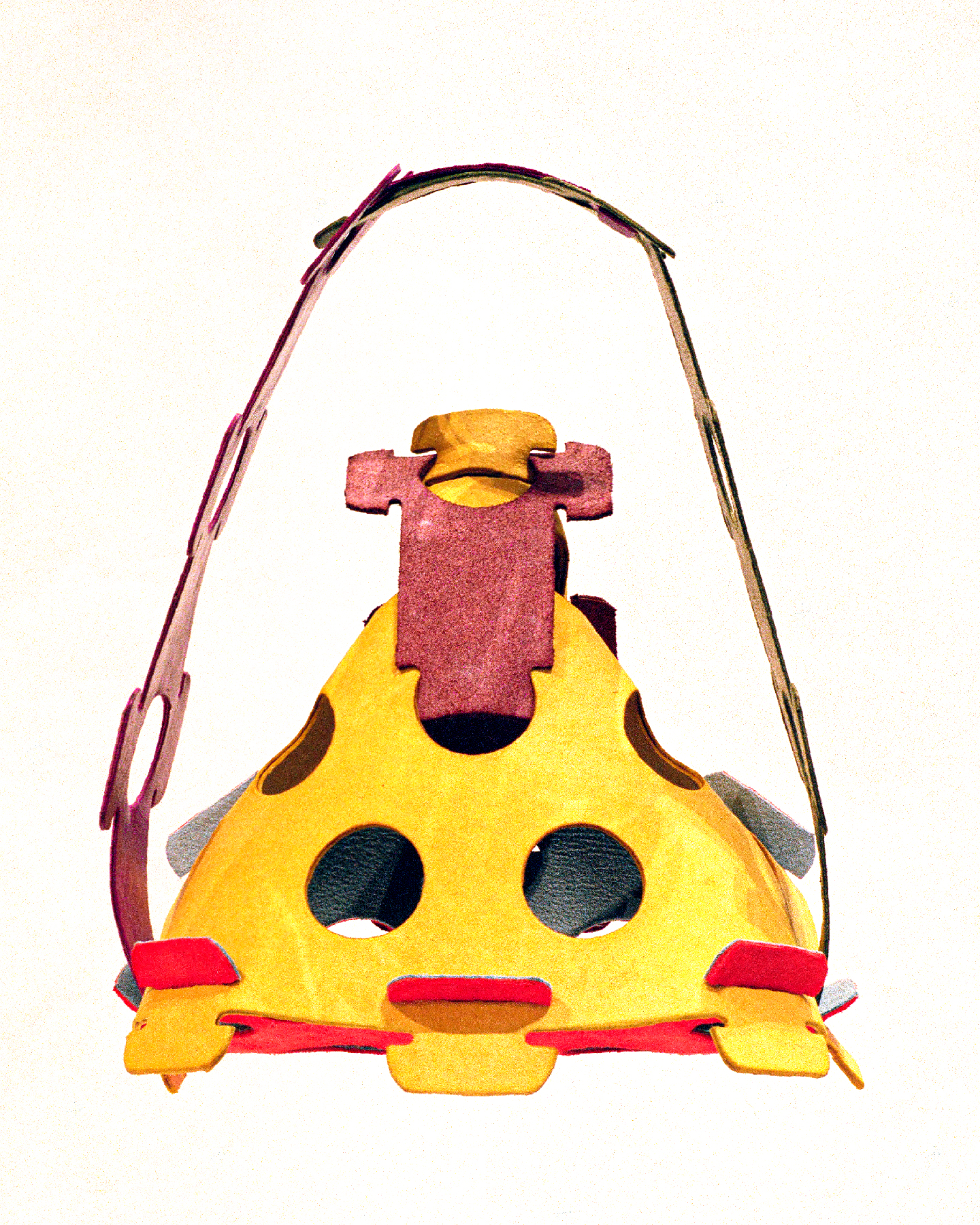
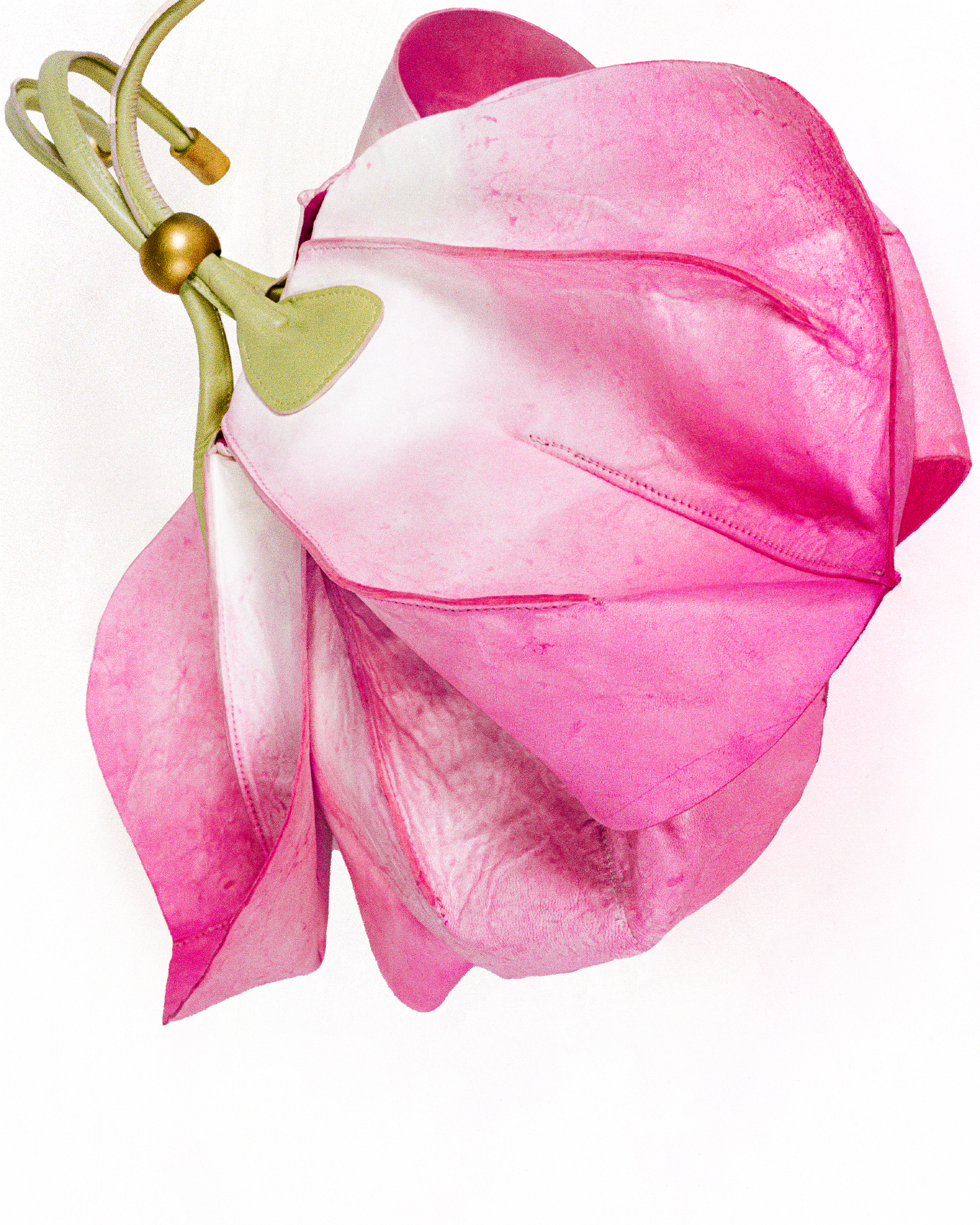
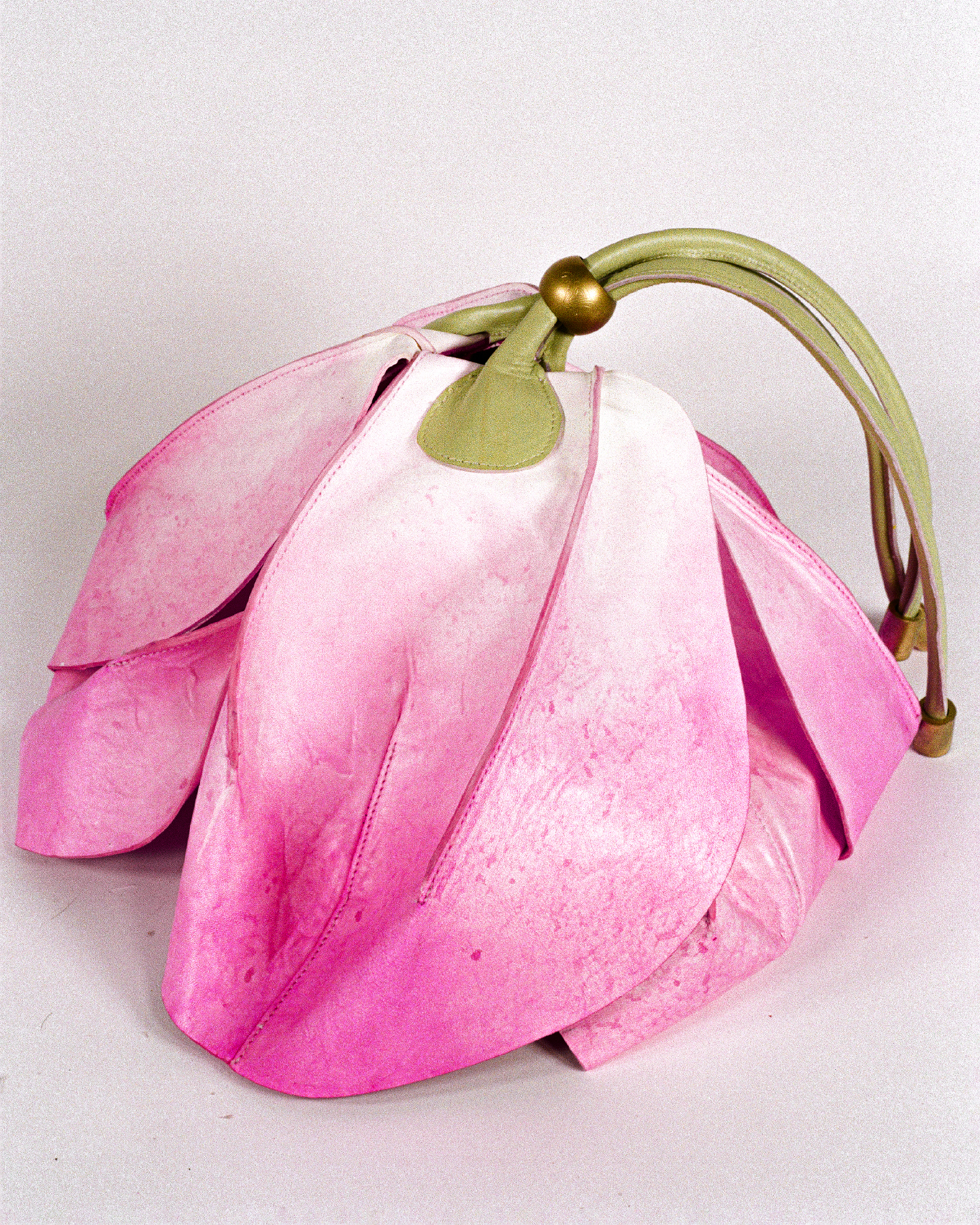
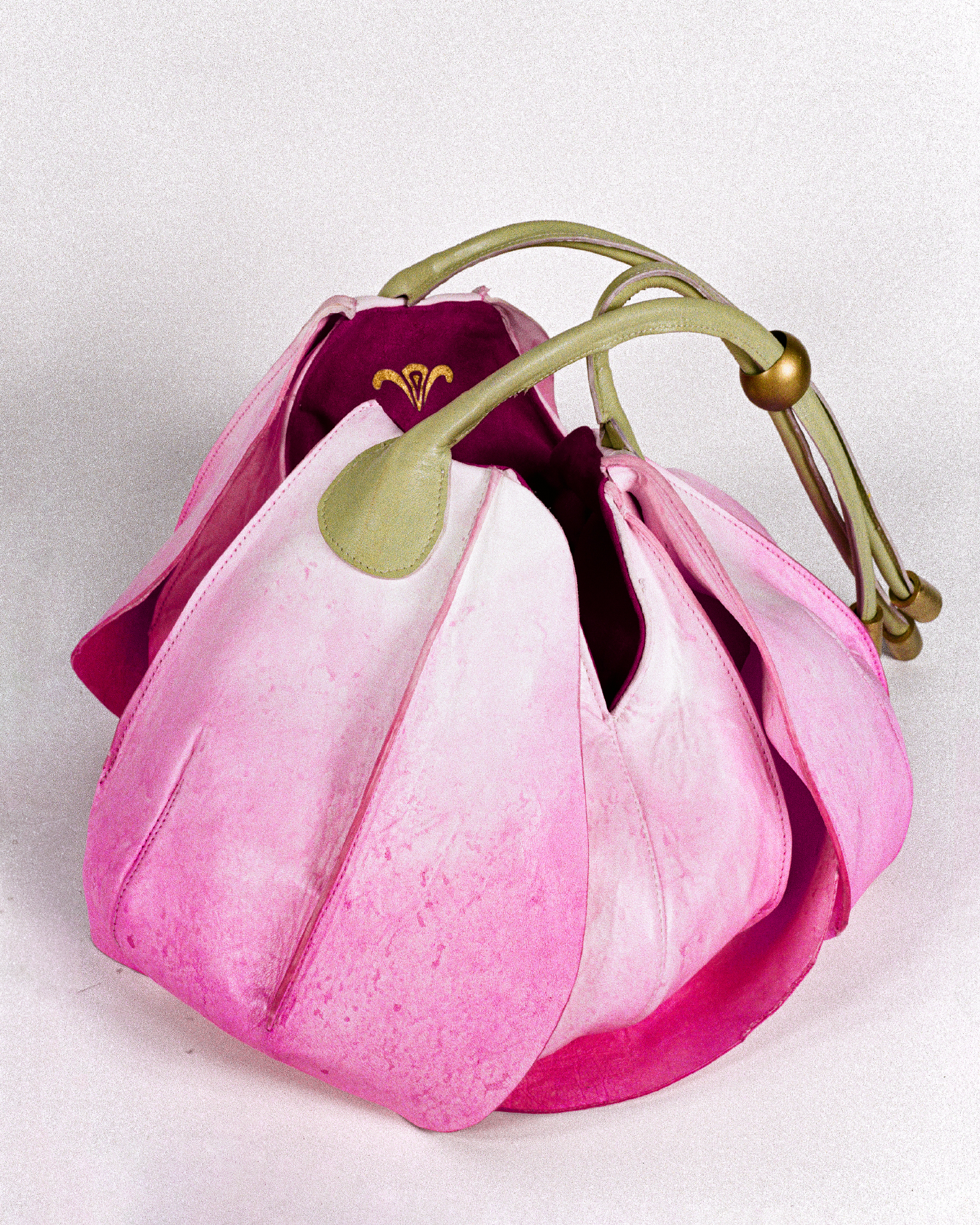
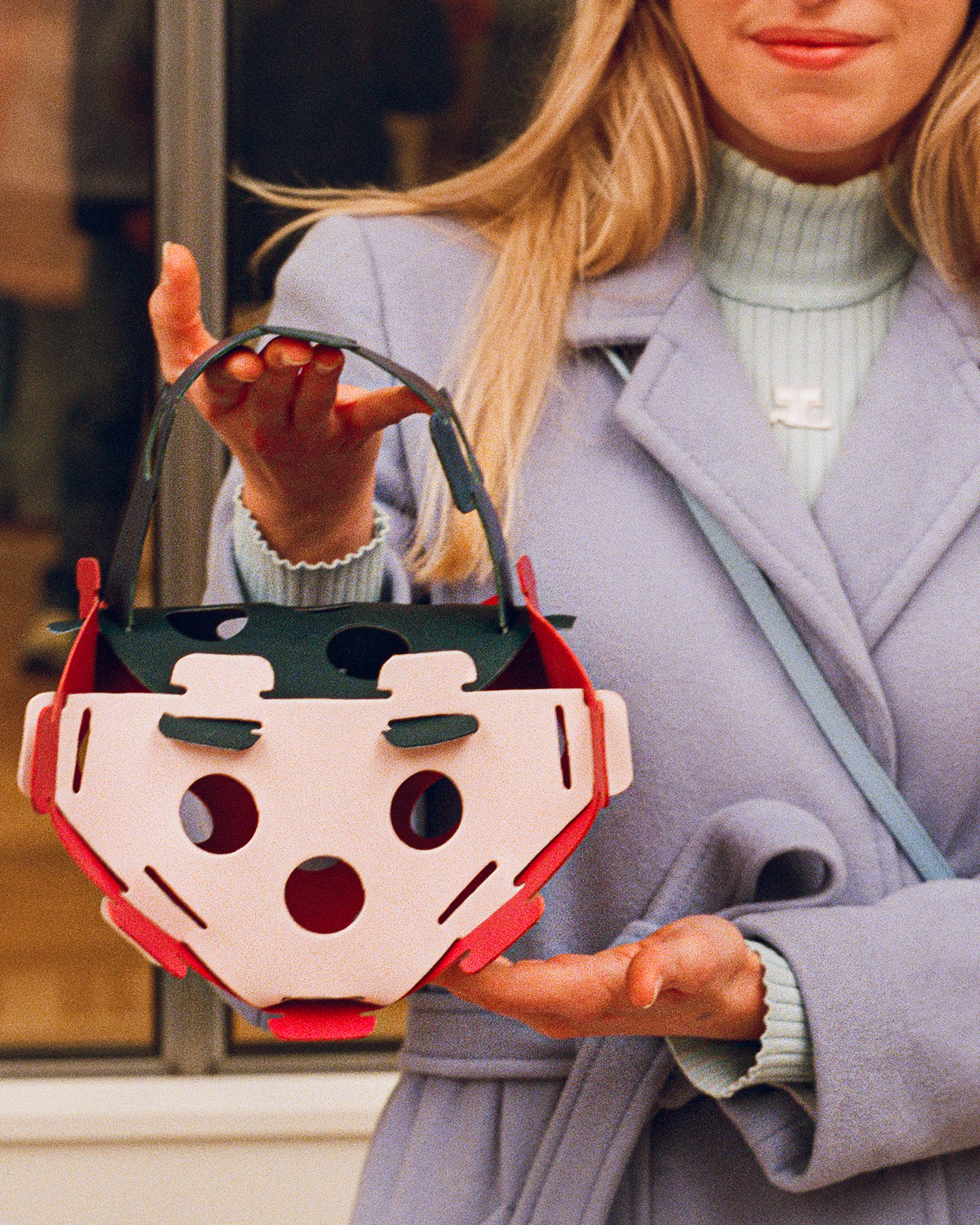
Hand-dyed natural lambskin, suede calfskin lining, gold-finish hardware. Shoulder and hand carry. One main compartment, sliding metallic ball with modified Triomphe logo signature, adjustable strap with a maximum drop of 32 cm.

Every evening at 6:30, a ceremony at the Tomb of the Unknown Soldier renews the Flame of Remembrance and includes the laying of flowers. The project asks what else Céline Vipiana might have taken as inspiration if her car had broken down at that time at the Arc de Triomphe in 1971, an encounter that led to the house’s historic emblem.

Leather petals are individually dipped in diluted Aqua Color until the dye concentrates into a vivid contrast at their edges. The petals are gathered one over another to reproduce the structure of a peony. Its blooming is controlled by what is carried inside and by the tension of the sliding hardware, which closes the bag and changes how it is carried, either on the shoulder or by hand like an upside down flower.

Project developed within a pedagogical partnership between Institut Français de la Mode and Celine, with no commercial scope.
byob
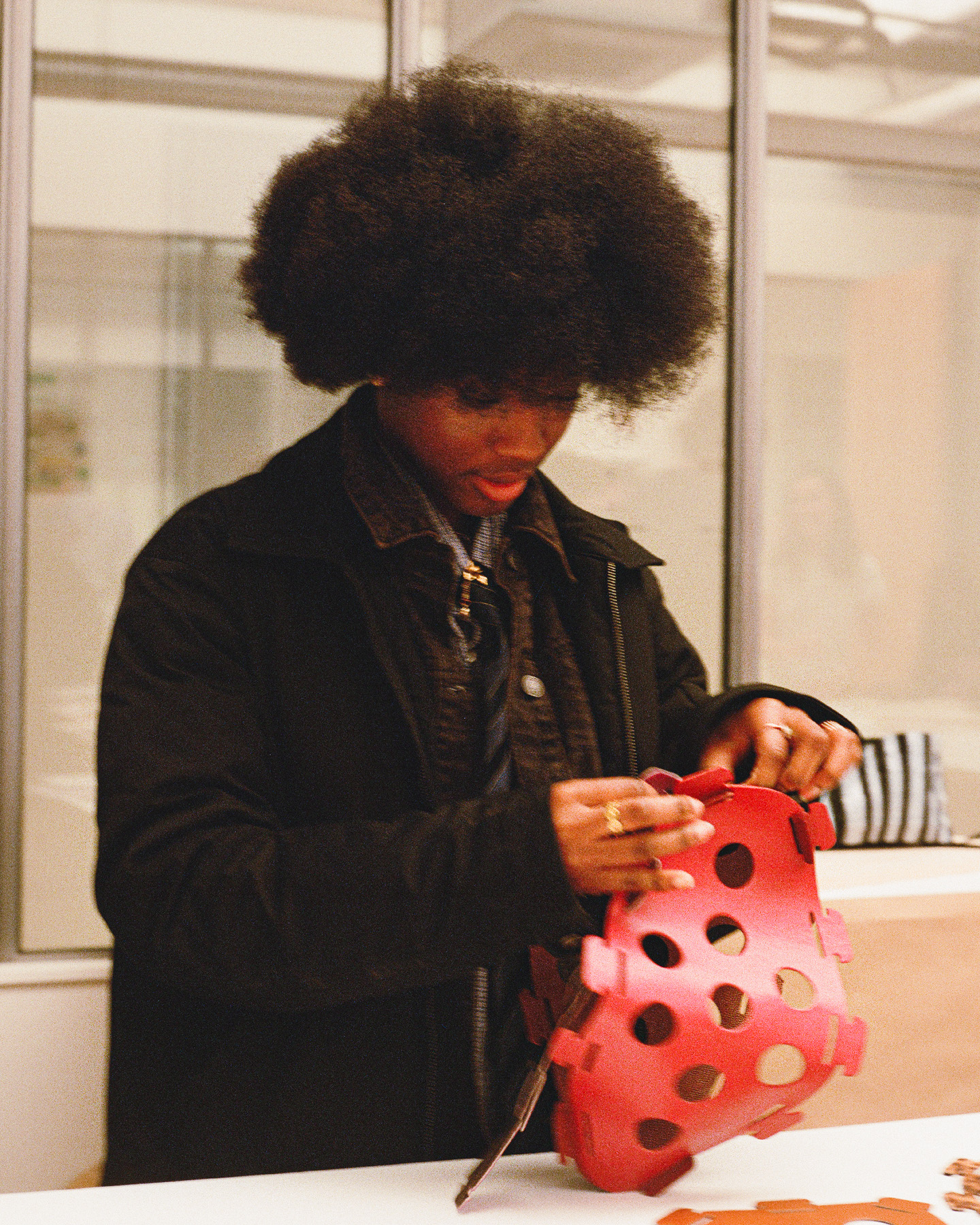
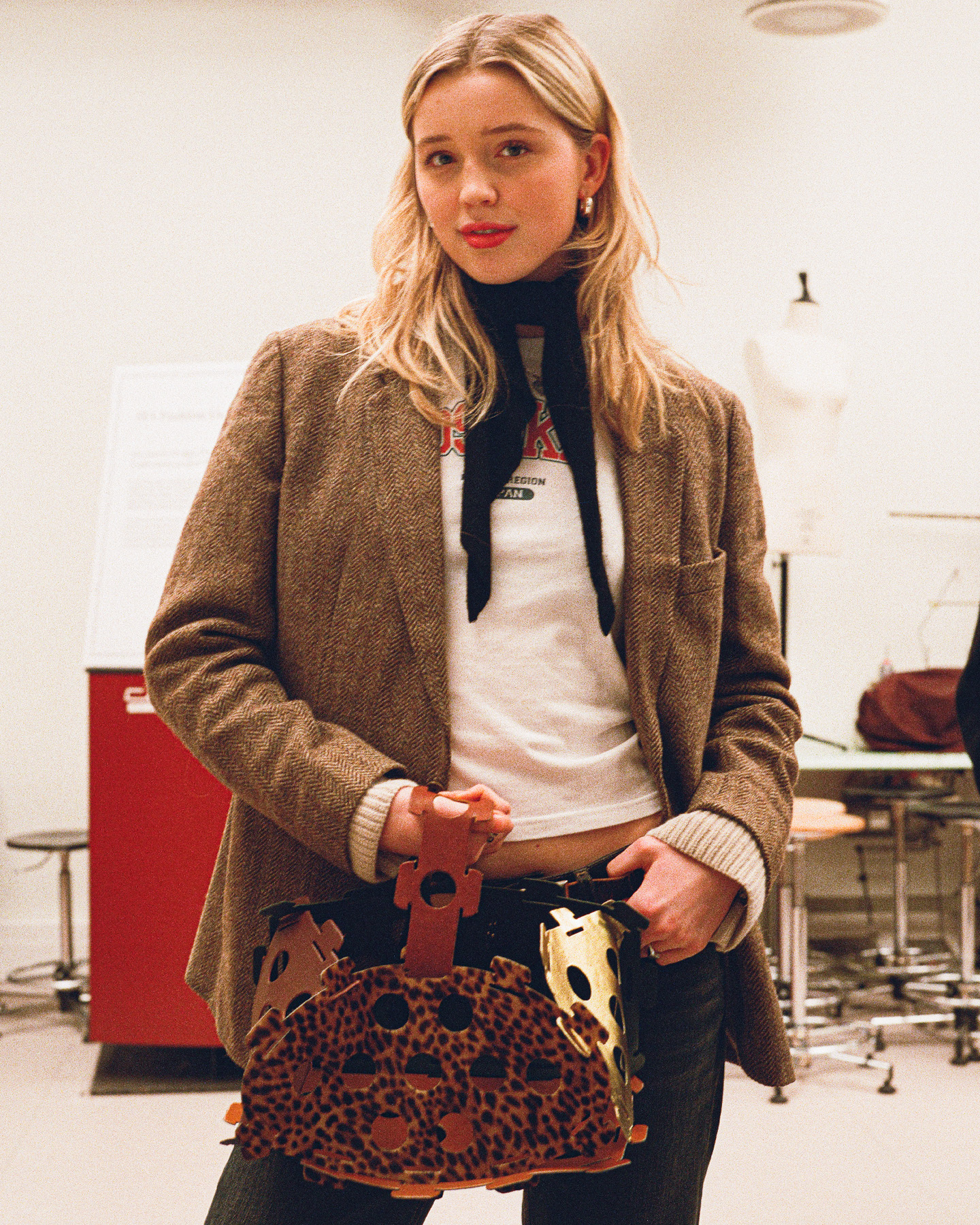
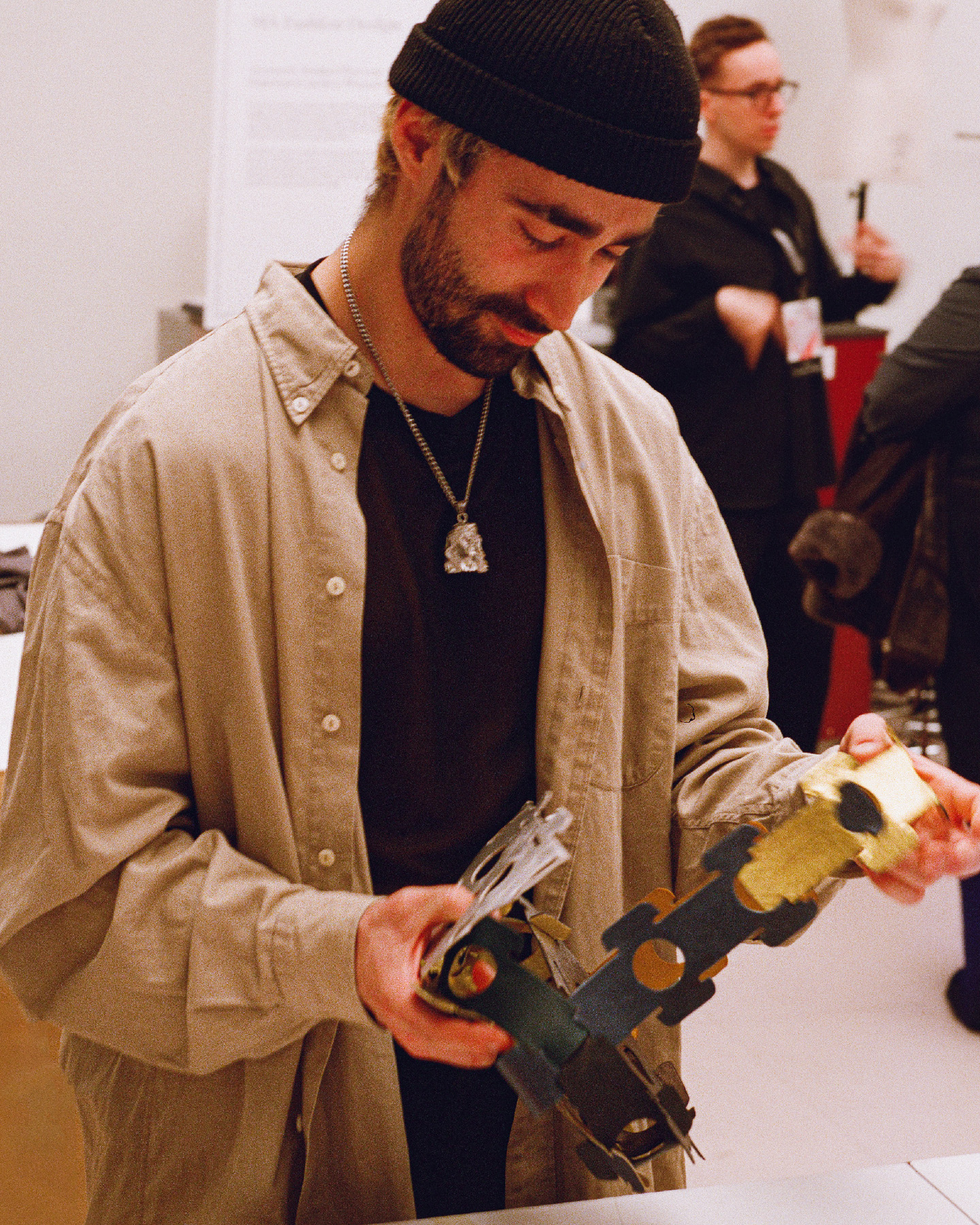
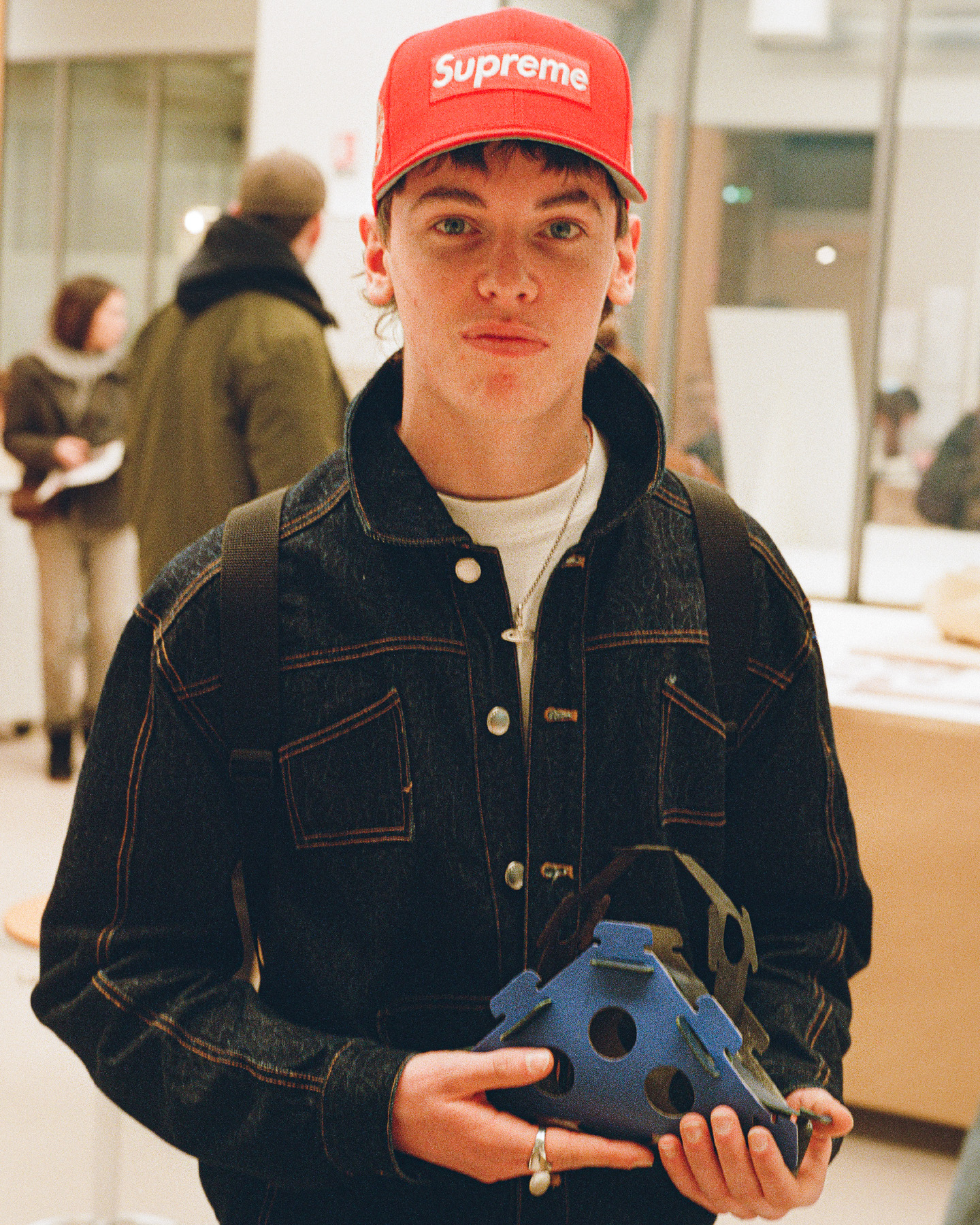
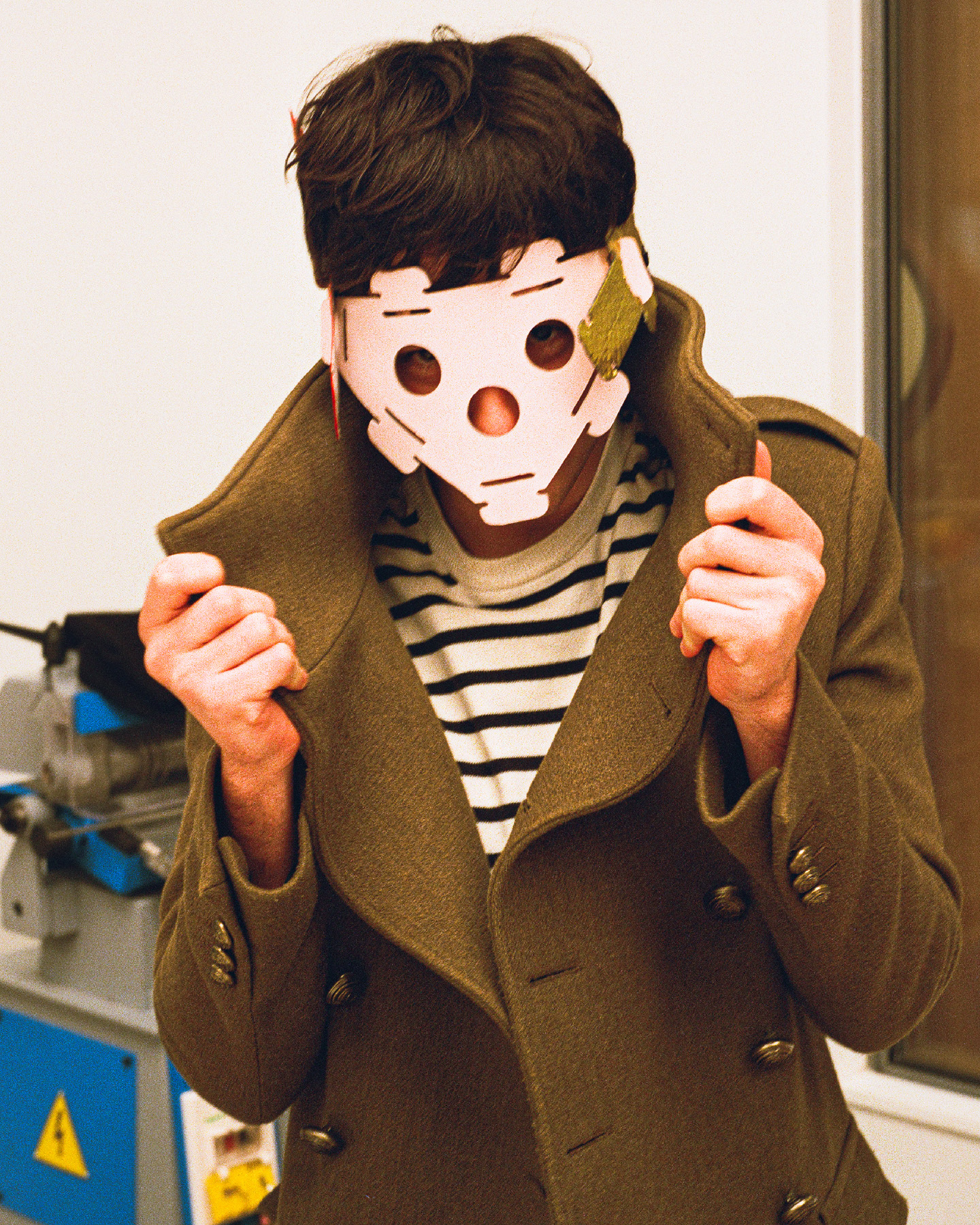
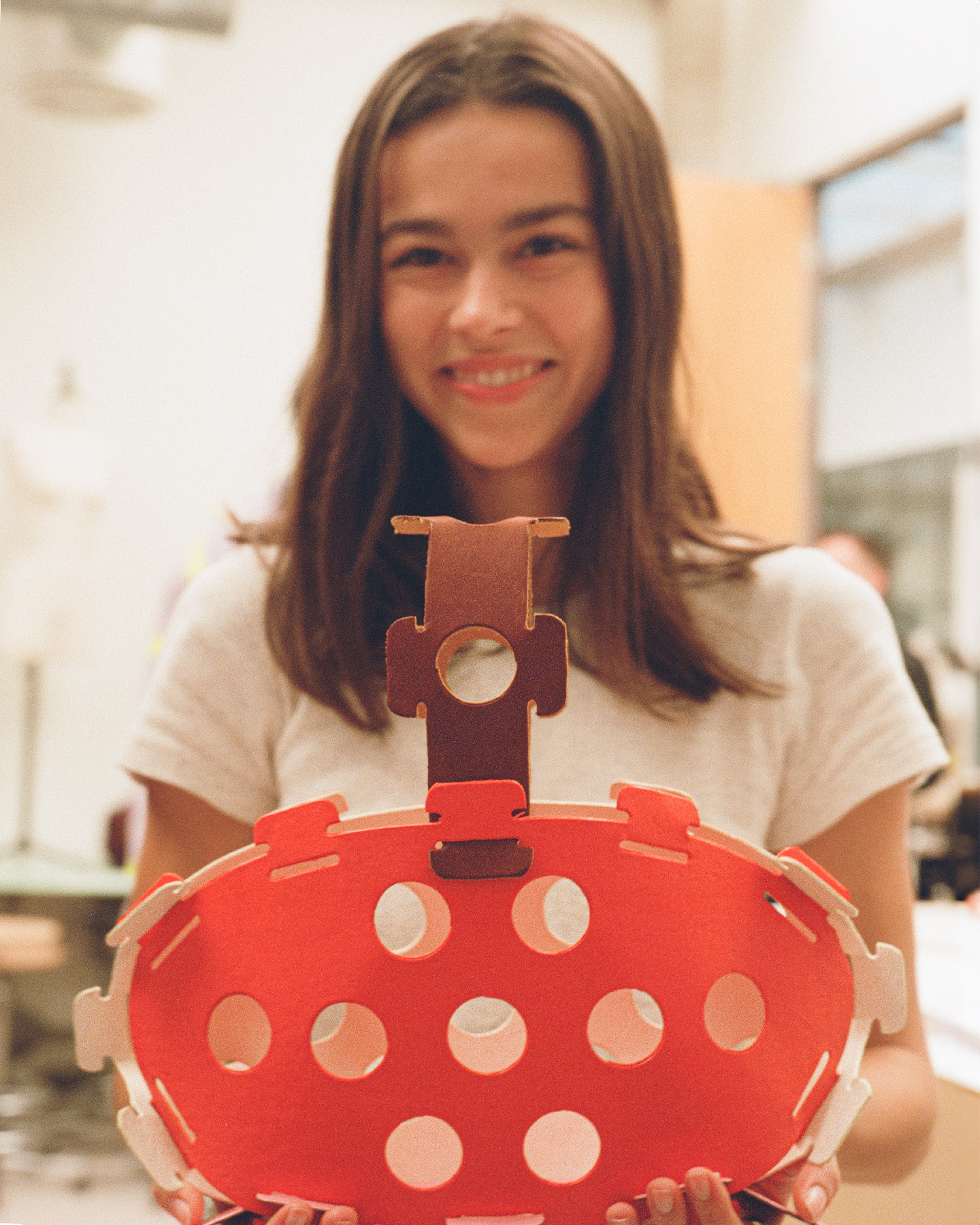
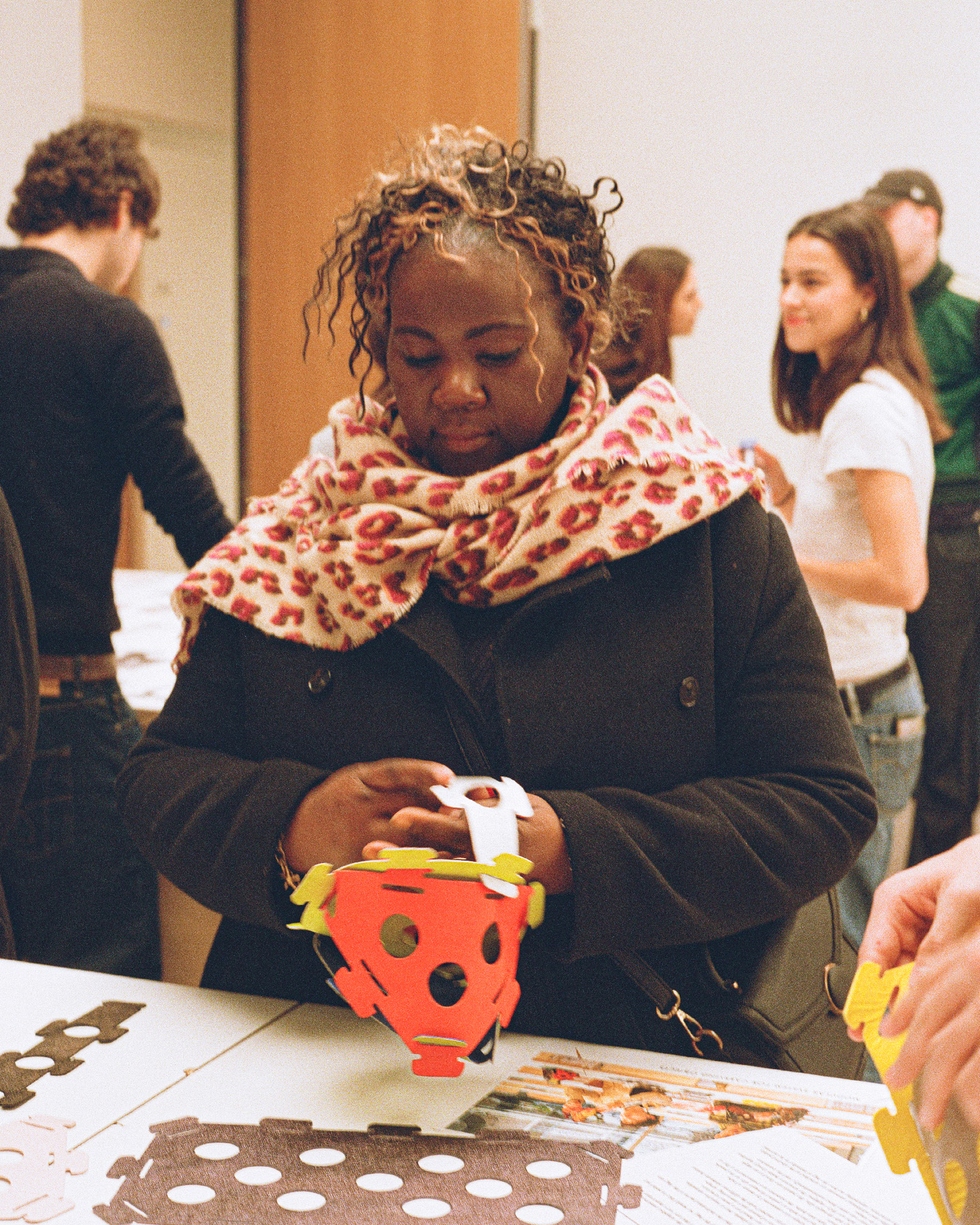
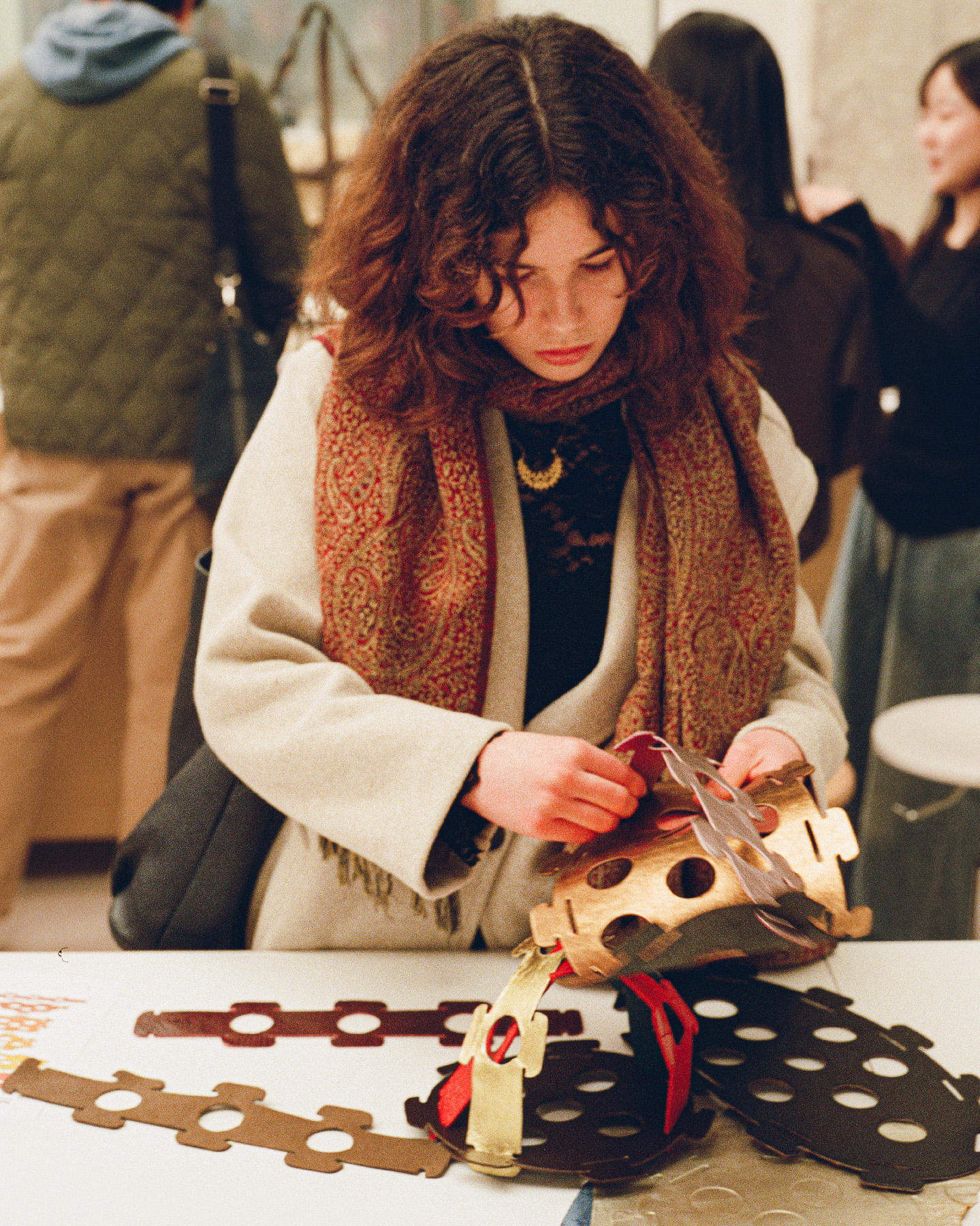
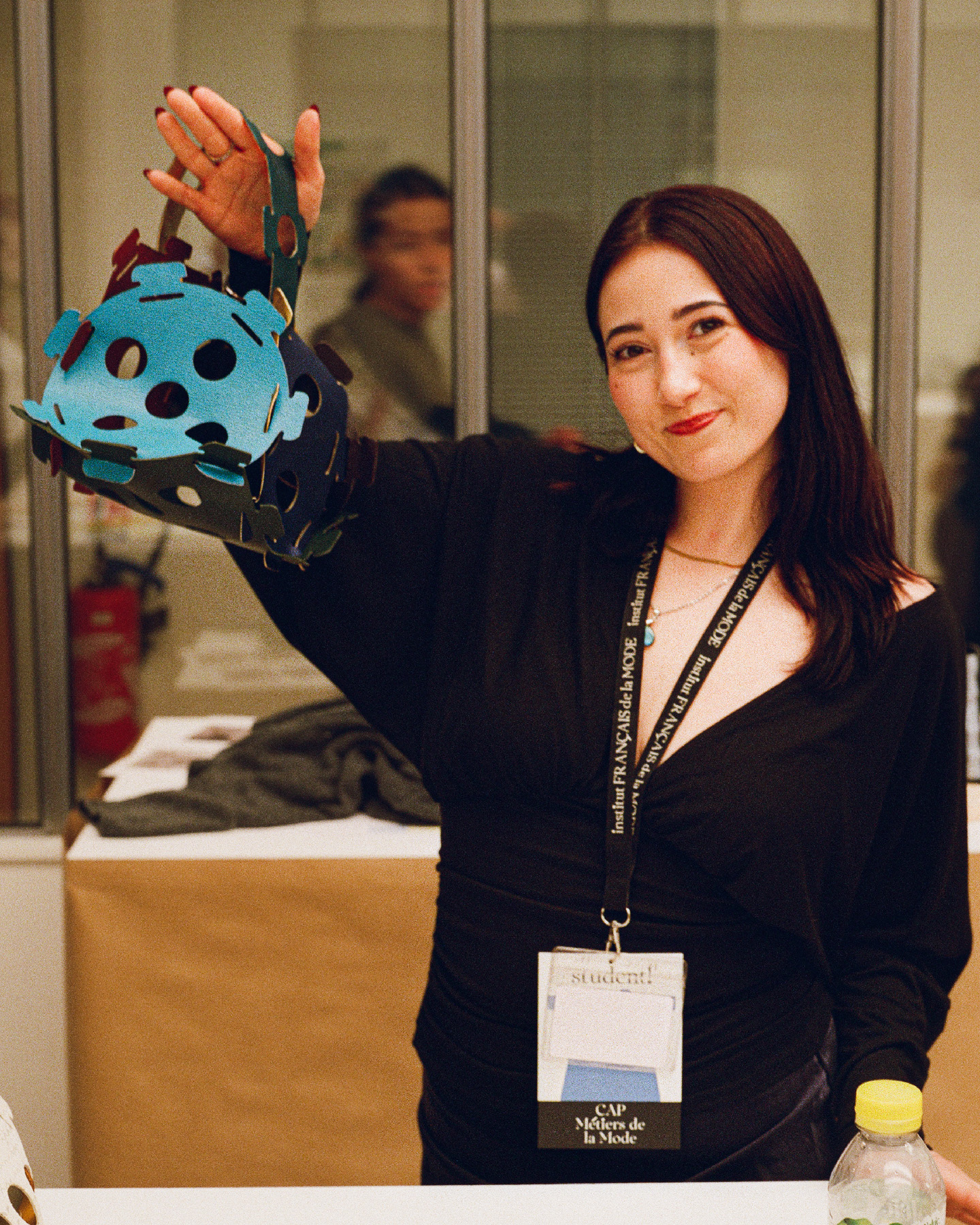
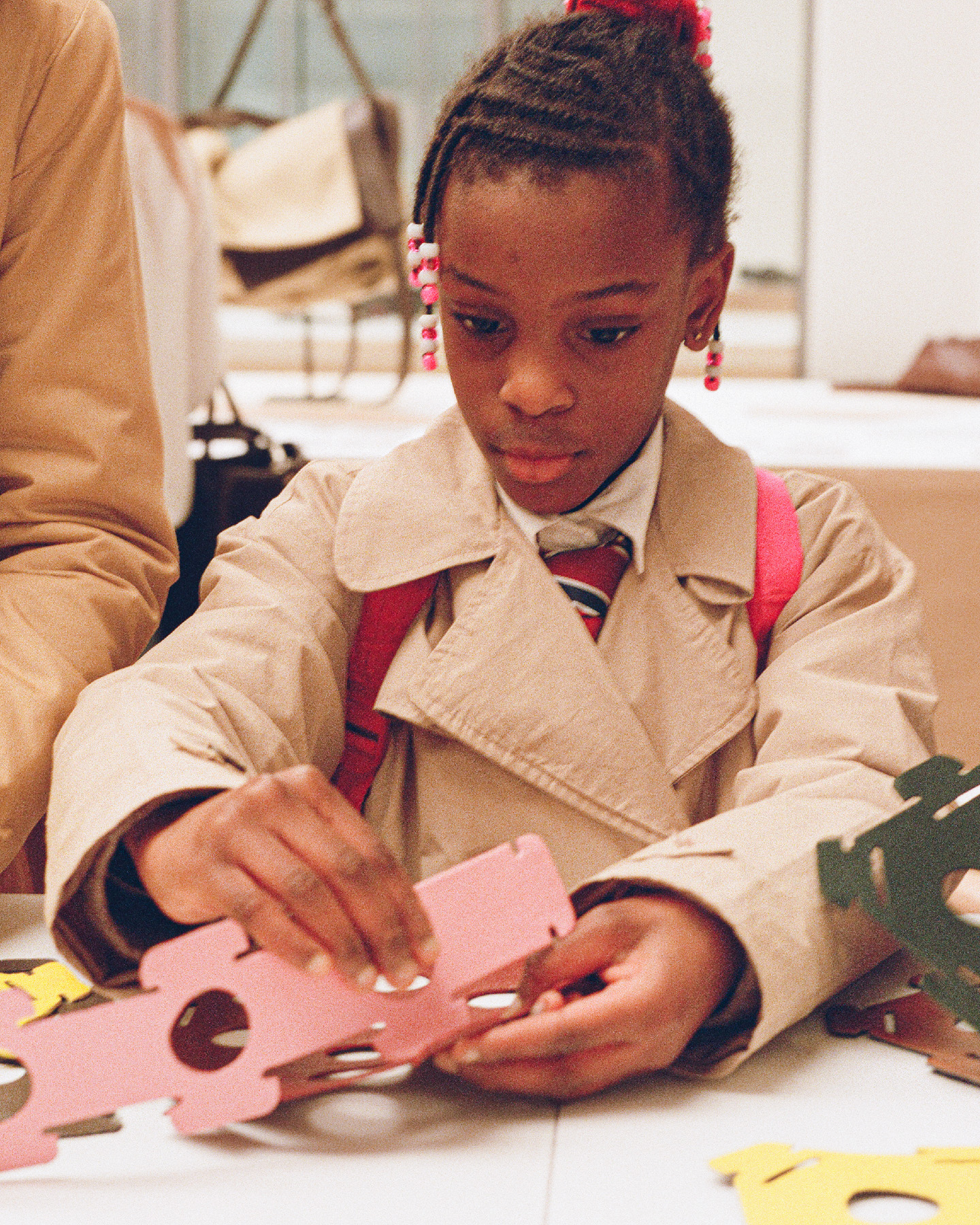
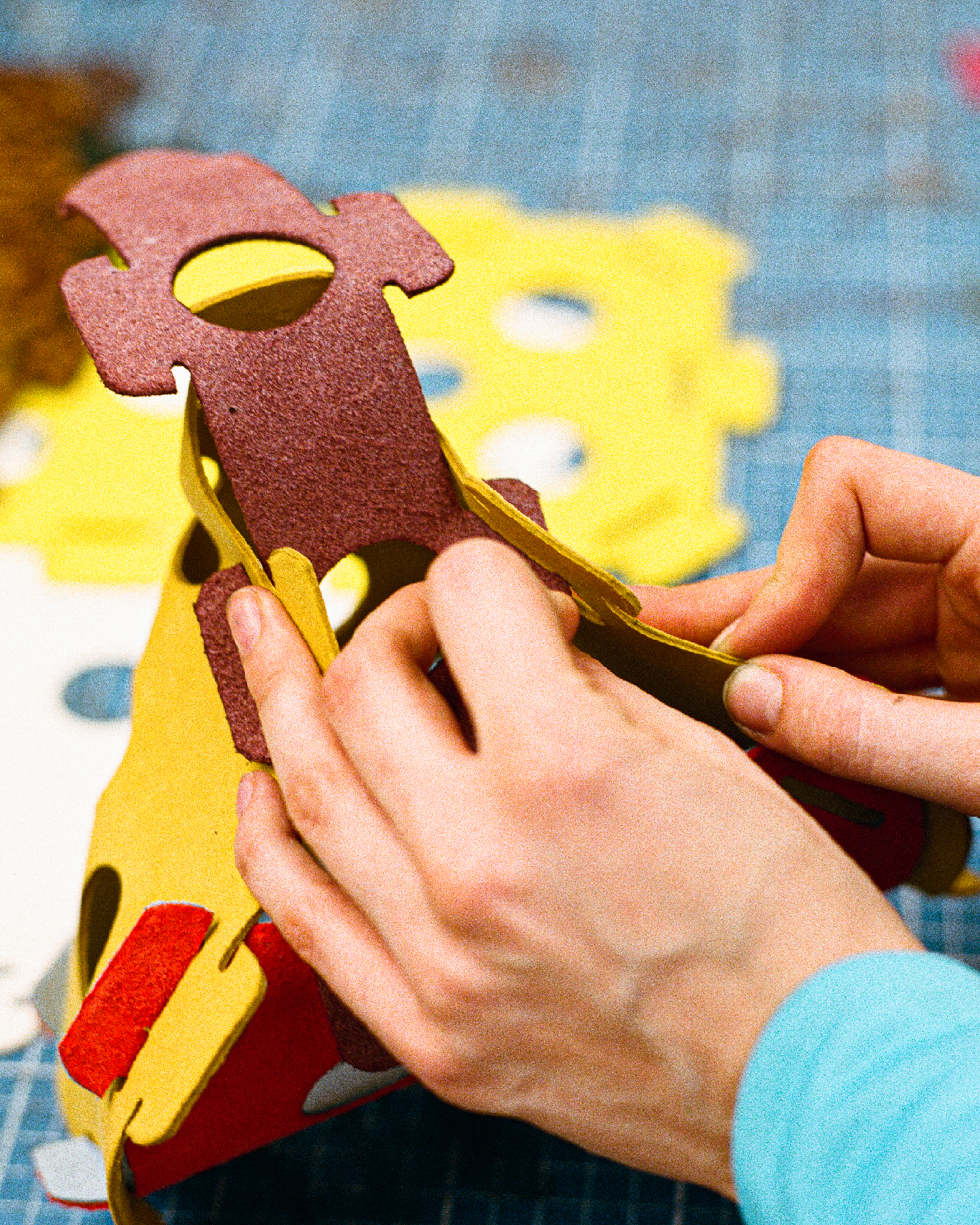
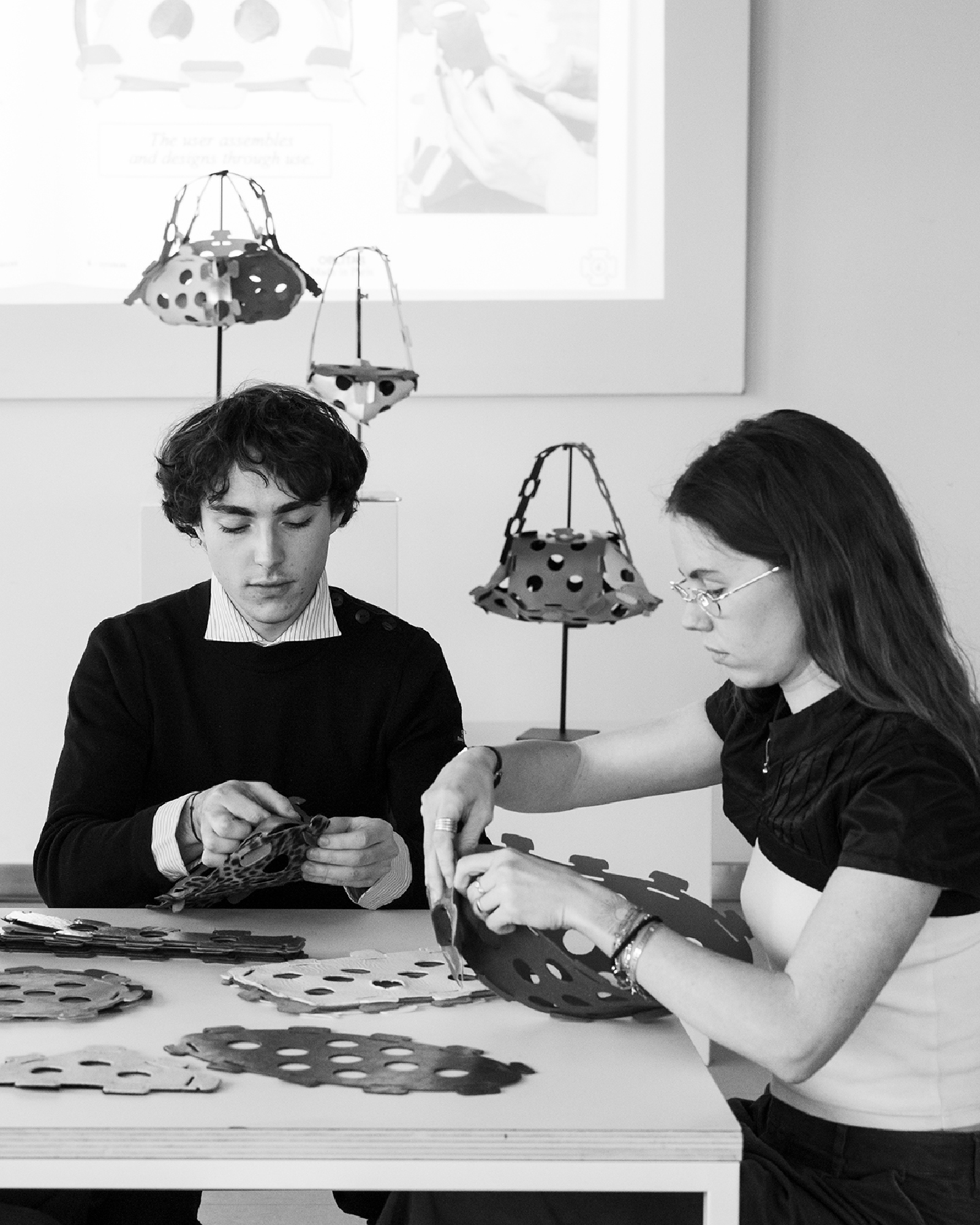
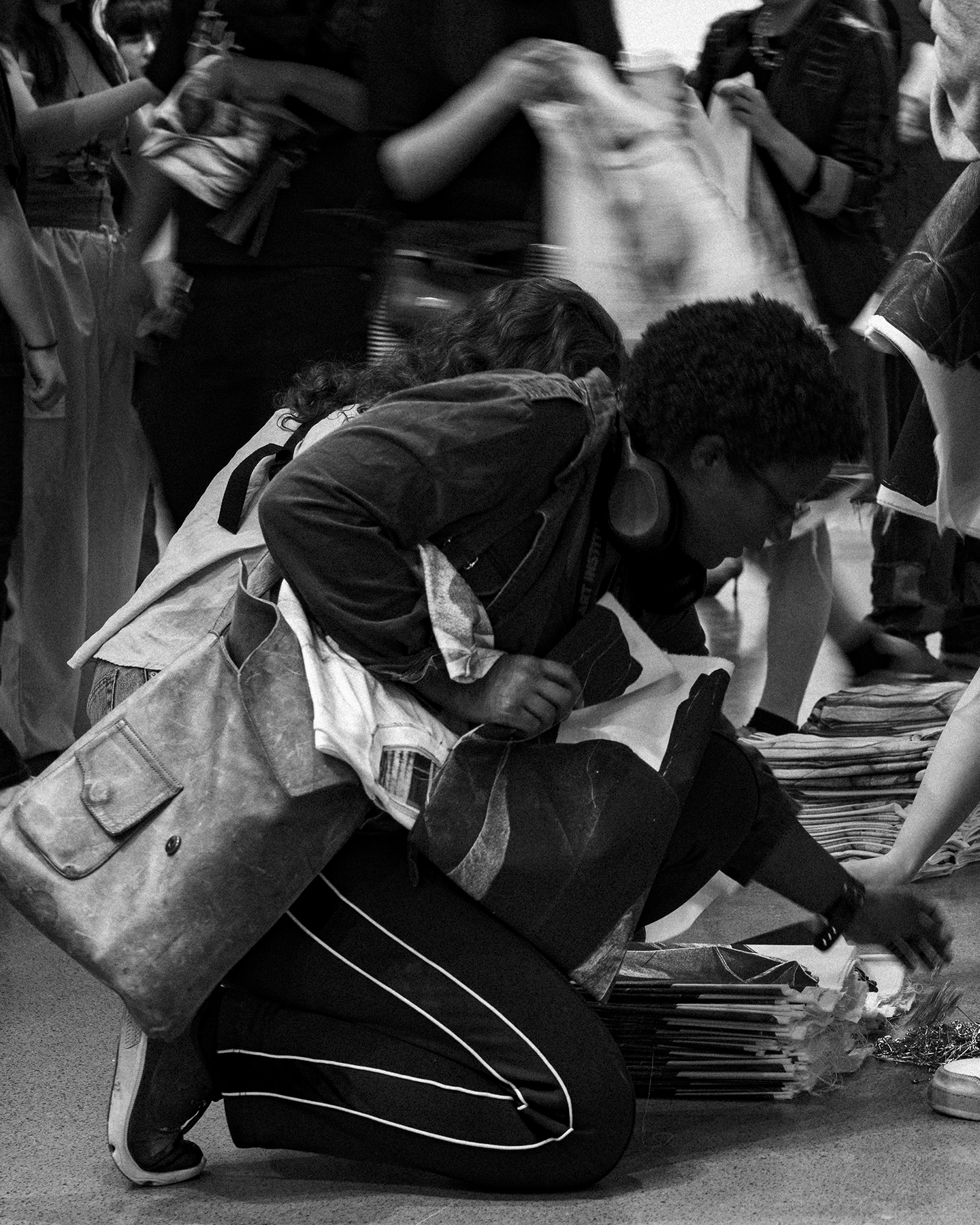
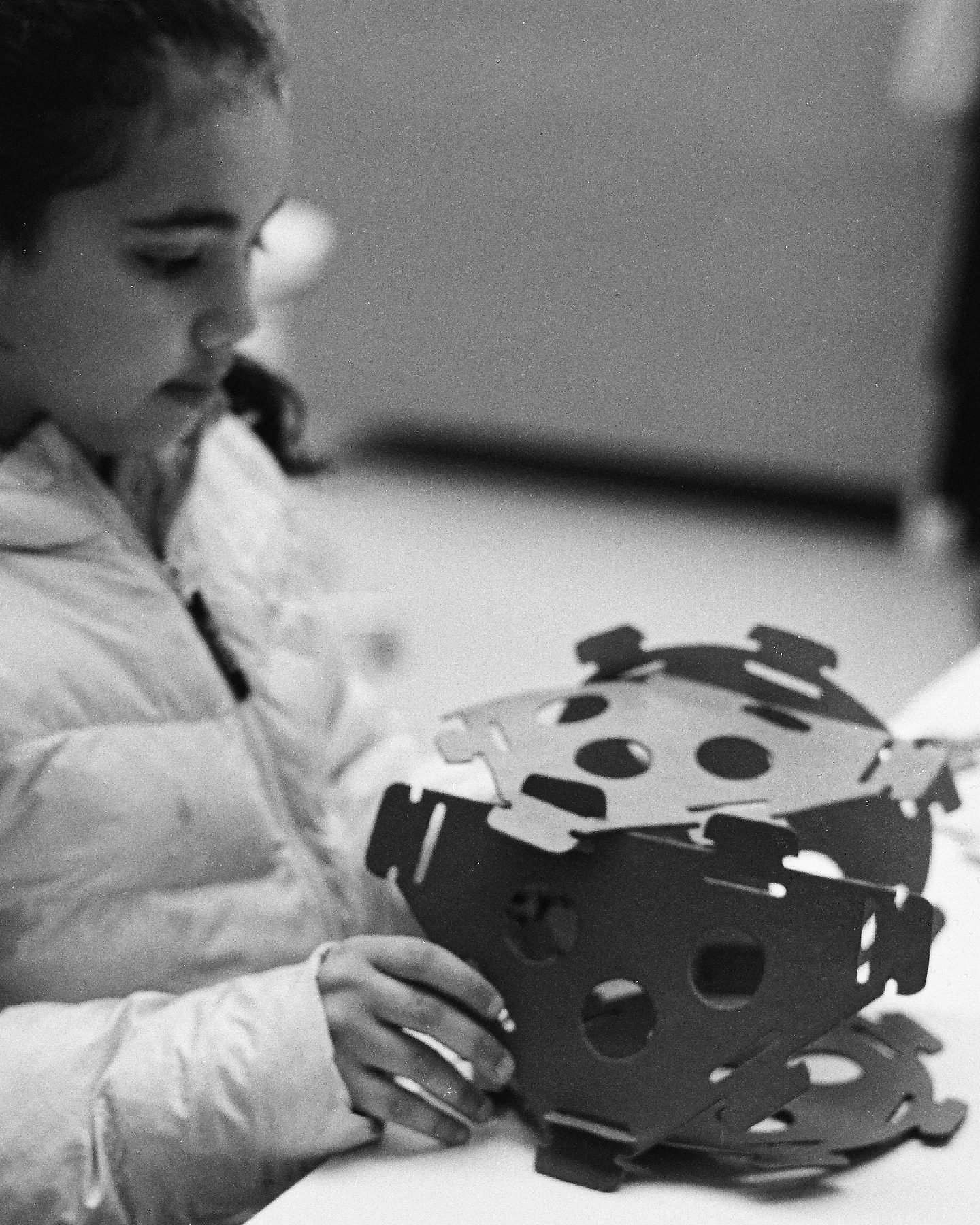
Build You Own Bag at Institut Français de la Mode, where around 100 visitors created bags from the same set of components.

The workshop tested how quickly the system could be understood and used without instruction. Visitors of various ages worked from the same set of panels and straps, connecting them through tabs, holes, and slits to build their own accessories.
tablo
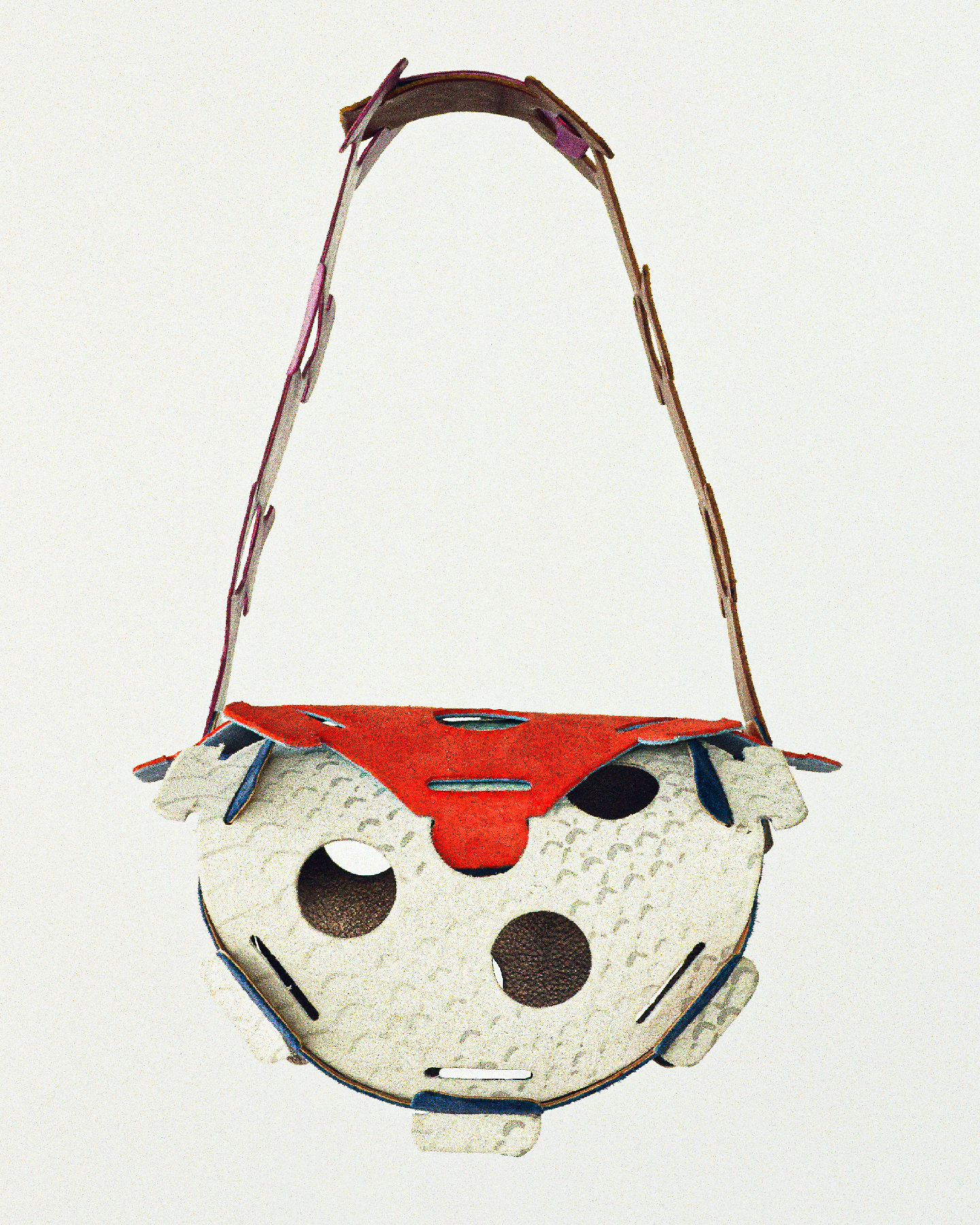
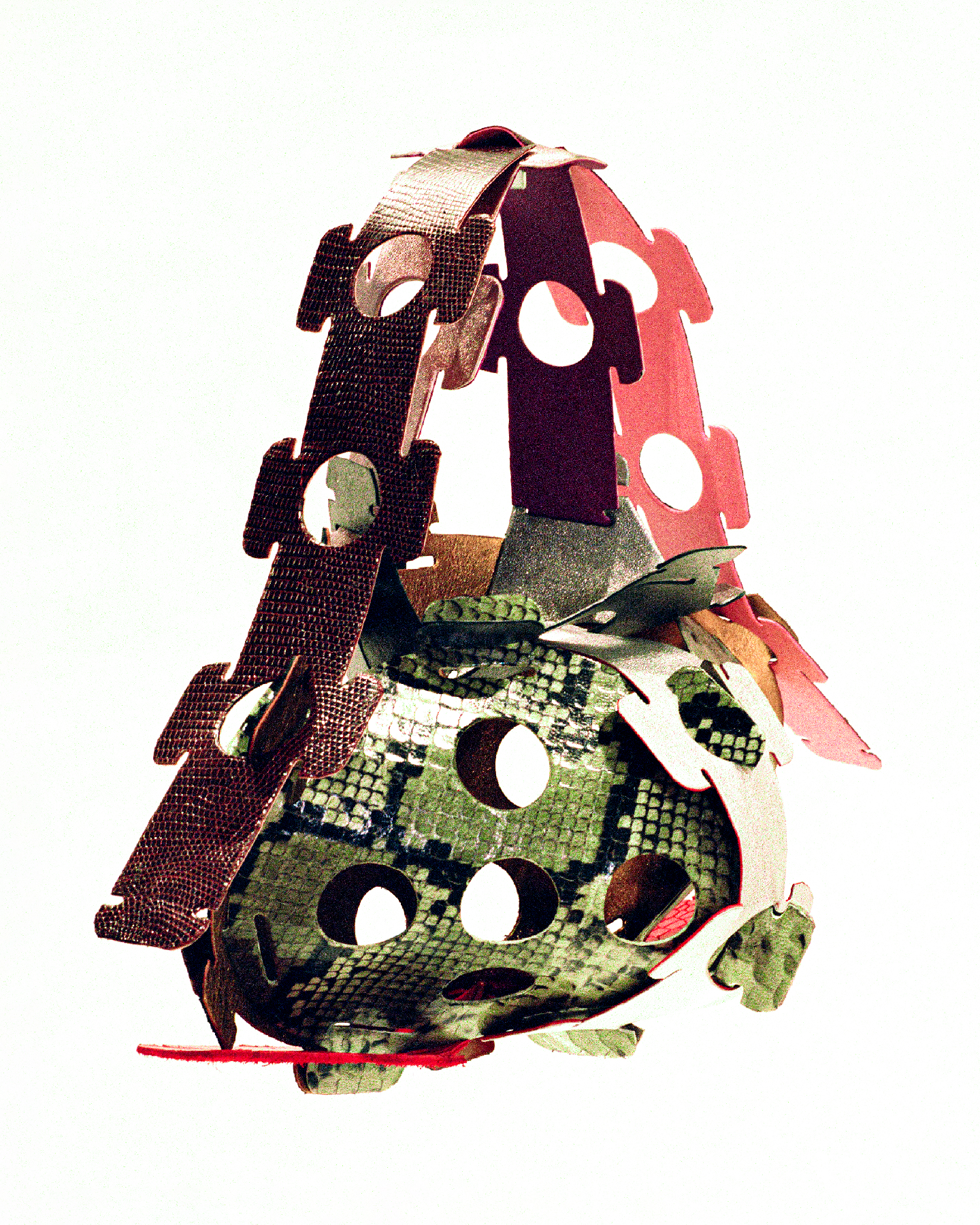
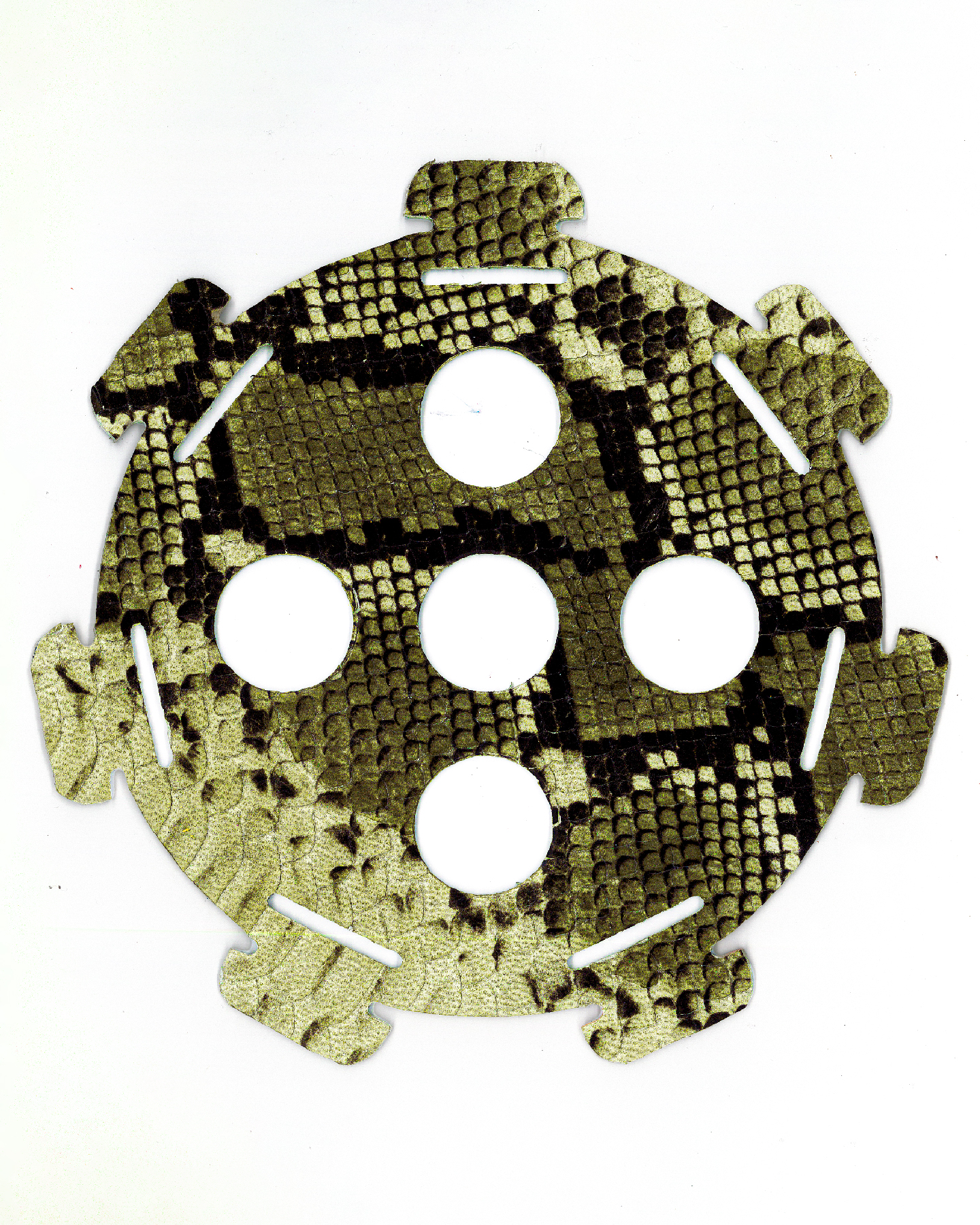
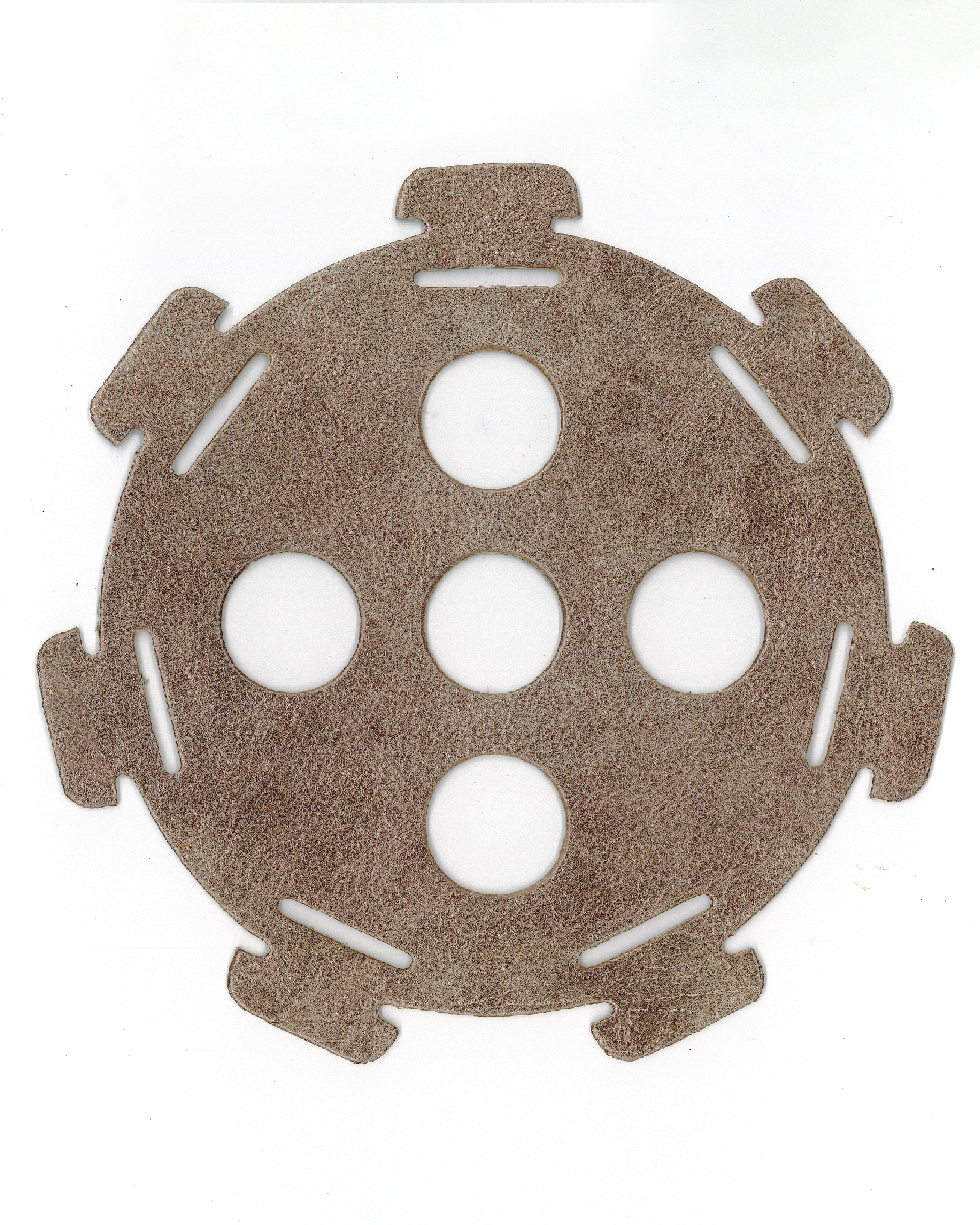
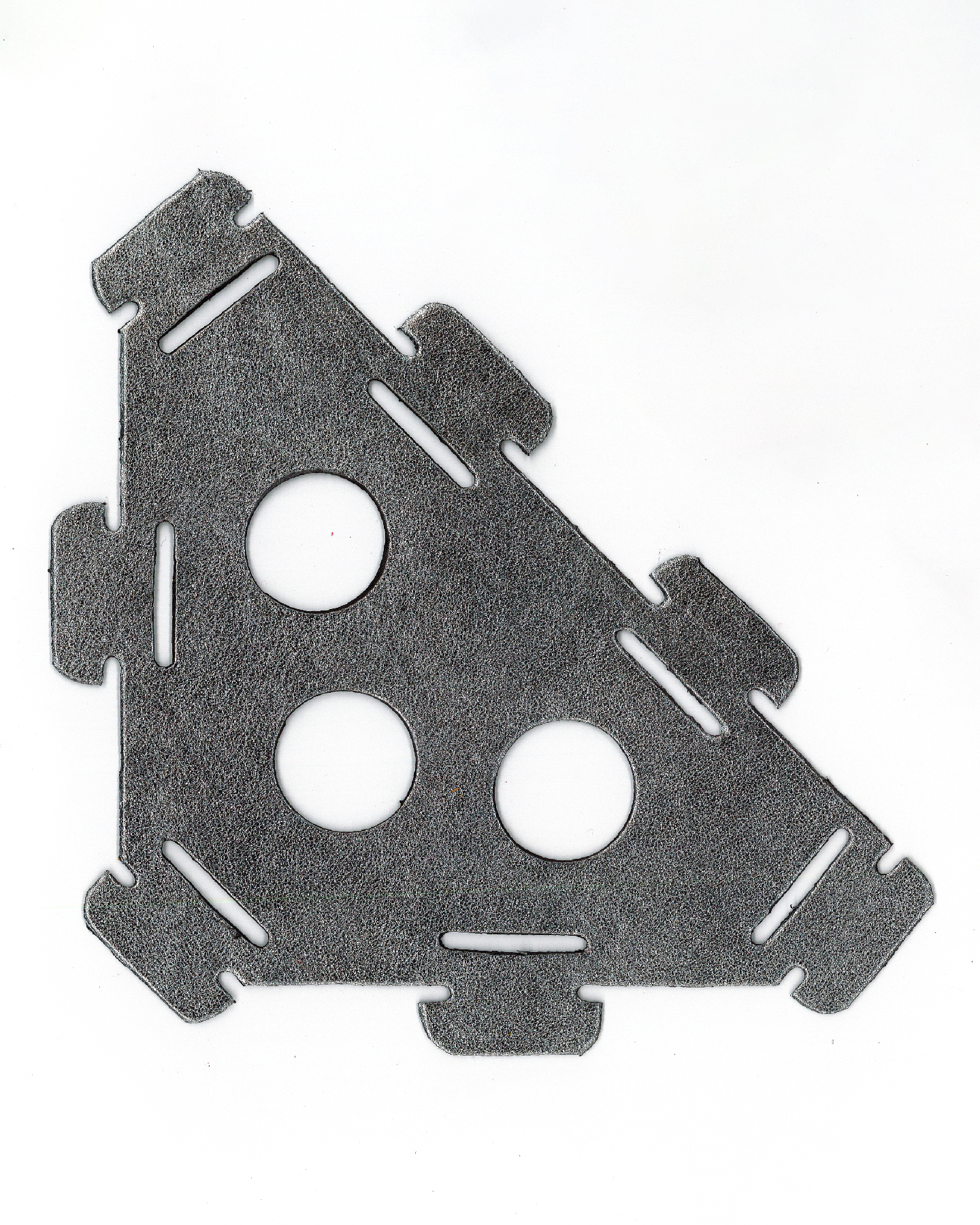
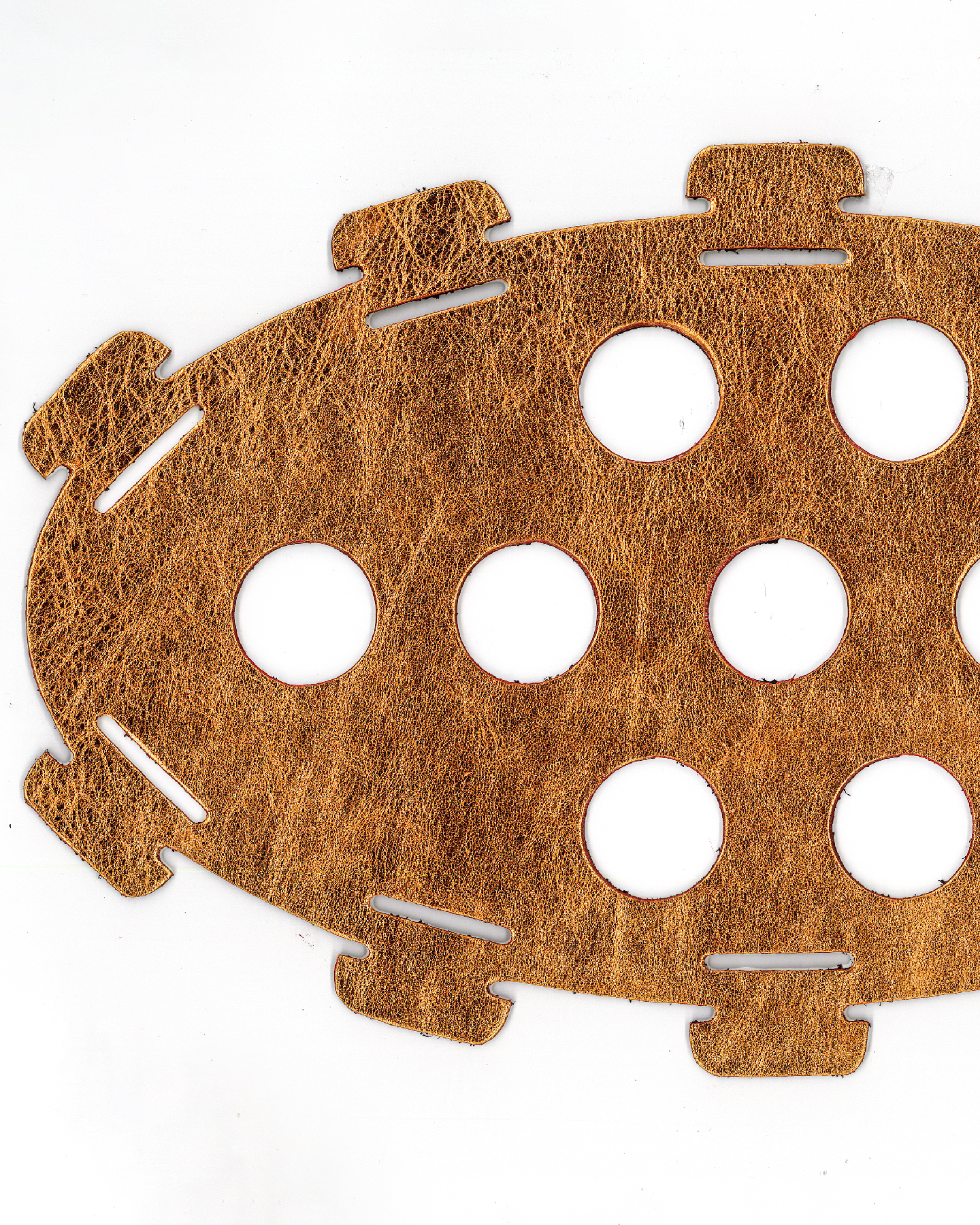
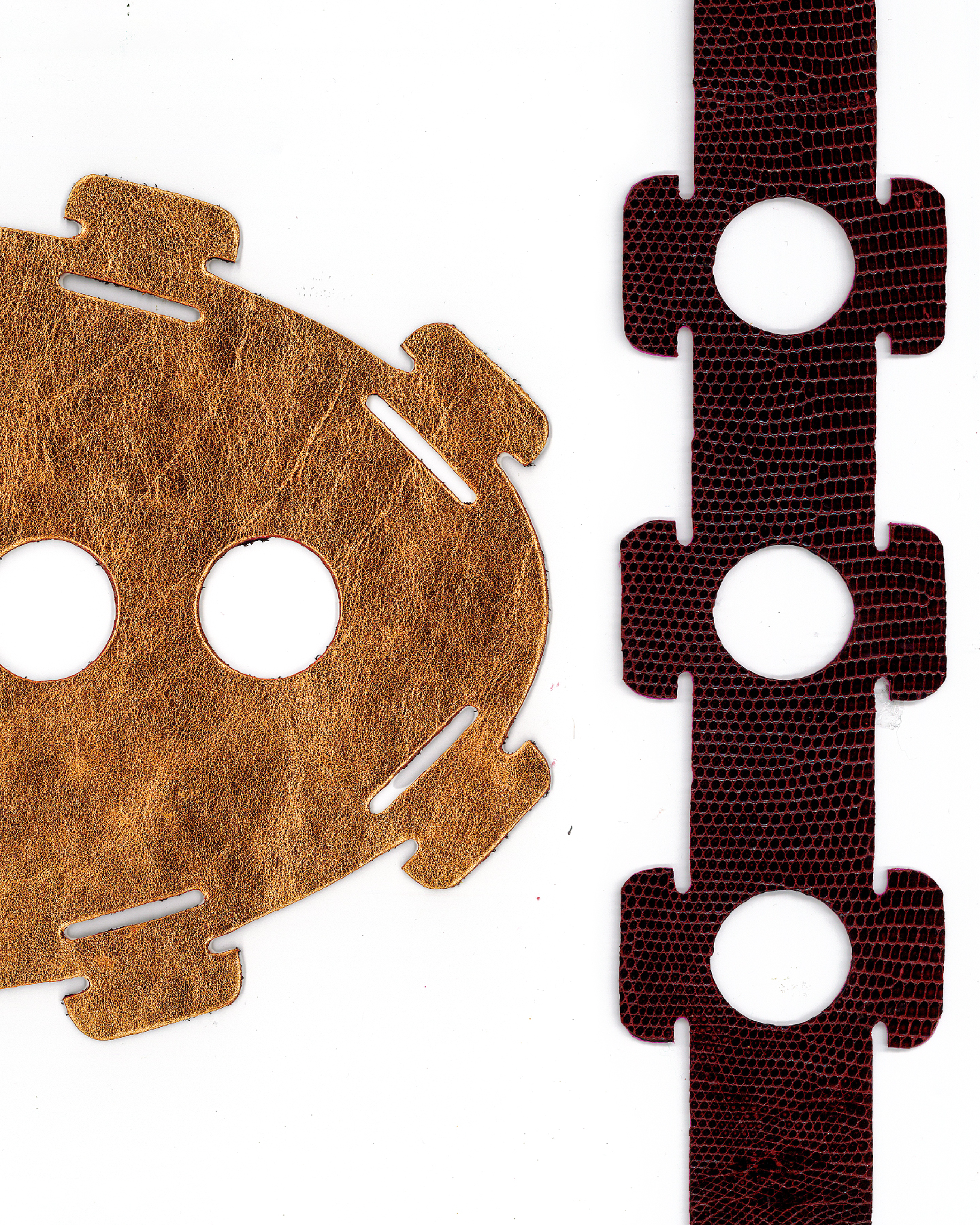
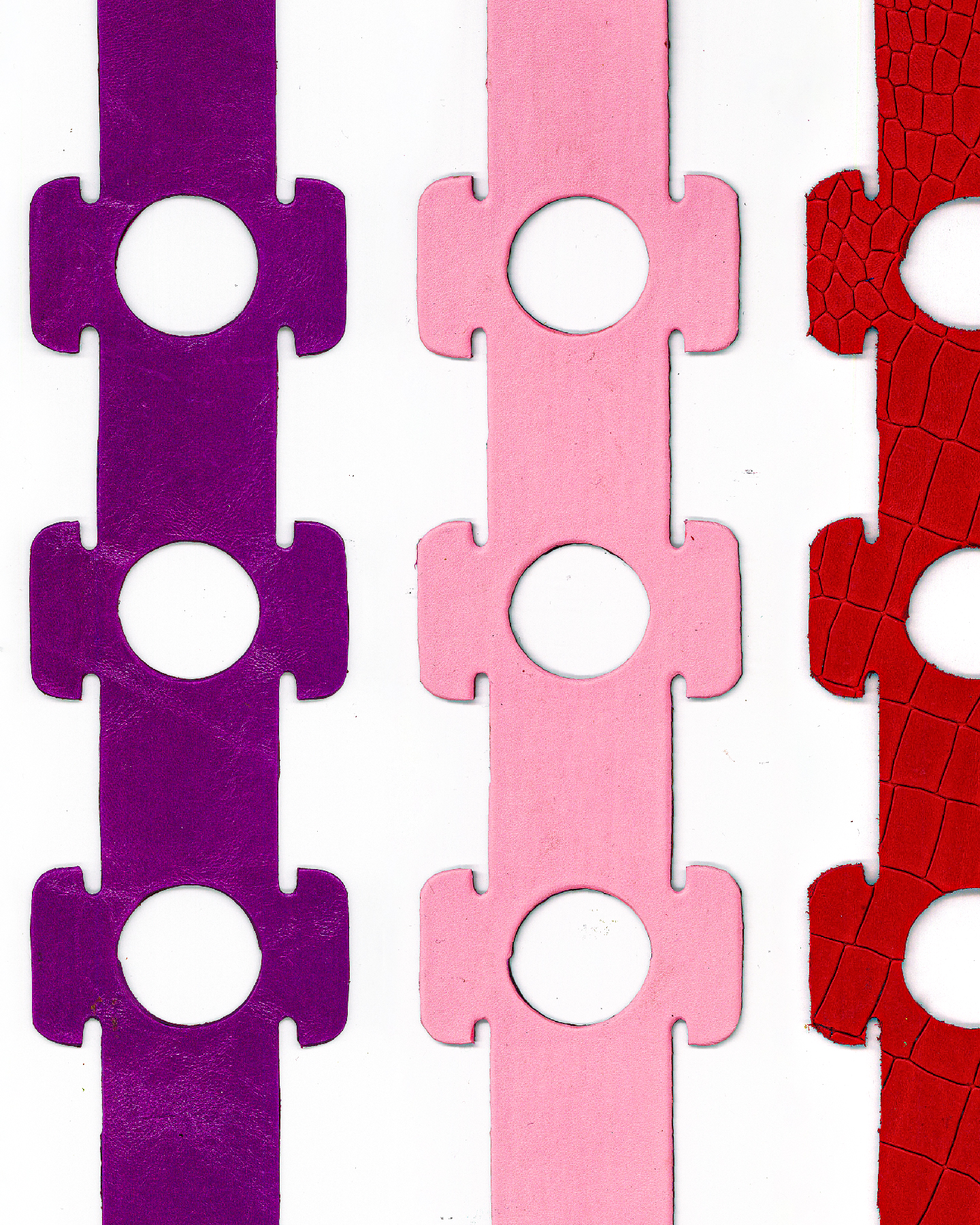
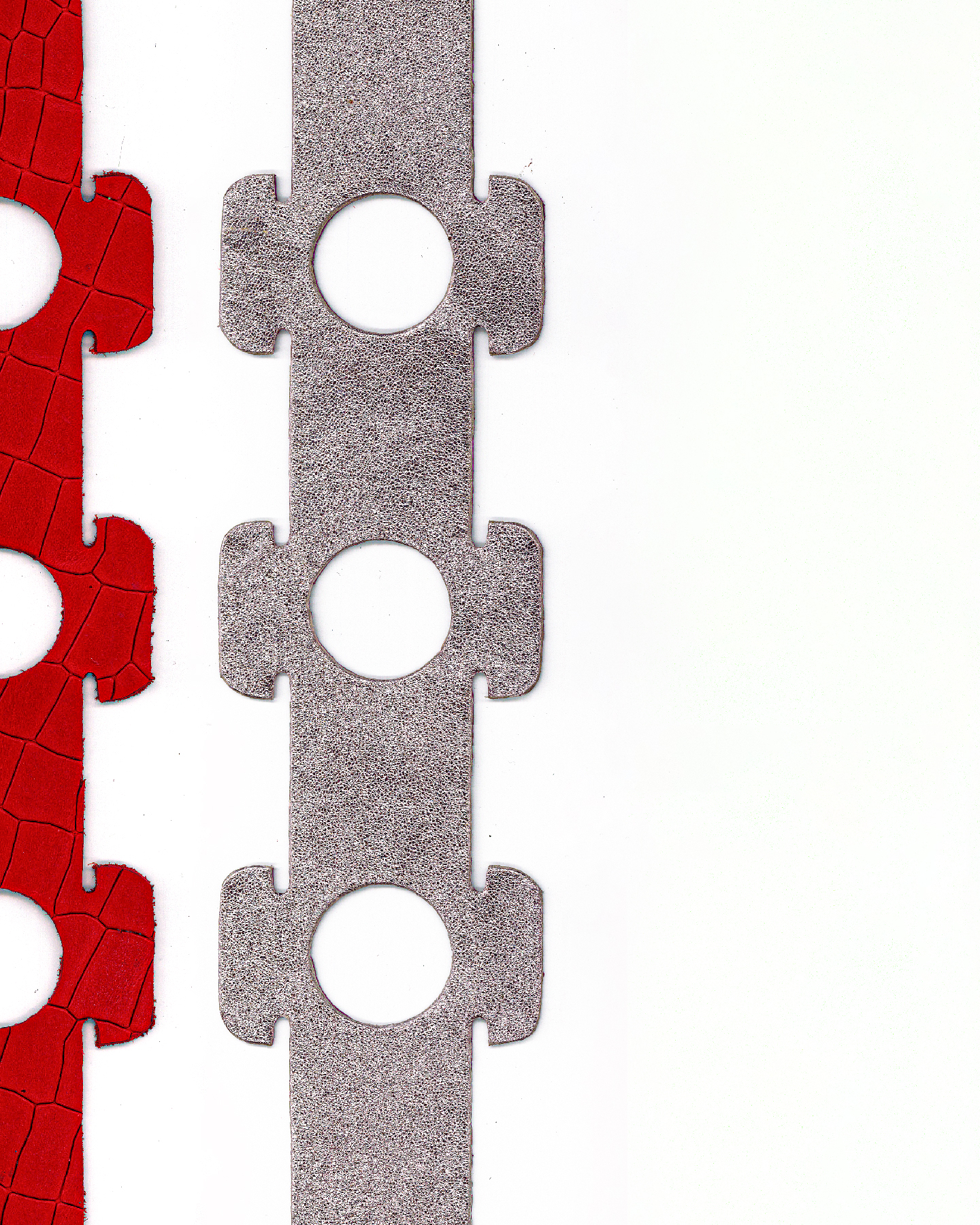
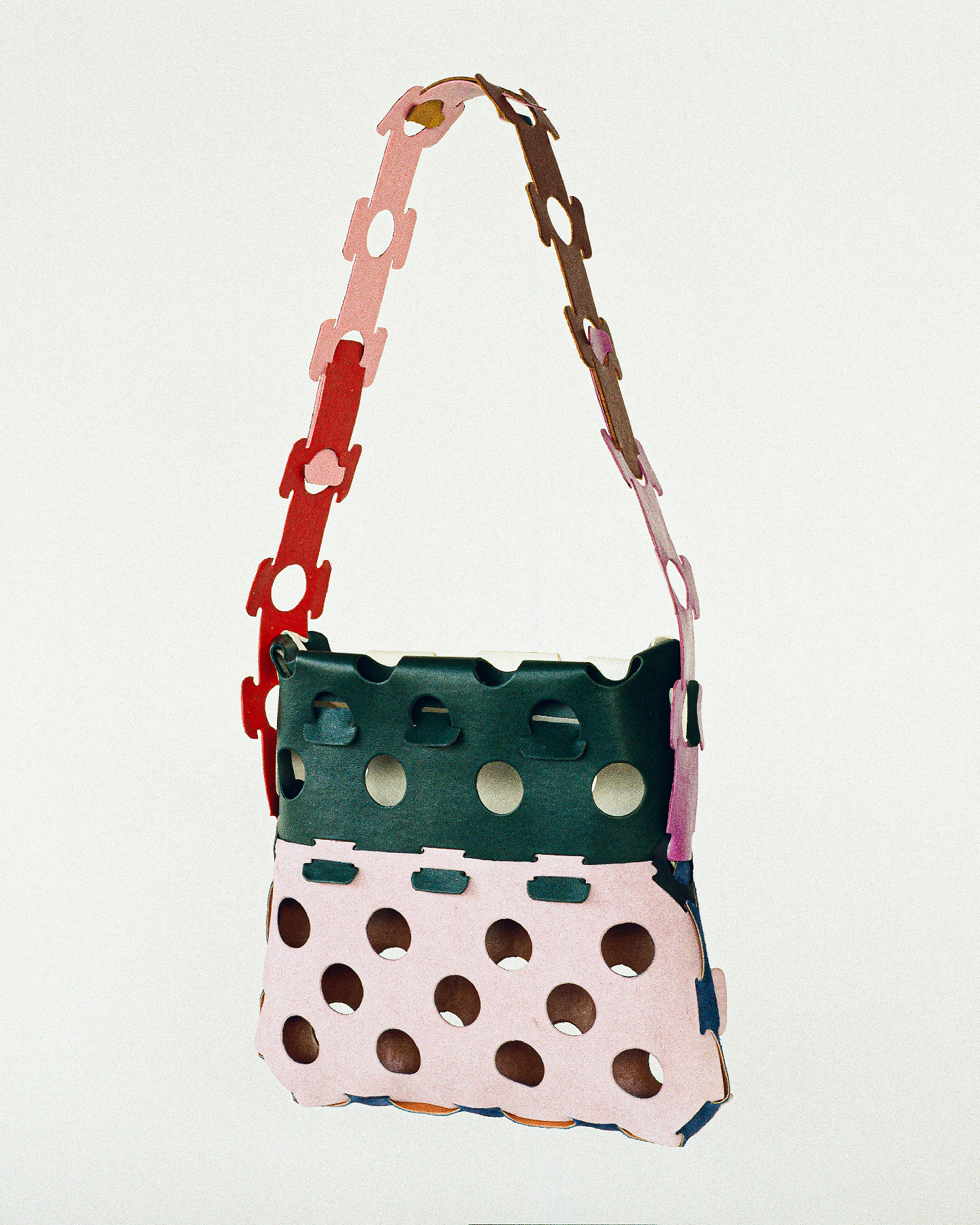
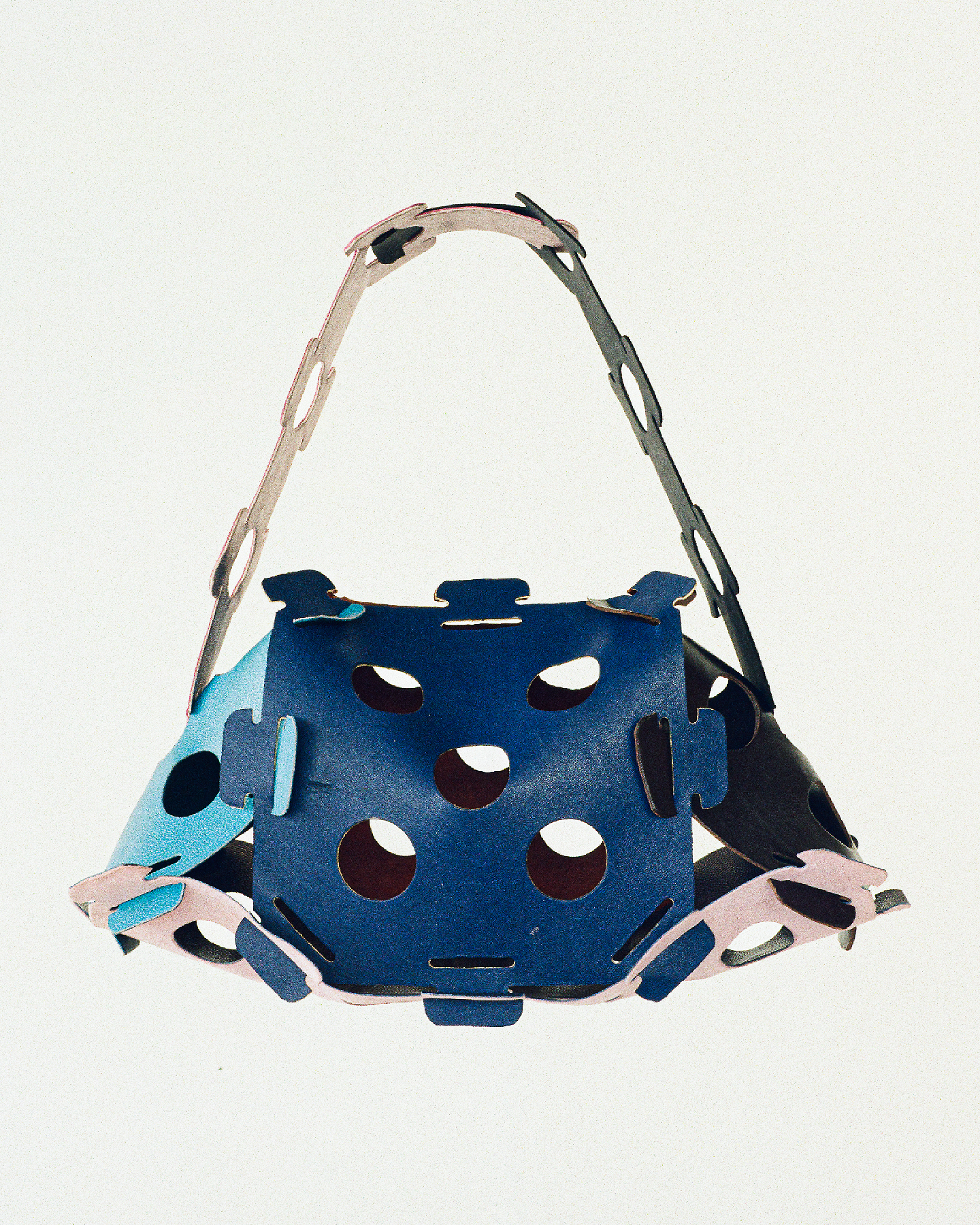
Interlocking modular bag system made of leather offcuts, Texon board, and Serogum adhesive.

The project’s goal is to reduce fashion to an accessible connection system that anyone can change. Using leather scraps donated by the studios at IFM and Maison Hamon, the system is not only about creating new forms, but also giving existing material a new life through structure and participation.
2025
armour
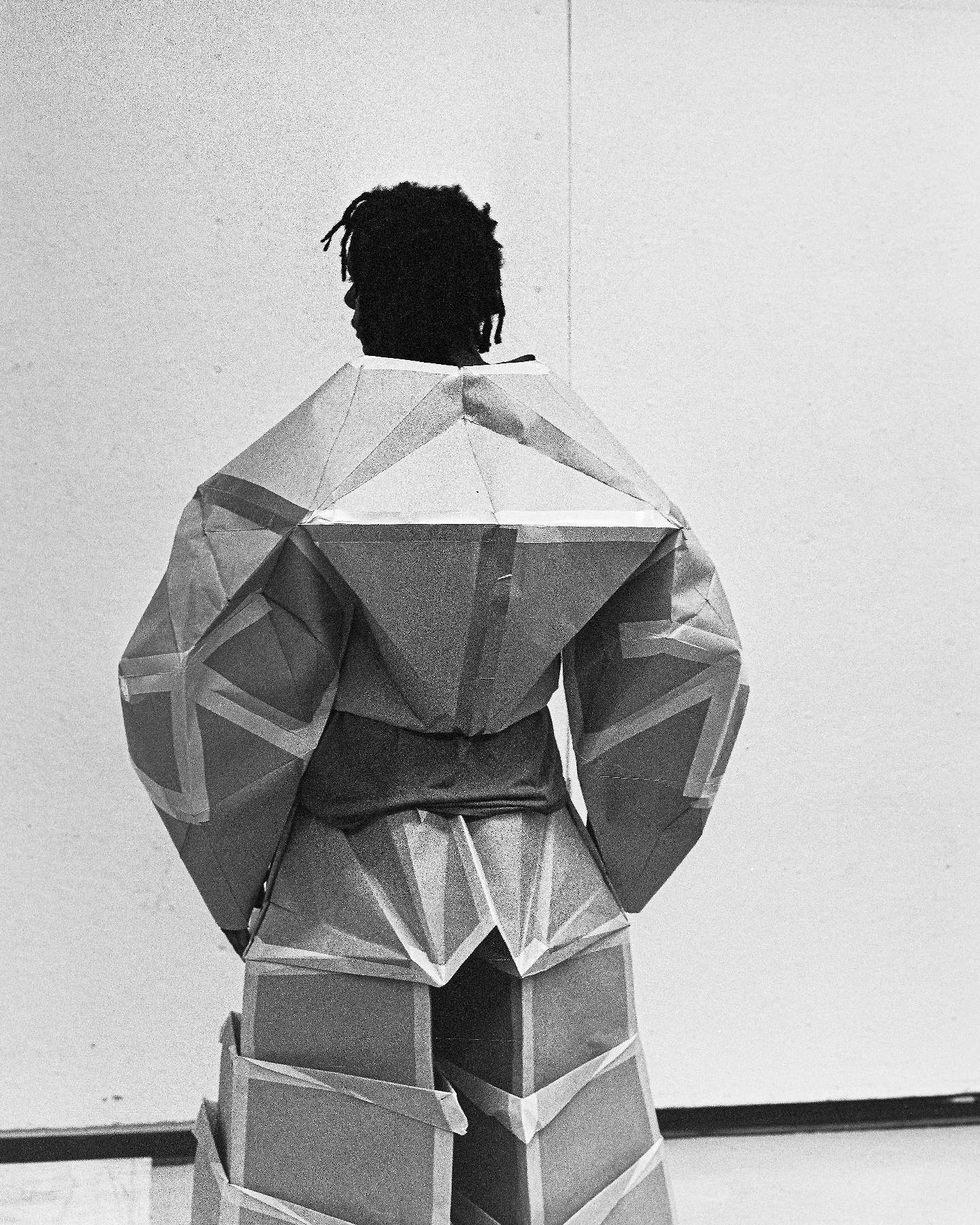
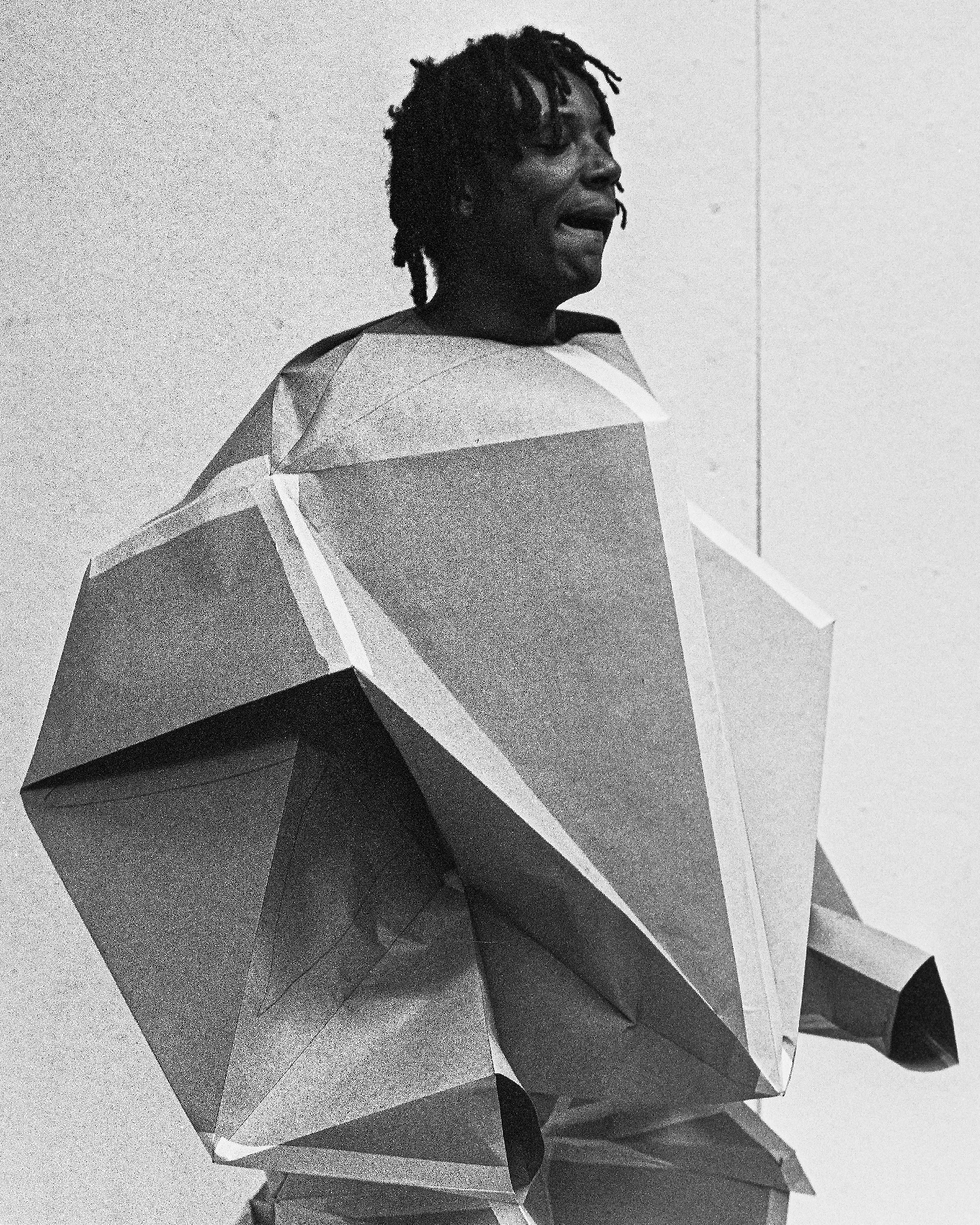
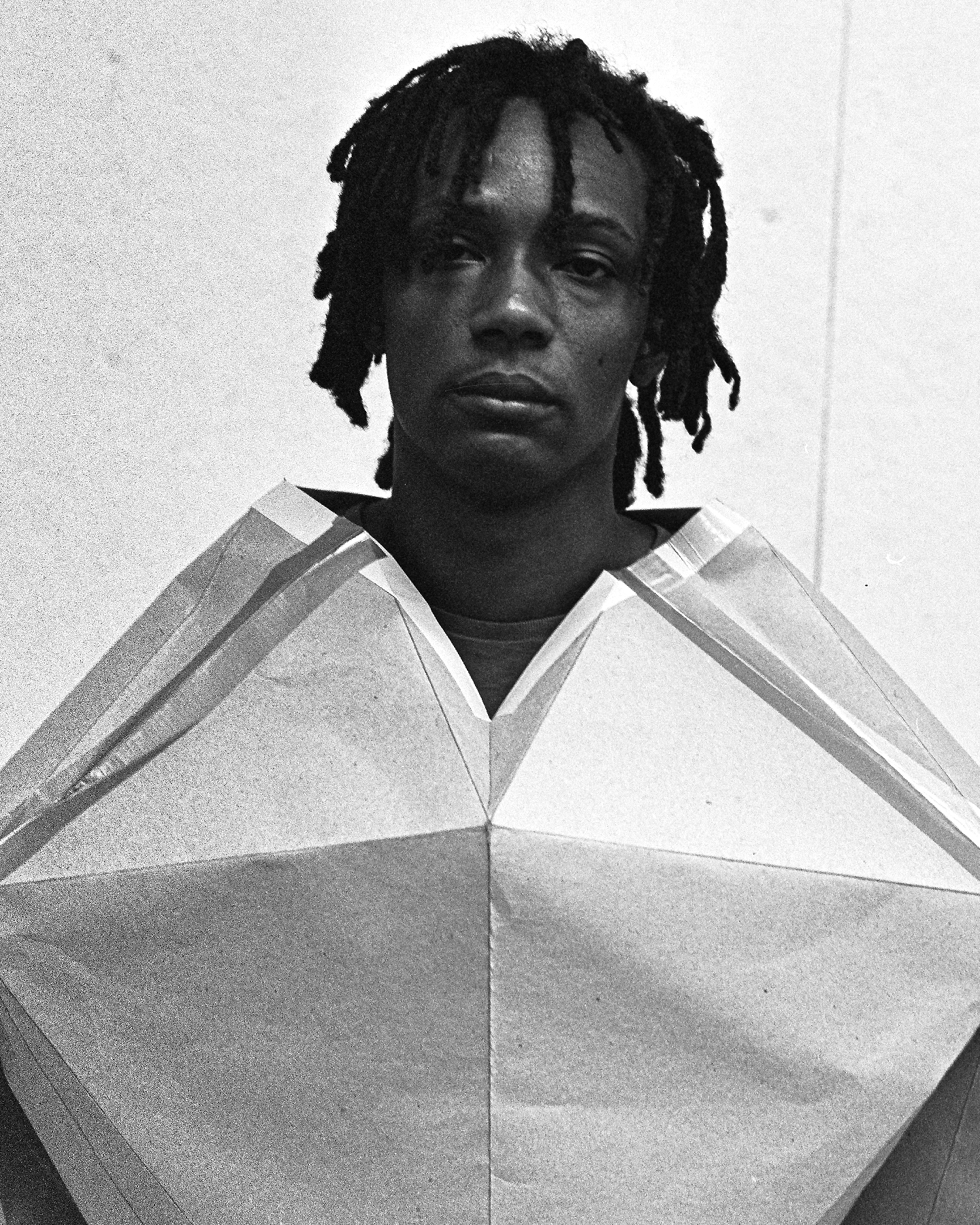
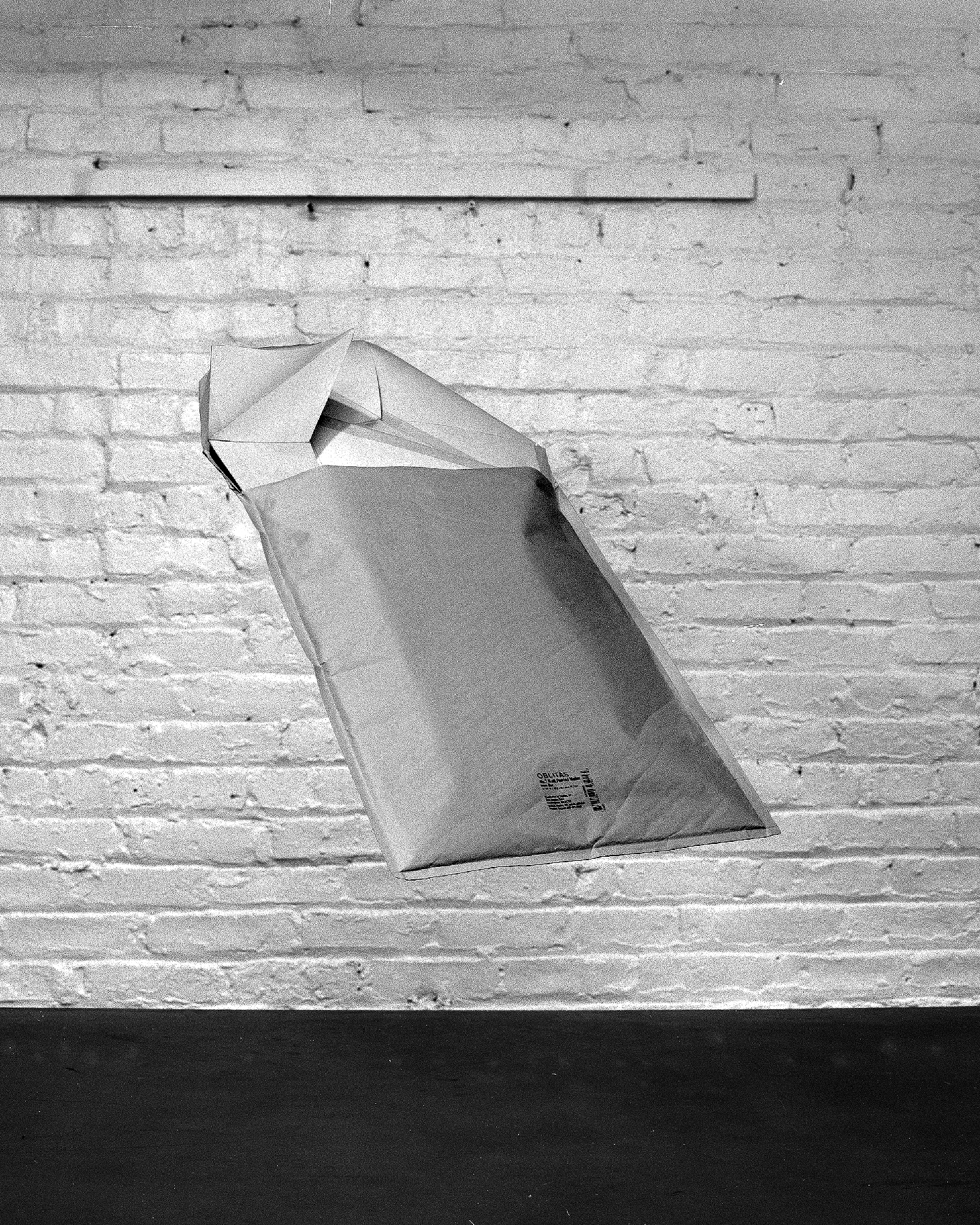
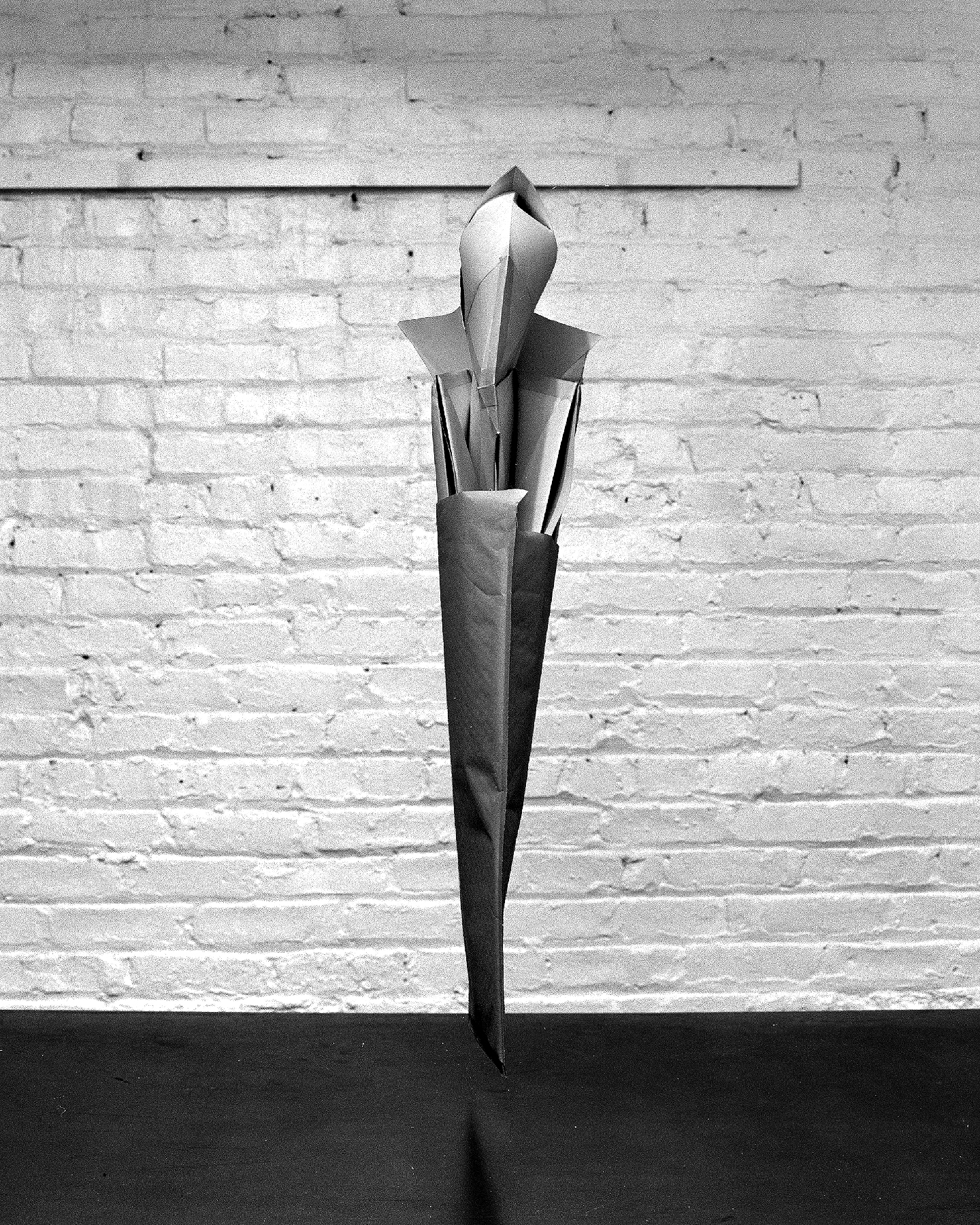
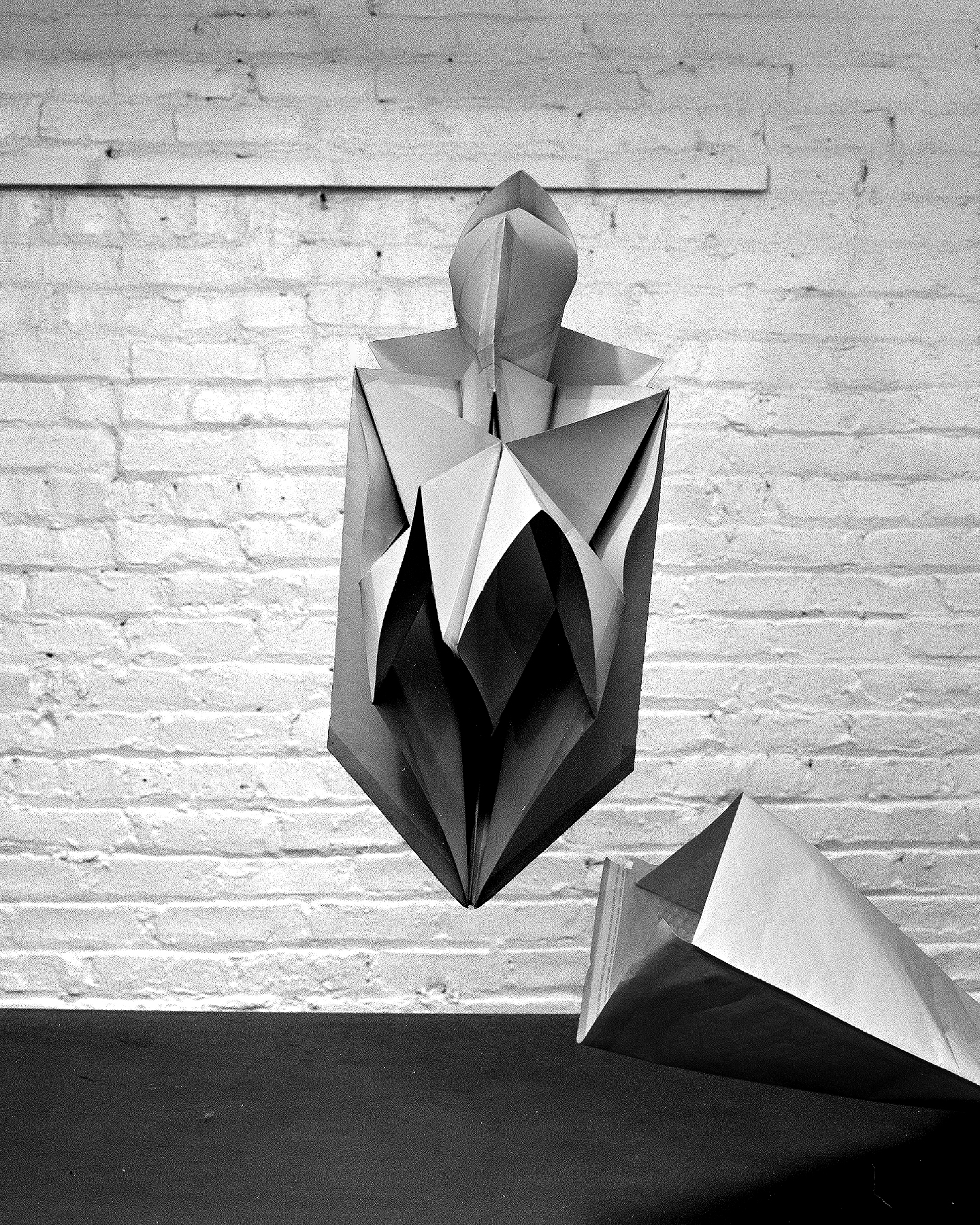
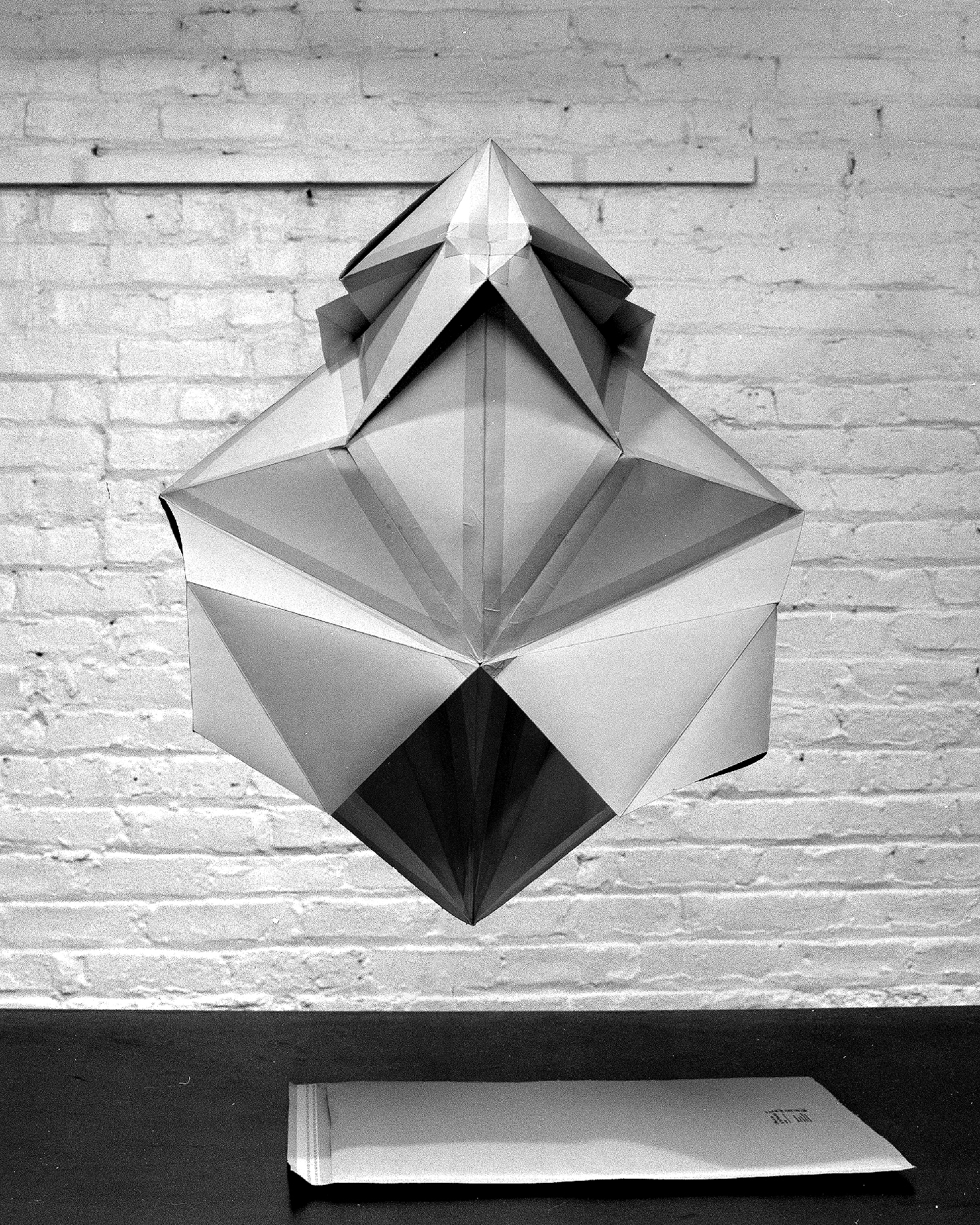
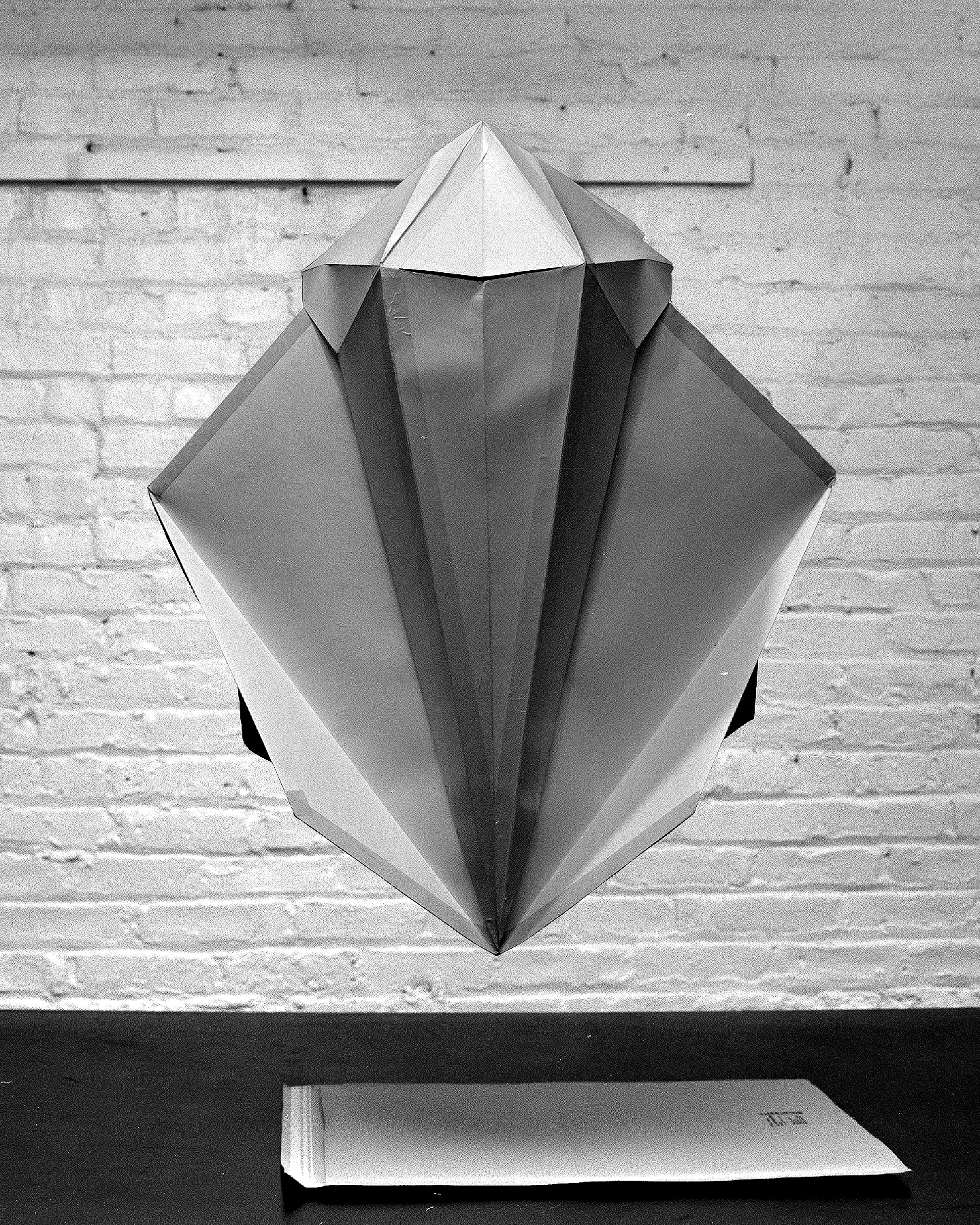
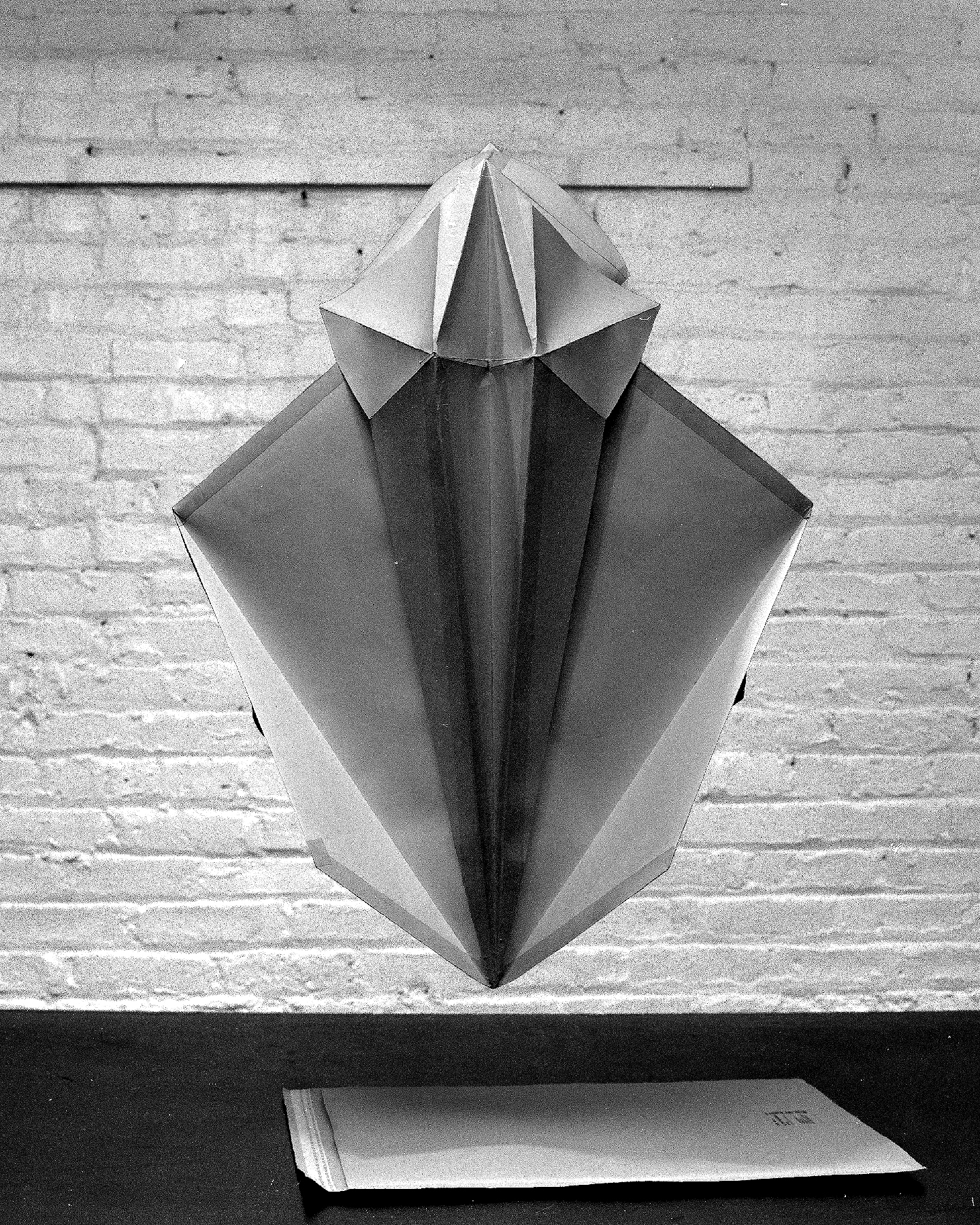
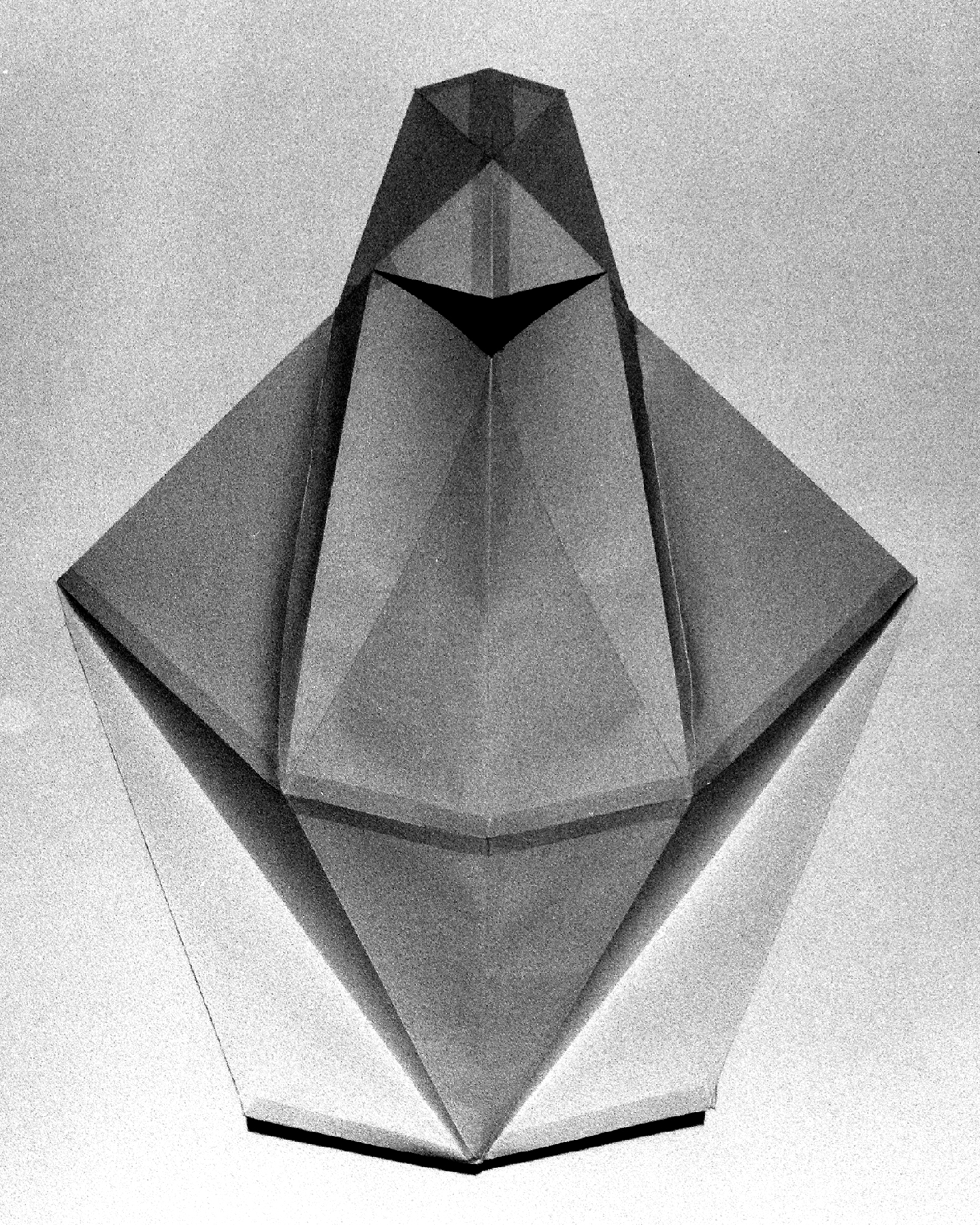
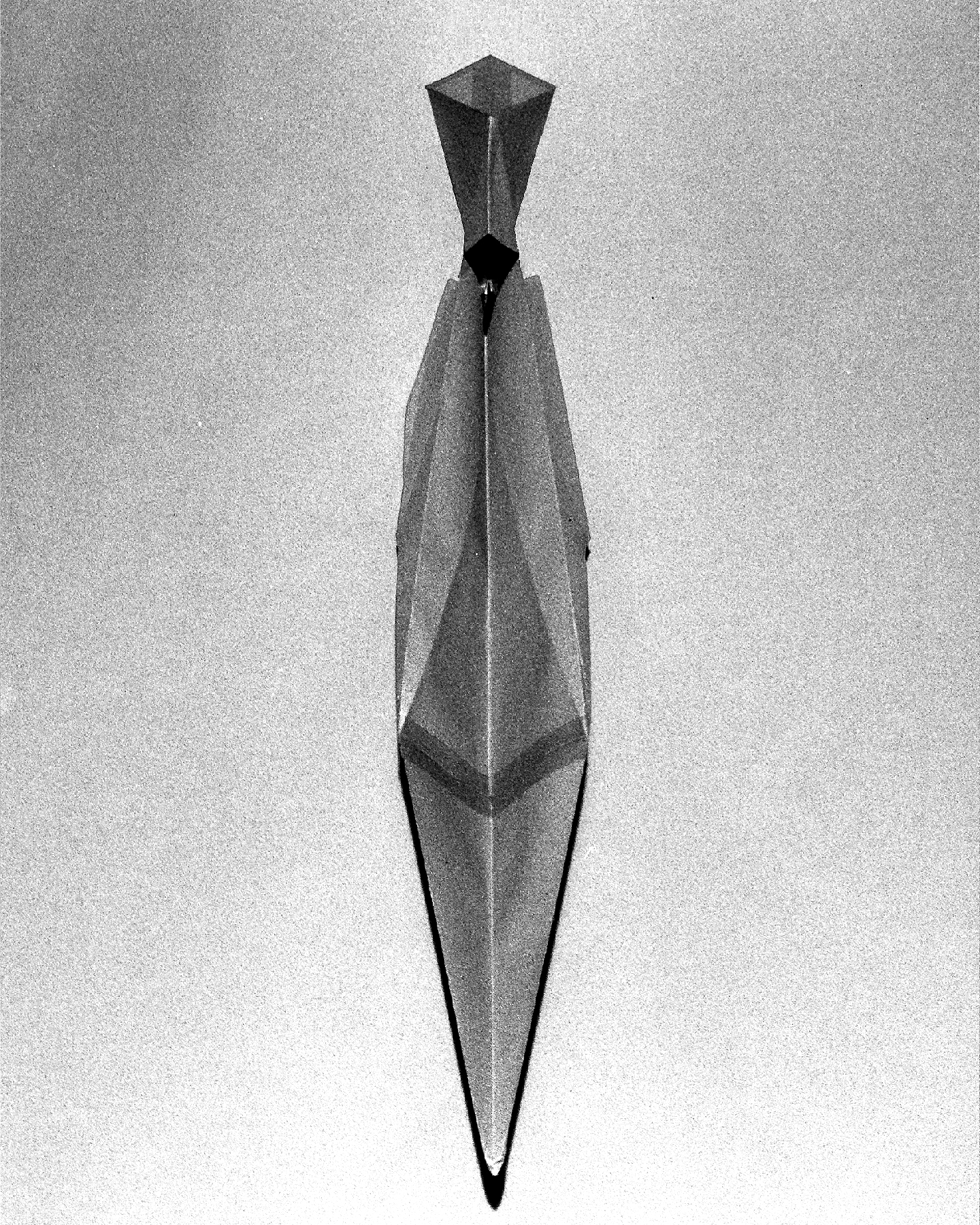
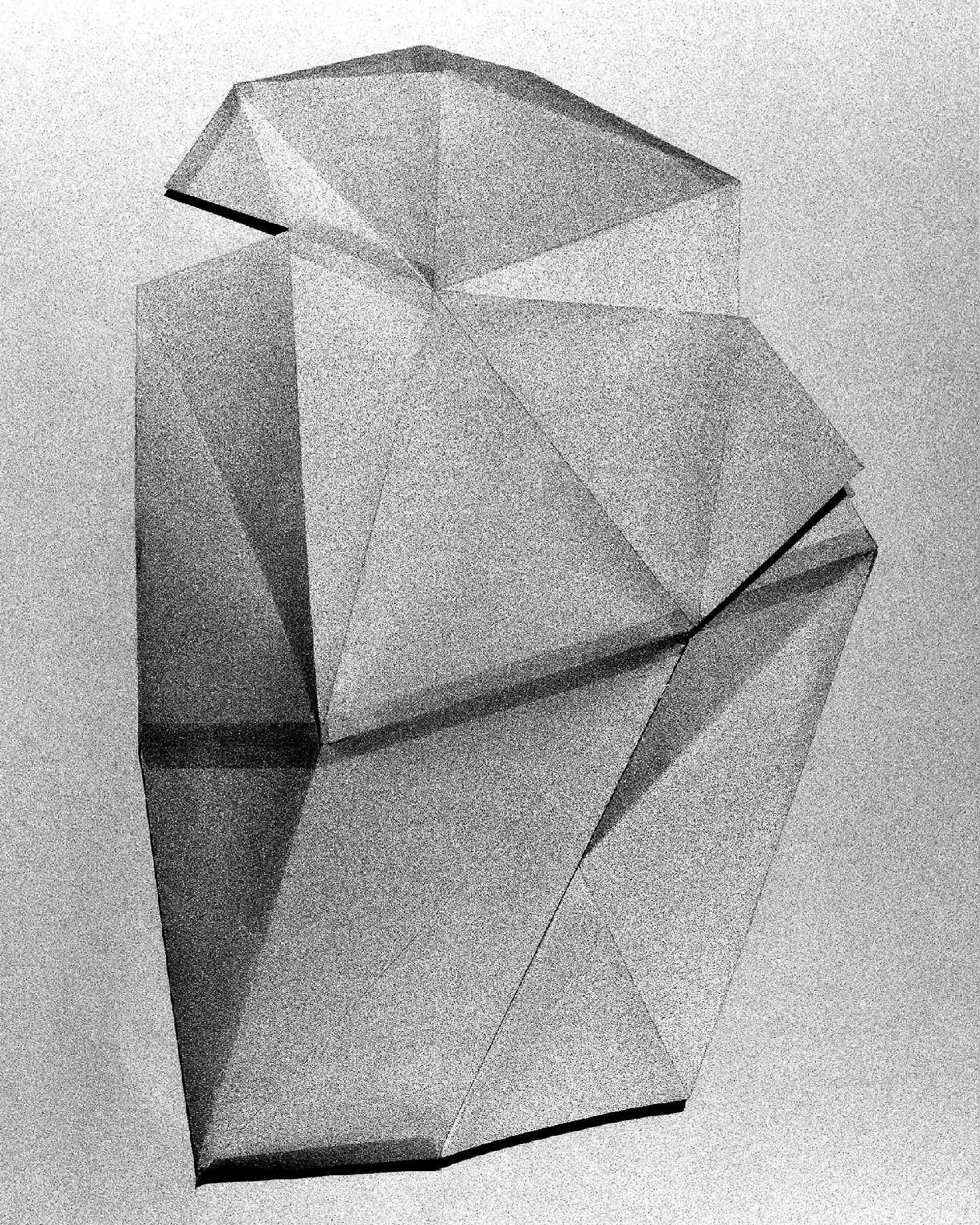
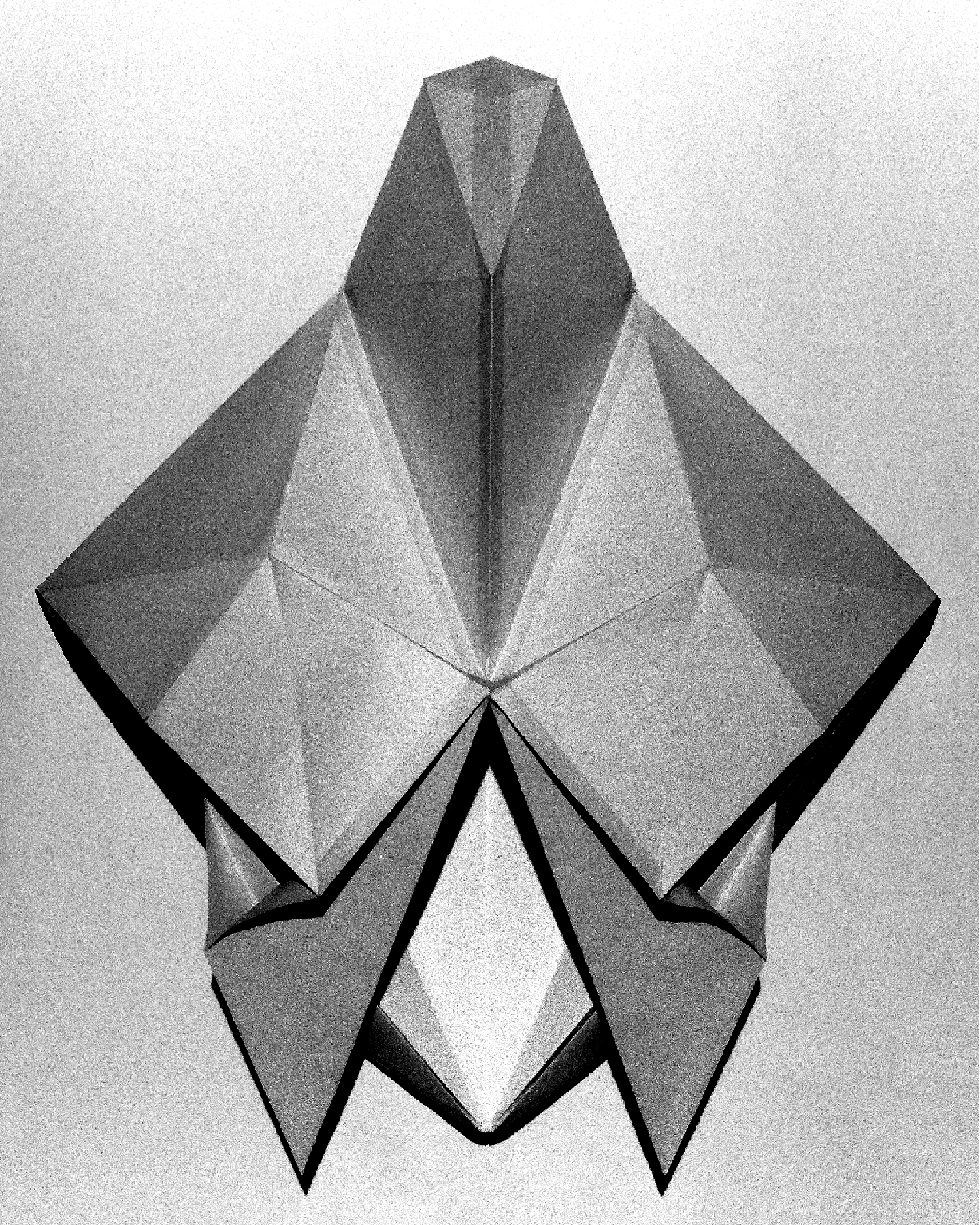
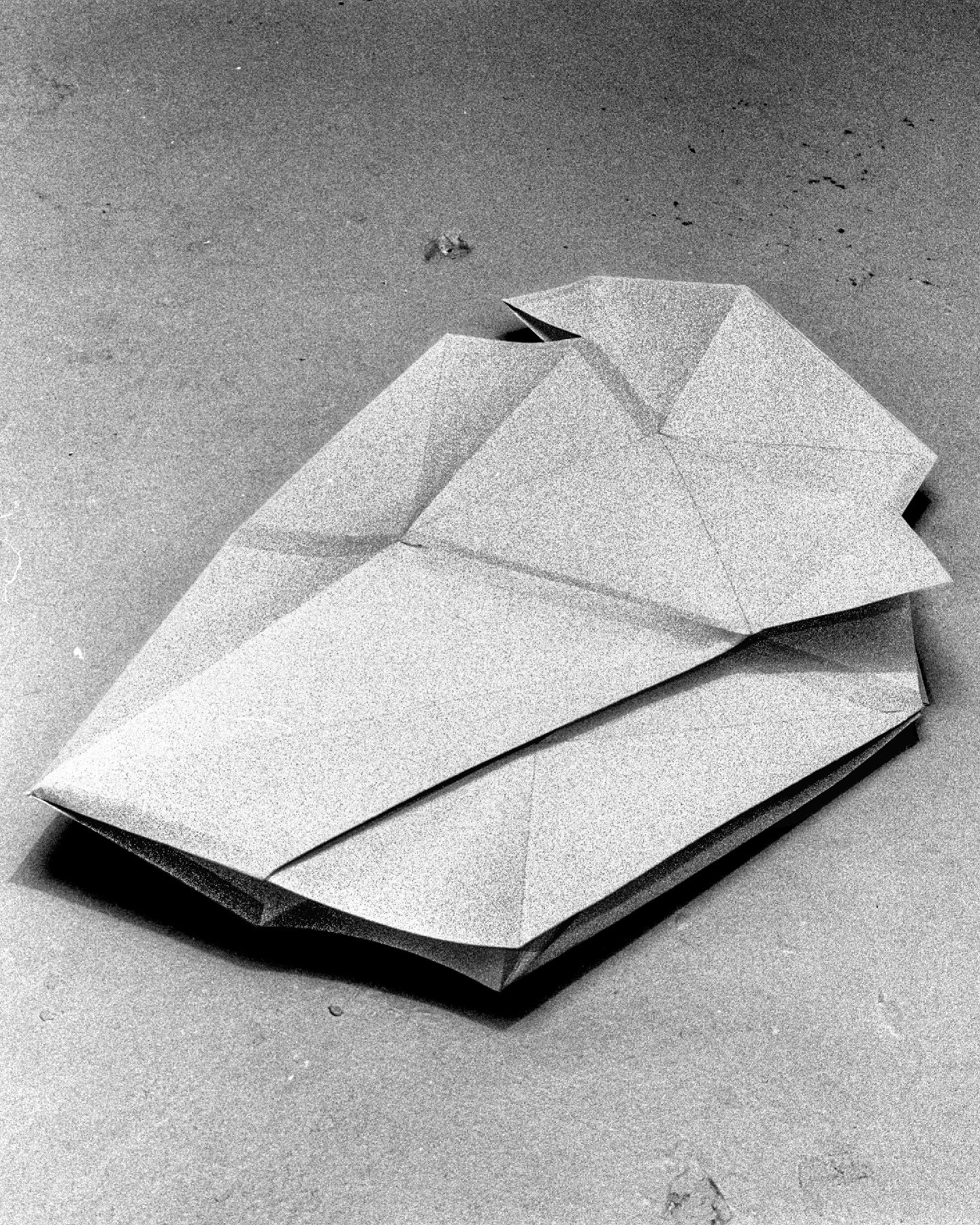
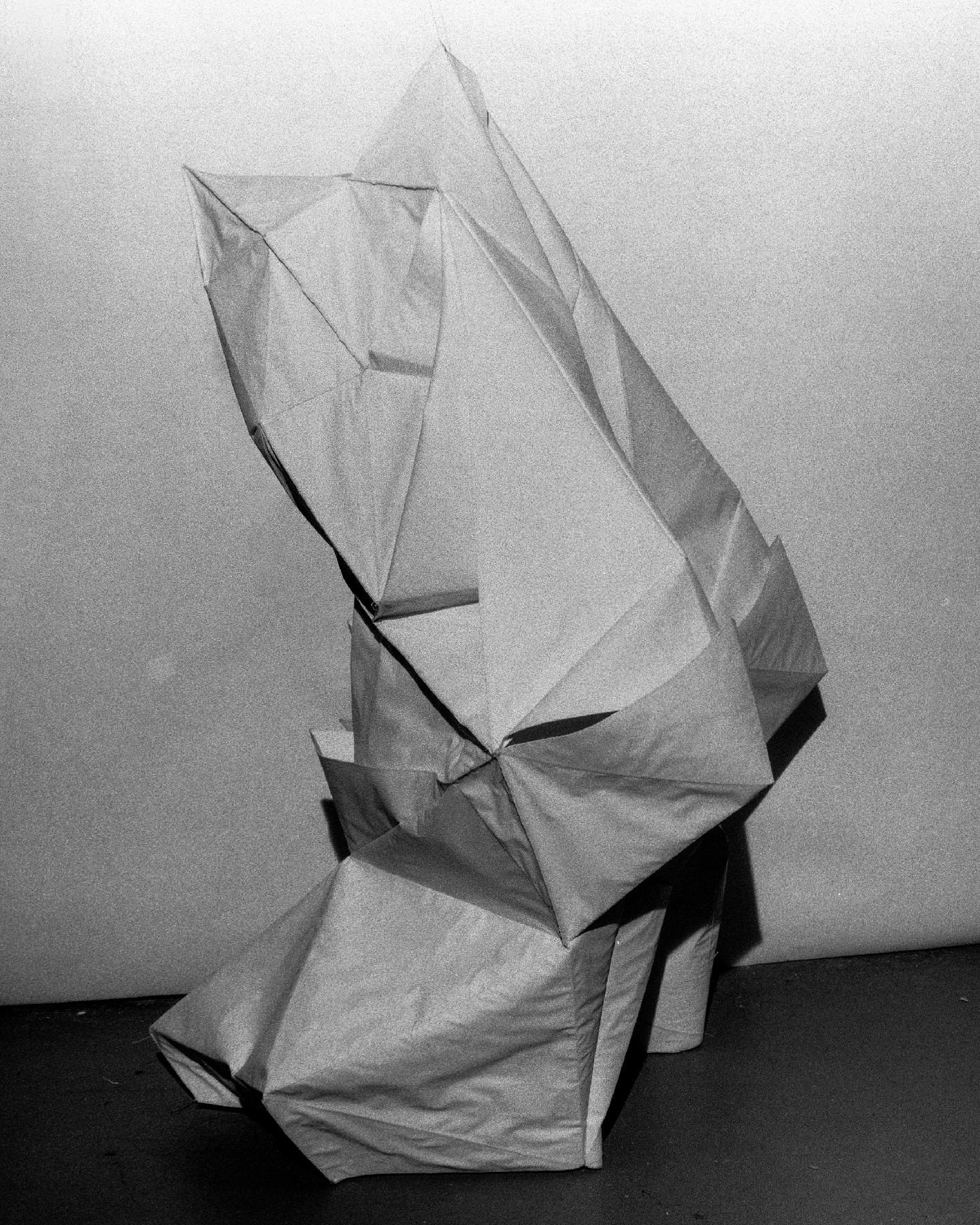
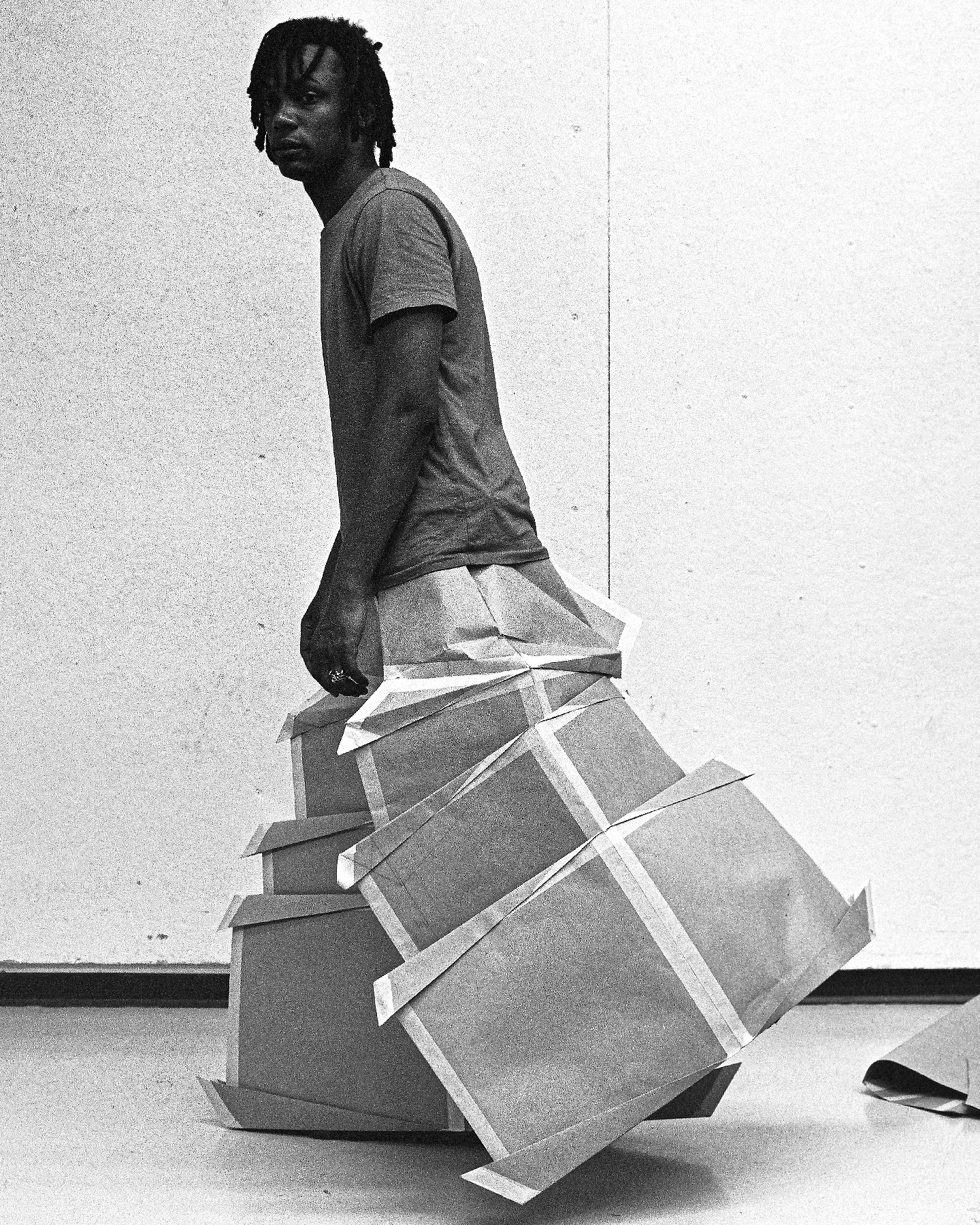
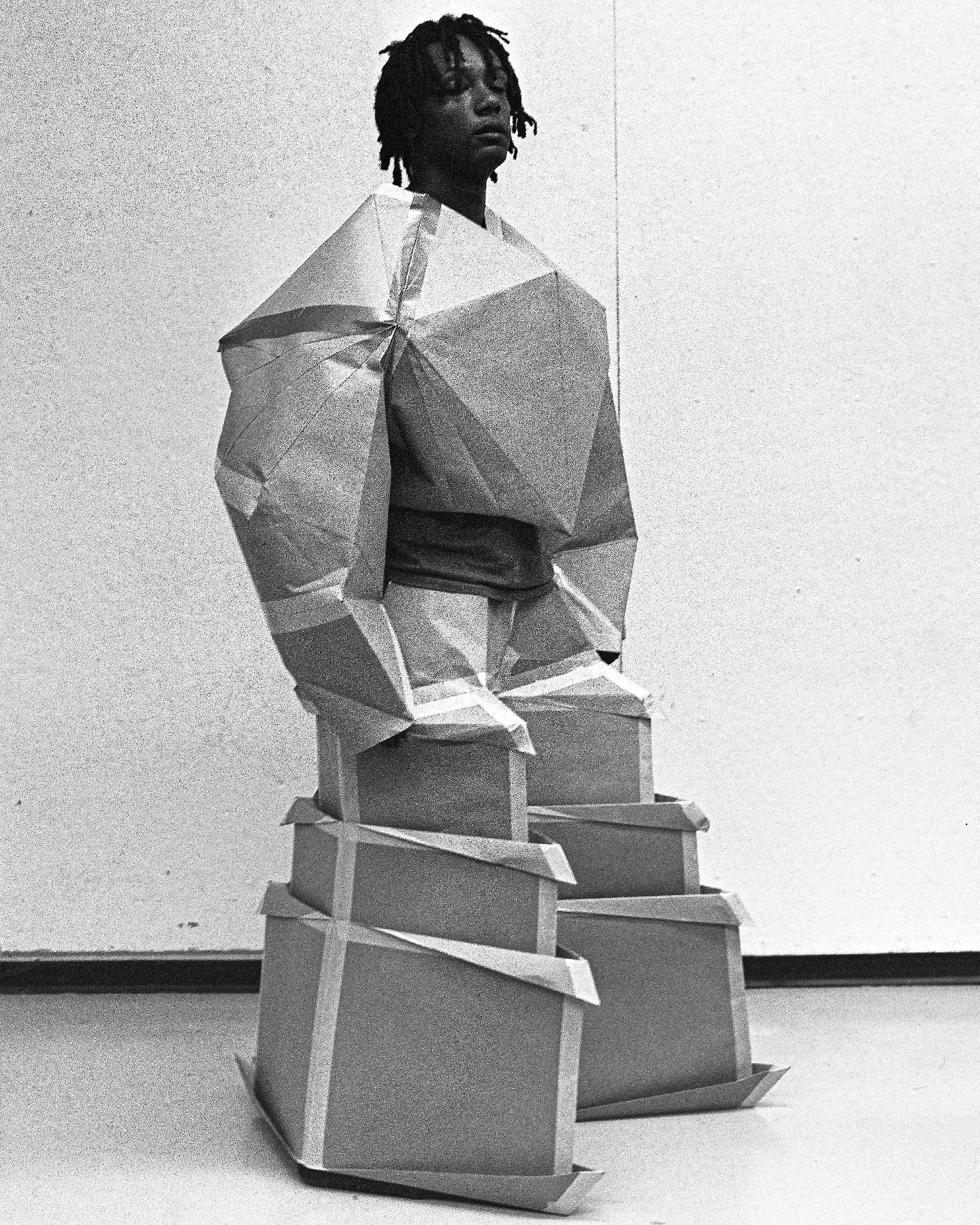
Silver gelatin prints documenting proportion and mobility tests in flat kraft paper garments.

Aerograms began with a recurring encounter: garments left on the street. Once mobile, they become static, forgotten, run over and hardened by weather. The project responds to this condition by proposing a more hopeful fate, where clothes can carry meaning even in their flattest form.

Garment and pattern become one. Each piece is constructed from a single surface. Its structure emerges through creases and folding systems such as Miura-ori. The form reveals itself only when lifted.

Paper versions function as wearable messages or flat patterns to be replied to through remaking, using any material at hand. Aerograms positions fashion as a system of correspondence, asking whether garments can operate like letters.

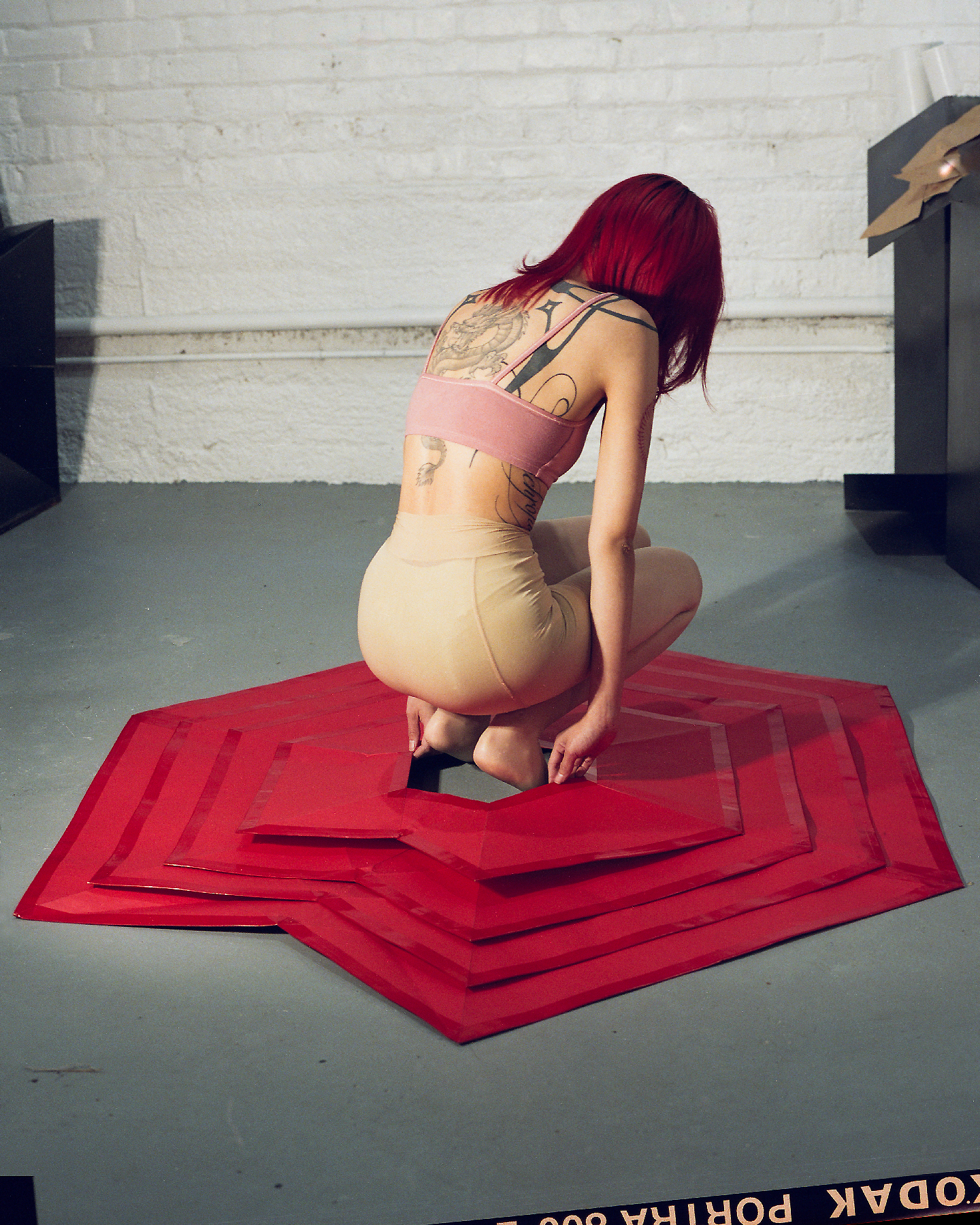
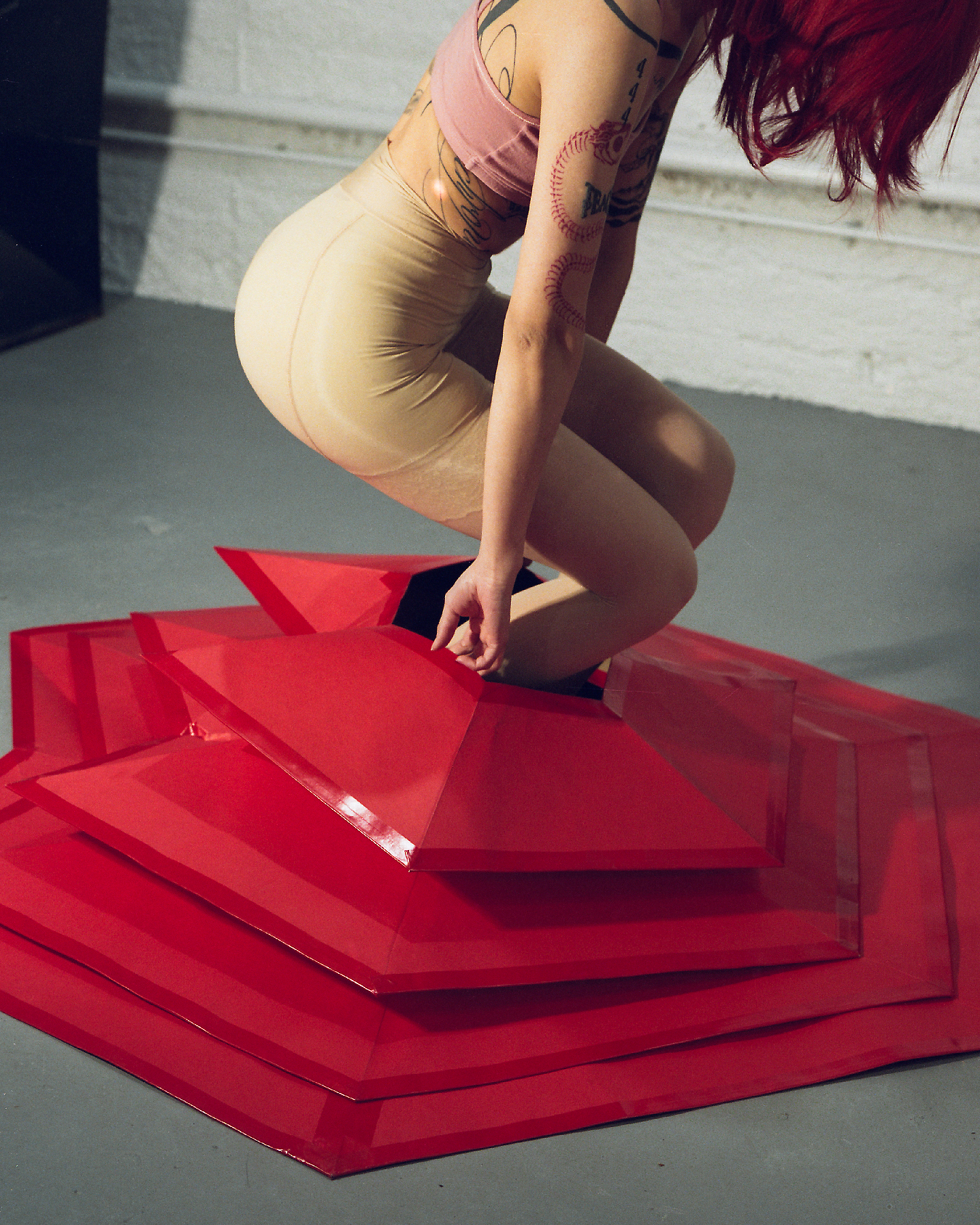
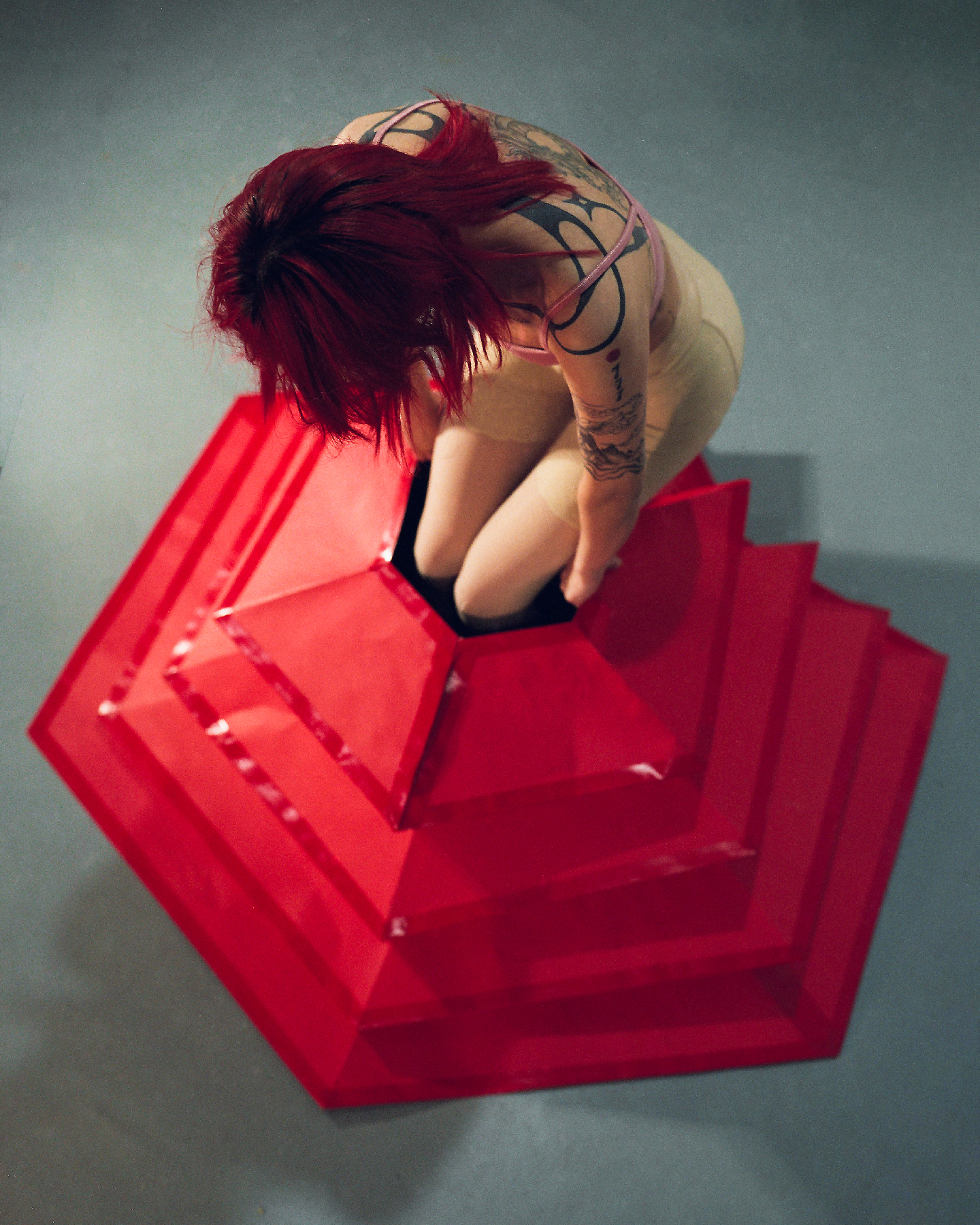
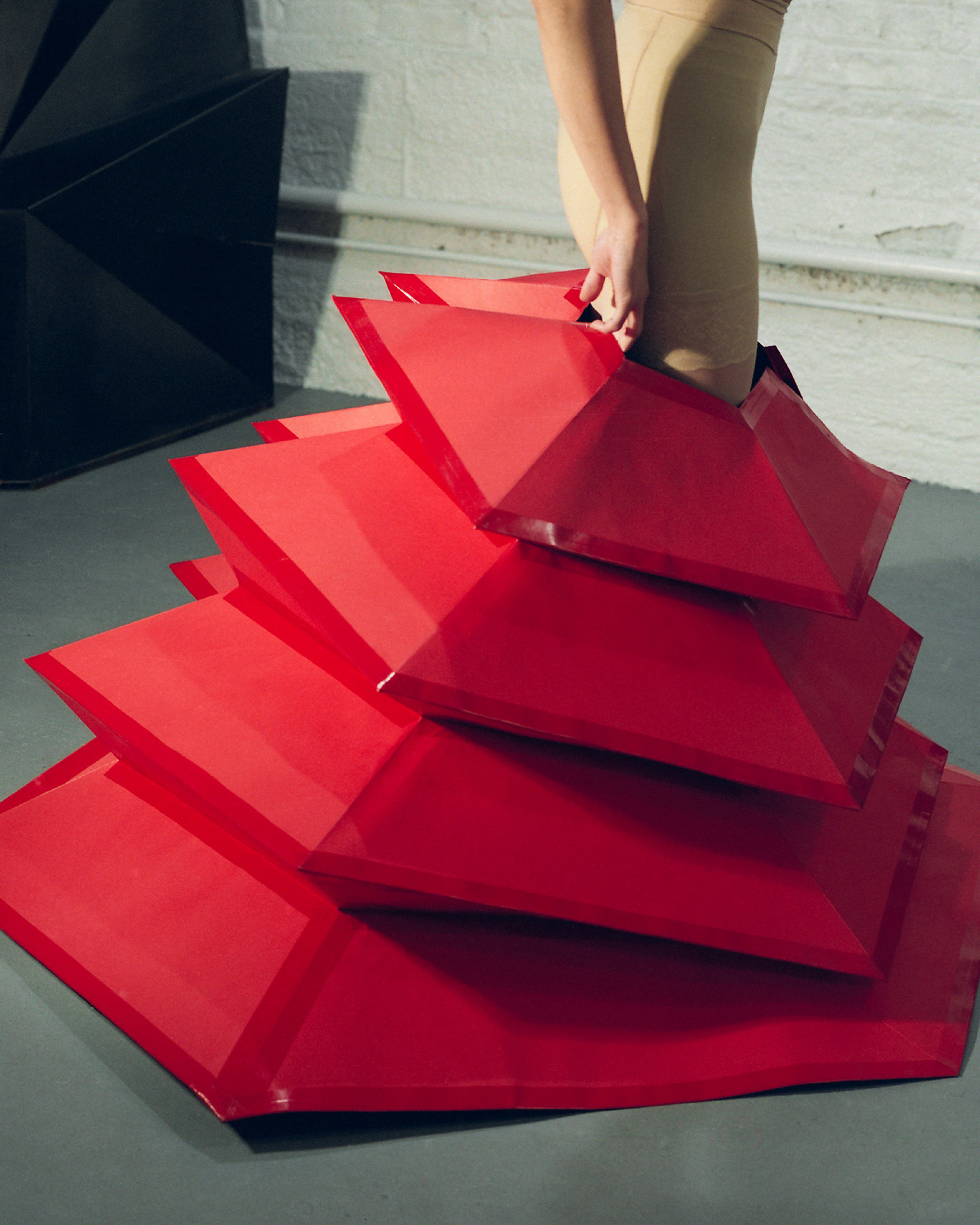
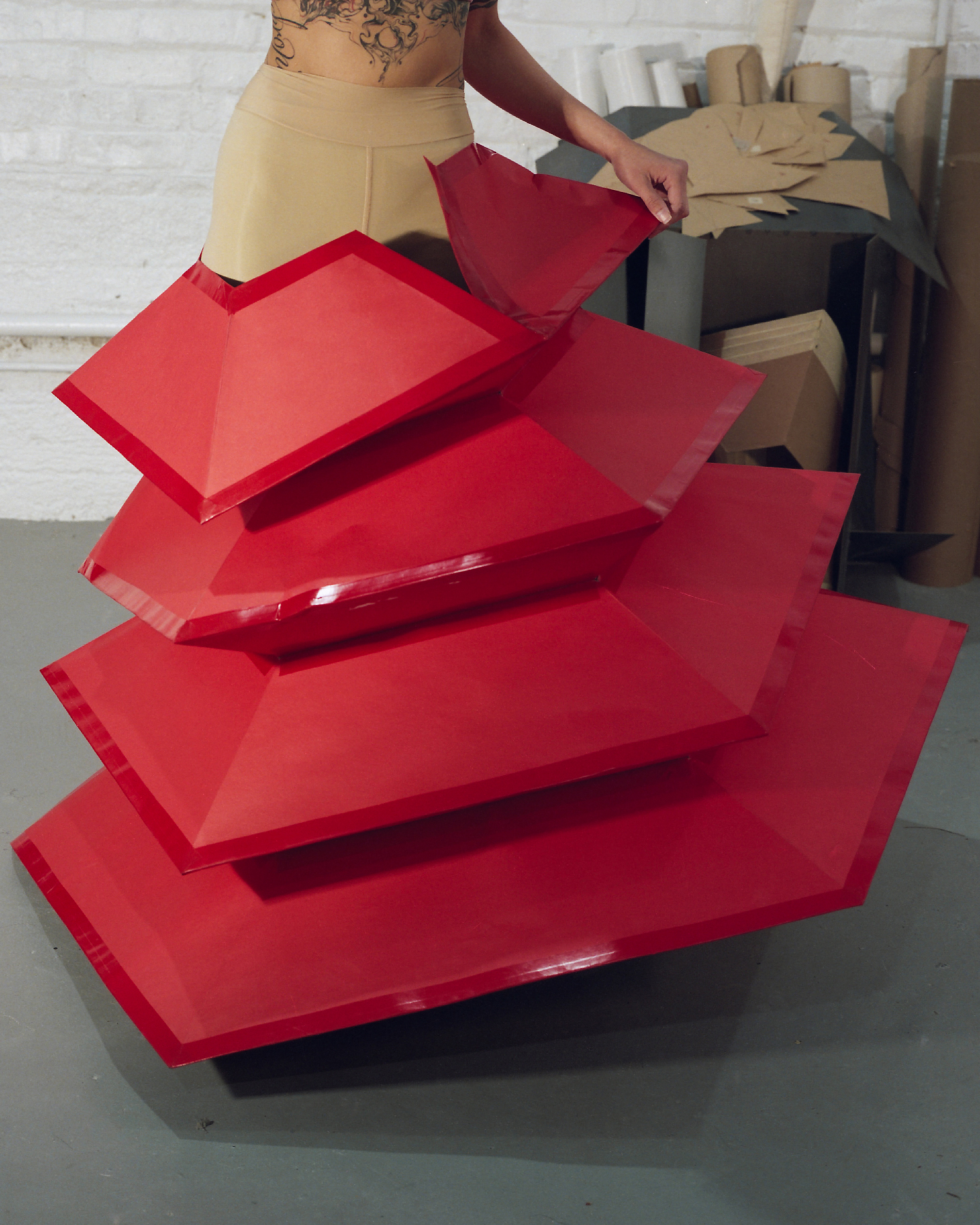
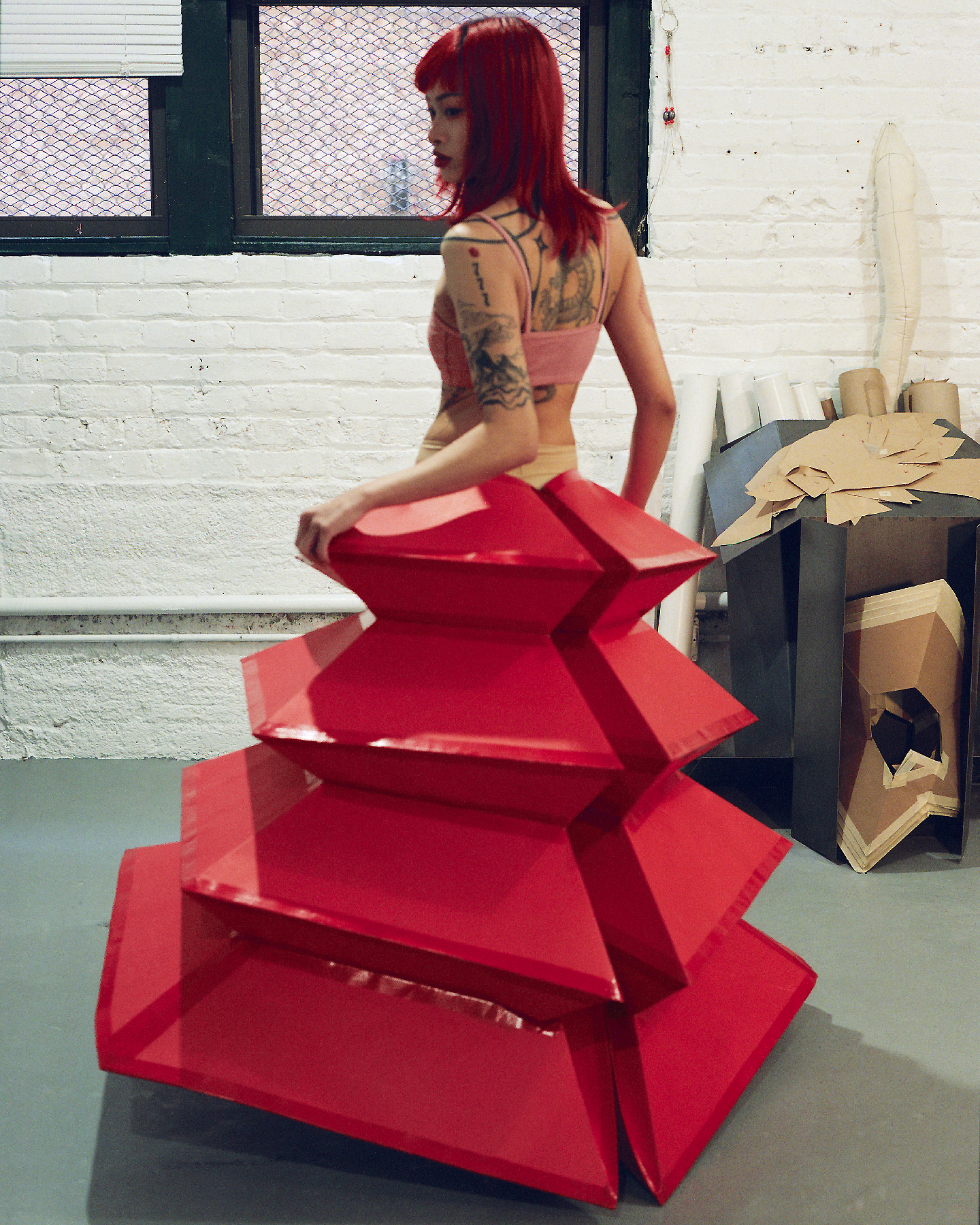
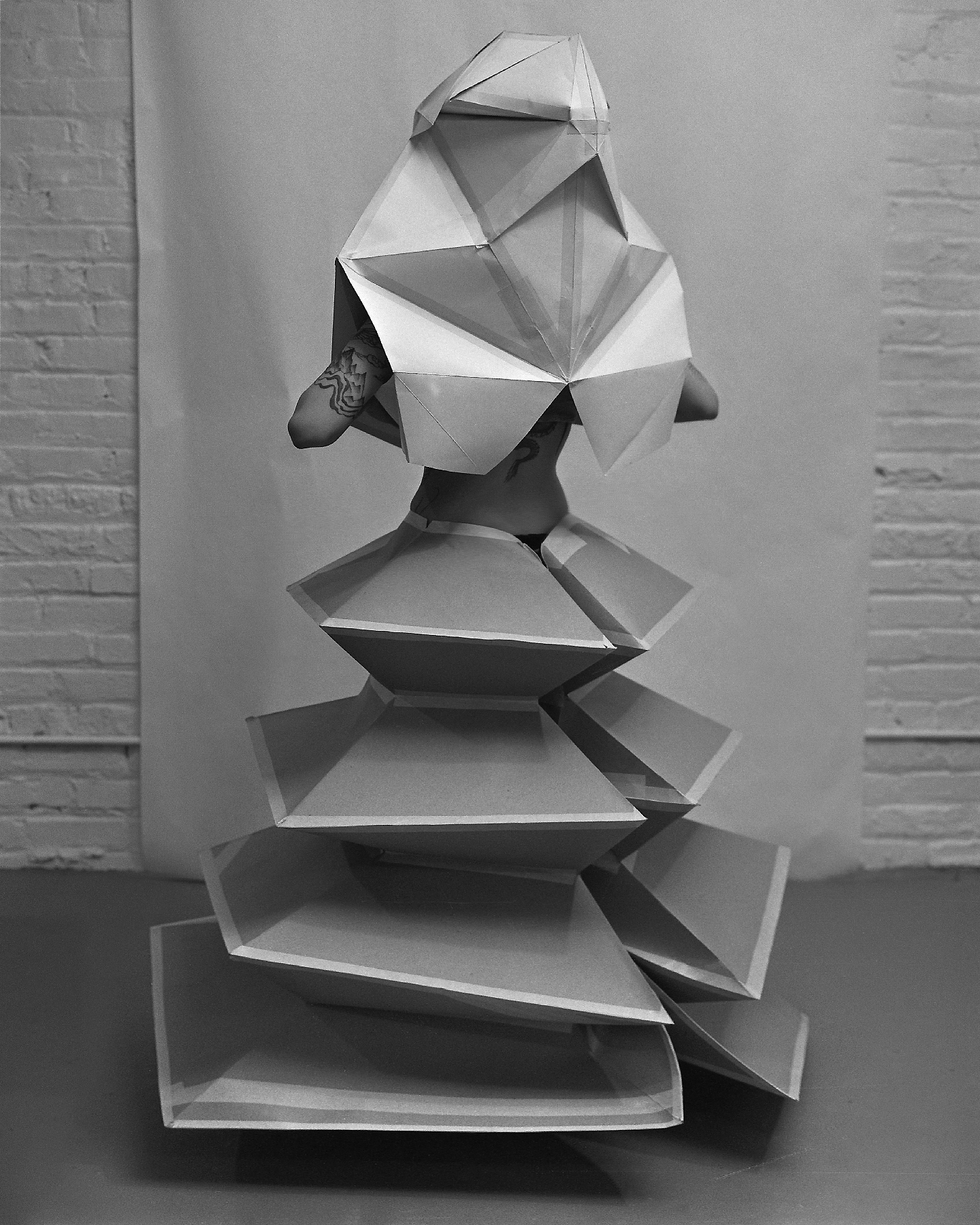
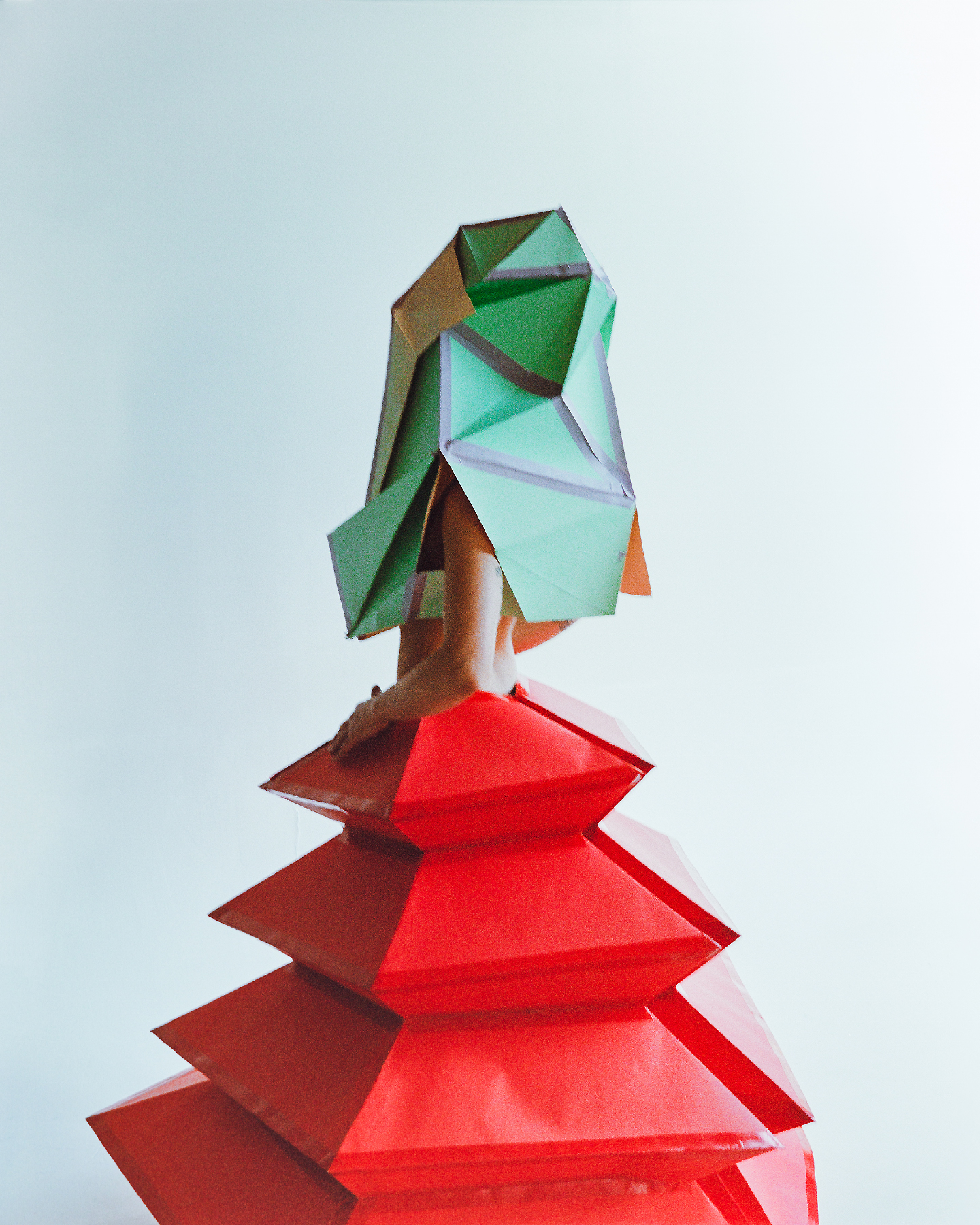
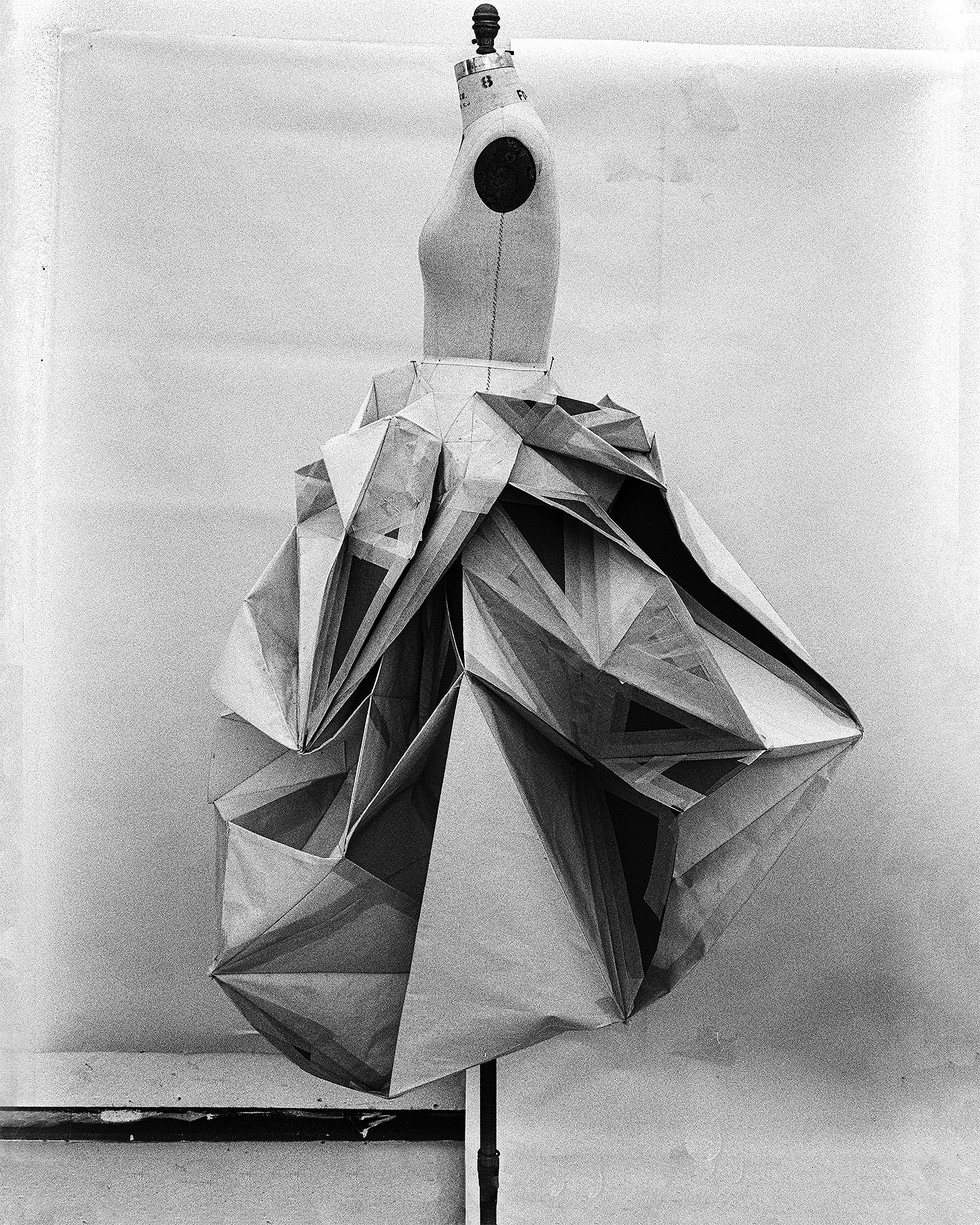
skirt2
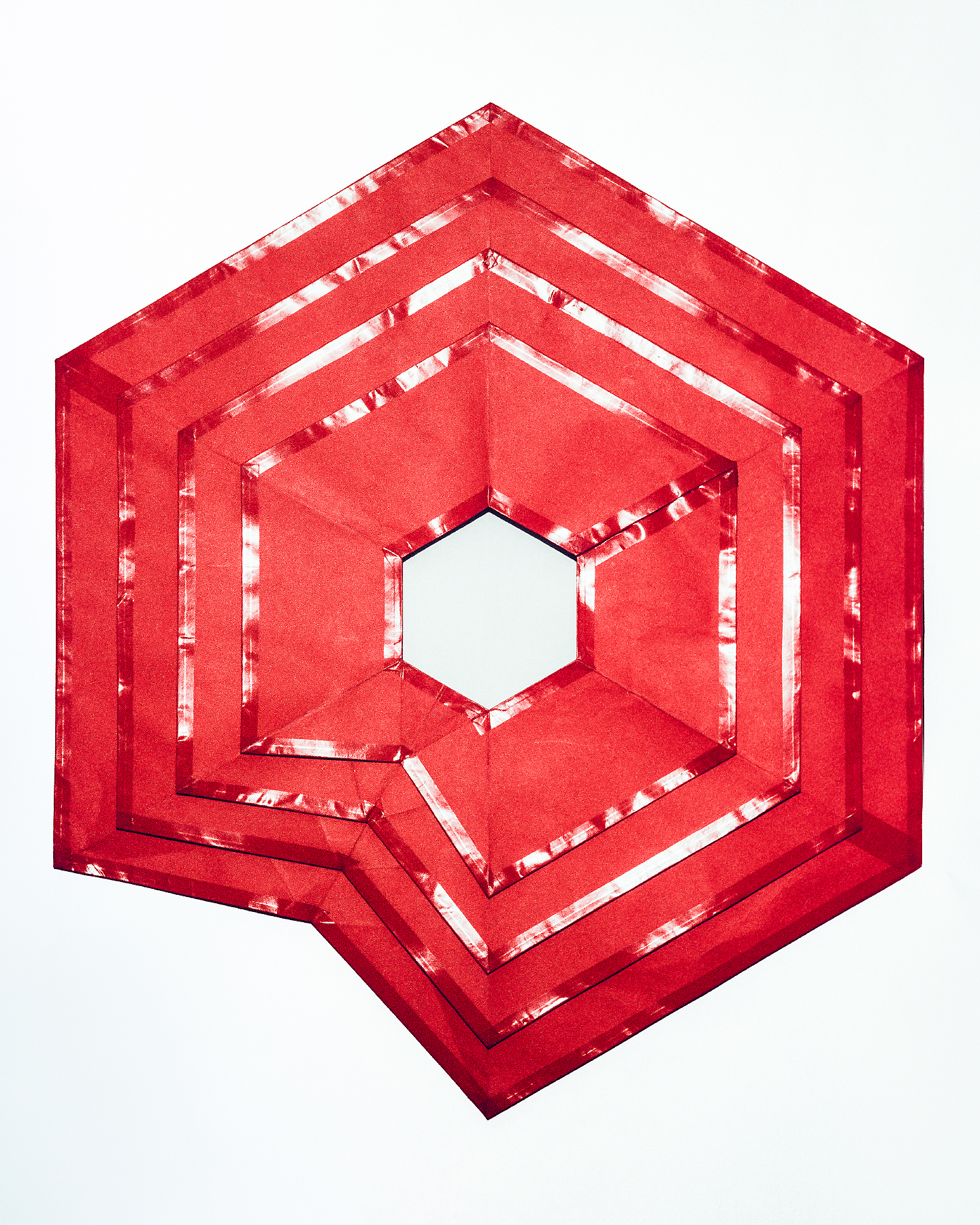
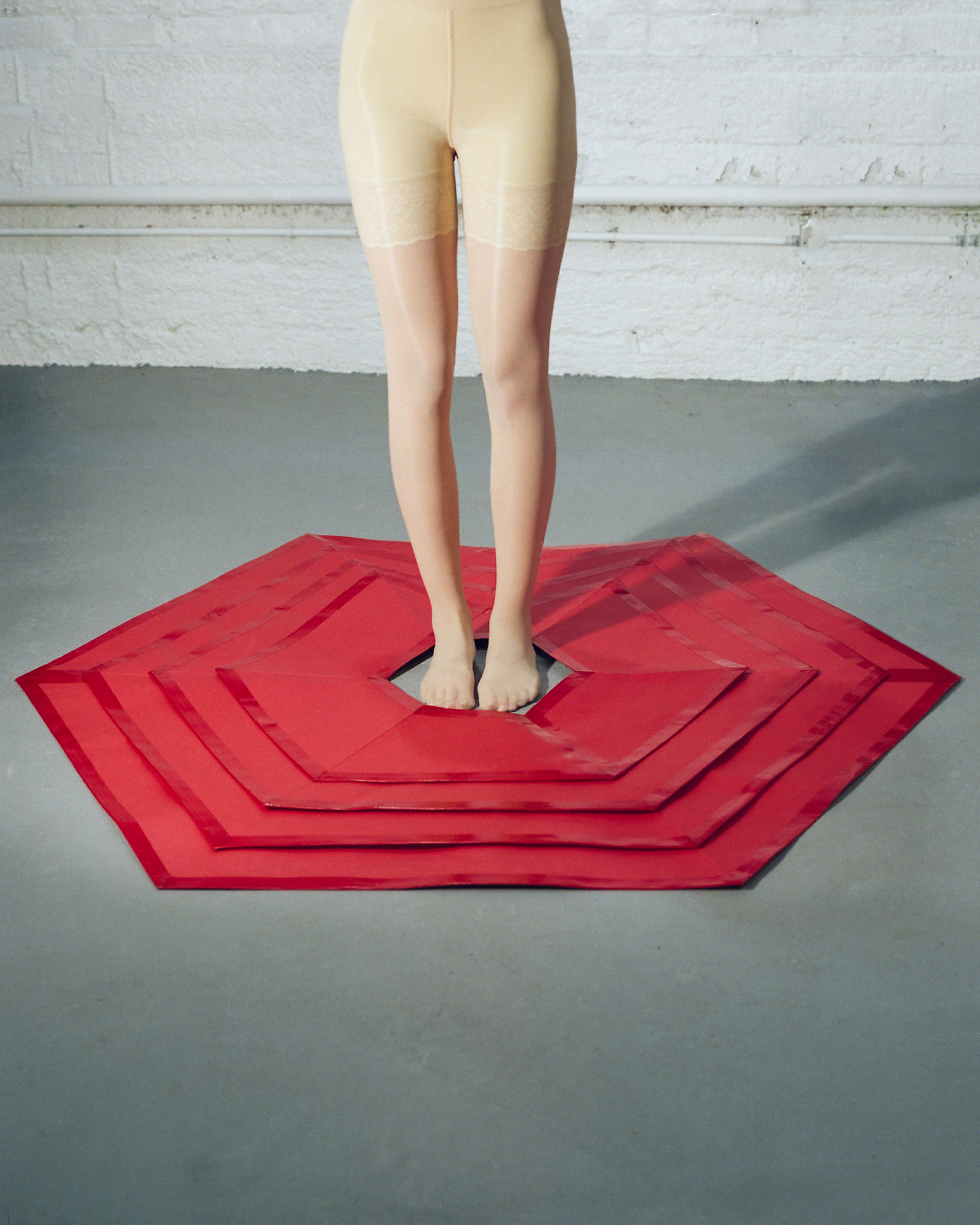
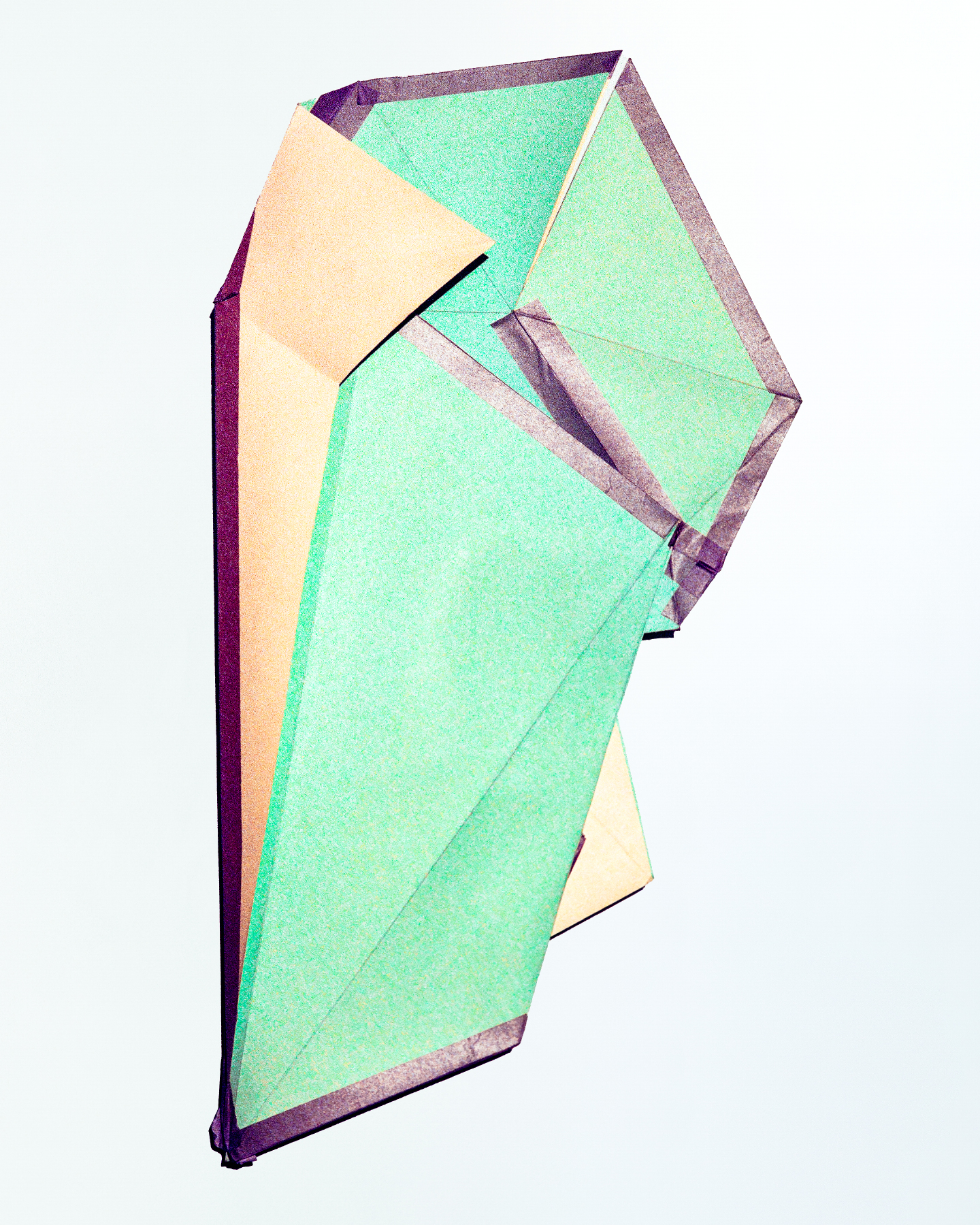
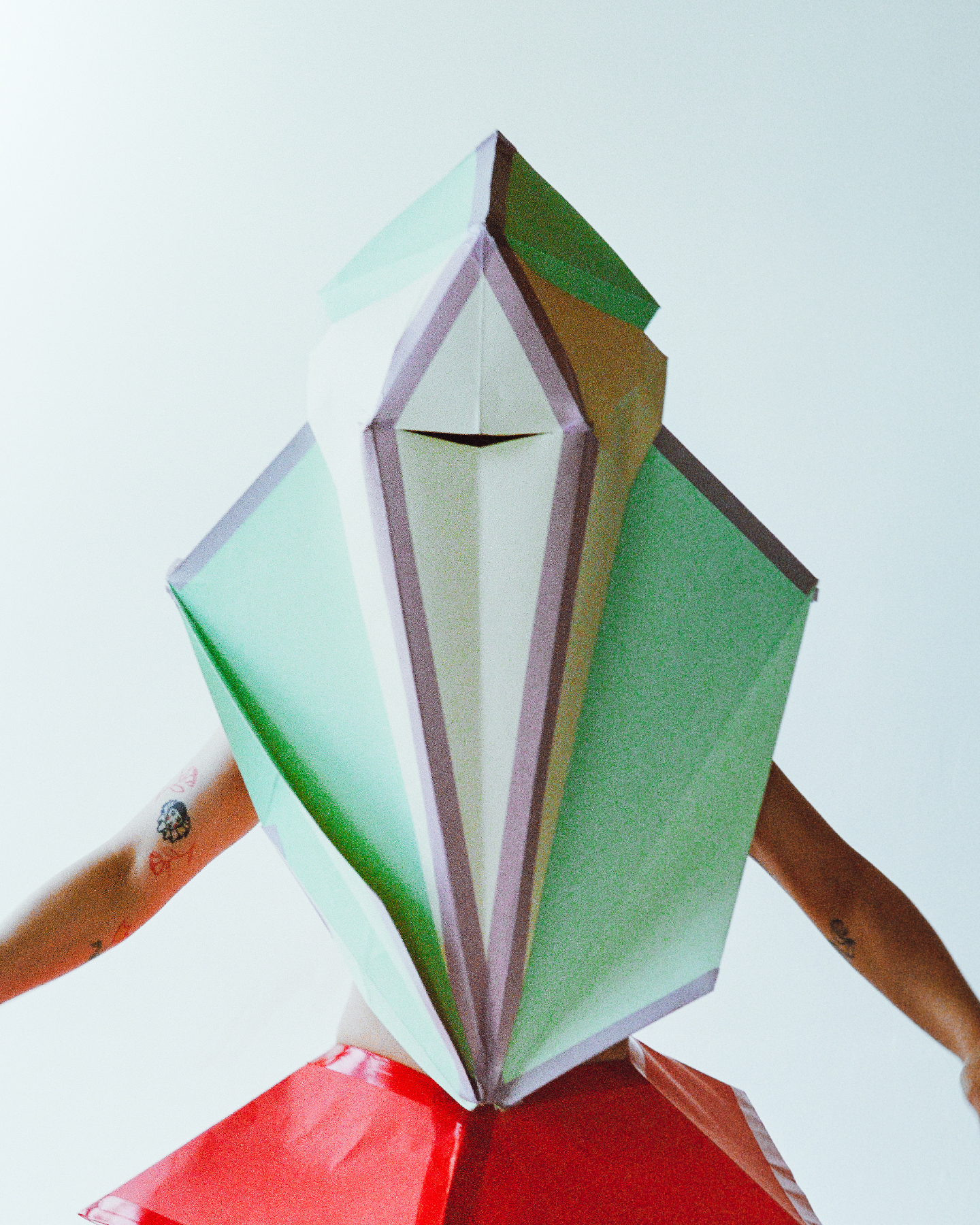
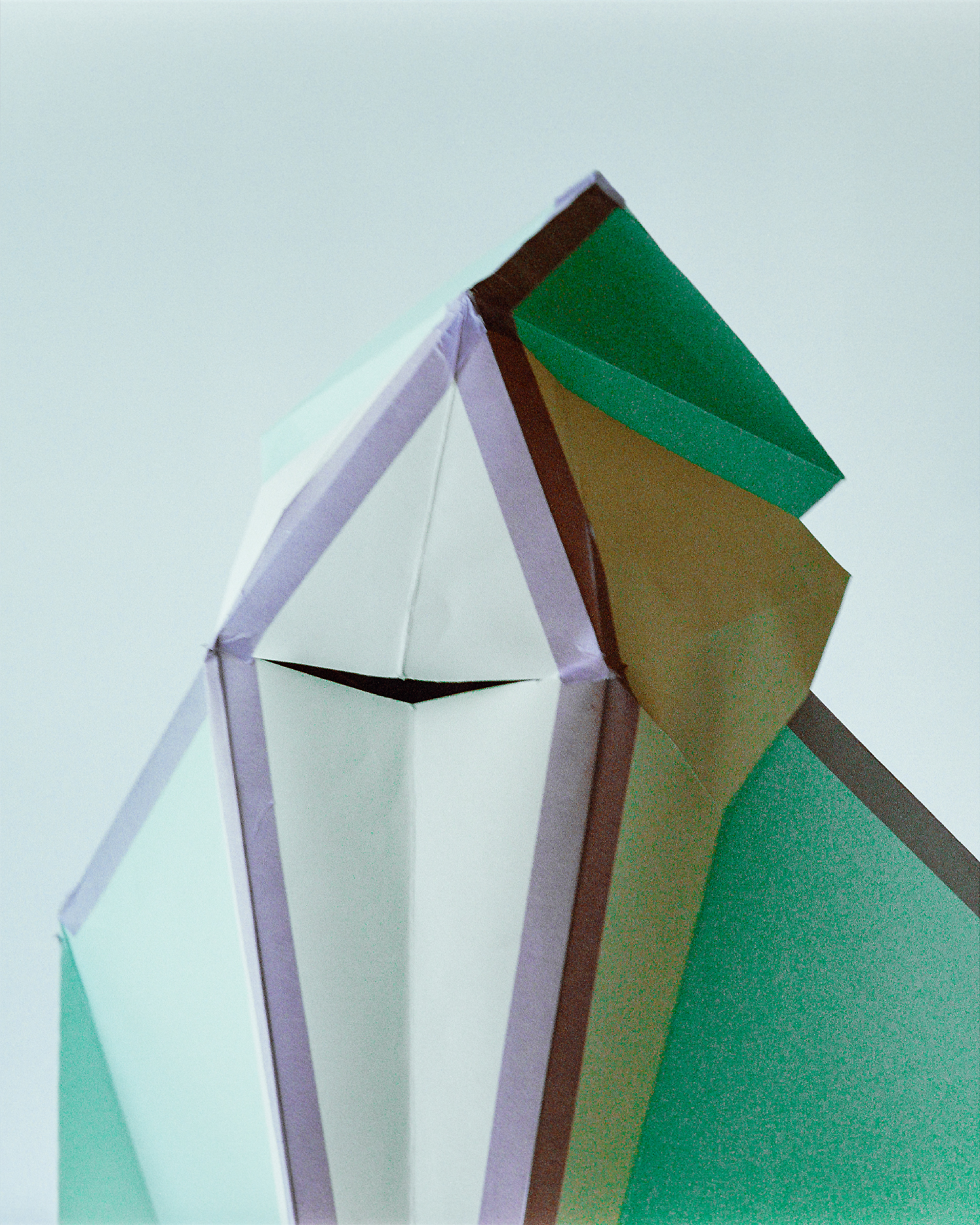
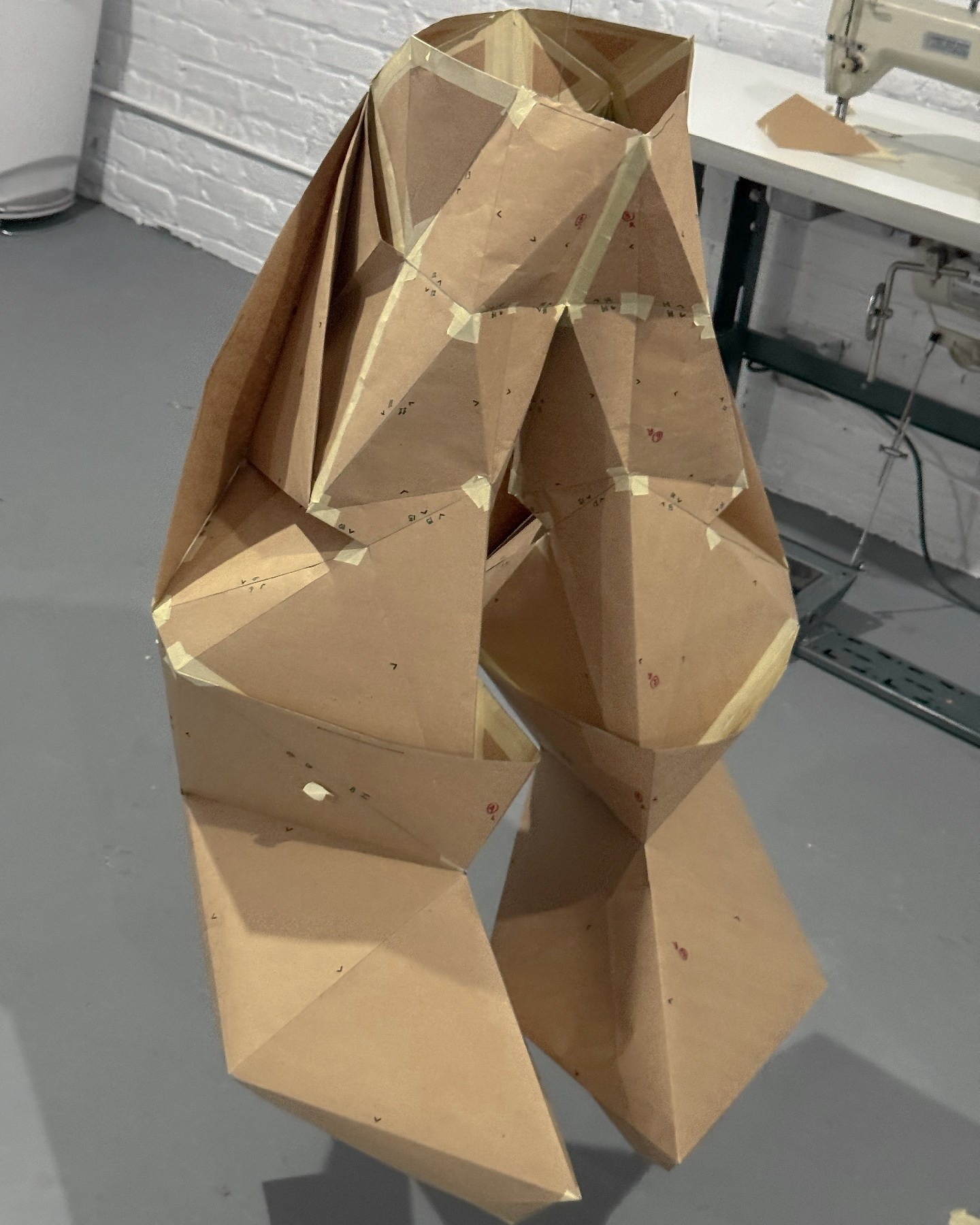
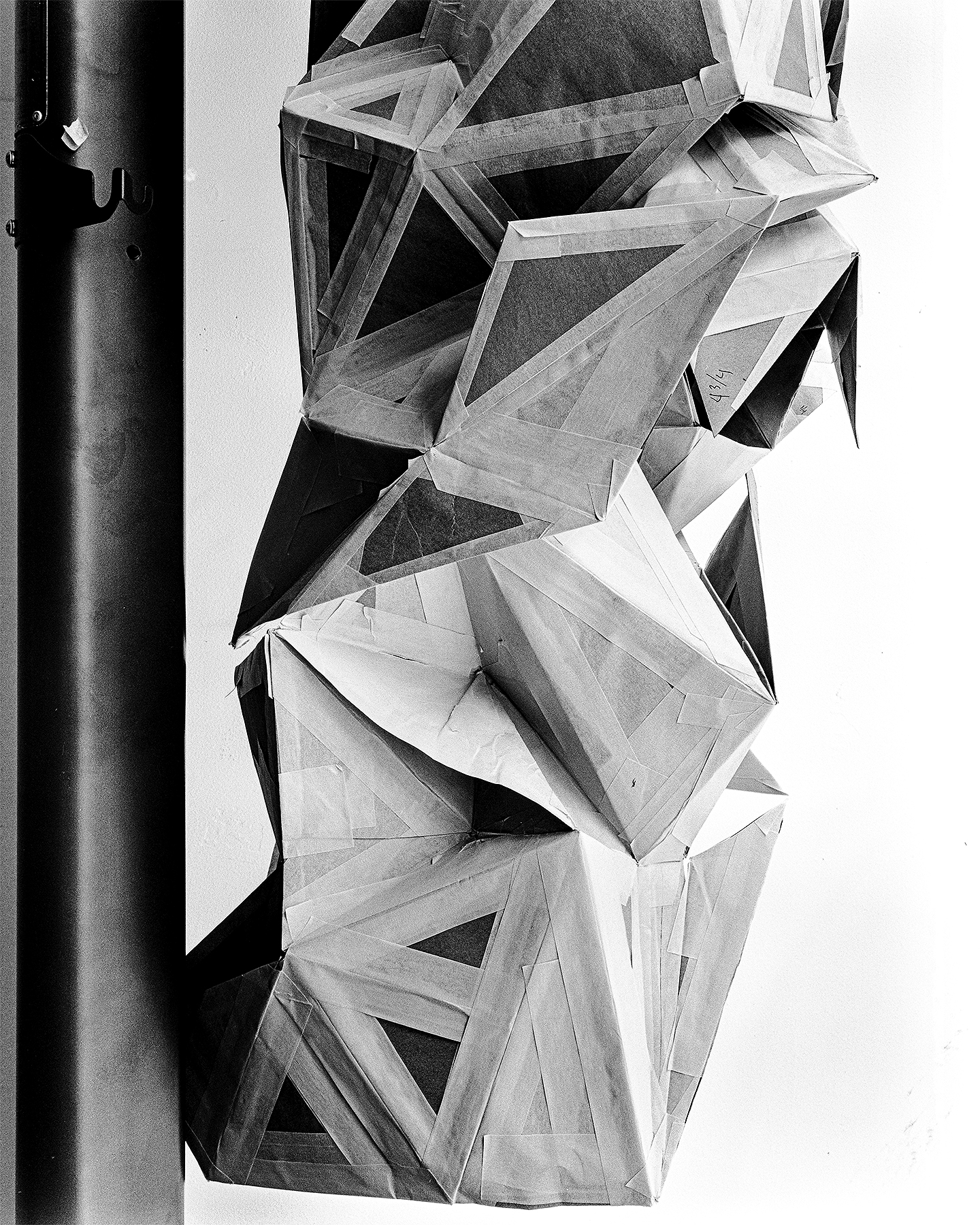
Manila oak tag paper .011", washi masking tape.

Aerograms began with a recurring encounter: garments left on the street. Once mobile, they become static, forgotten, run over and hardened by weather. The project responds to this condition by proposing a more hopeful fate, where clothes can carry meaning even in their flattest form.

Garment and pattern become one. Each piece is constructed from a single surface. Its structure emerges through creases and folding systems such as Miura-ori. The form reveals itself only when lifted.

Paper versions function as wearable messages or flat patterns to be replied to through remaking, using any material at hand. Aerograms positions fashion as a system of correspondence, asking whether garments can operate like letters.

windbreaker
Manila oak tag paper .011", washi masking tape. Two side pockets.

Aerograms began with a recurring encounter: garments left on the street. Once mobile, they become static, forgotten, run over and hardened by weather. The project responds to this condition by proposing a more hopeful fate, where clothes can carry meaning even in their flattest form.

Garment and pattern become one. Each piece is constructed from a single surface. Its structure emerges through creases and folding systems such as Miura-ori. The form reveals itself only when lifted.

Paper versions function as wearable messages or flat patterns to be replied to through remaking, using any material at hand. Aerograms positions fashion as a system of correspondence, asking whether garments can operate like letters.

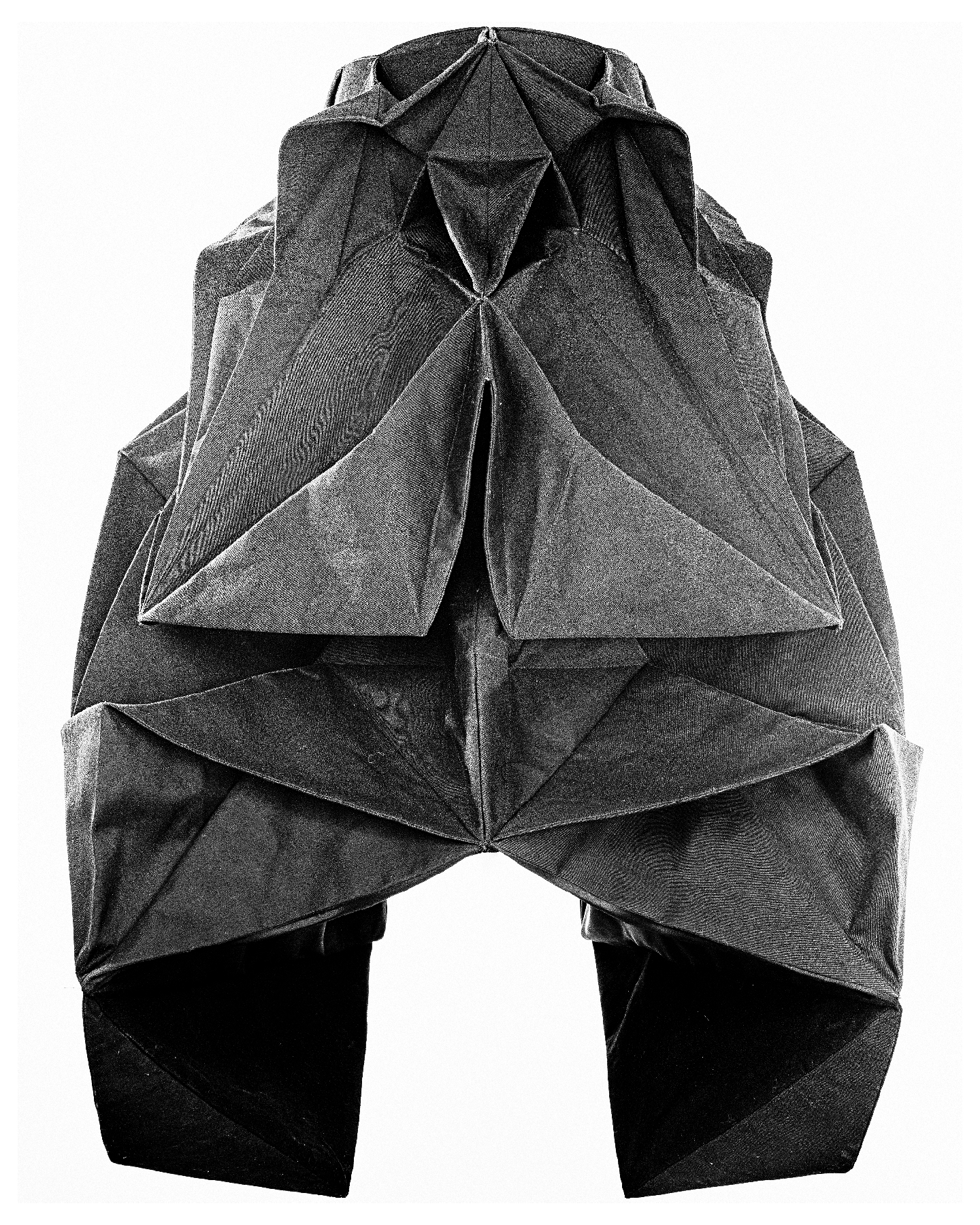
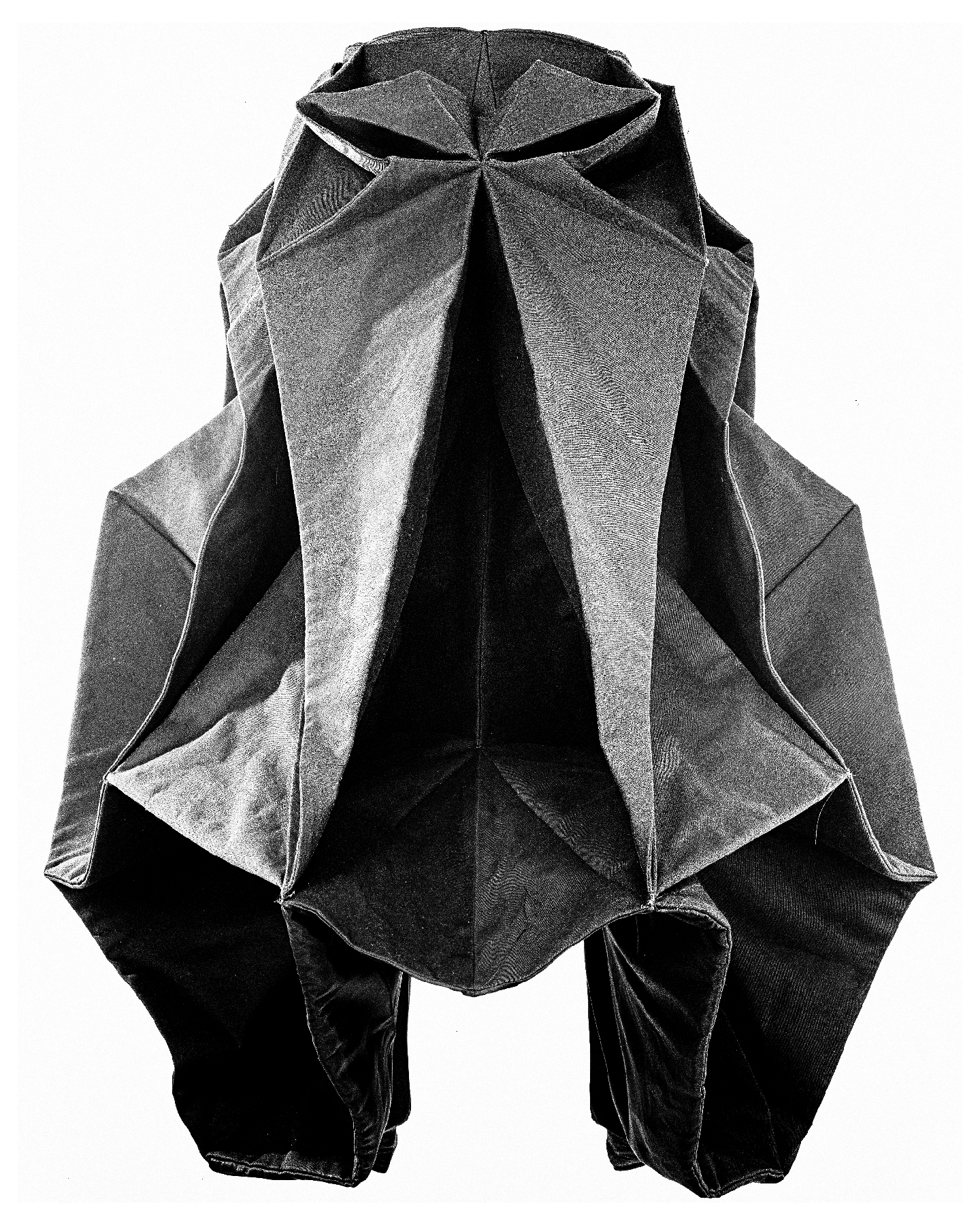
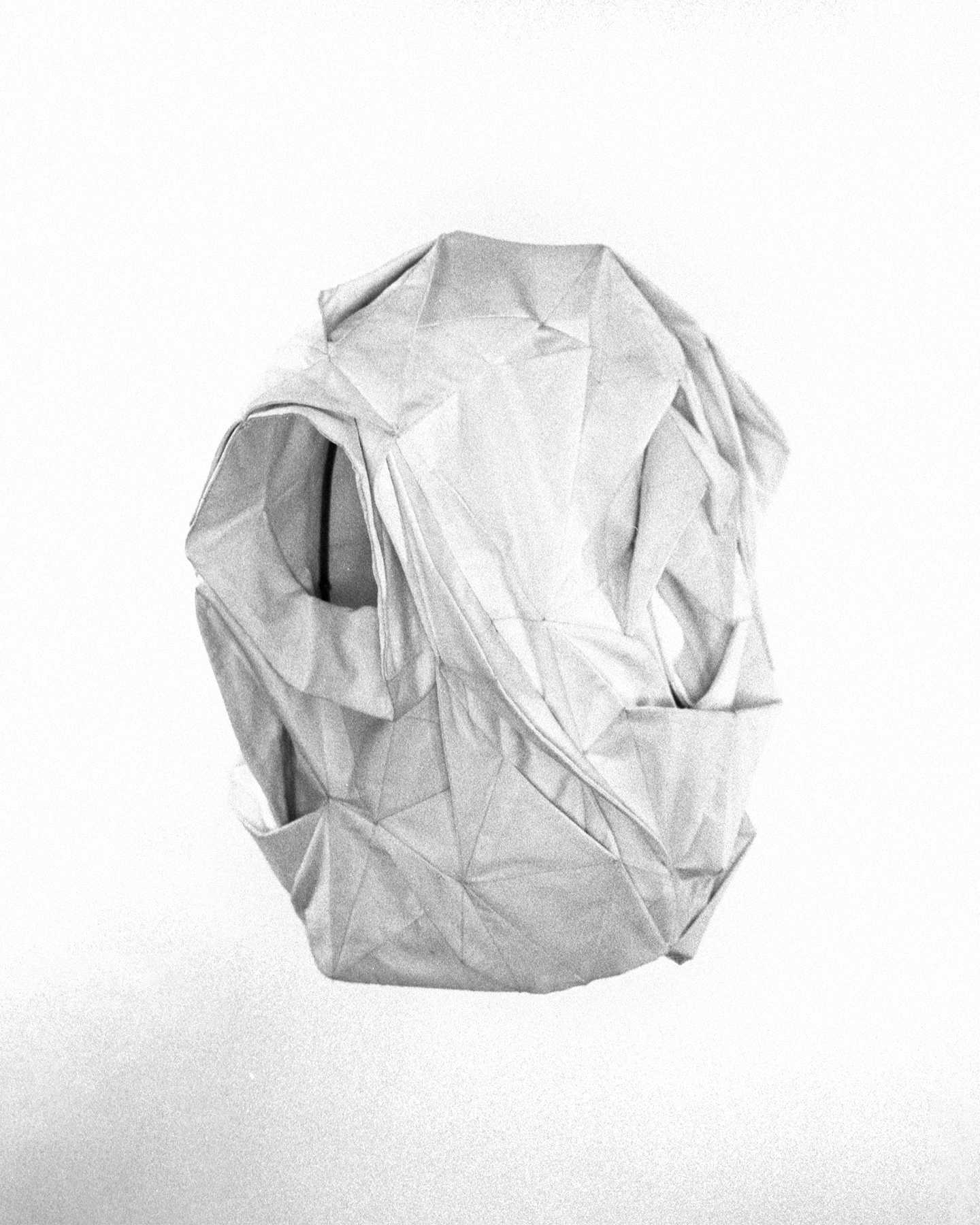
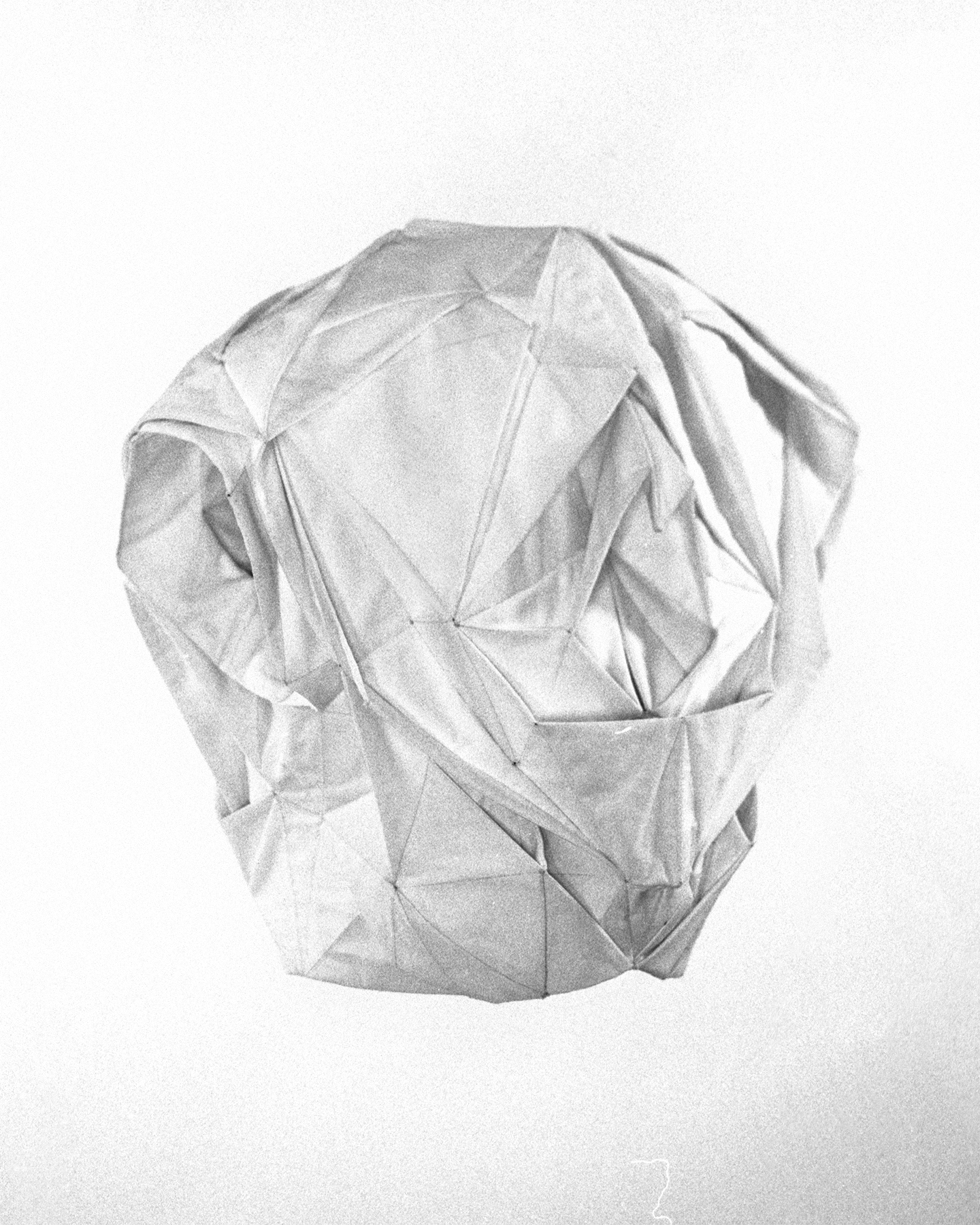
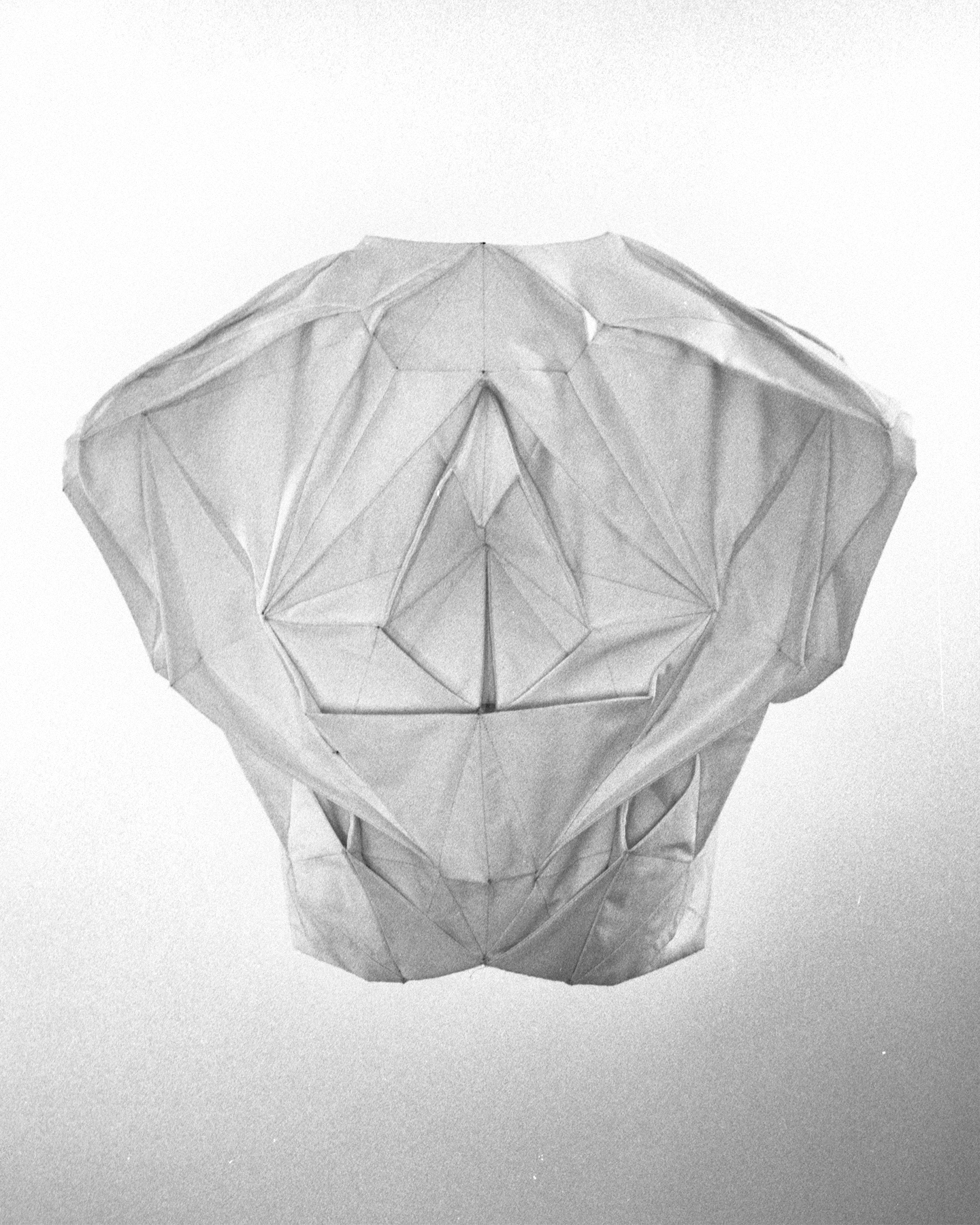
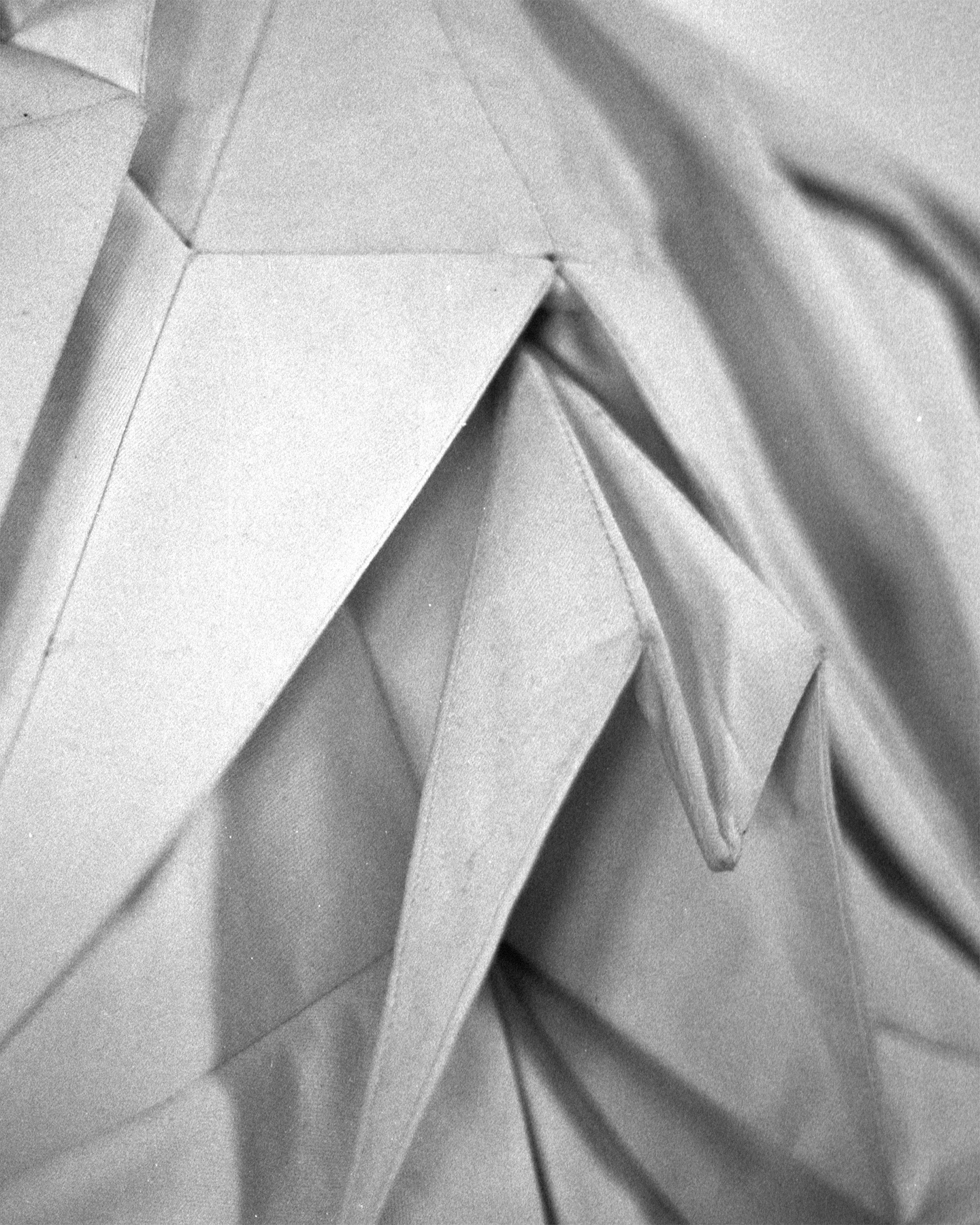
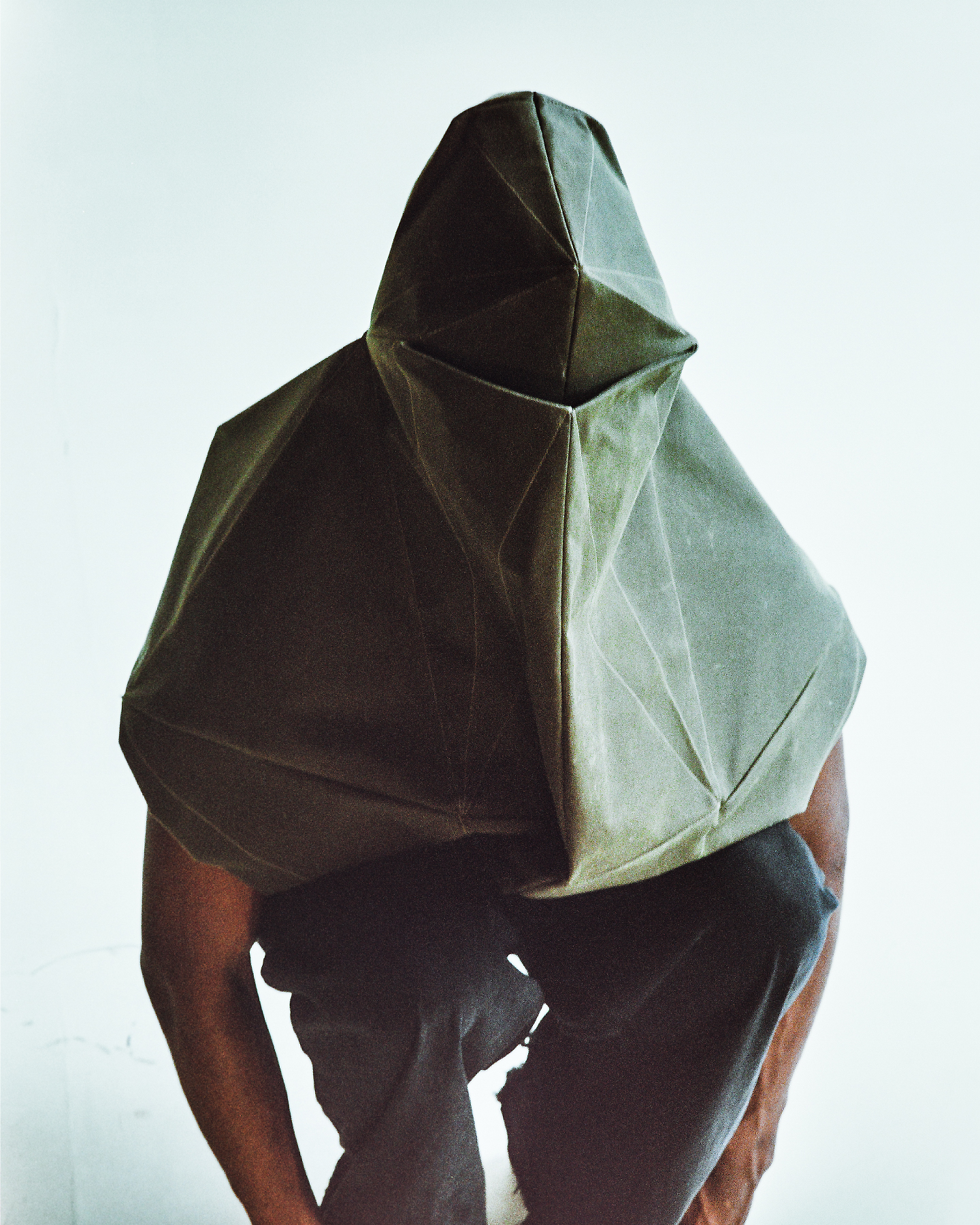
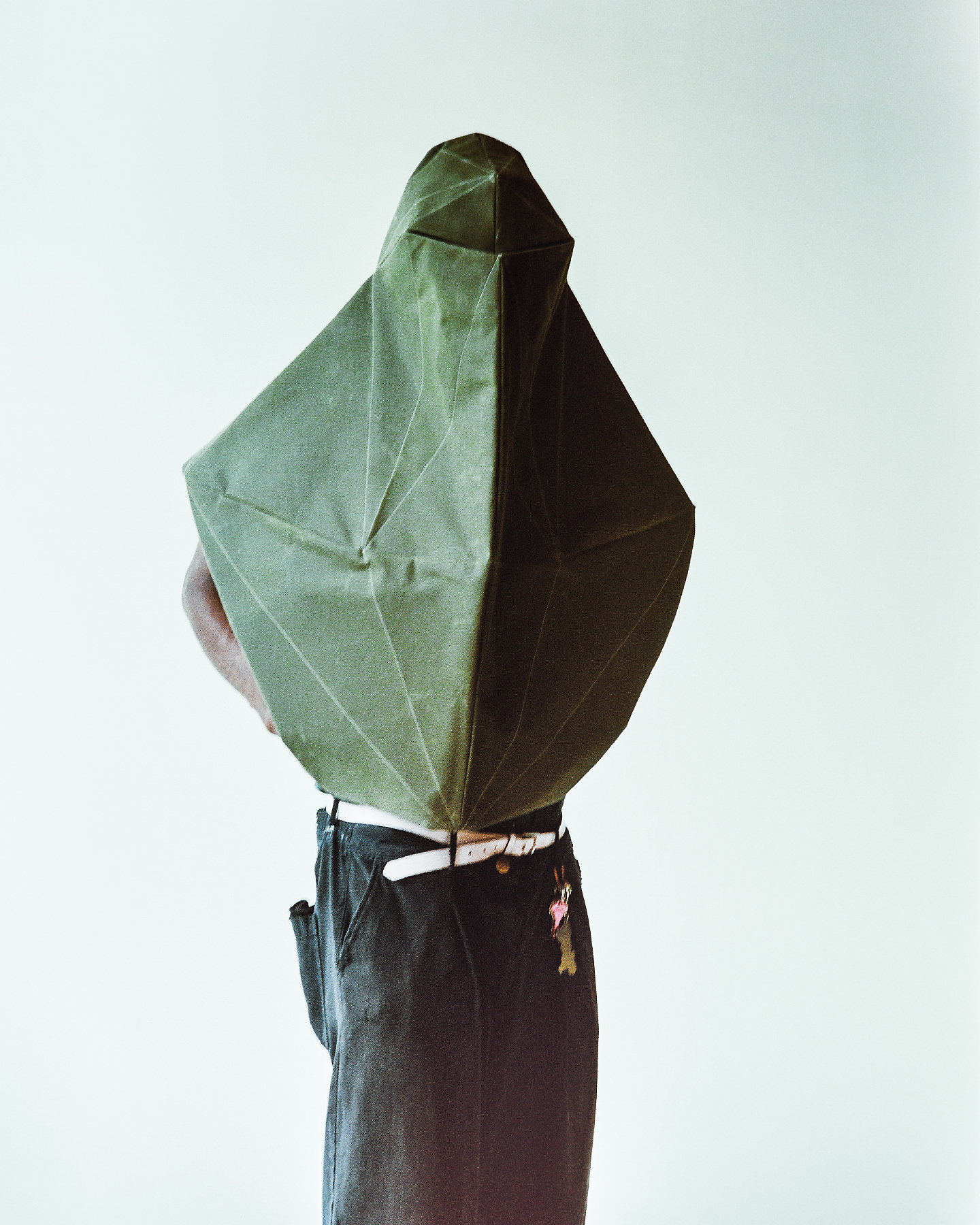
hooded vest
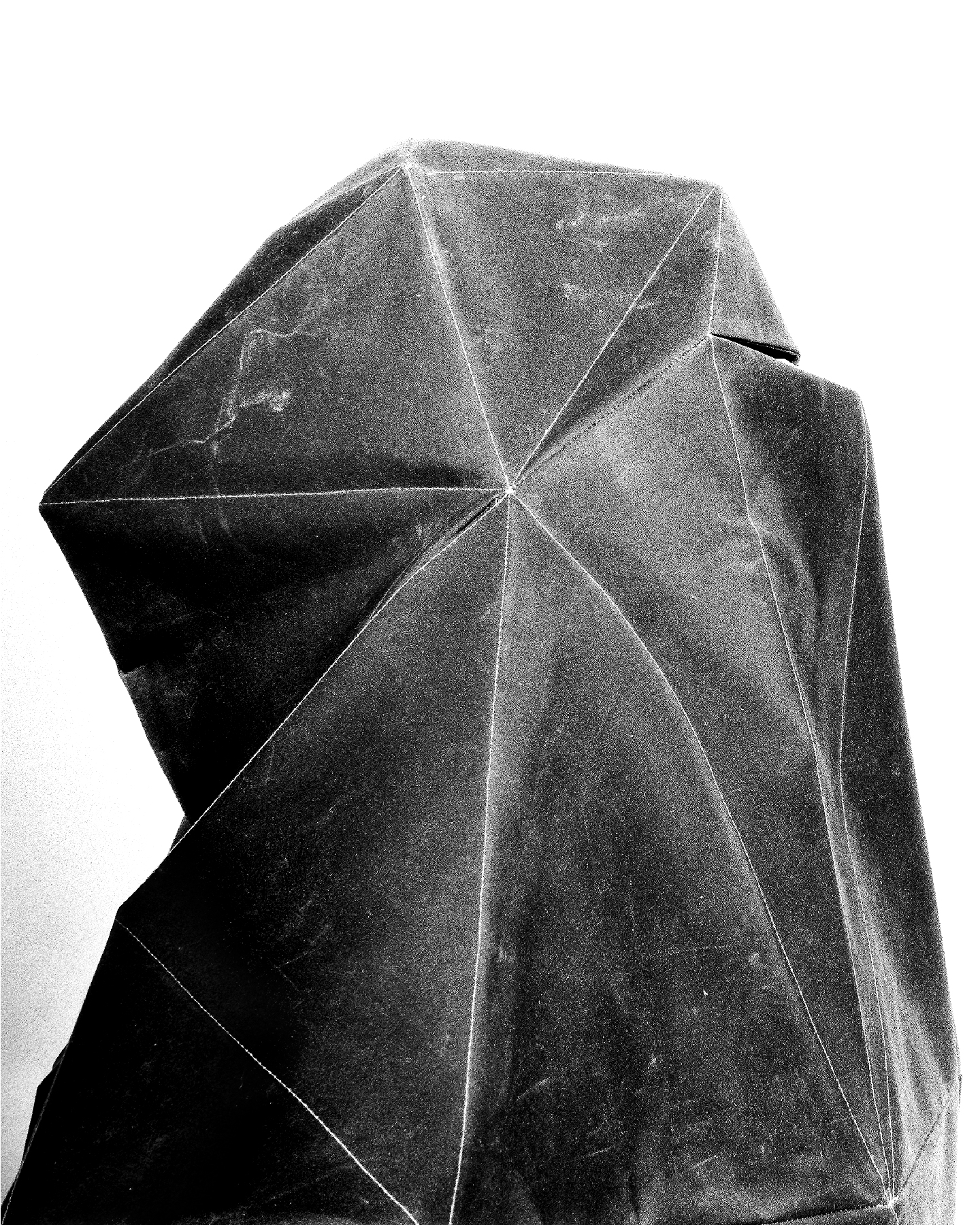
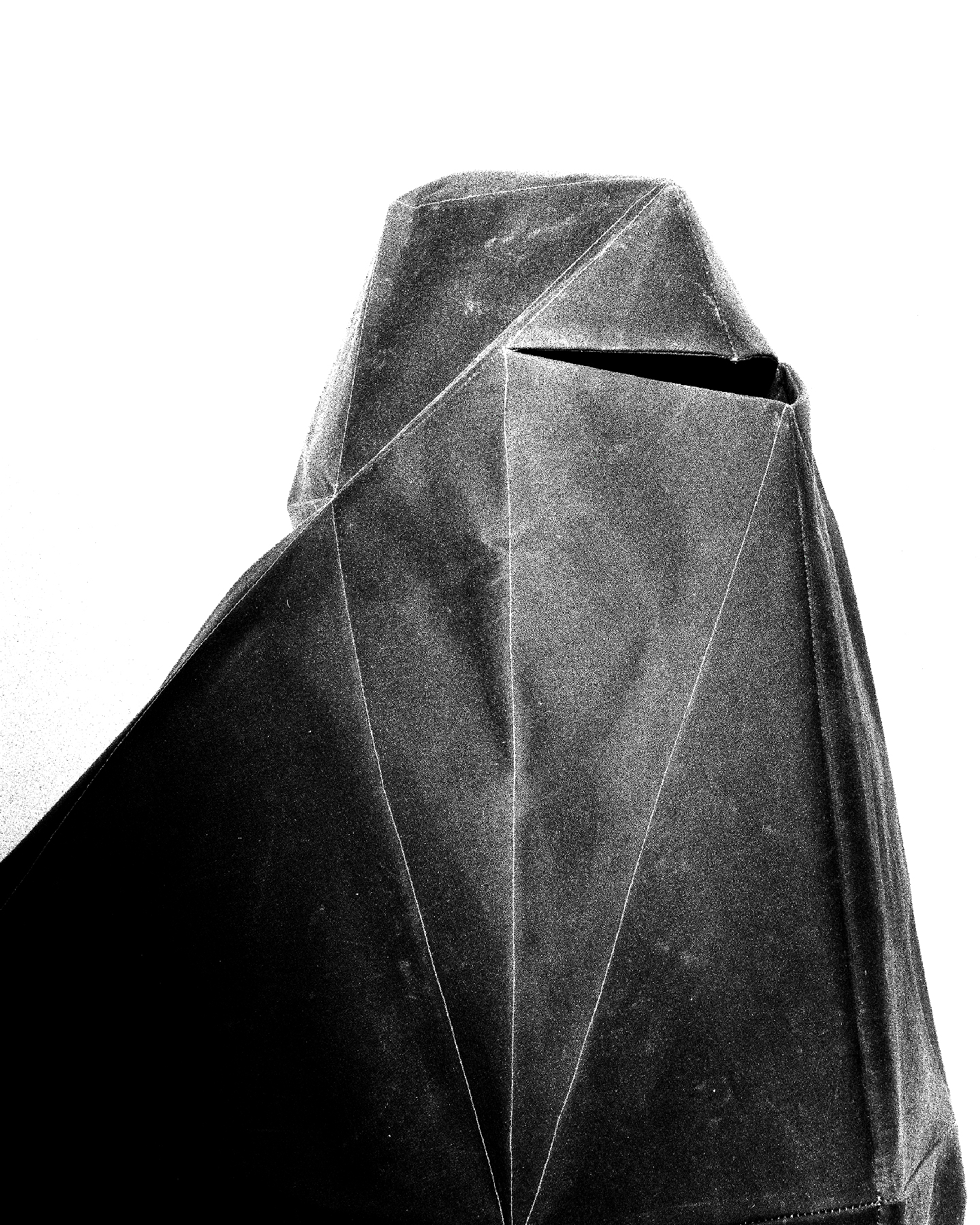
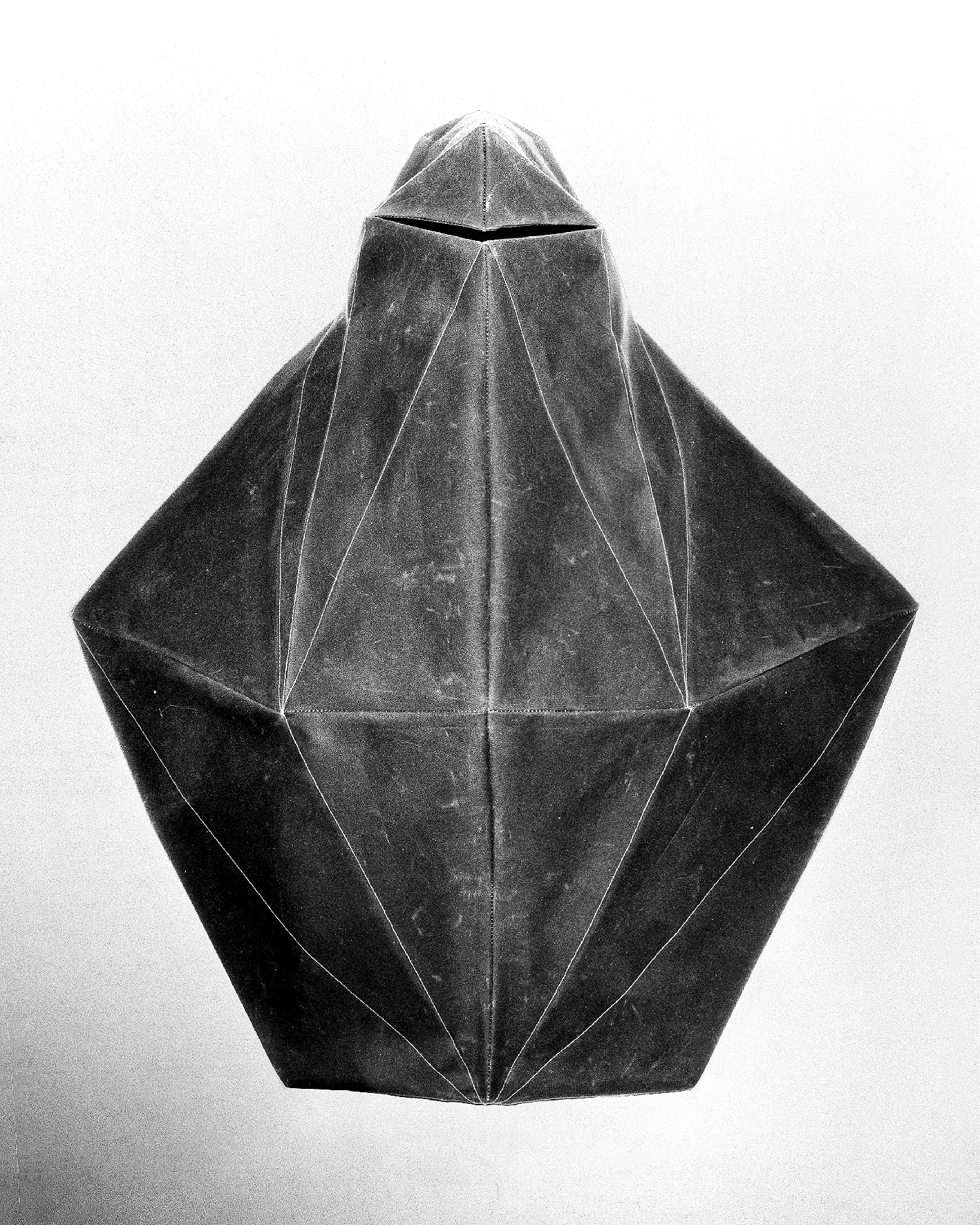
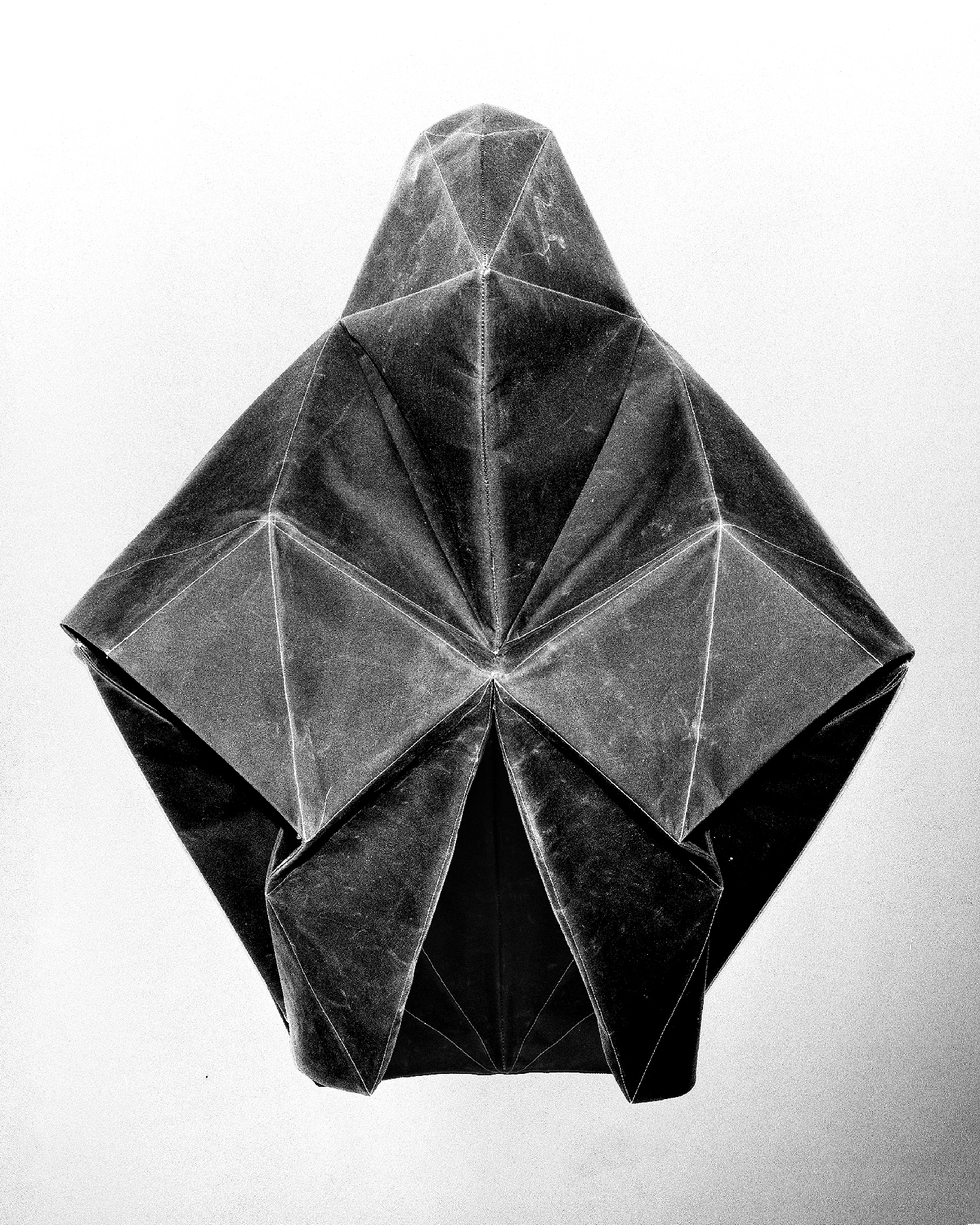
Manila oak tag paper .011", washi masking tape. Fabric version in waxed cotton twill. Two side pockets.

Aerograms began with a recurring encounter: garments left on the street. Once mobile, they become static, forgotten, run over and hardened by weather. The project responds to this condition by proposing a more hopeful fate, where clothes can carry meaning even in their flattest form.

Garment and pattern become one. Each piece is constructed from a single surface. Its structure emerges through creases and folding systems such as Miura-ori. The form reveals itself only when lifted.

Paper versions function as wearable messages or flat patterns to be replied to through remaking, using any material at hand. Aerograms positions fashion as a system of correspondence, asking whether garments can operate like letters.

pants
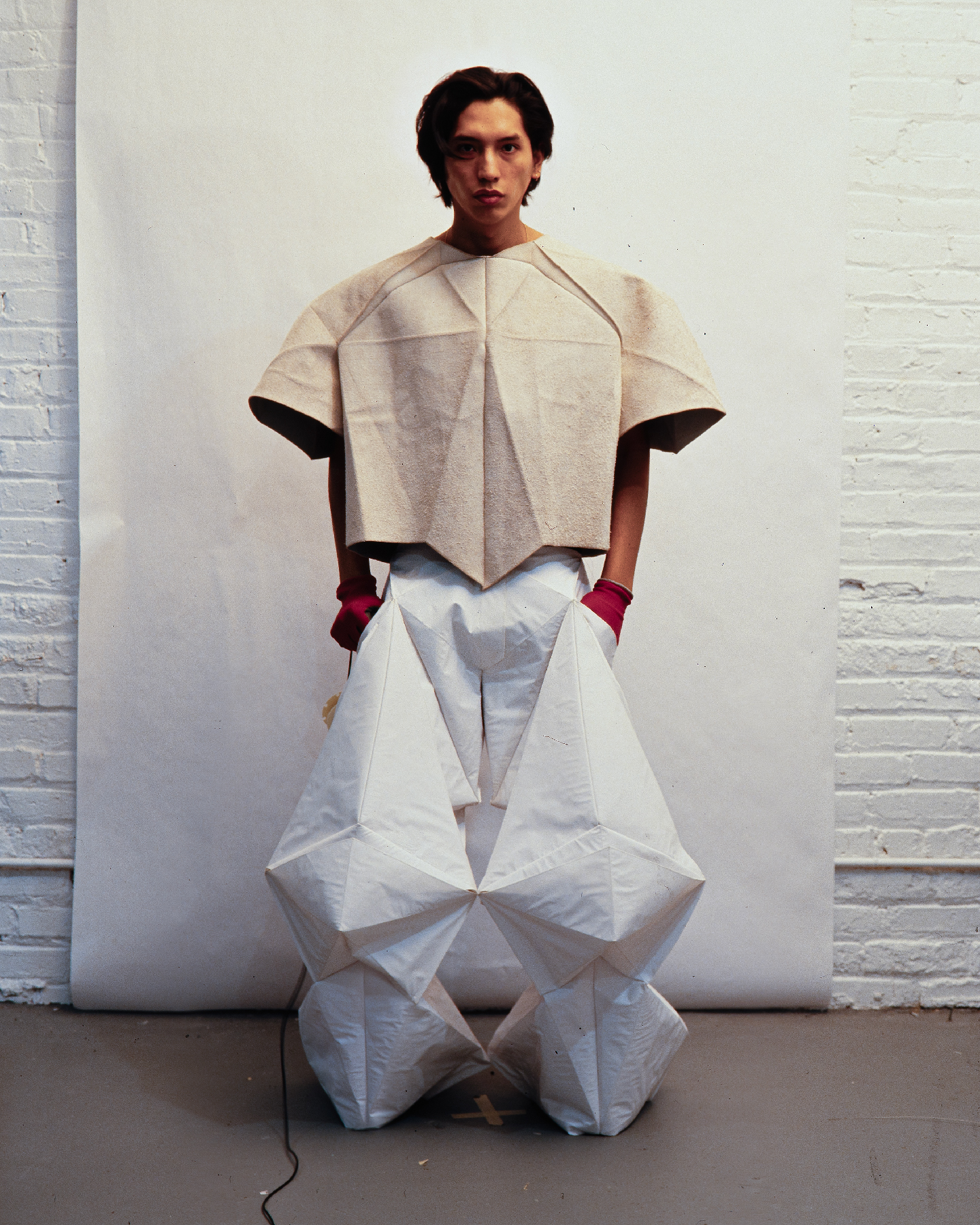
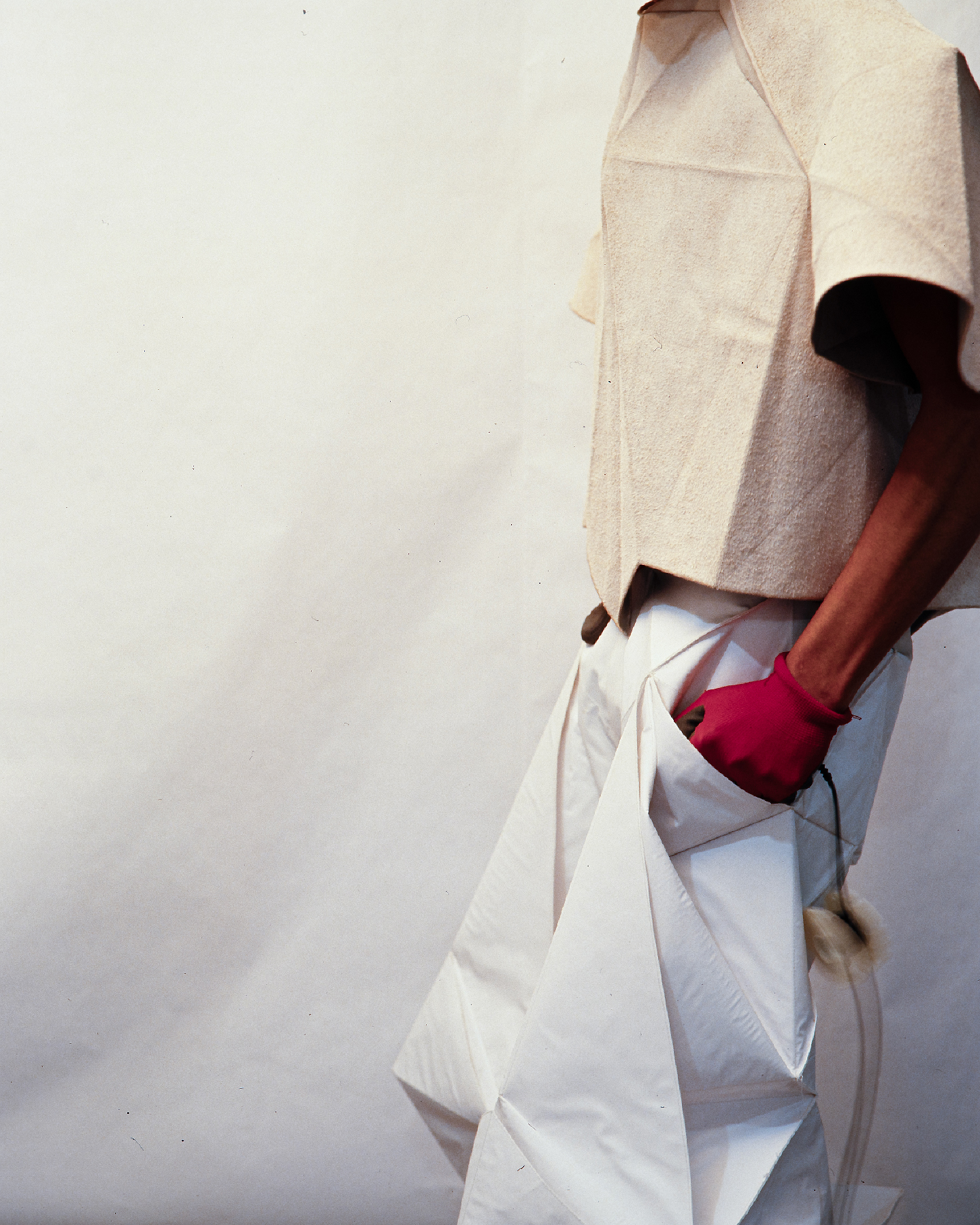
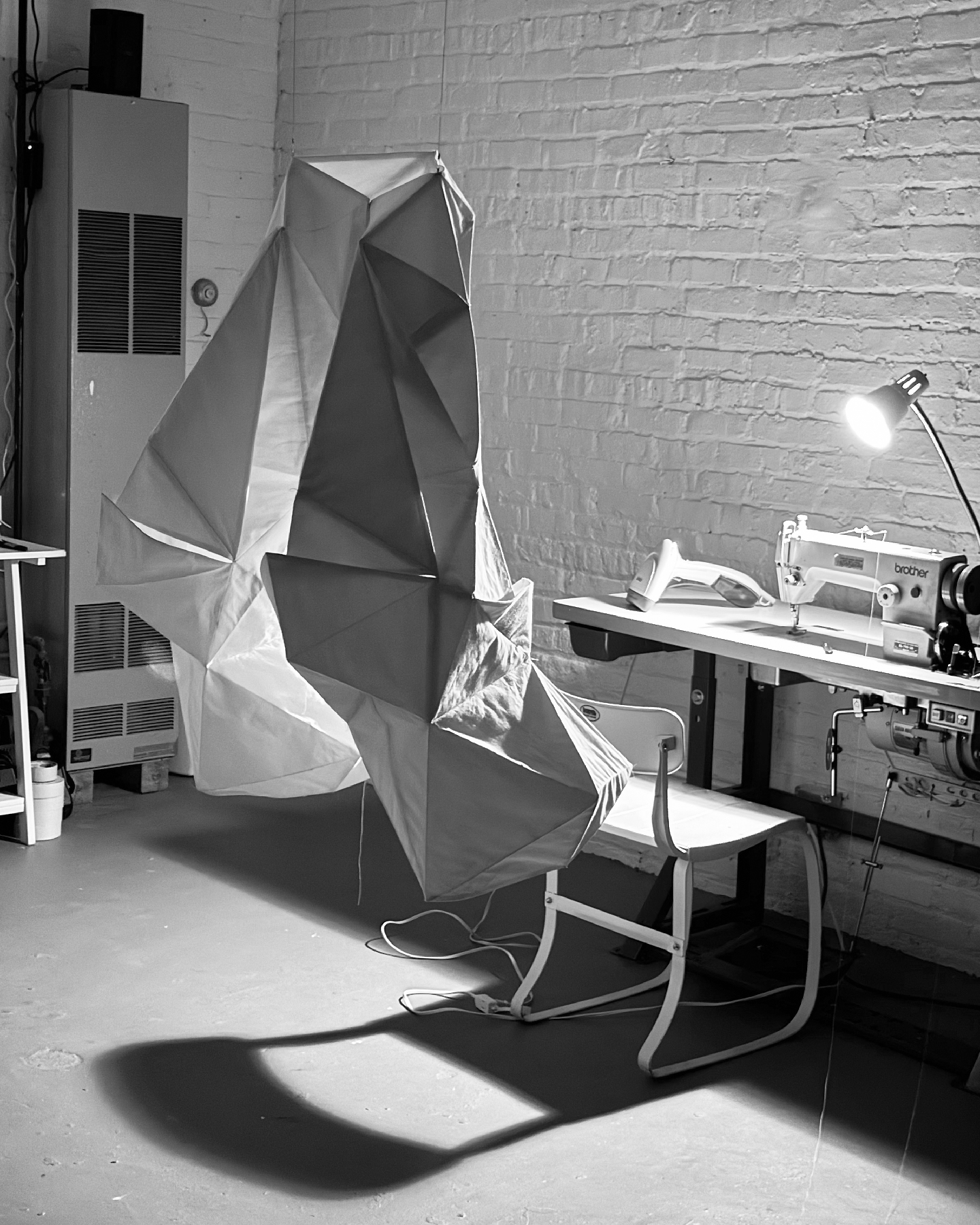
White 100D matte nylon, TPU laminated.

The construction draws from articulated armor, where controlled overlaps allow rigid forms to move together. Folds and pleats are positioned around areas of articulation, such as the back of the knee, so they activate during walking. As these areas compress, air is displaced into inactive spaces, allowing movement without breaking the overall structure.

2024
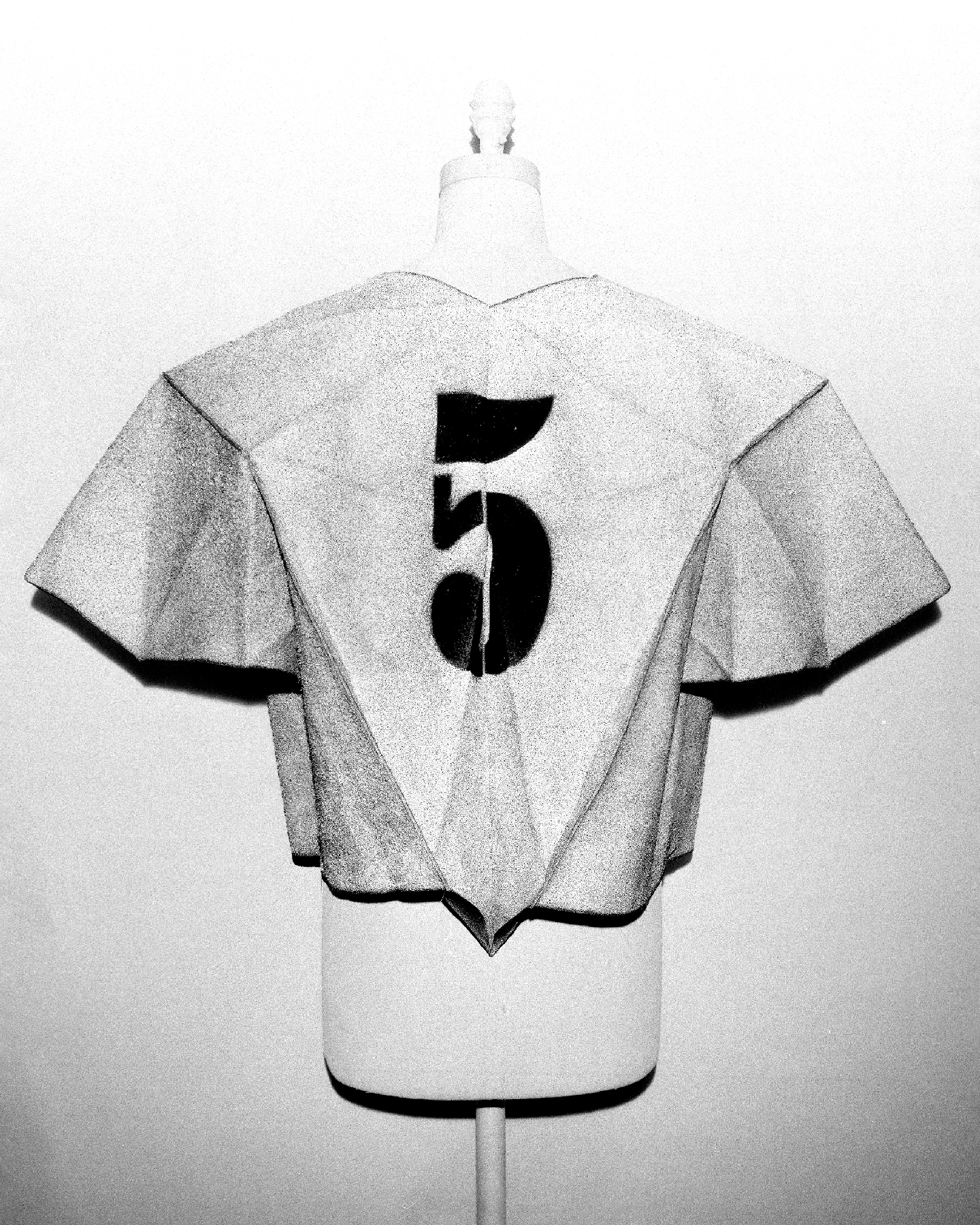
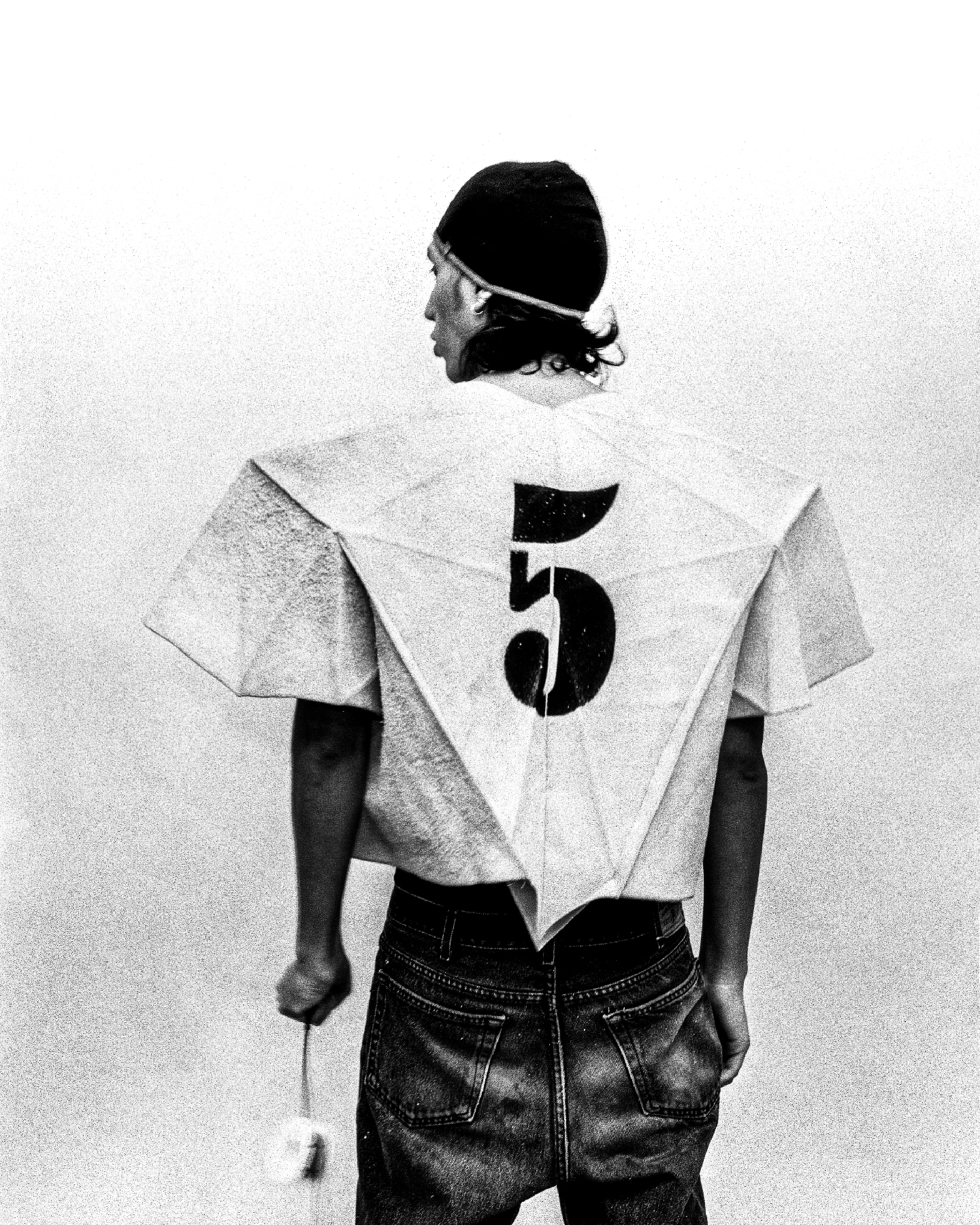
jersey
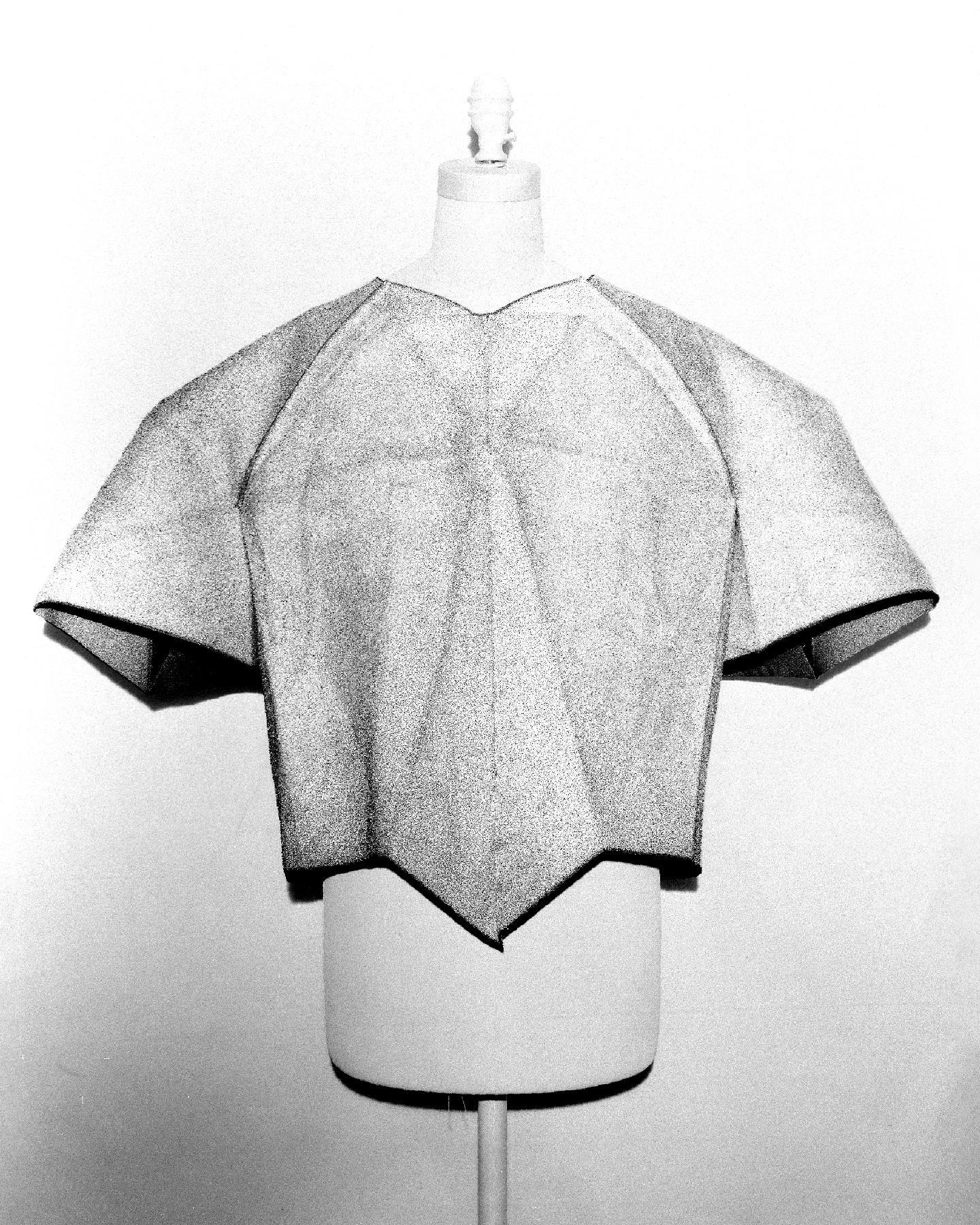
White split suede jersey, rough side out. Stencil dyed number 5.

Leaving its most vulnerable surface exposed, the piece is meant to collect wear and marks over time. Like a football jersey, its value builds through what happens to it.

to unfold
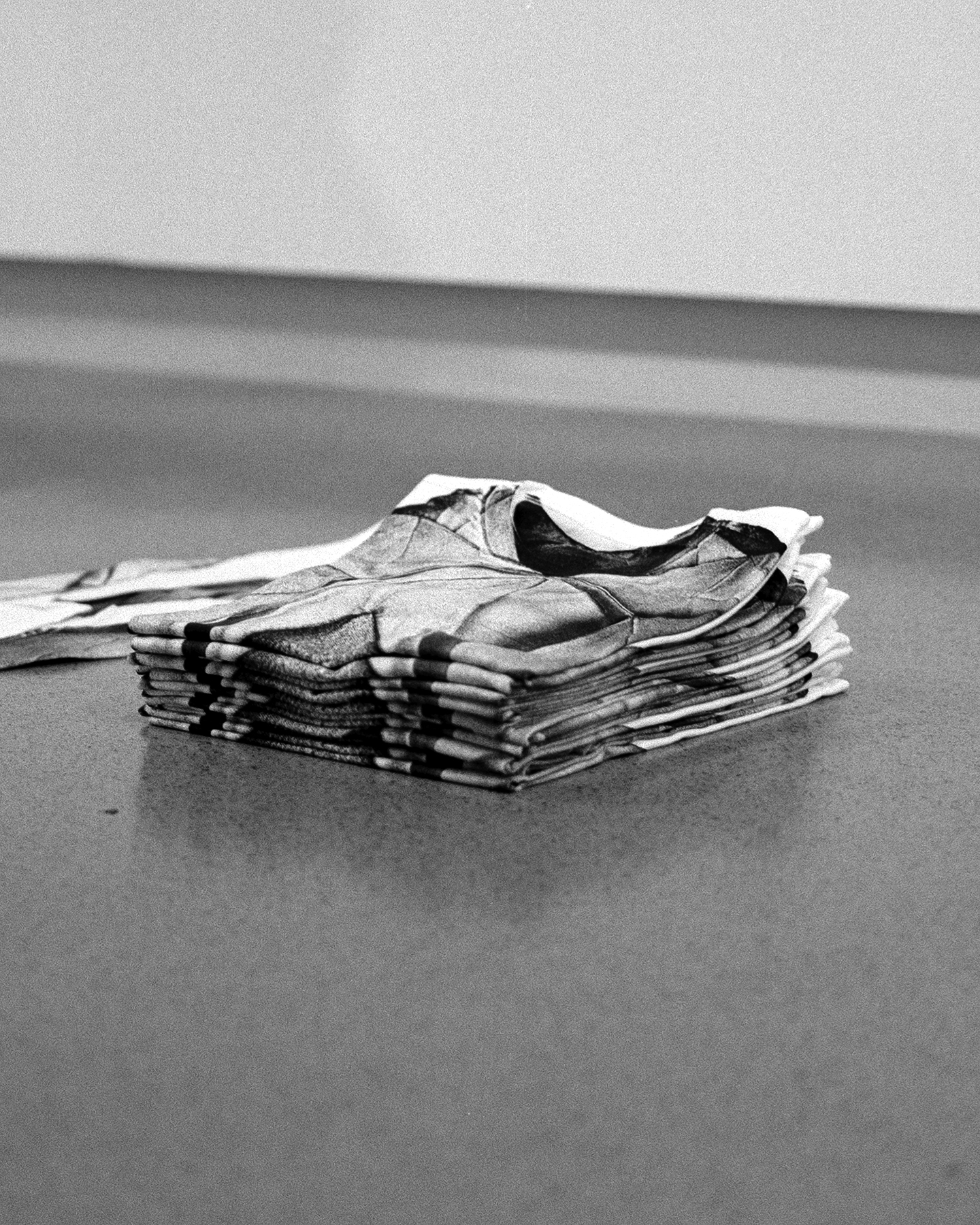
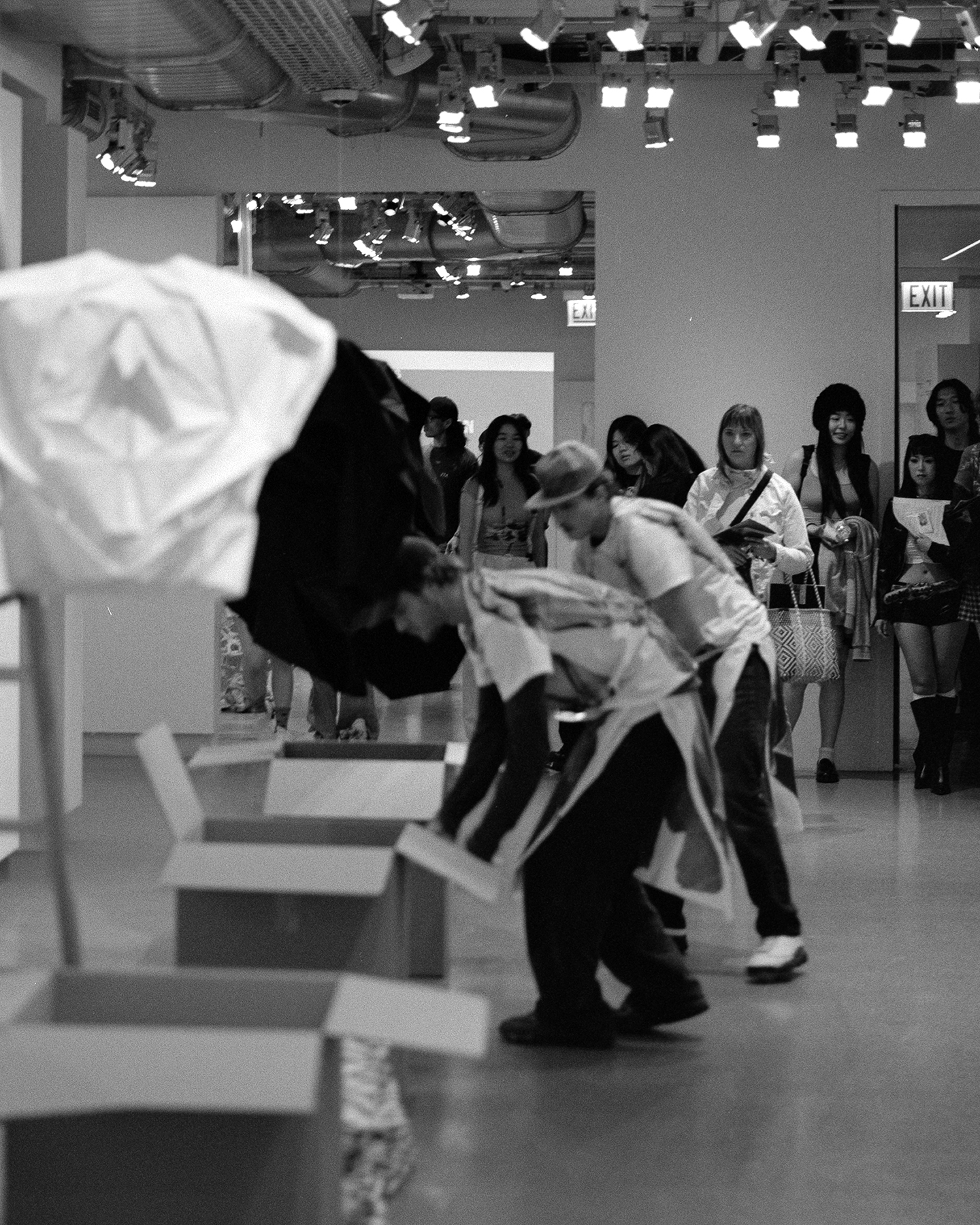
Installation and performance, screen printed garments, large format photographs. May 11 at SAIC Galleries, Chicago IL.

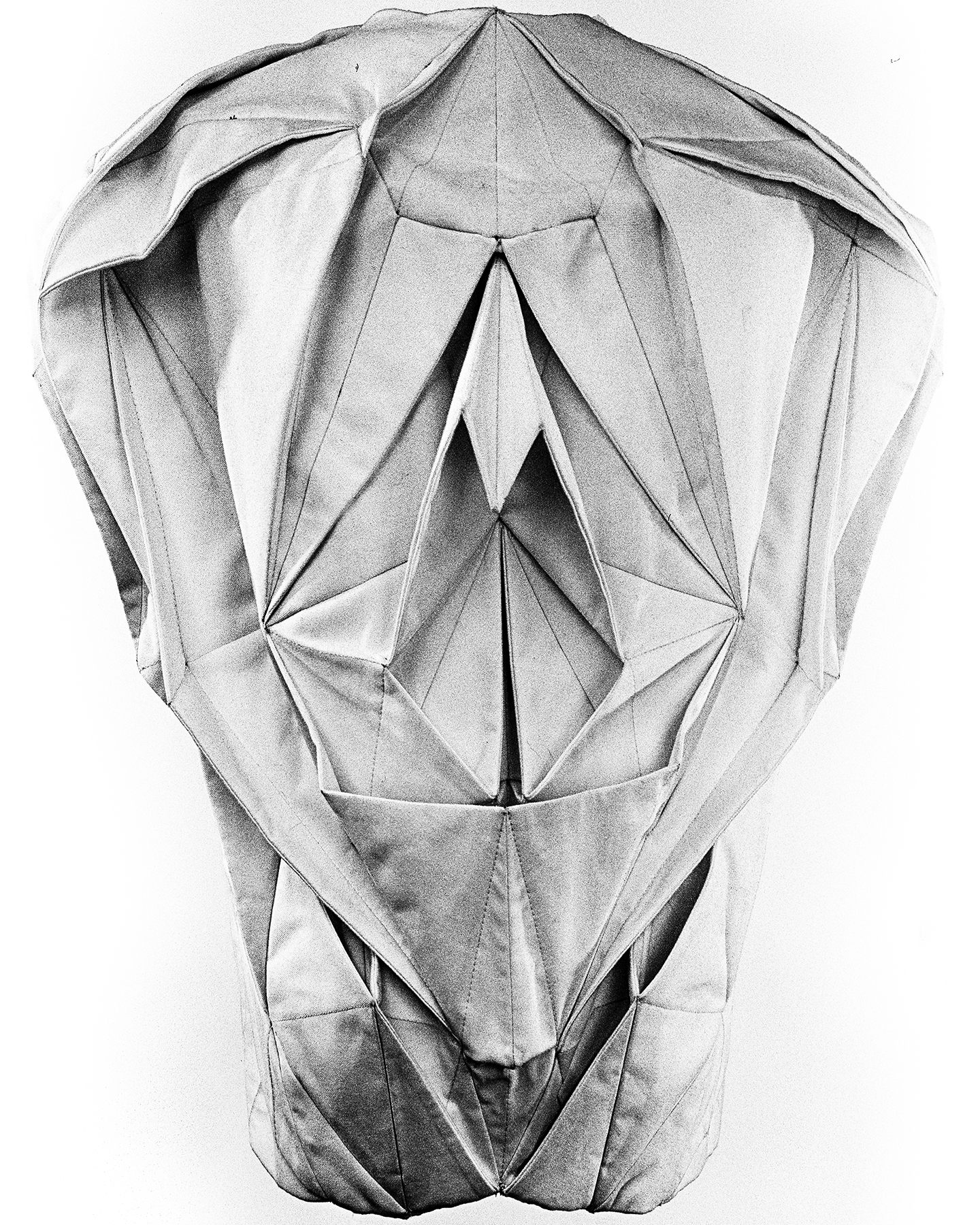
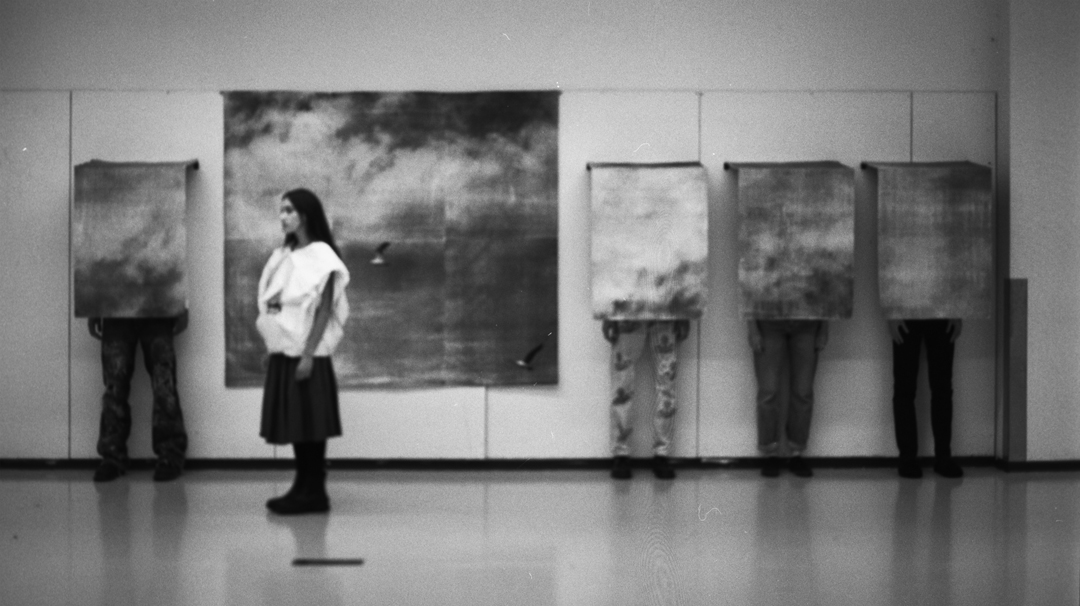
To Unfold proposes the death of fashion not as disappearance, but as transformation. It looks at fashion’s shift from presence to perception, as garments are increasingly experienced through images rather than through the body.
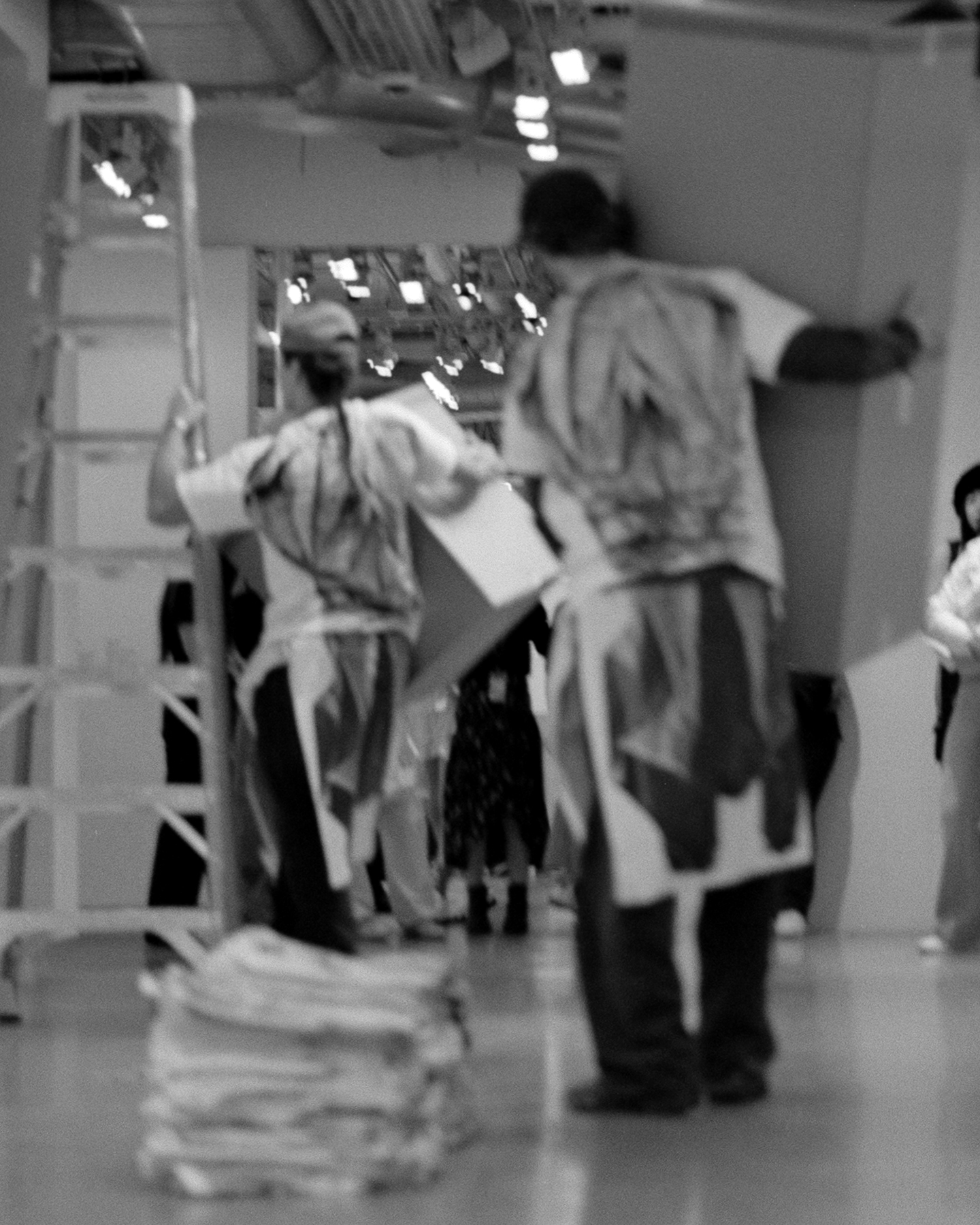
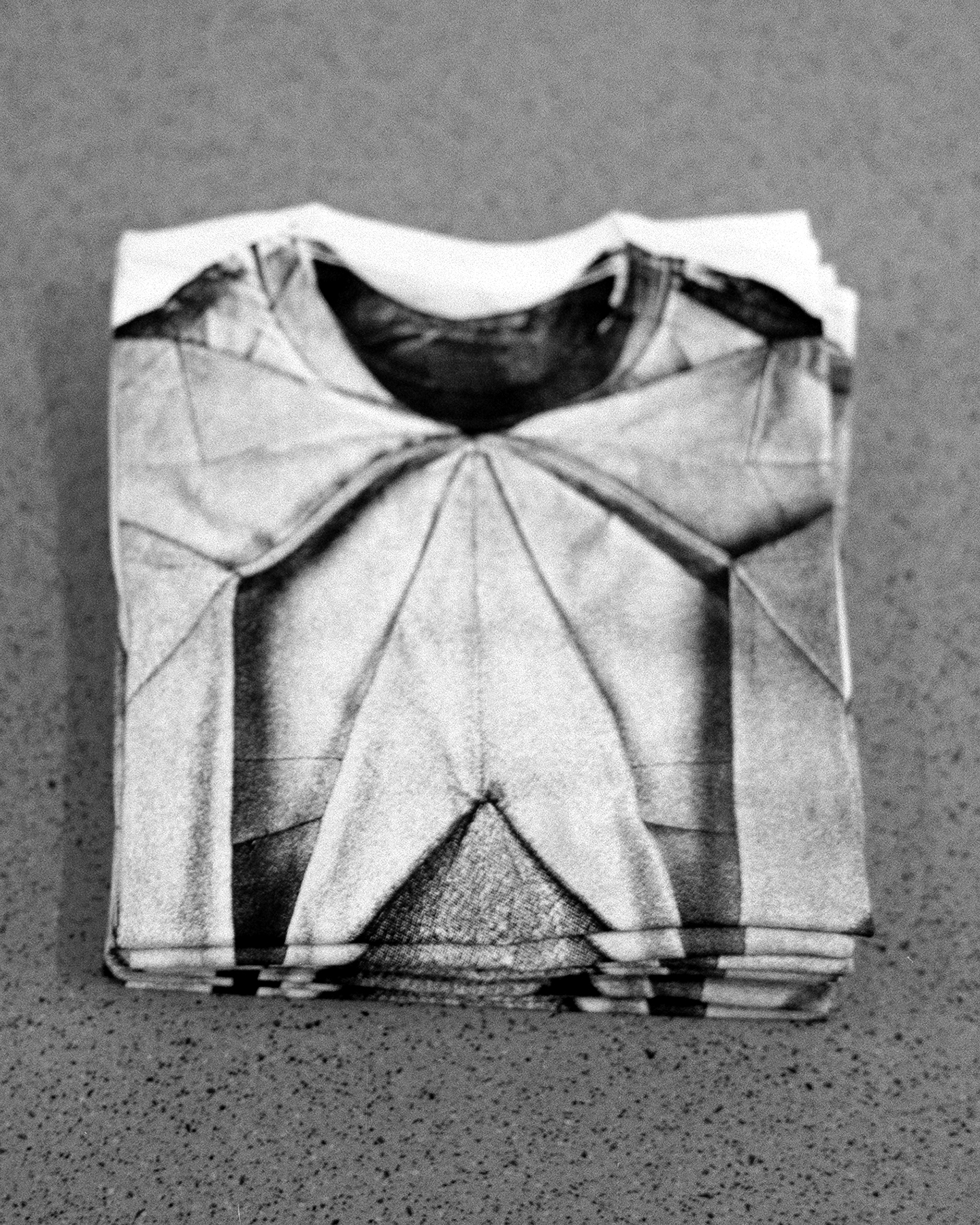
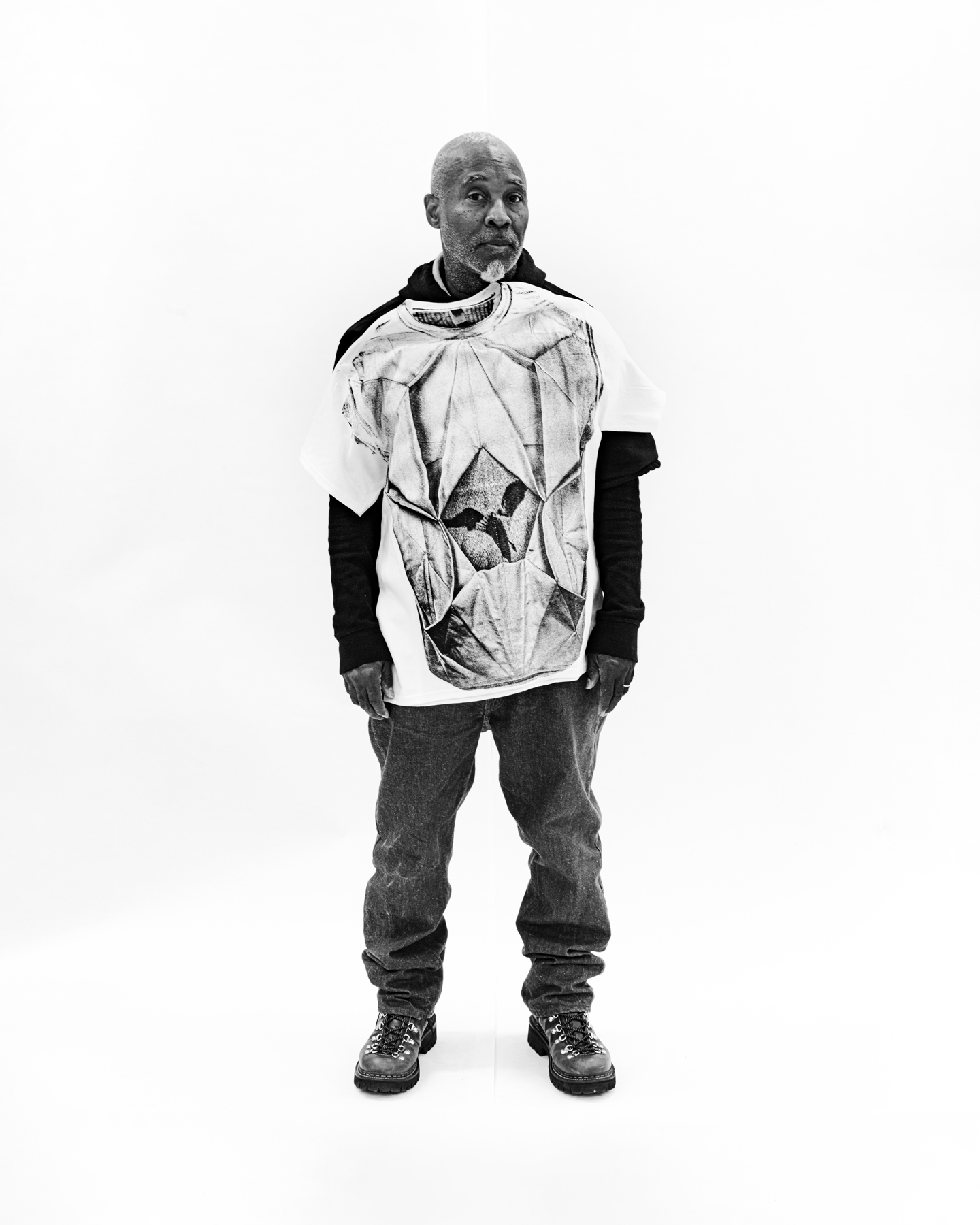
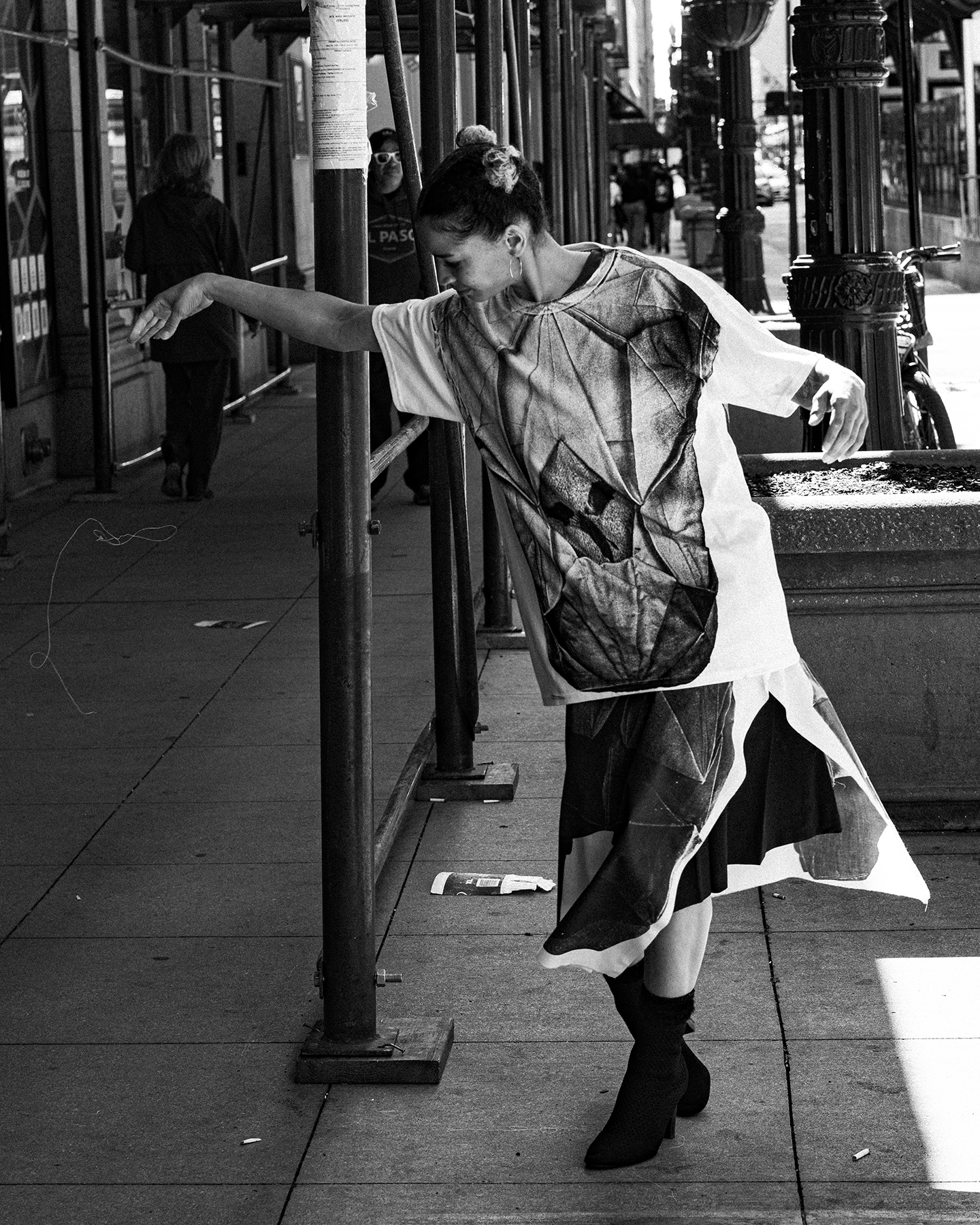
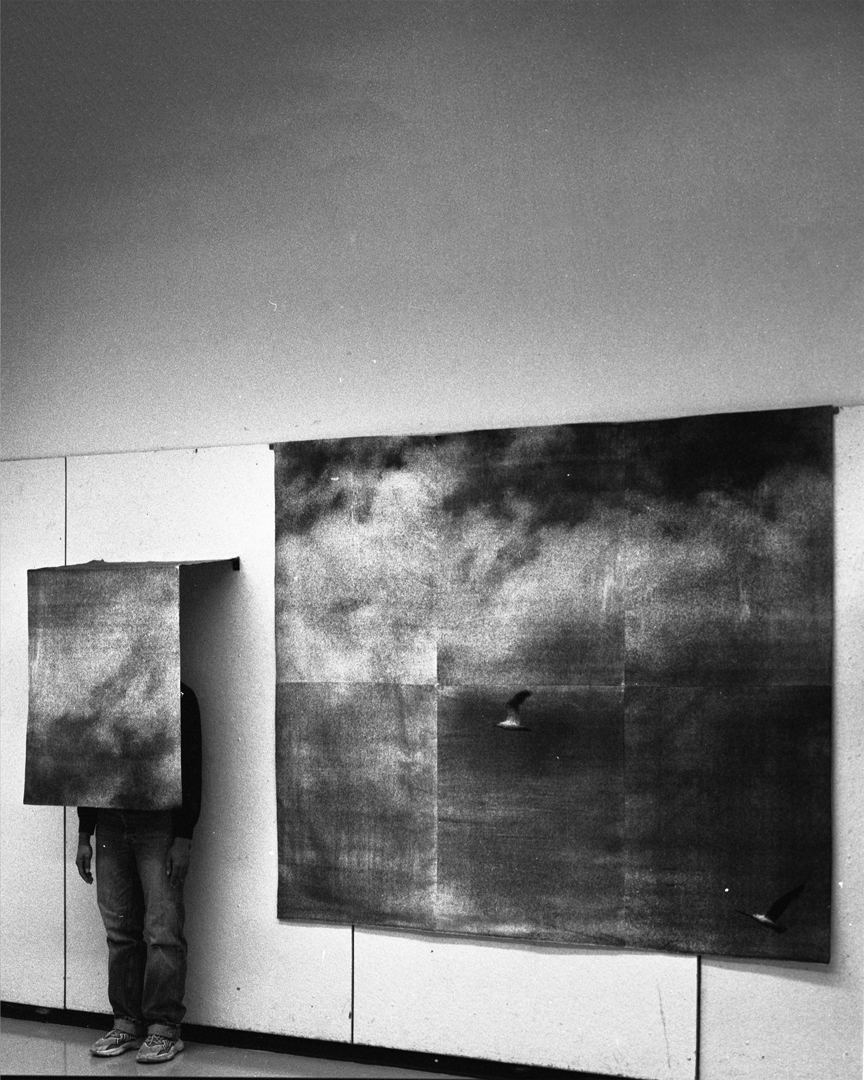
For the opening, garments from Spaces were installed inside the white cube and photographed from the front and back using a large format camera. The following day, the original garments were removed and replaced by 230 simplified reproductions: white T shirts and square cut skirts, hand screen printed using negatives made from those photographs, then folded and installed throughout the gallery.

The reproductions were free to take. Within minutes, they were gone. For the remaining twelve days of the exhibition, the gallery stayed empty, leaving only the memory of the garments and their circulation outside the space.

In that emptiness was a question: Does fashion detach from art by offering itself freely, through reproduction, circulation, and use?

skirt
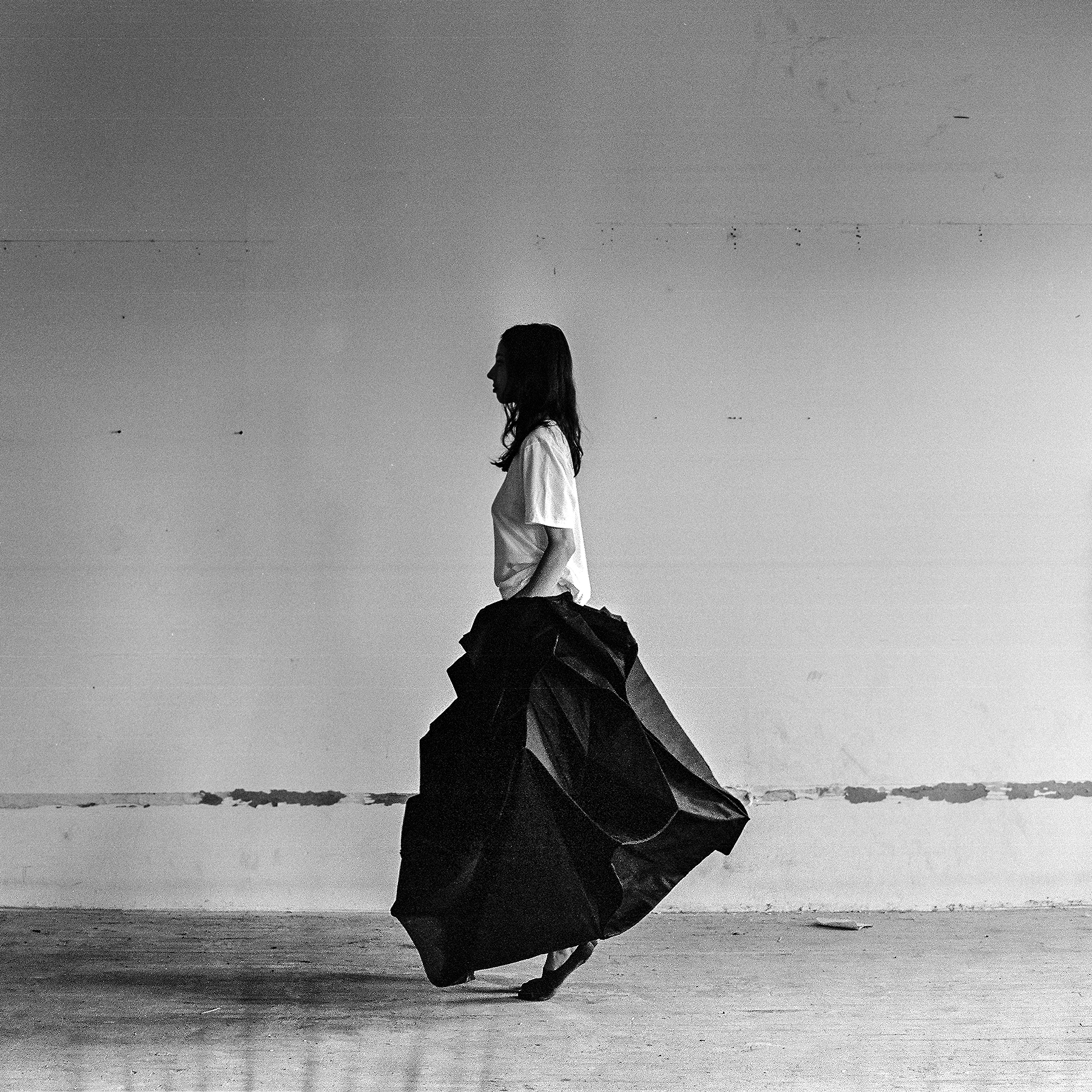
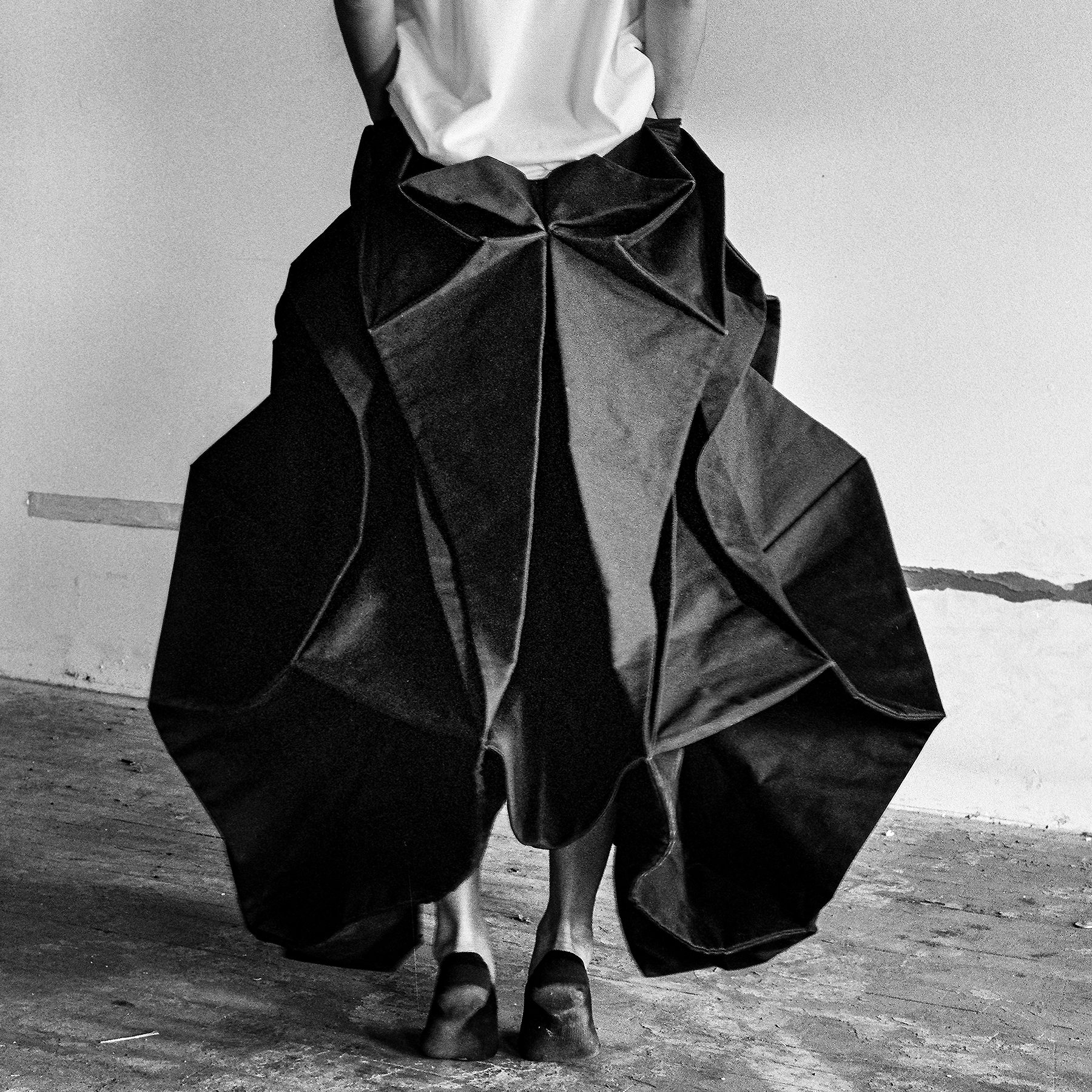
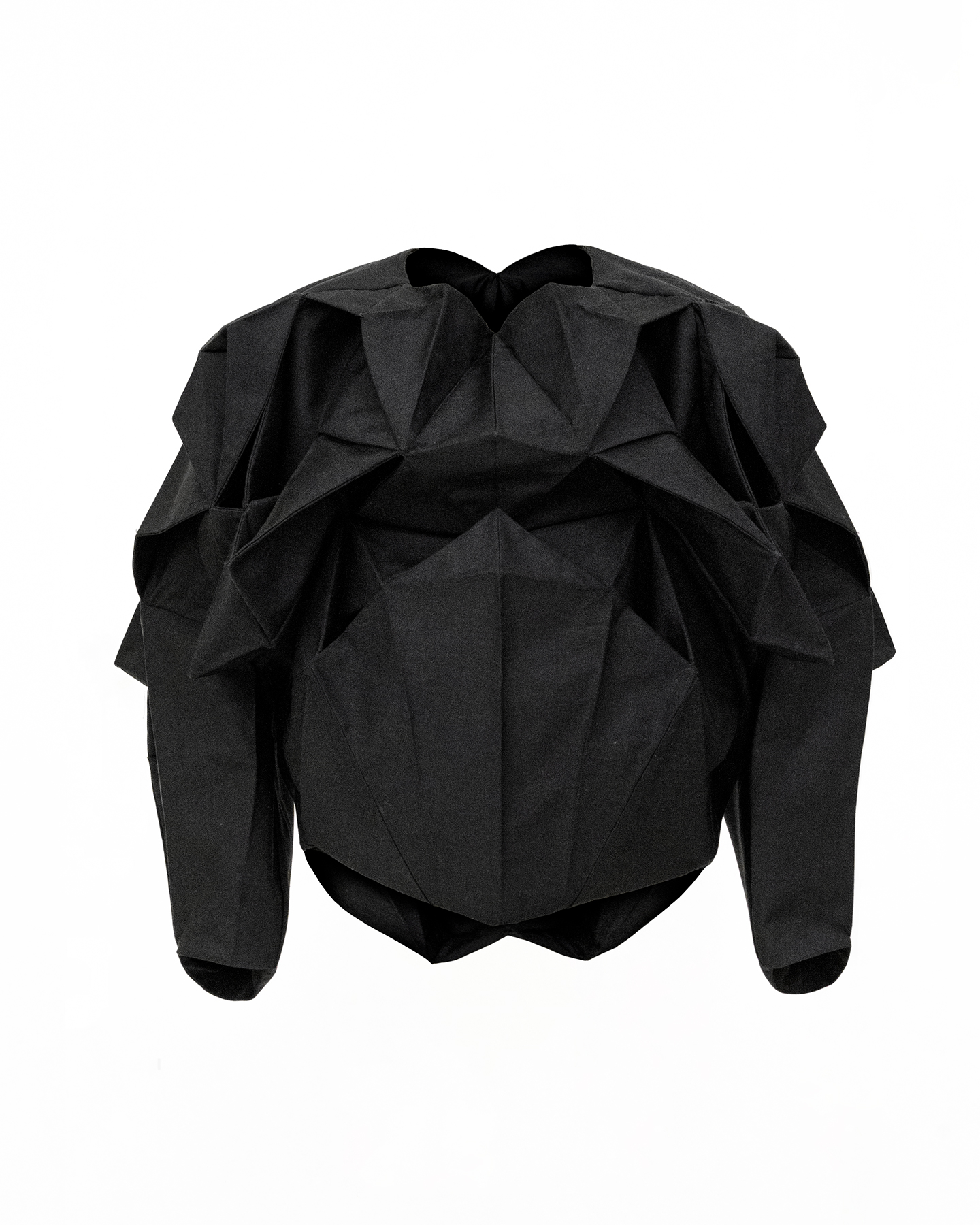
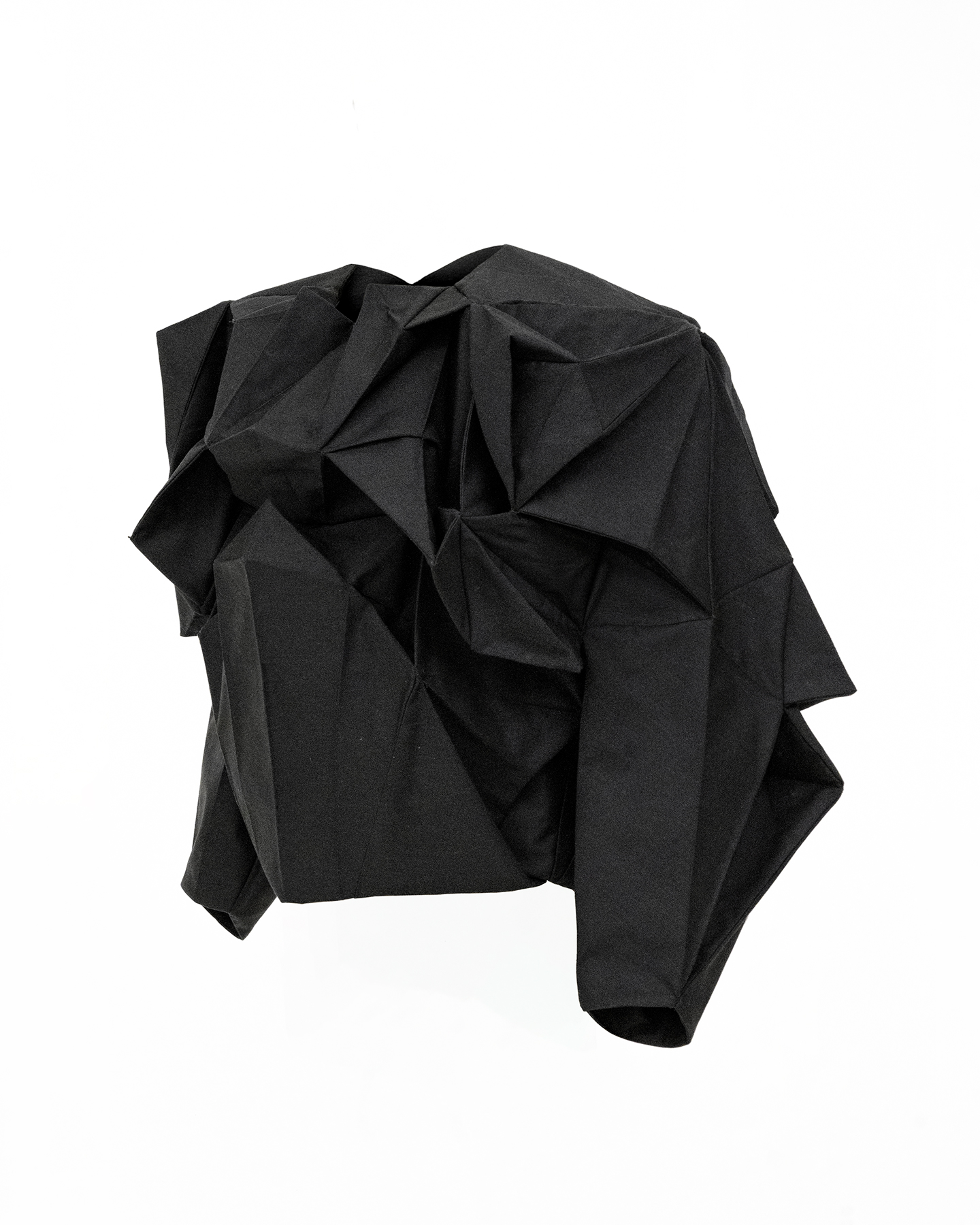
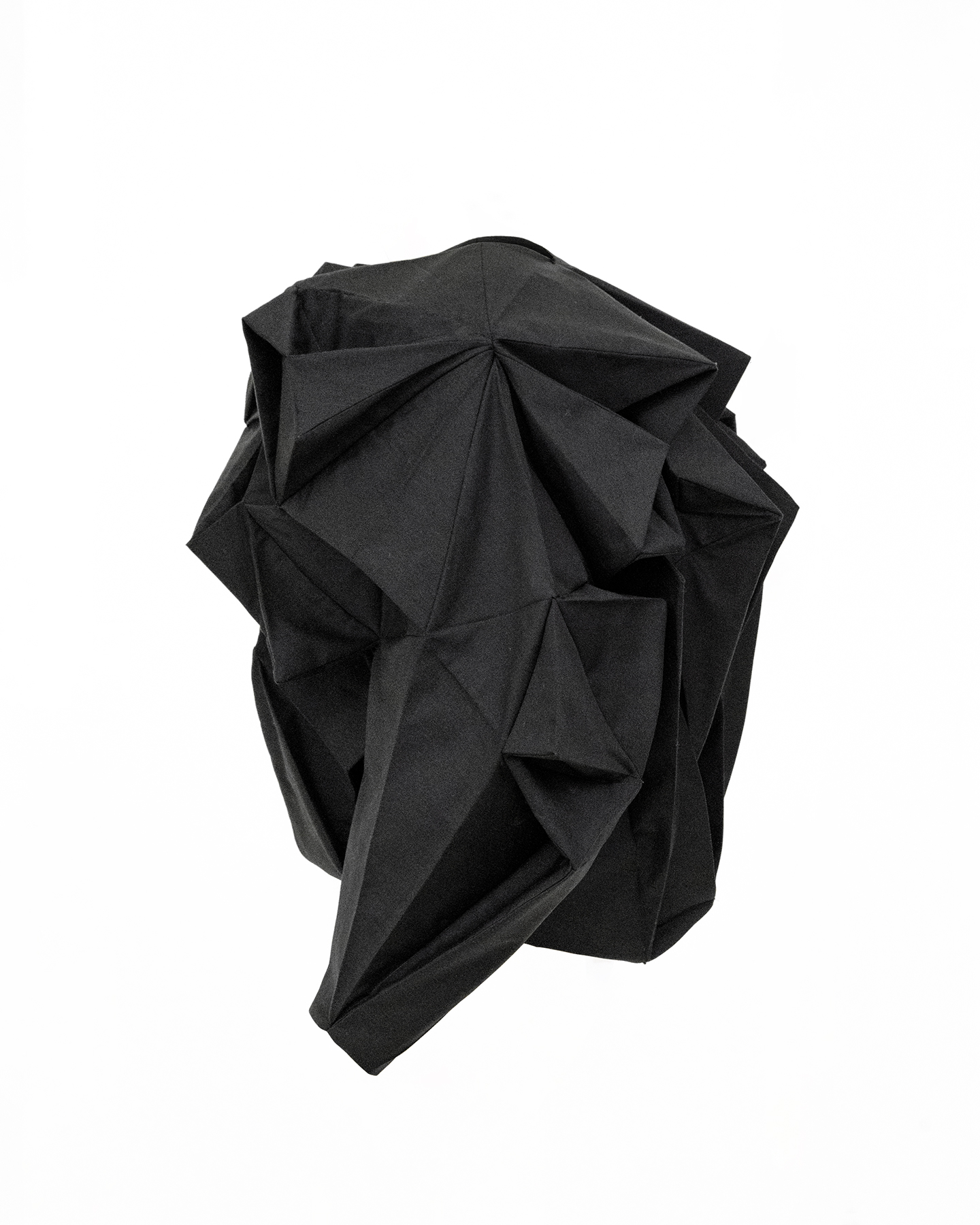
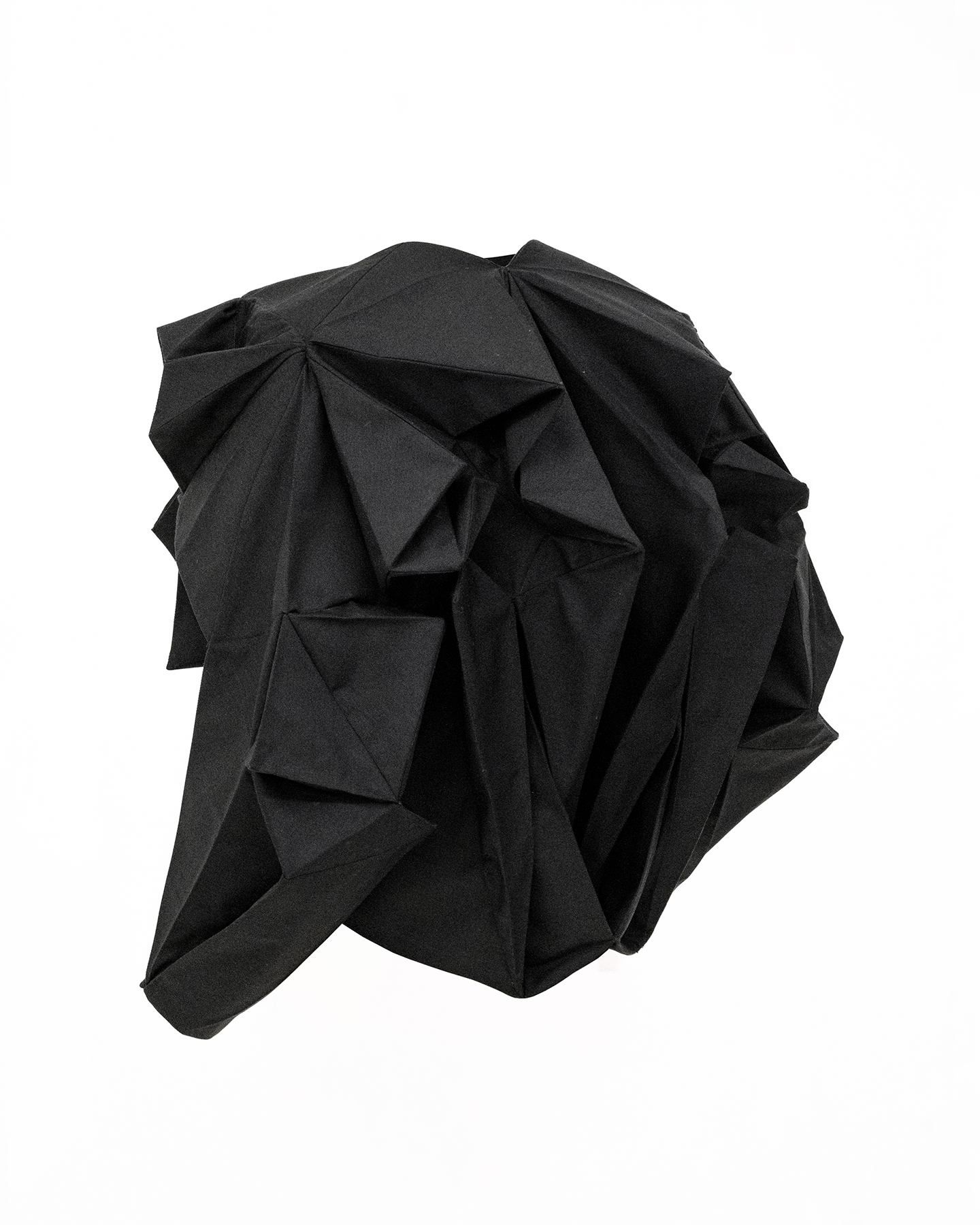
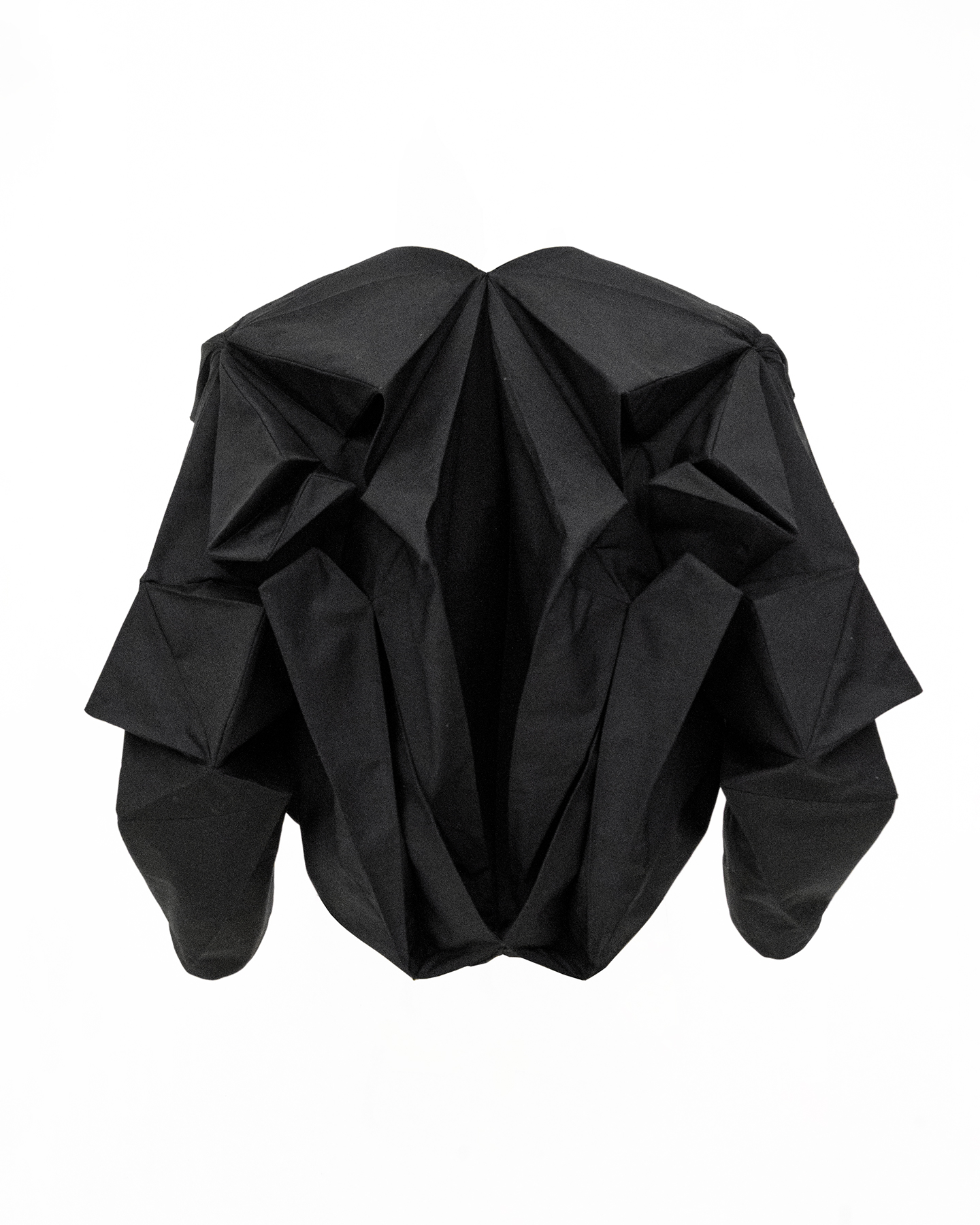
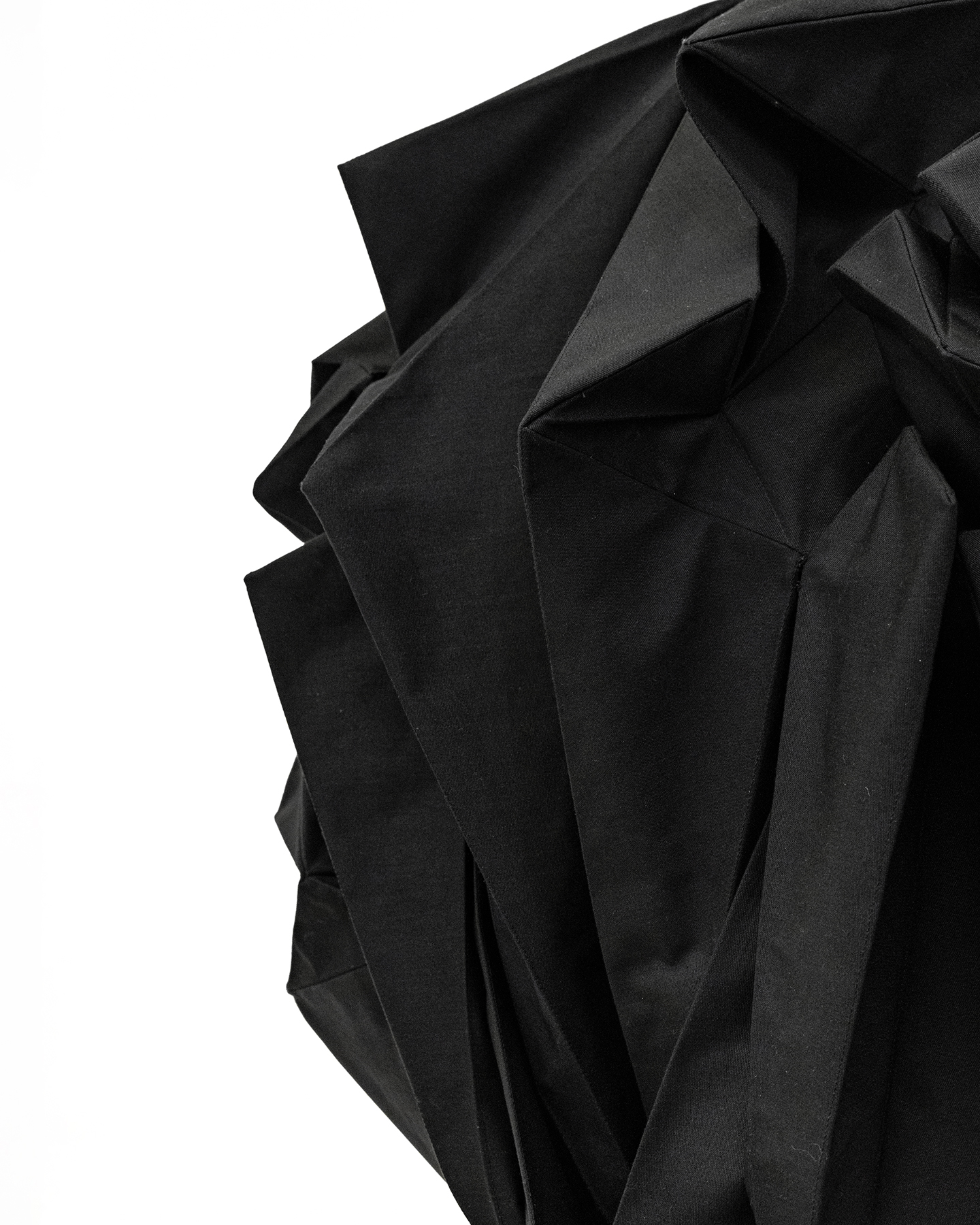
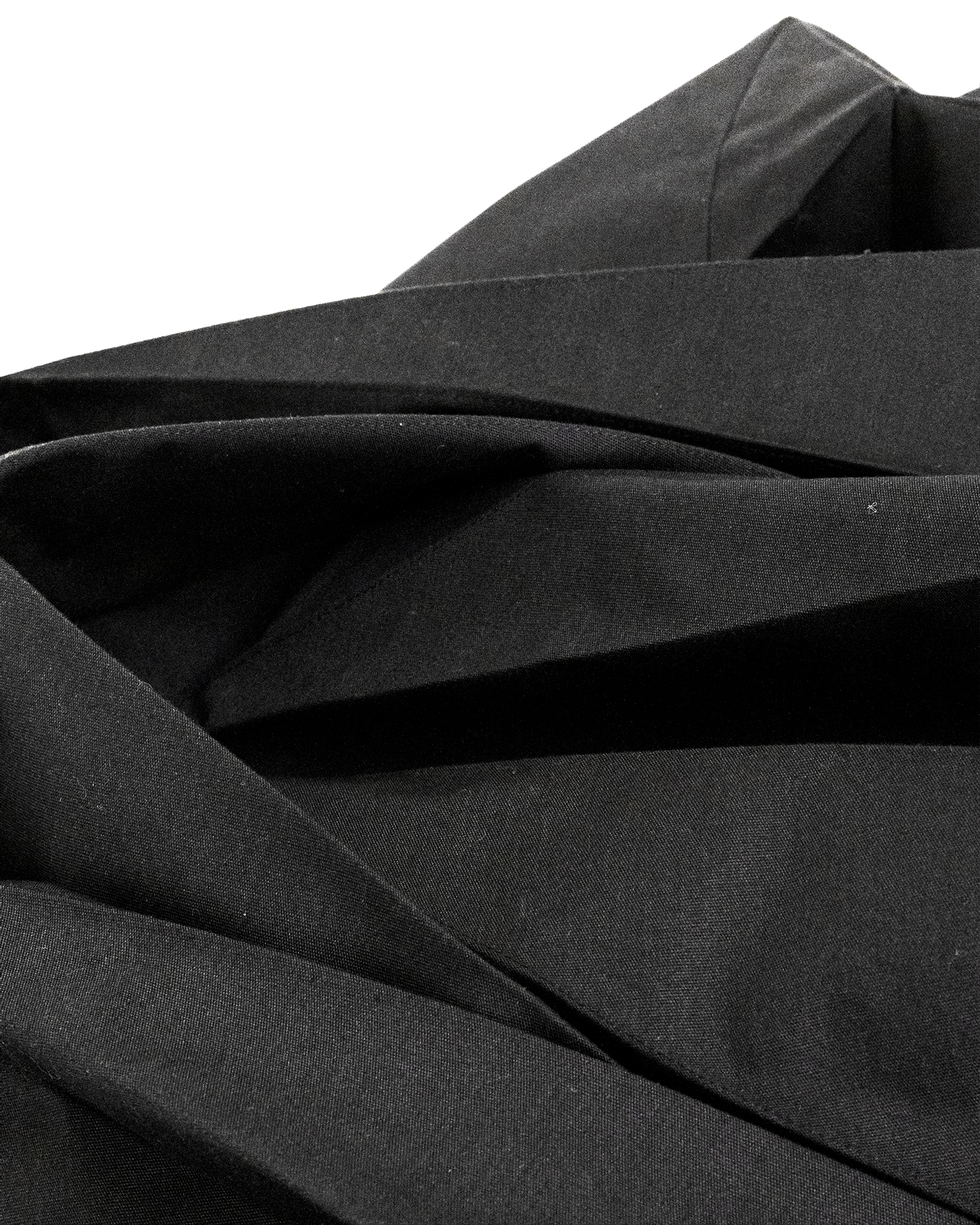
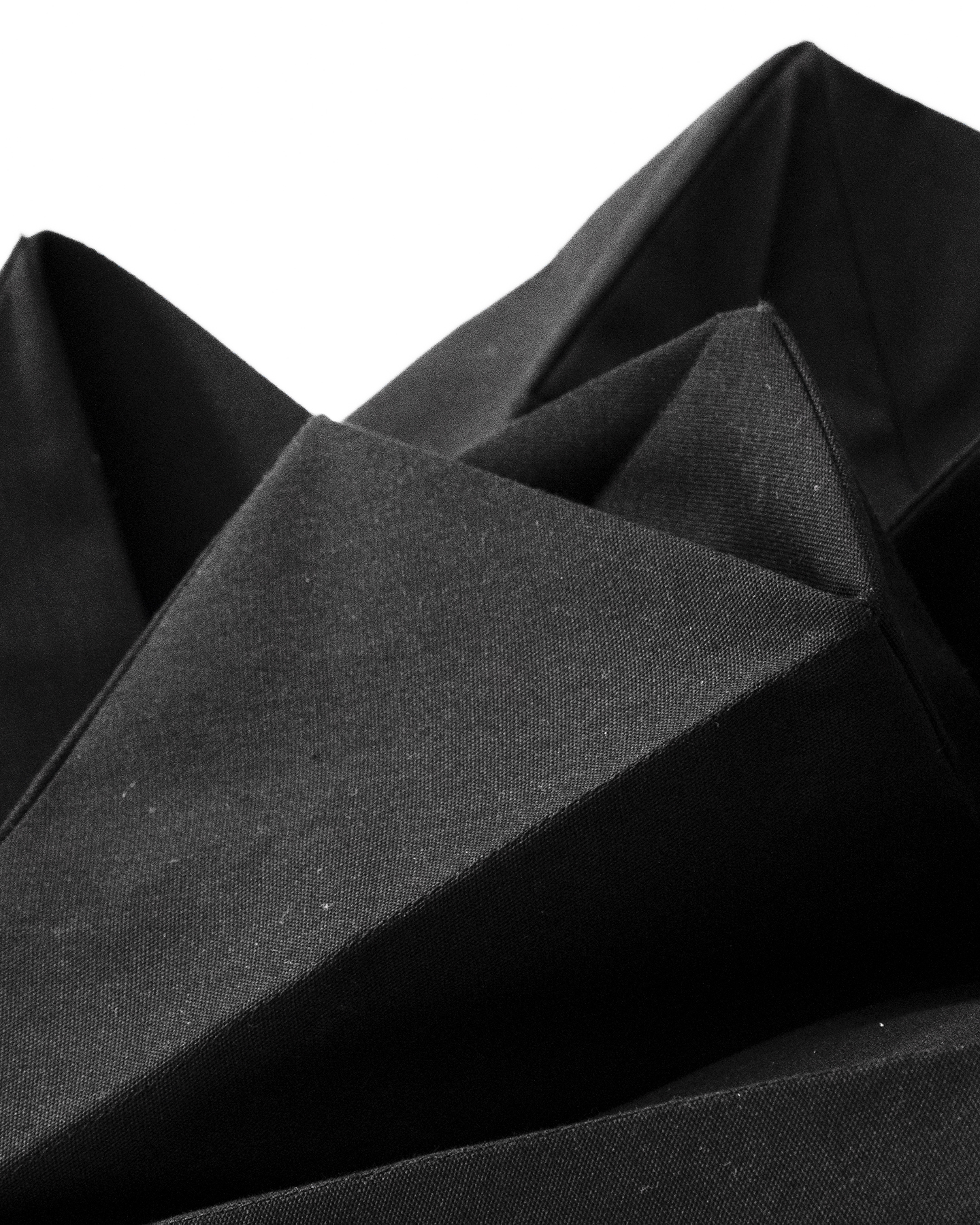
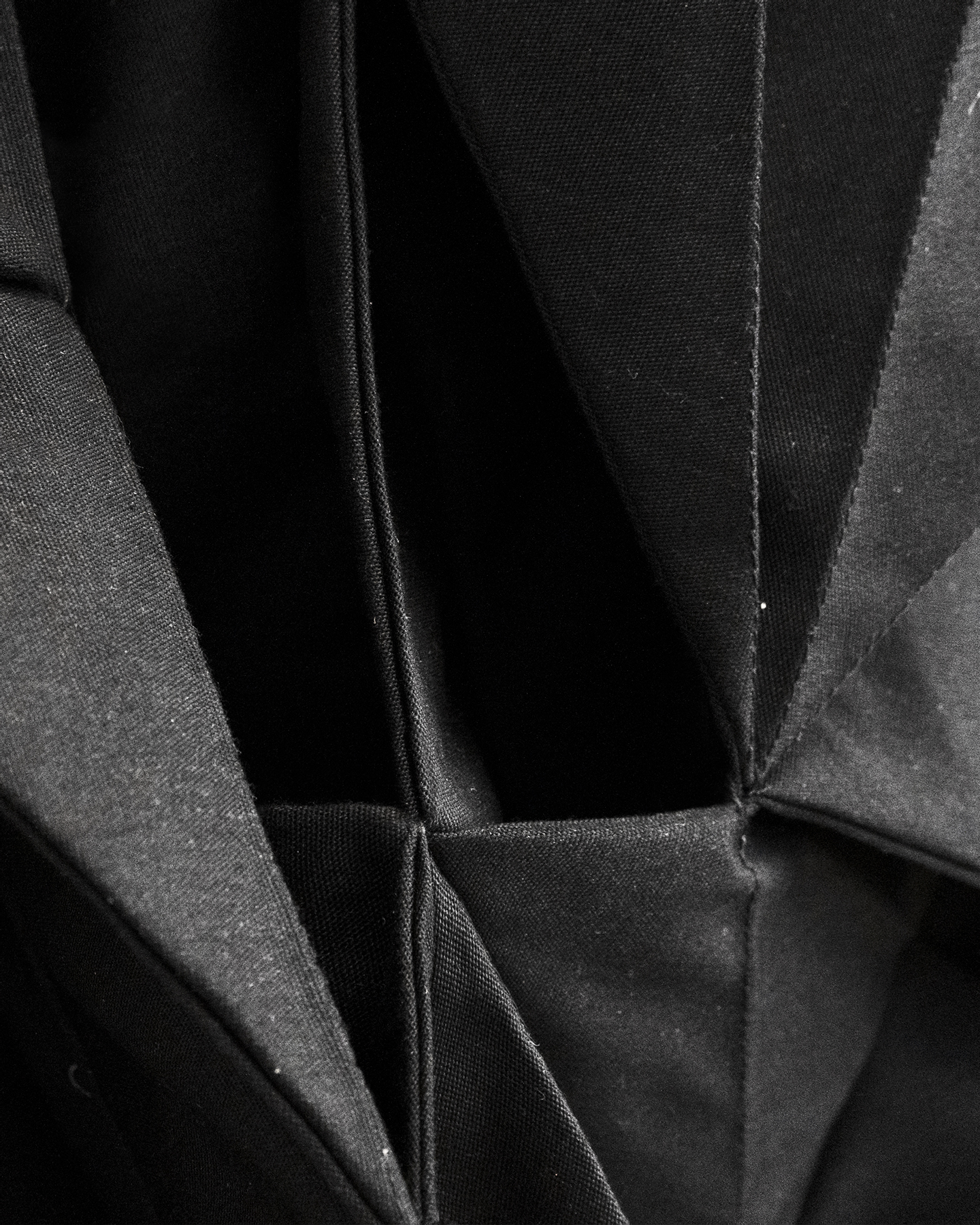
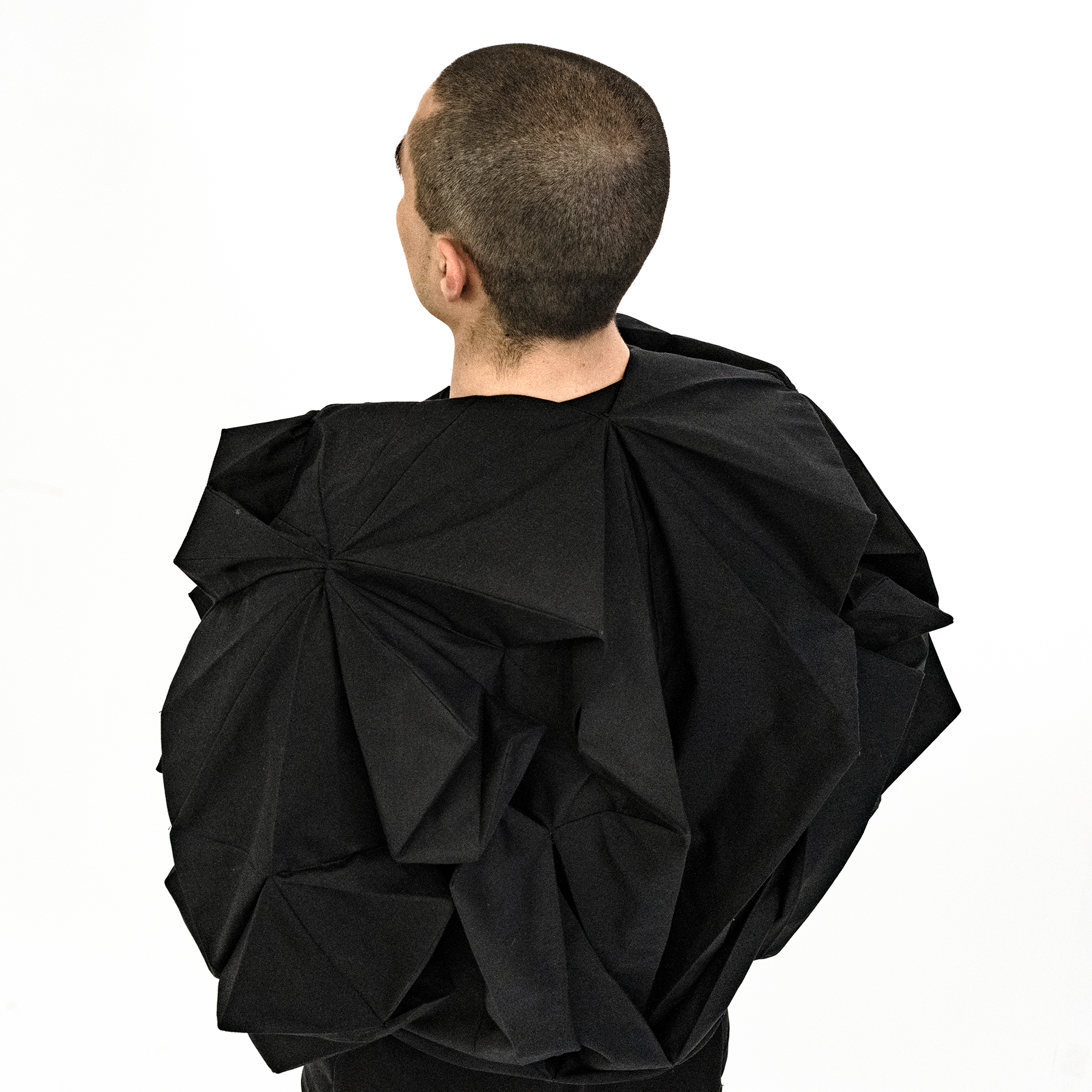
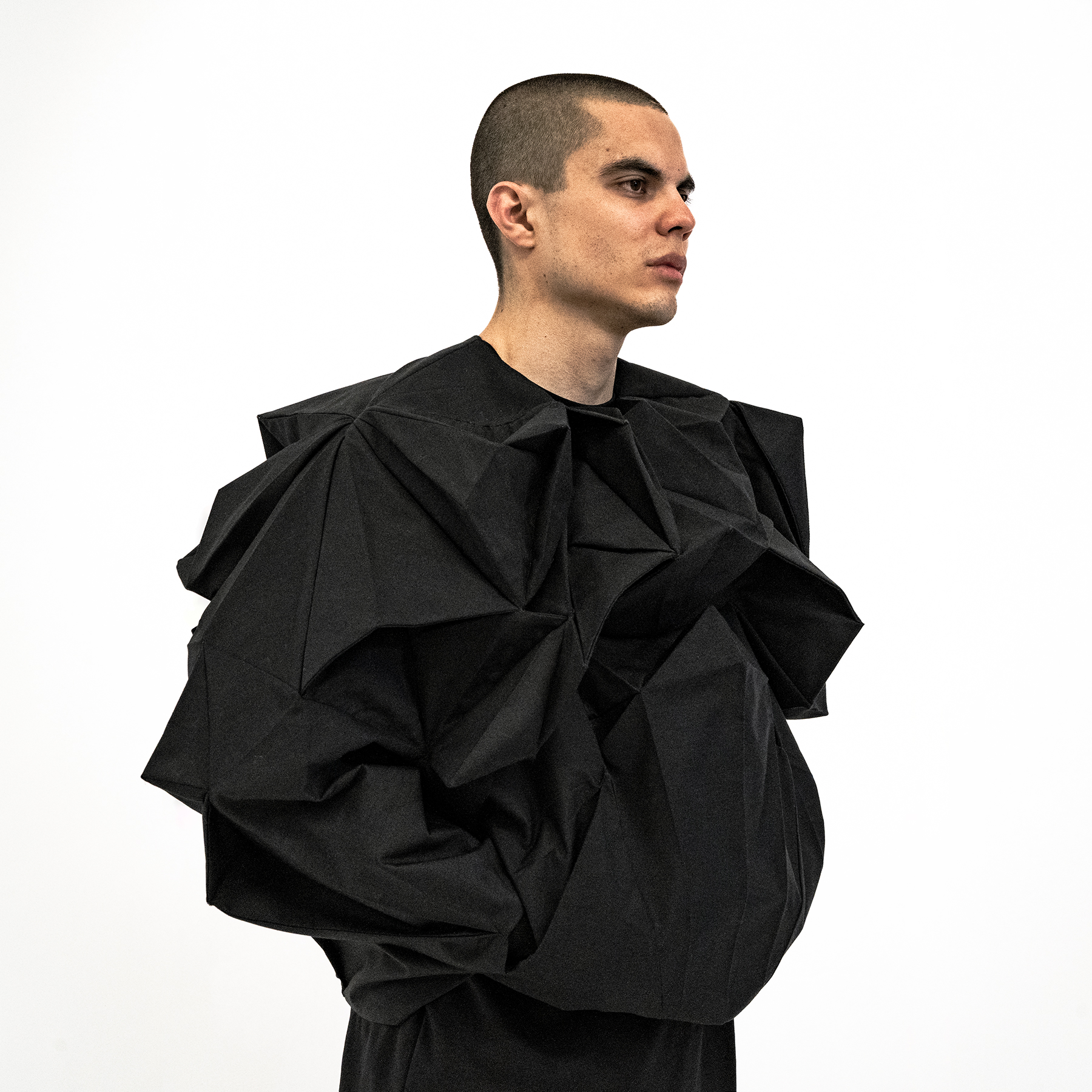
Black cotton suiting skirt, folded with two side pockets.

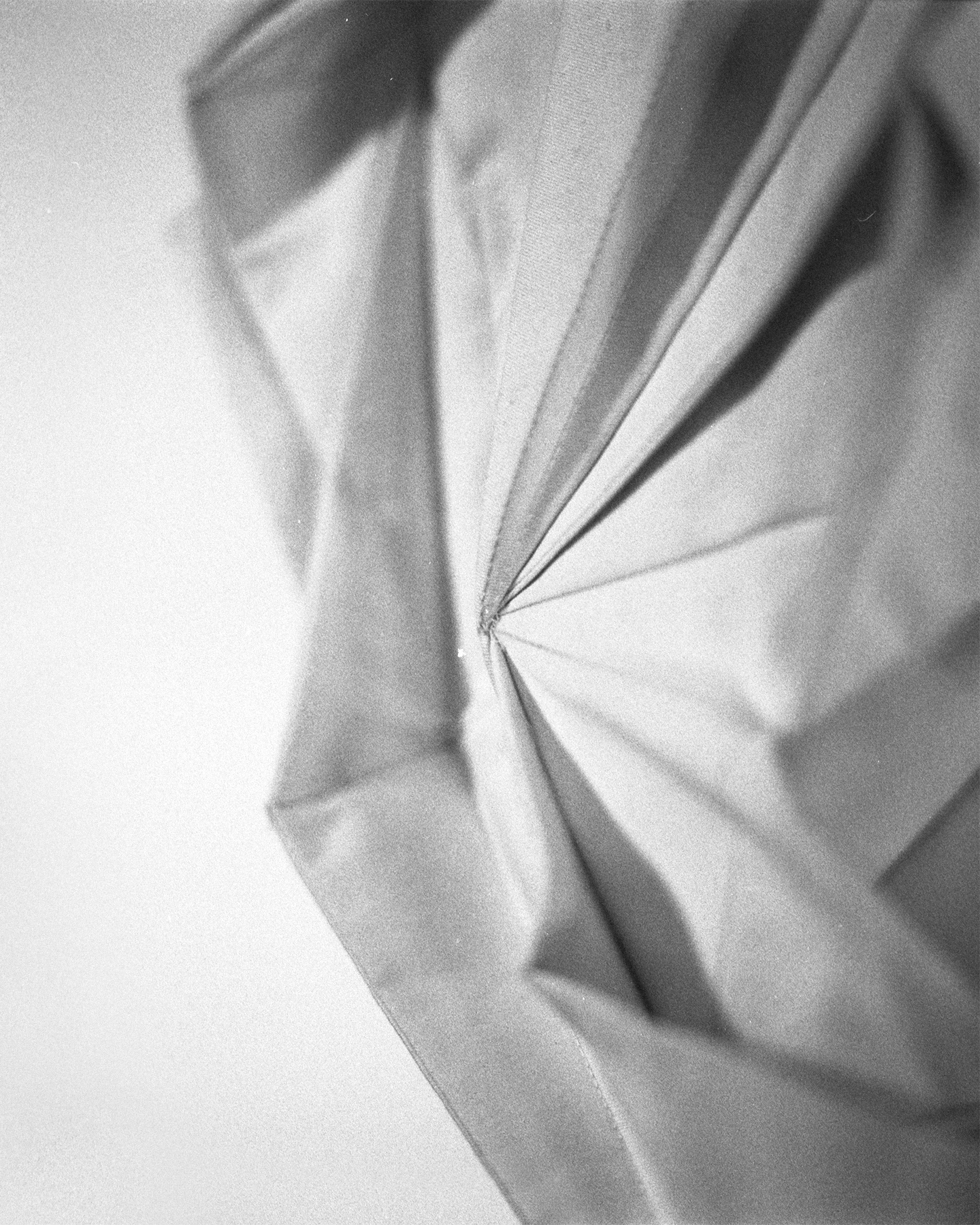
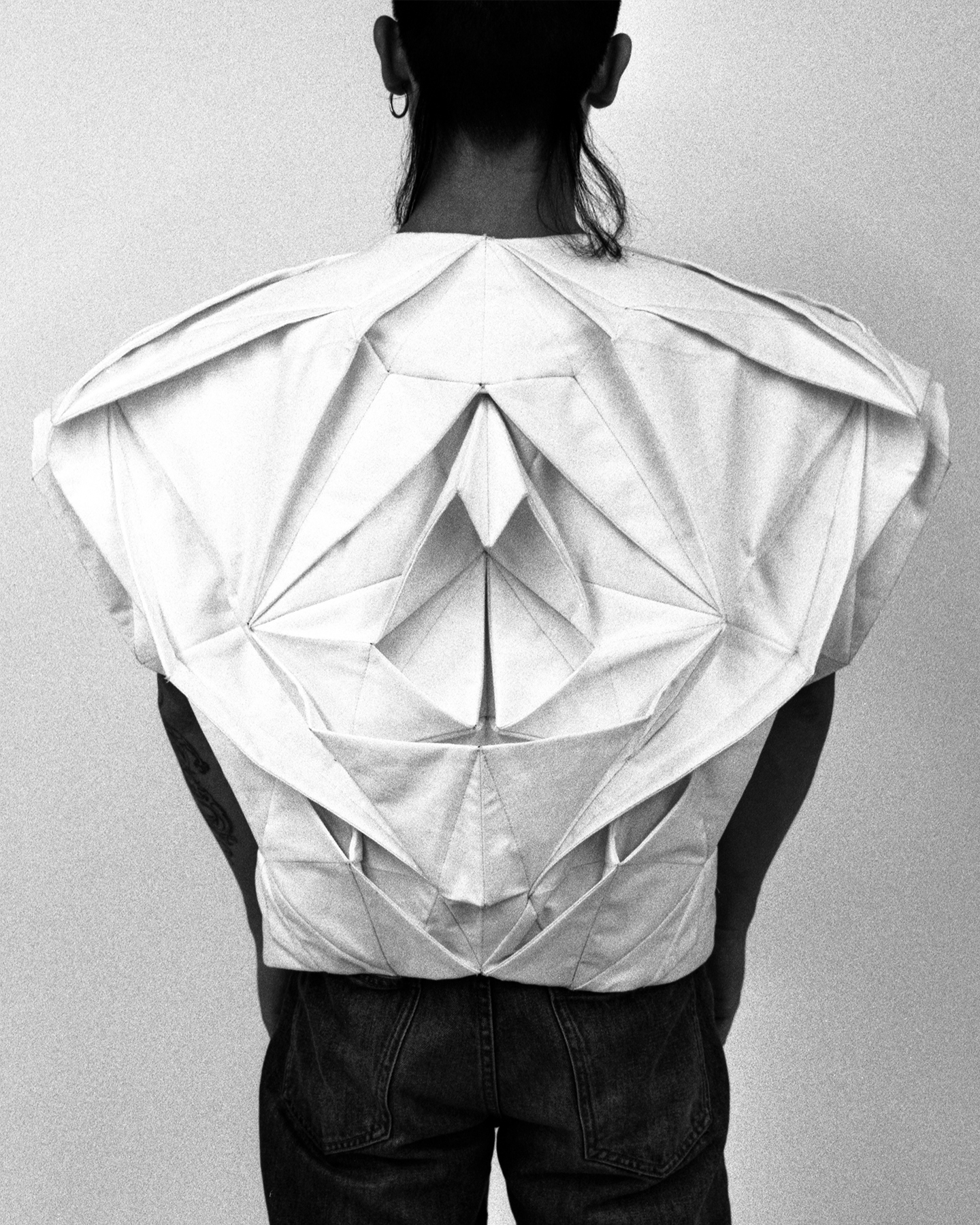
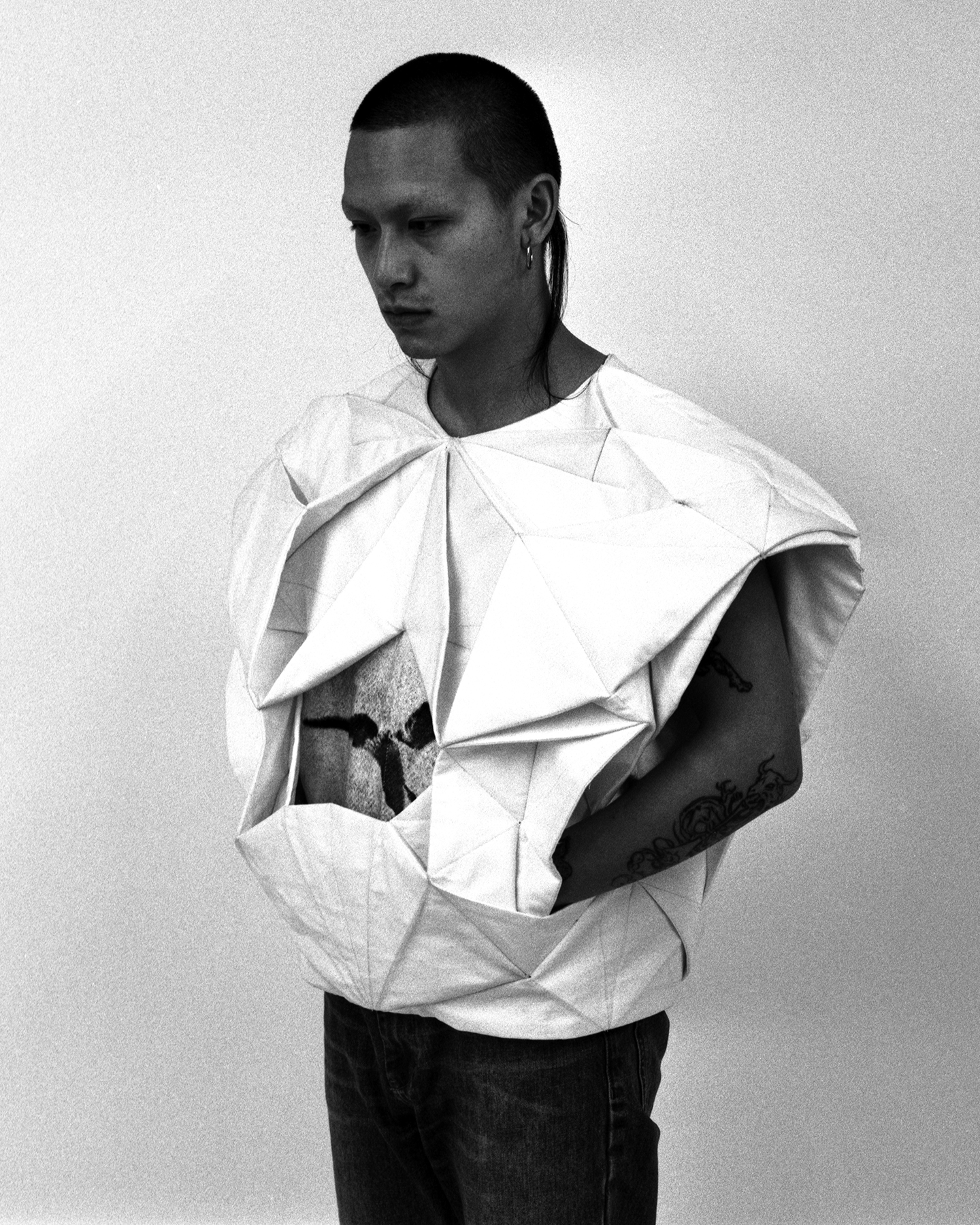
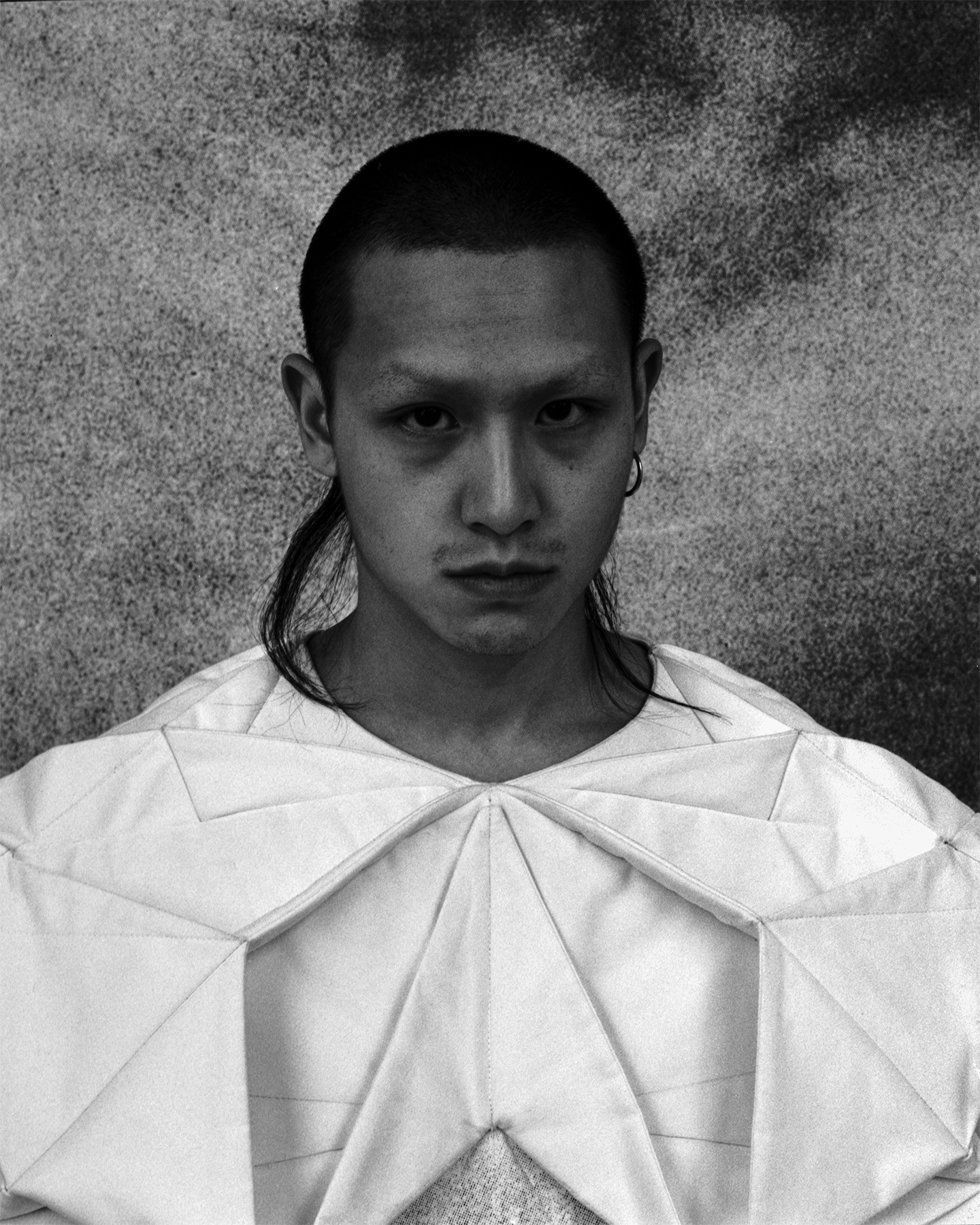
Spaces begins with a simple observation: clothes are folded more often than they are worn, making the fold one of the most common forms a garment takes. The project extends the fabric’s natural drape into stability, treating clothing not as an object but as a space to inhabit and move within. Fabric is pressed and constructed to preserve its folds. Each piece changes through contact with the body, existing as both form and moment.

pigeonhole
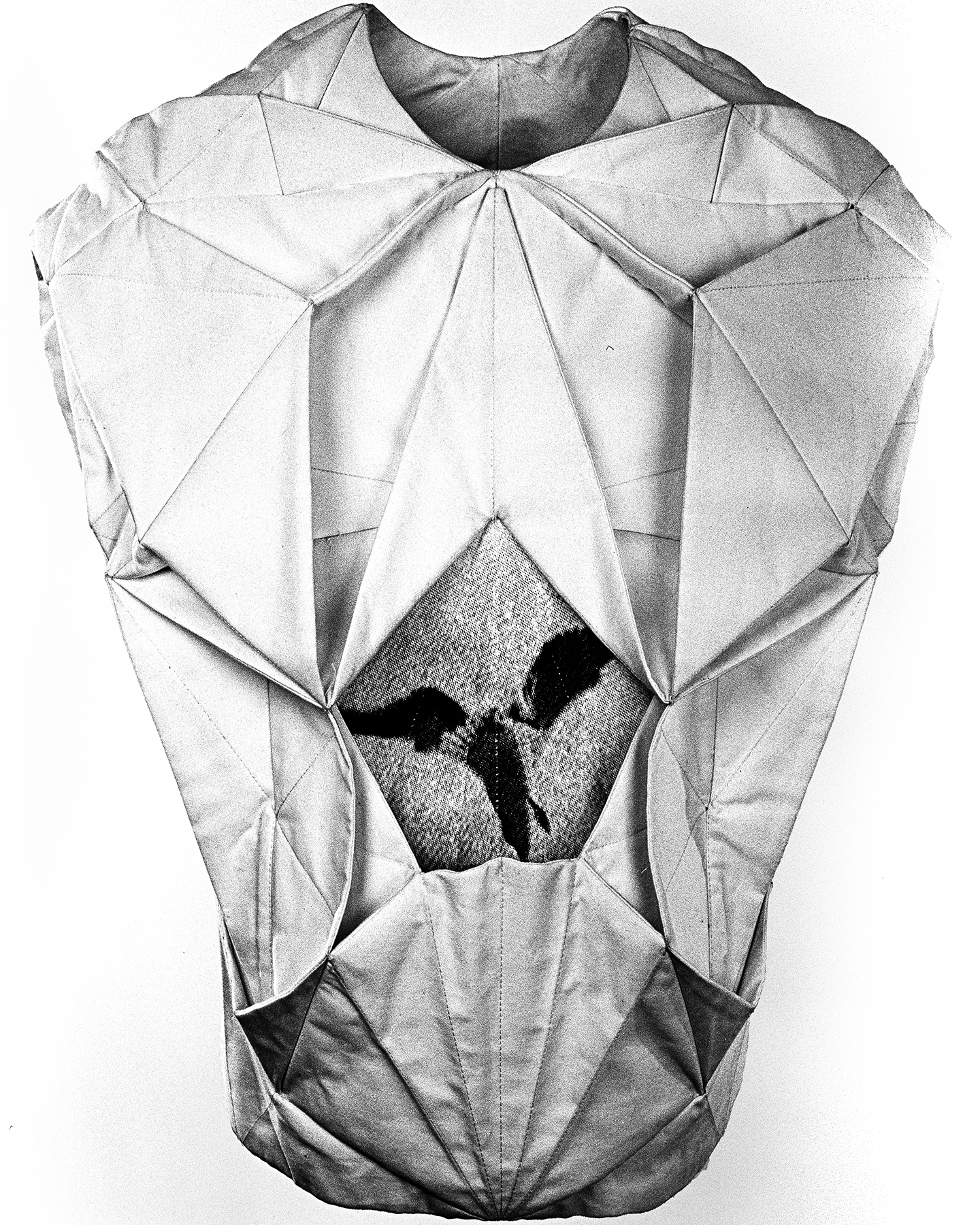
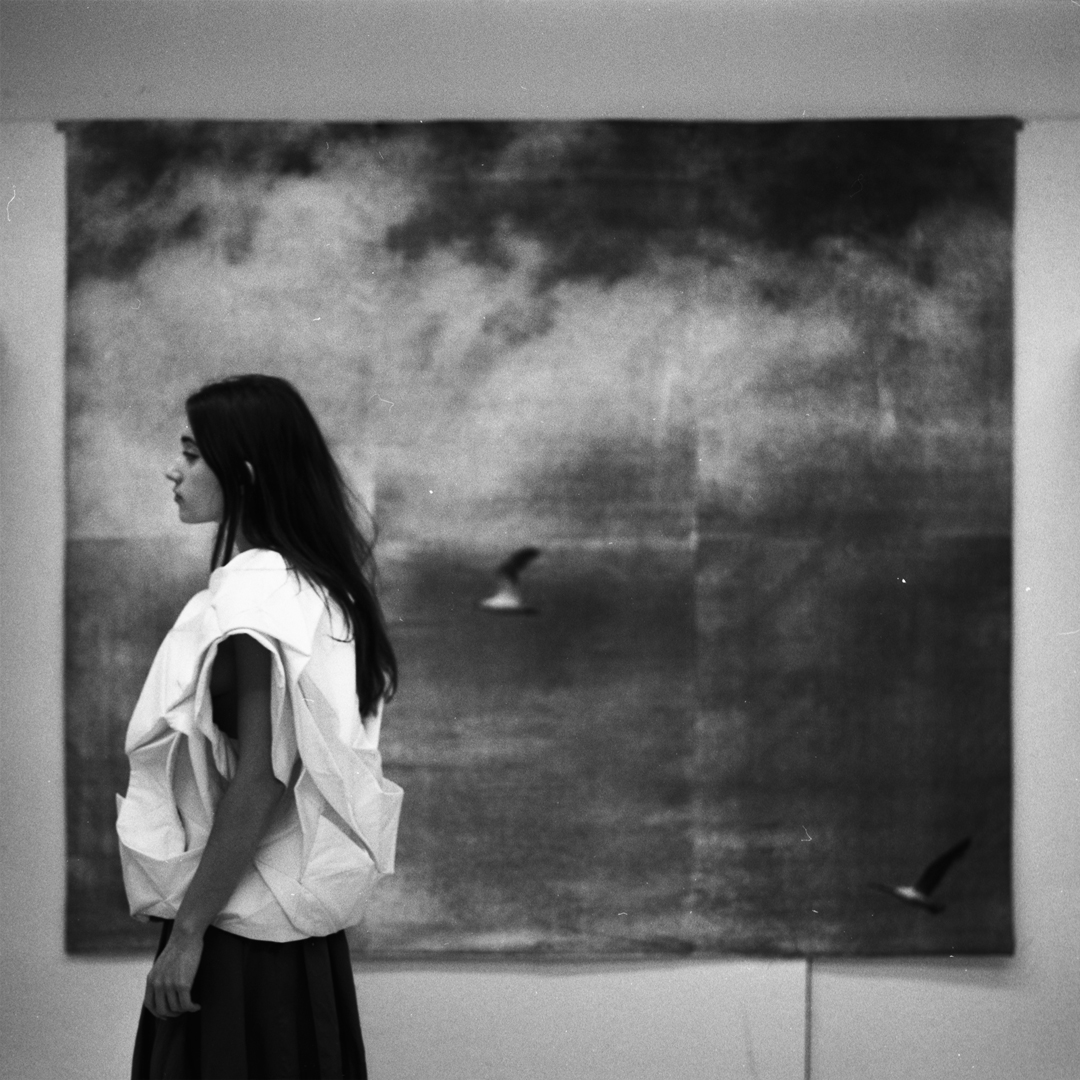
Silver gelatin prints.

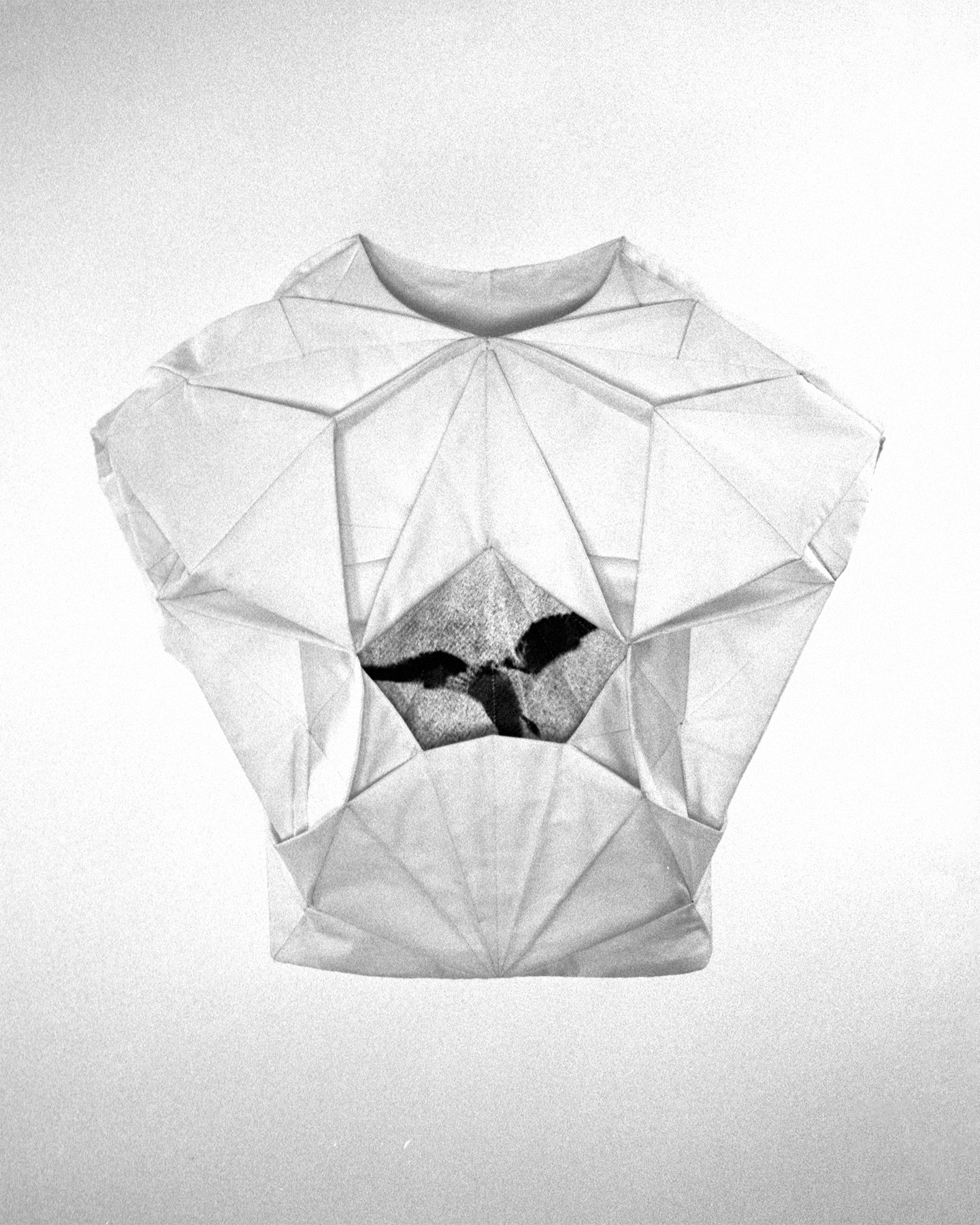
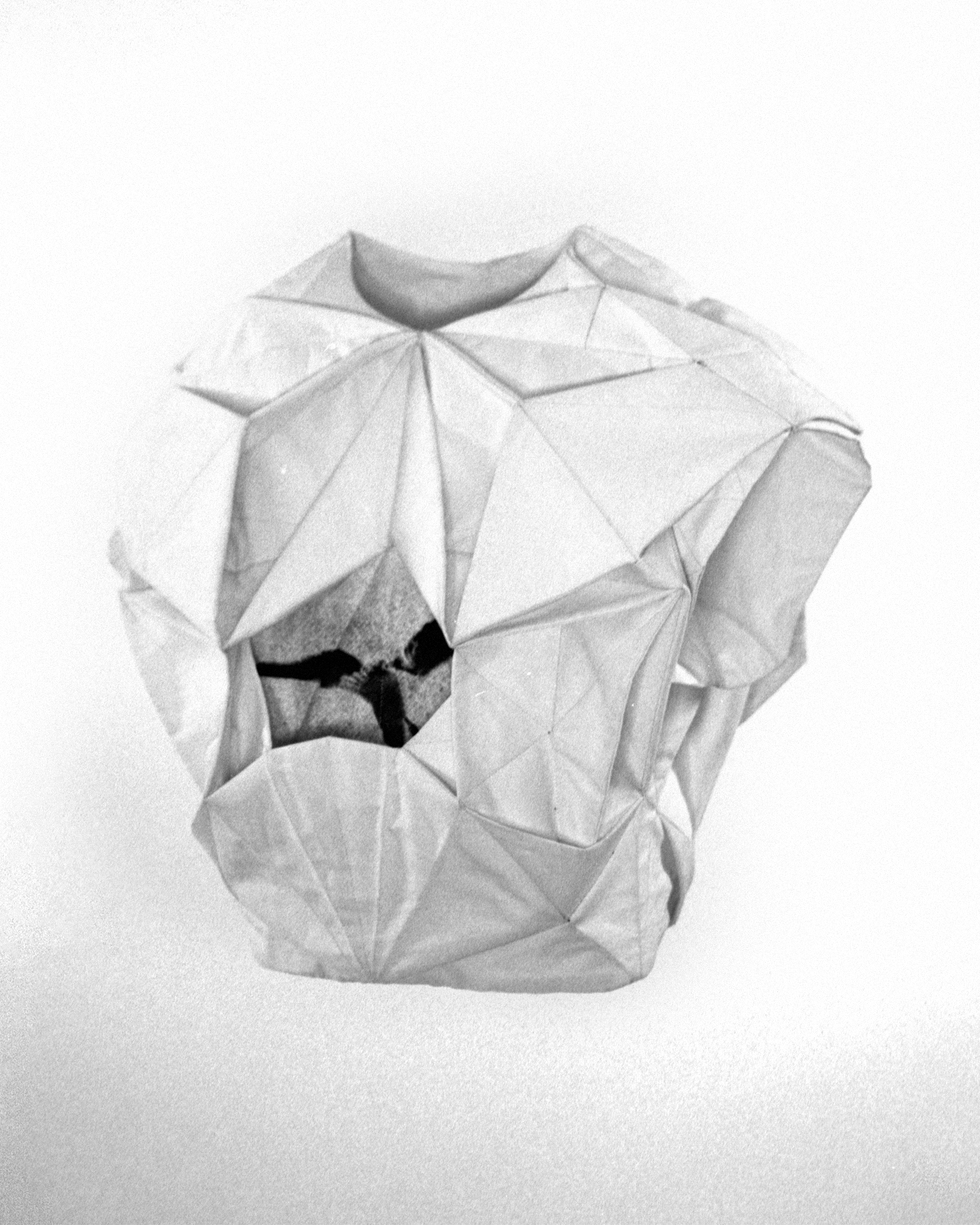
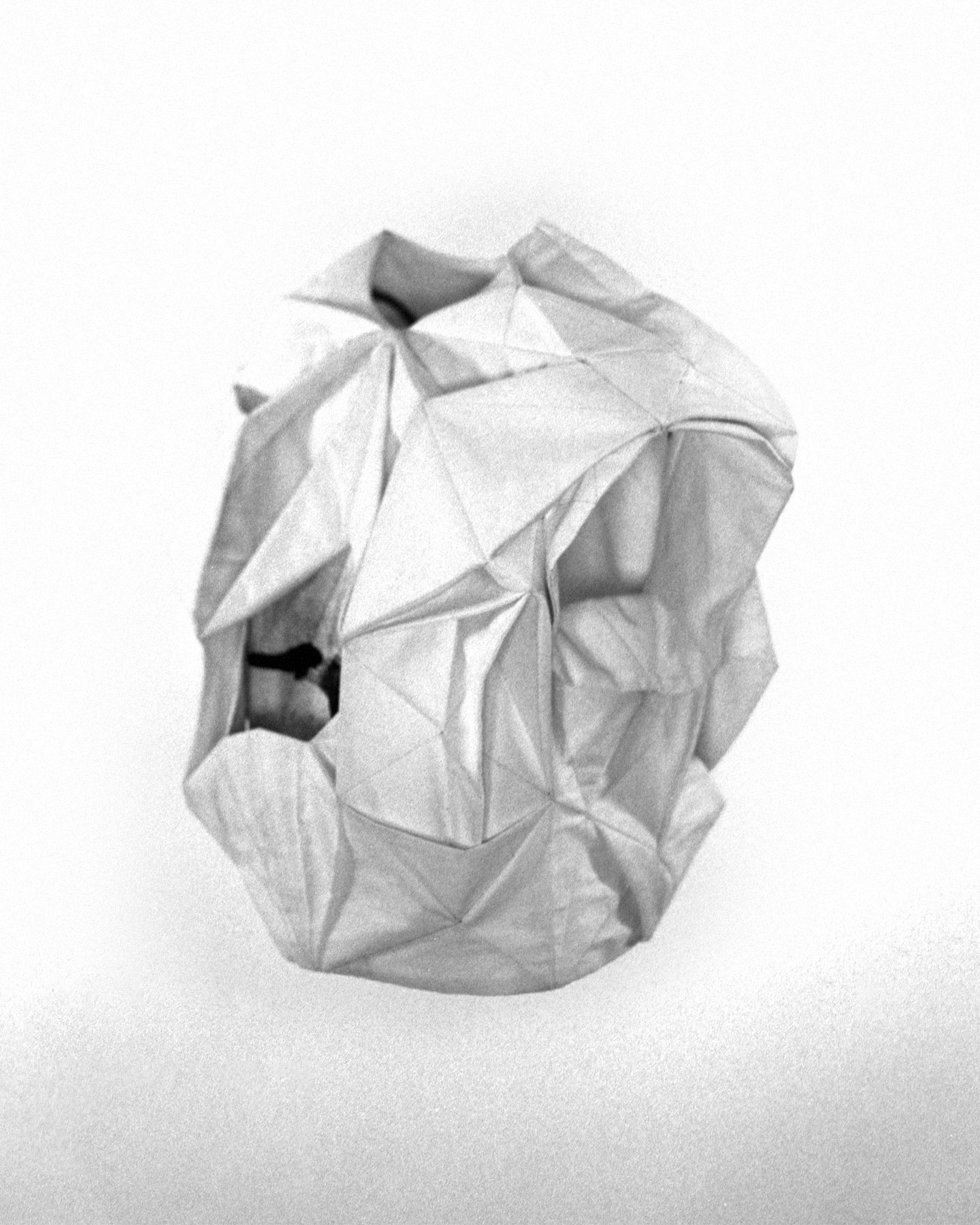
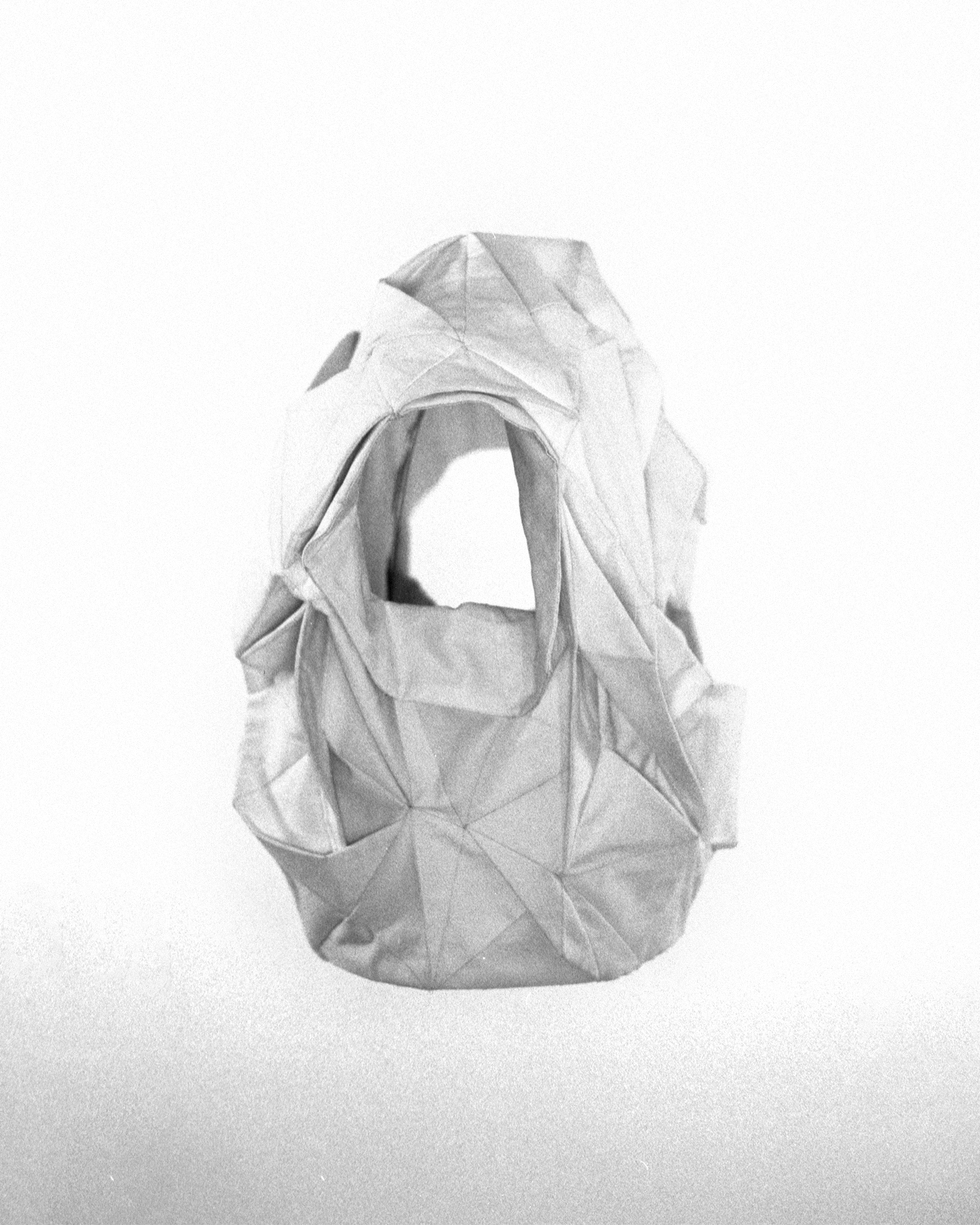
Tank top in front of hand screen printed analog photographs of clouds. The open sky and free pigeons become signs of hope and the possibility of leaving a fixed place. Pigeonhole questions the spaces fashion assigns to what it finds difficult to accept.

tanktop
White cotton denim tank top with screen printed analog photograph. Darts create a frame within the garment, holding a screen printed analog photograph of a dove attempting to leave its pigeonhole.

Spaces begins with a simple observation: clothes are folded more often than they are worn, making the fold one of the most common forms a garment takes. The project extends the fabric’s natural drape into stability, treating clothing not as an object but as a space to inhabit and move within. Fabric is pressed and constructed to preserve its folds. Each piece changes through contact with the body, existing as both form and moment.

pullover
Black wool suiting pullover with pressed, structured folds and four pockets.

Spaces begins with a simple observation: clothes are folded more often than they are worn, making the fold one of the most common forms a garment takes. The project extends the fabric’s natural drape into stability, treating clothing not as an object but as a space to inhabit and move within. Fabric is pressed and constructed to preserve its folds. Each piece changes through contact with the body, existing as both form and moment.

2023
studio
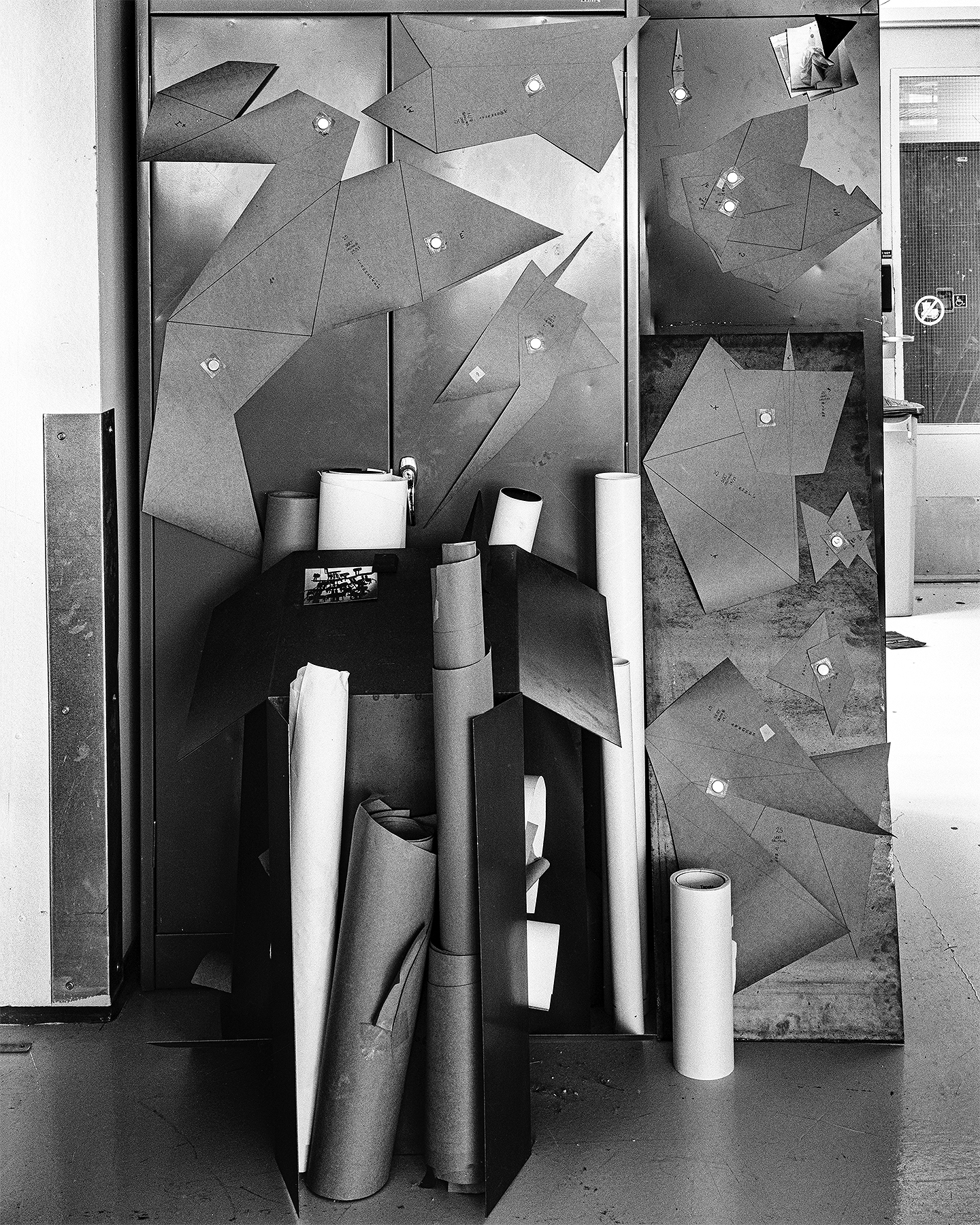
Silver gelatin prints.

A series of large format photographs documenting the studio and the process of making through folding.

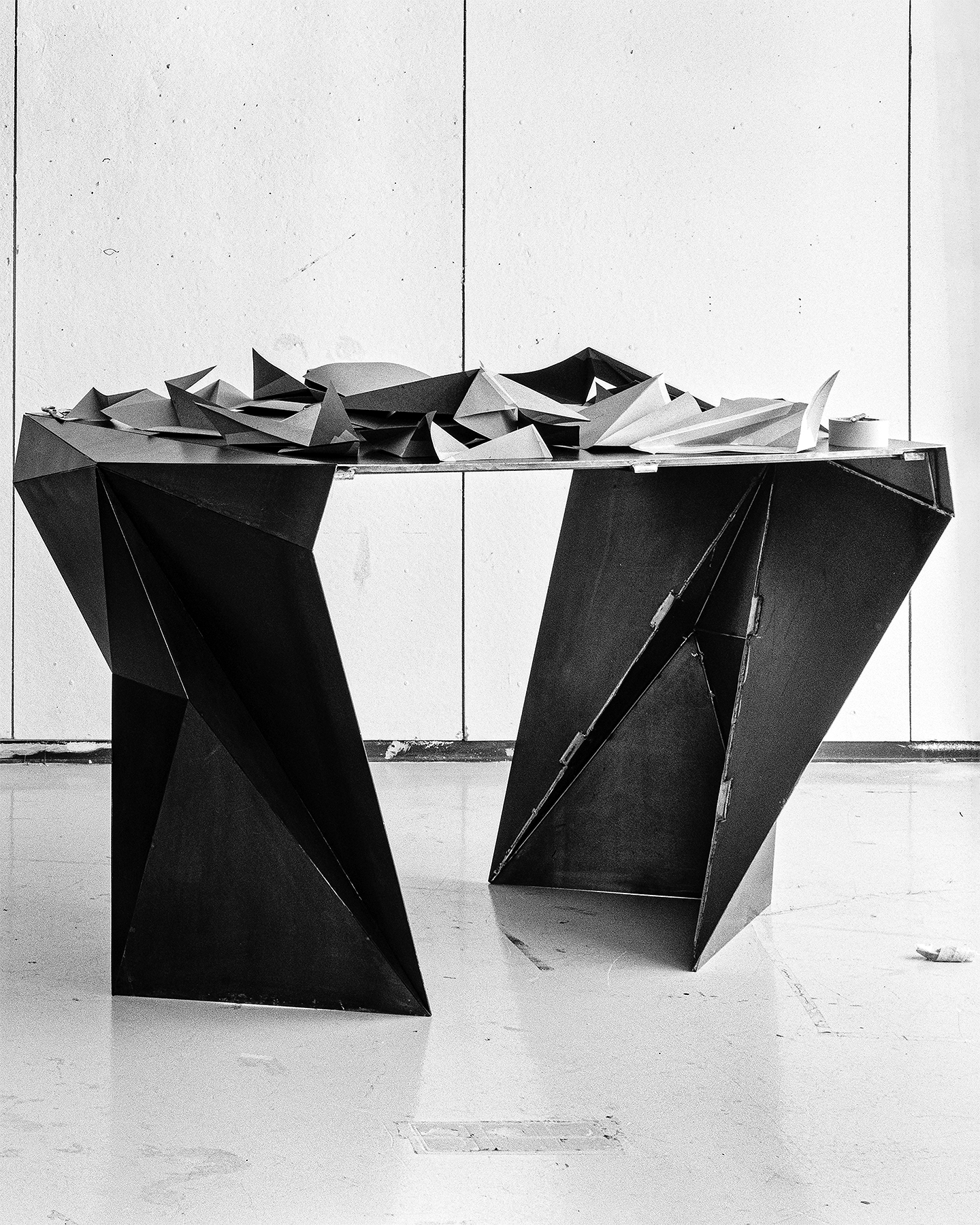
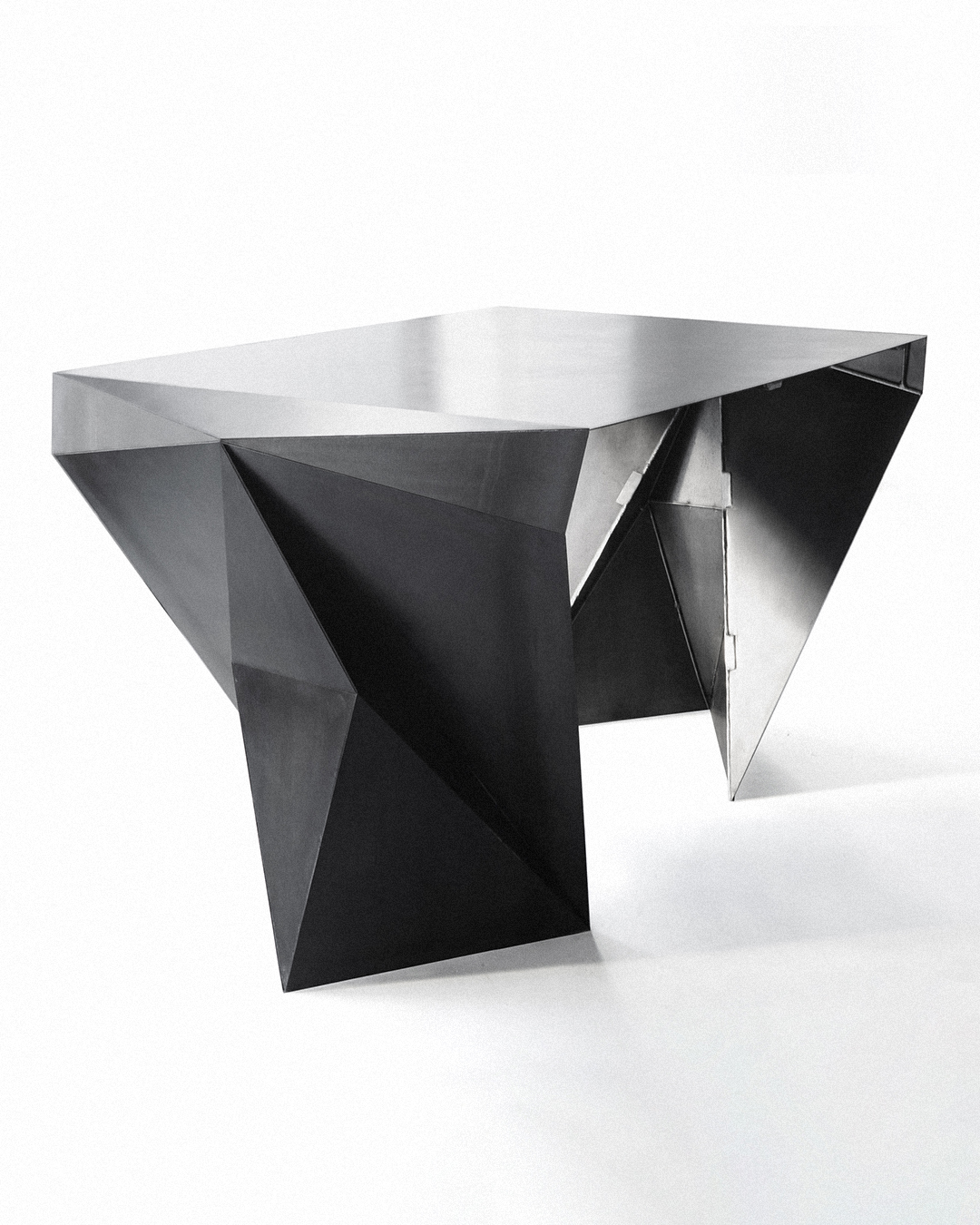
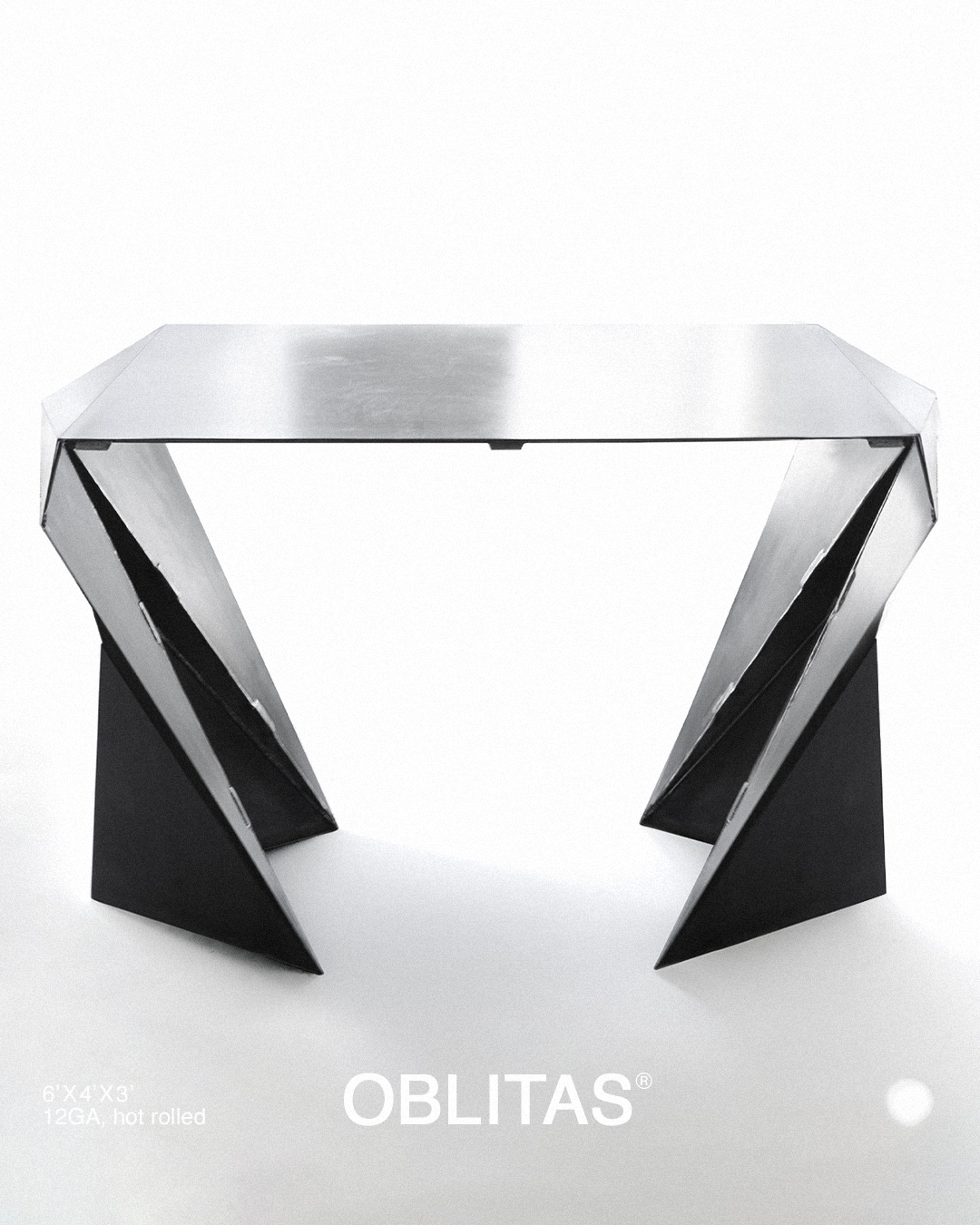
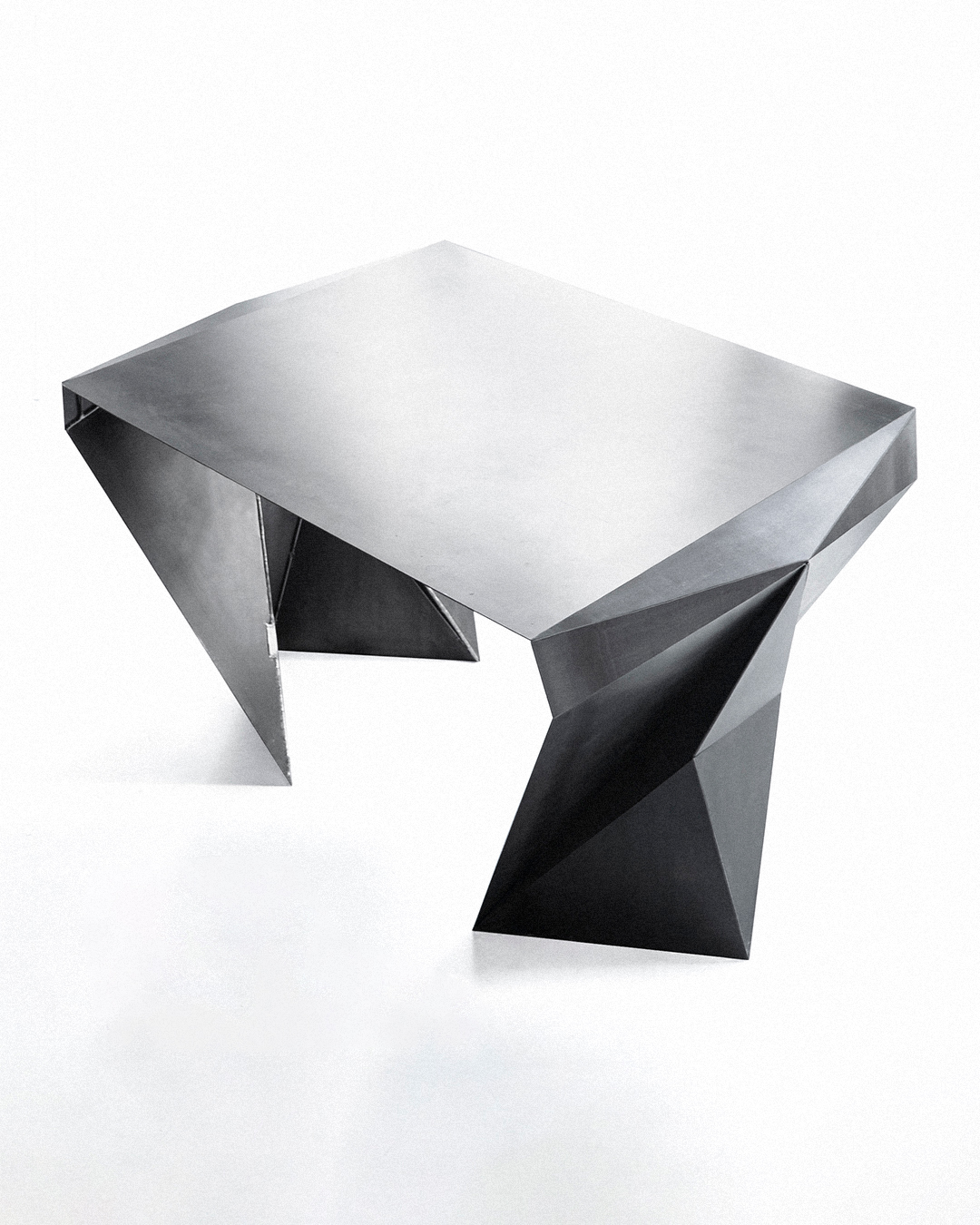
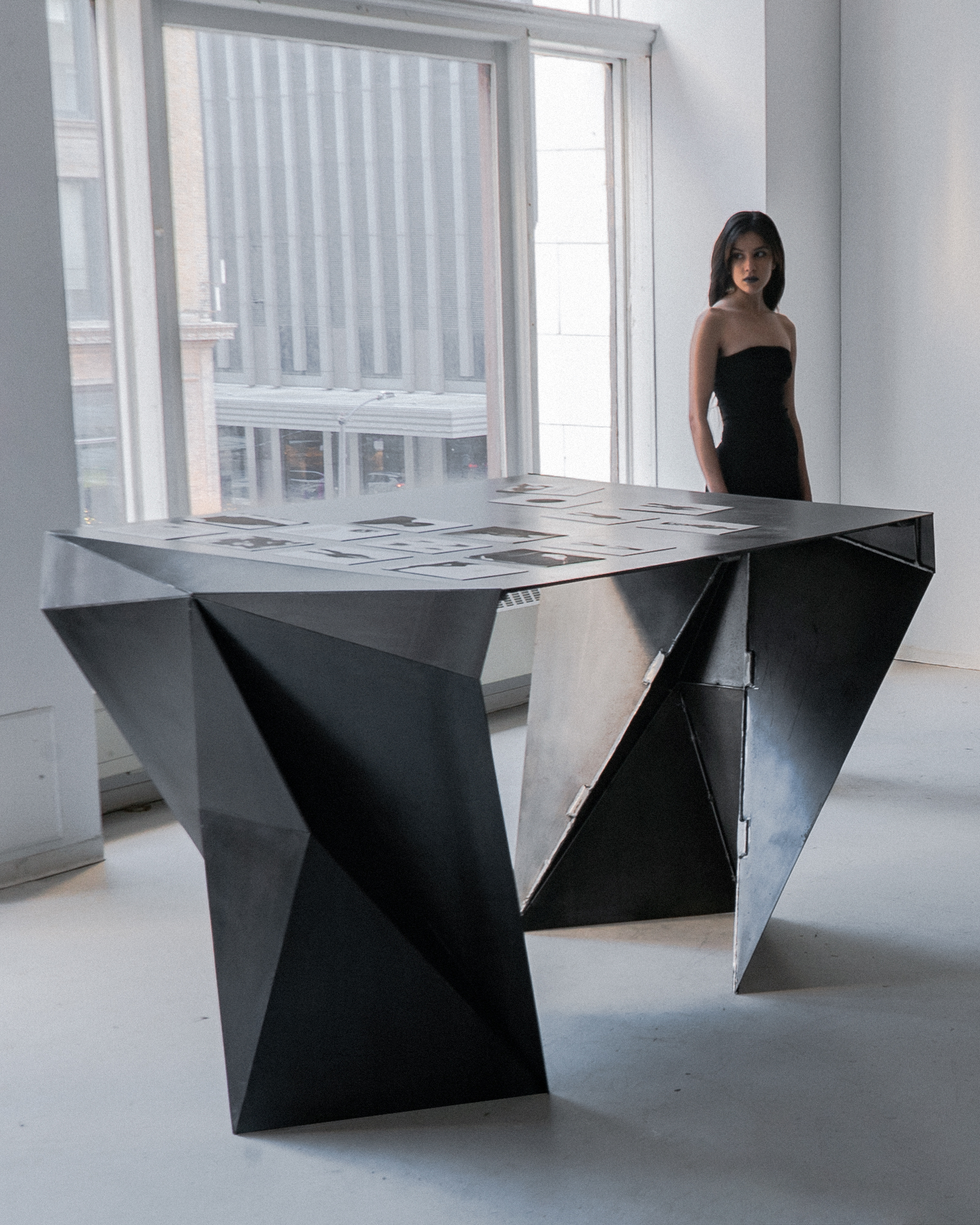
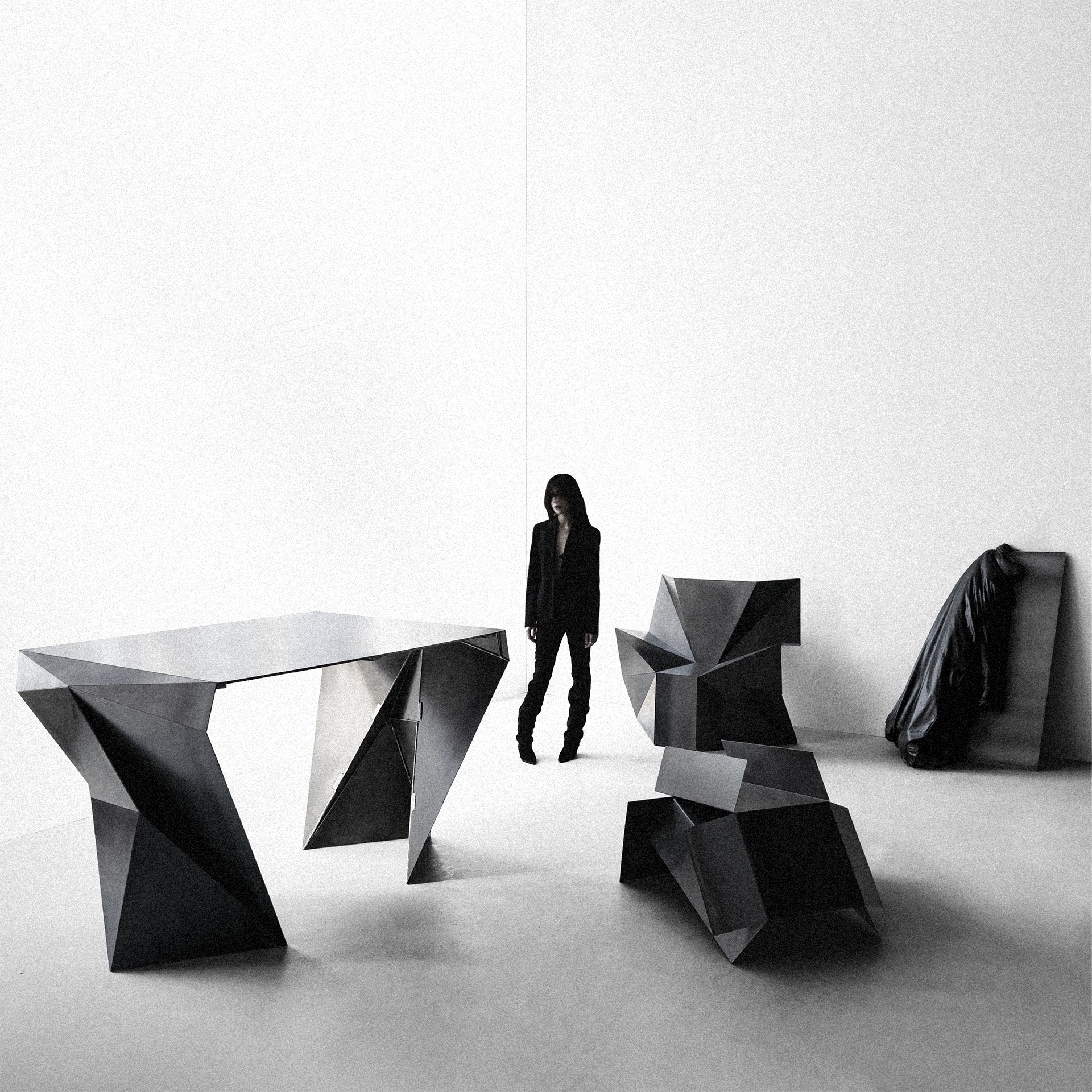
workbench
Hot-rolled steel.

This project proposes a simplified working environment built from furniture formed from full sheets of steel. Each object is made by folding the entire sheet, leaving no offcuts. The approach grew from an obsession with paper, not as a passive surface for marks, but as a material whose own form could generate structure.

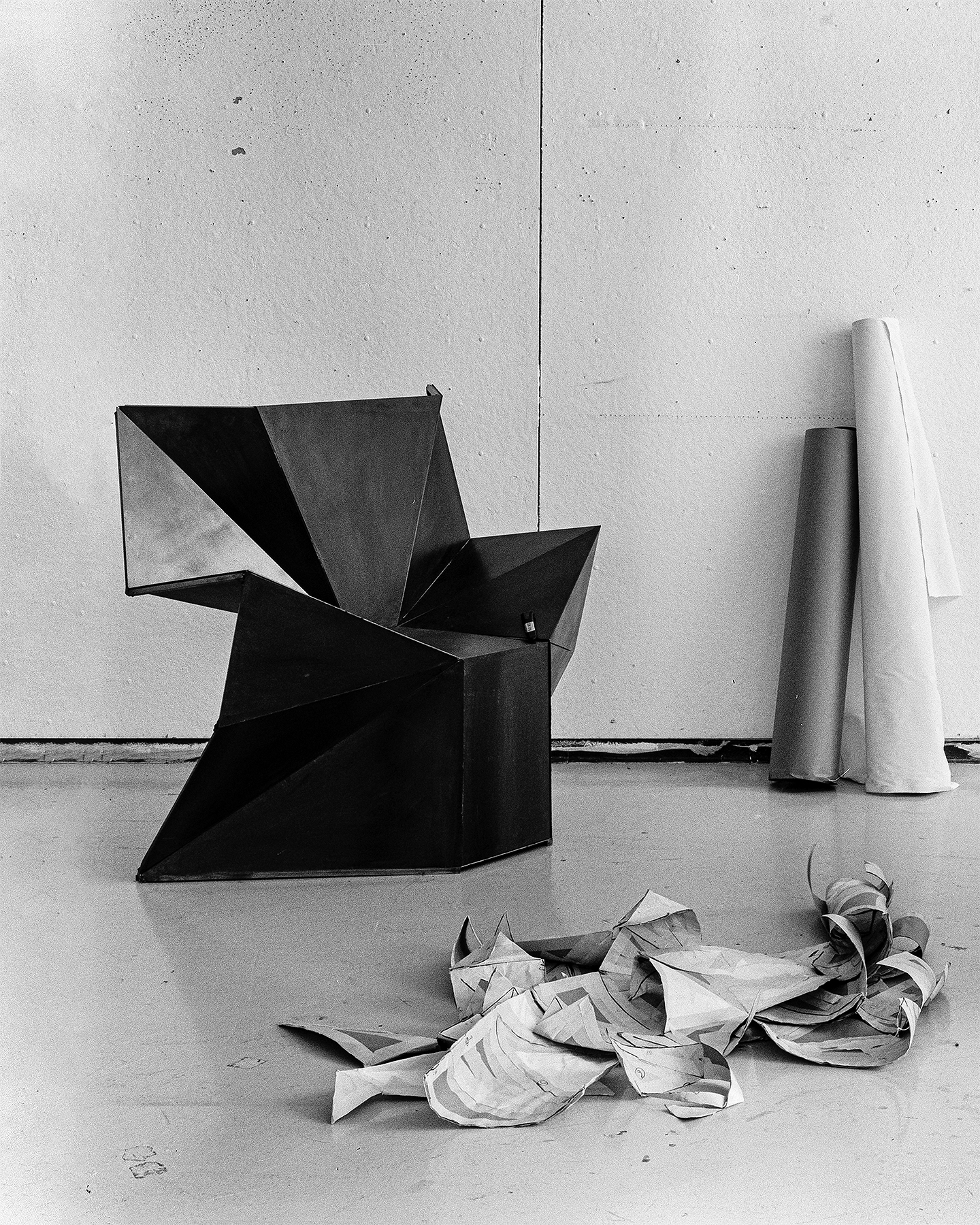
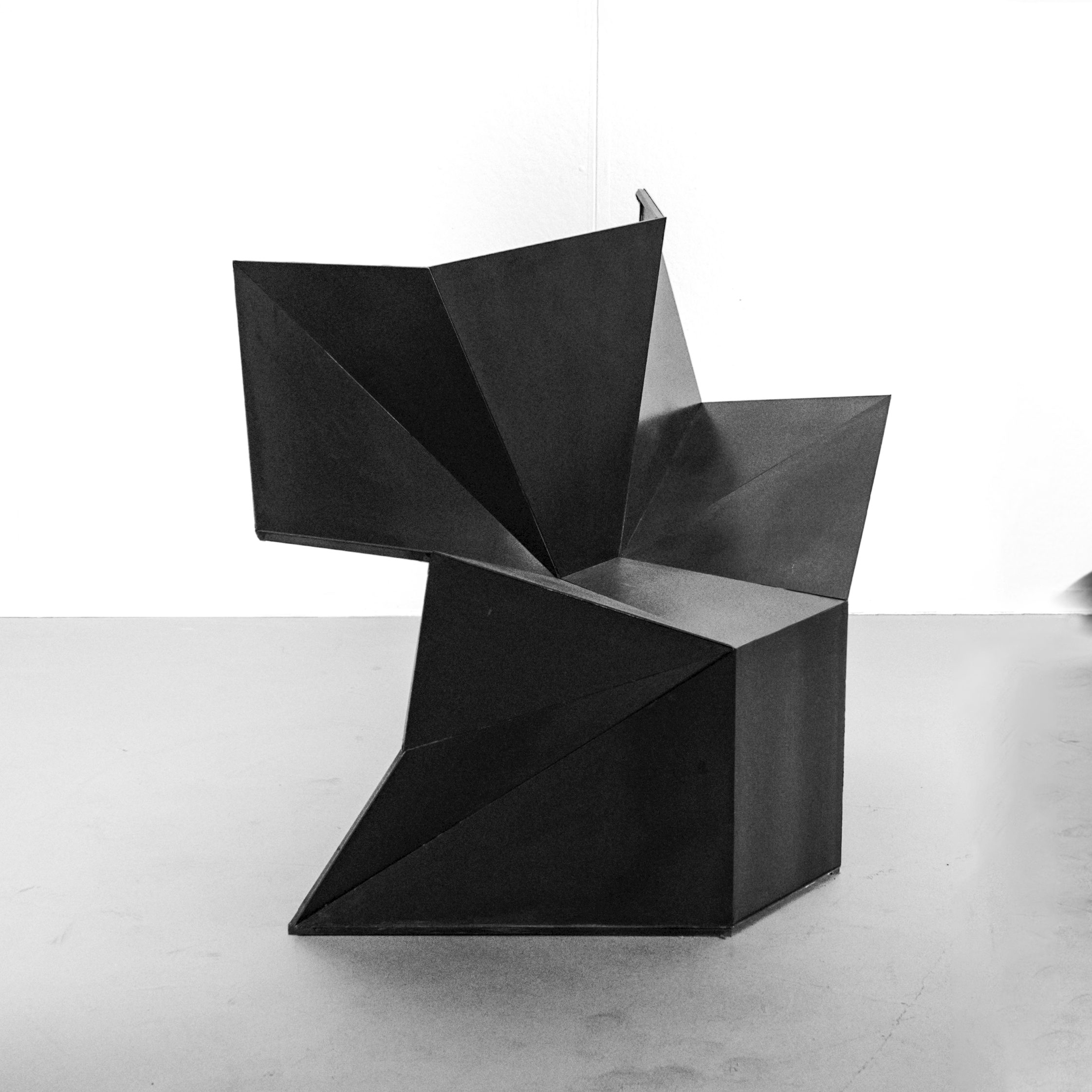
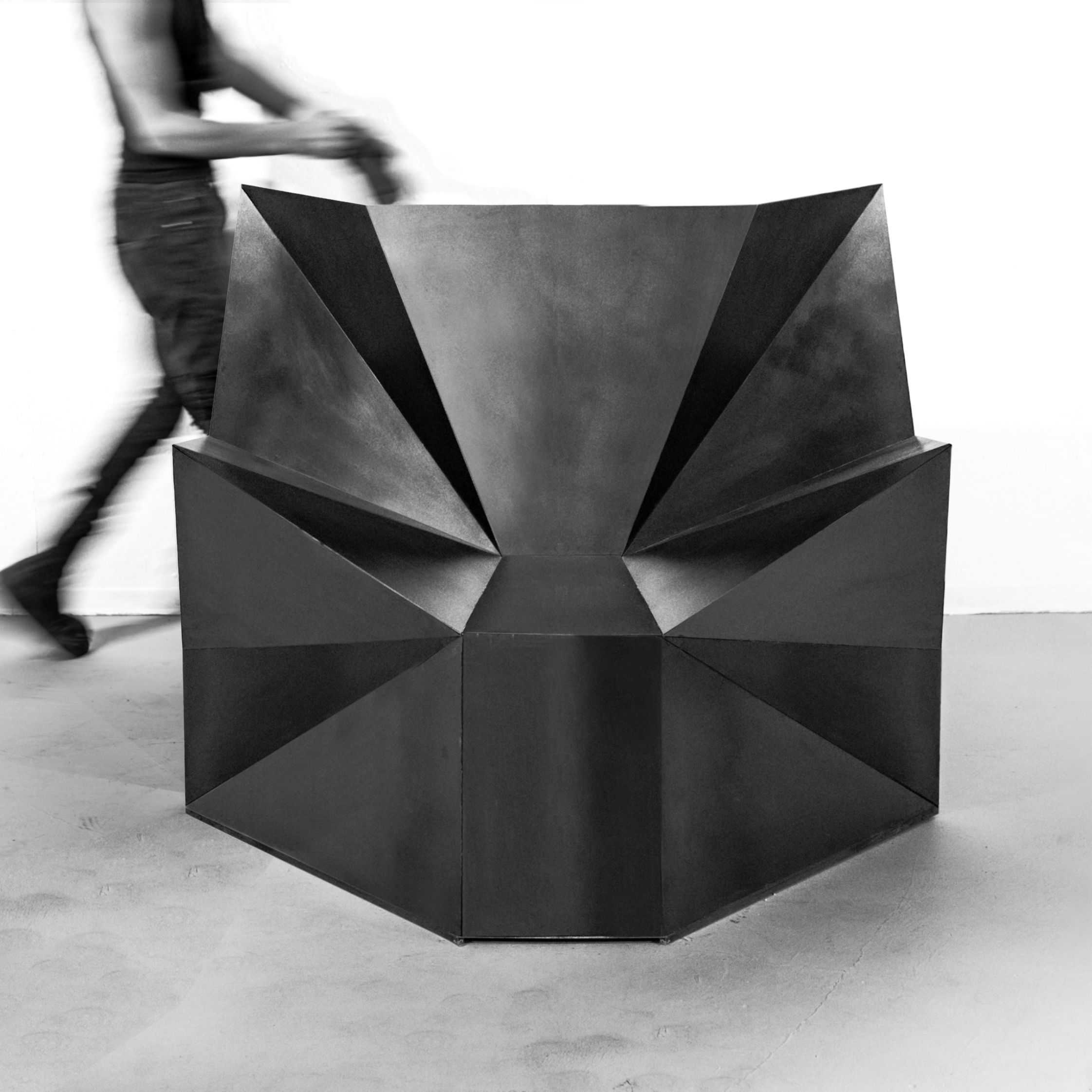
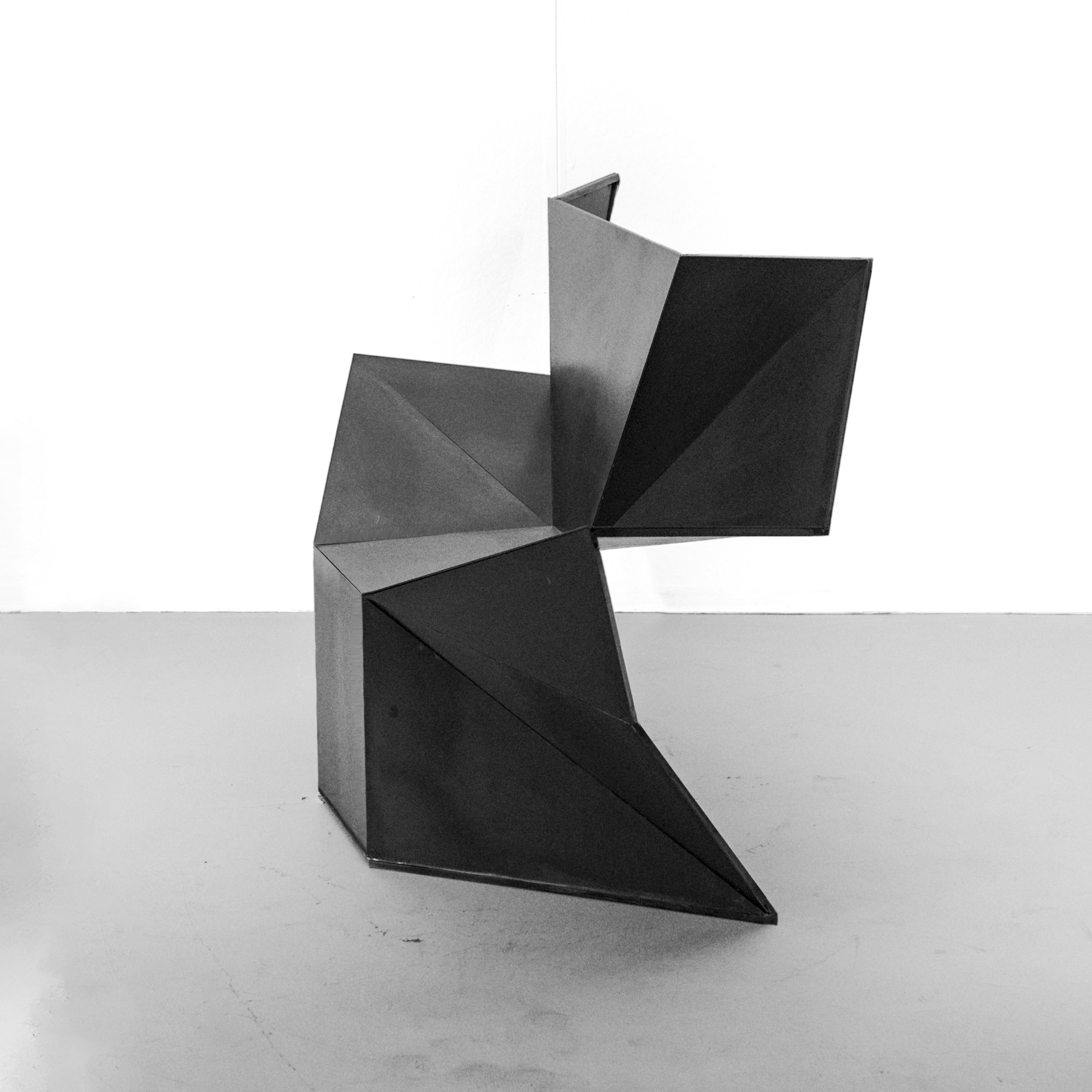
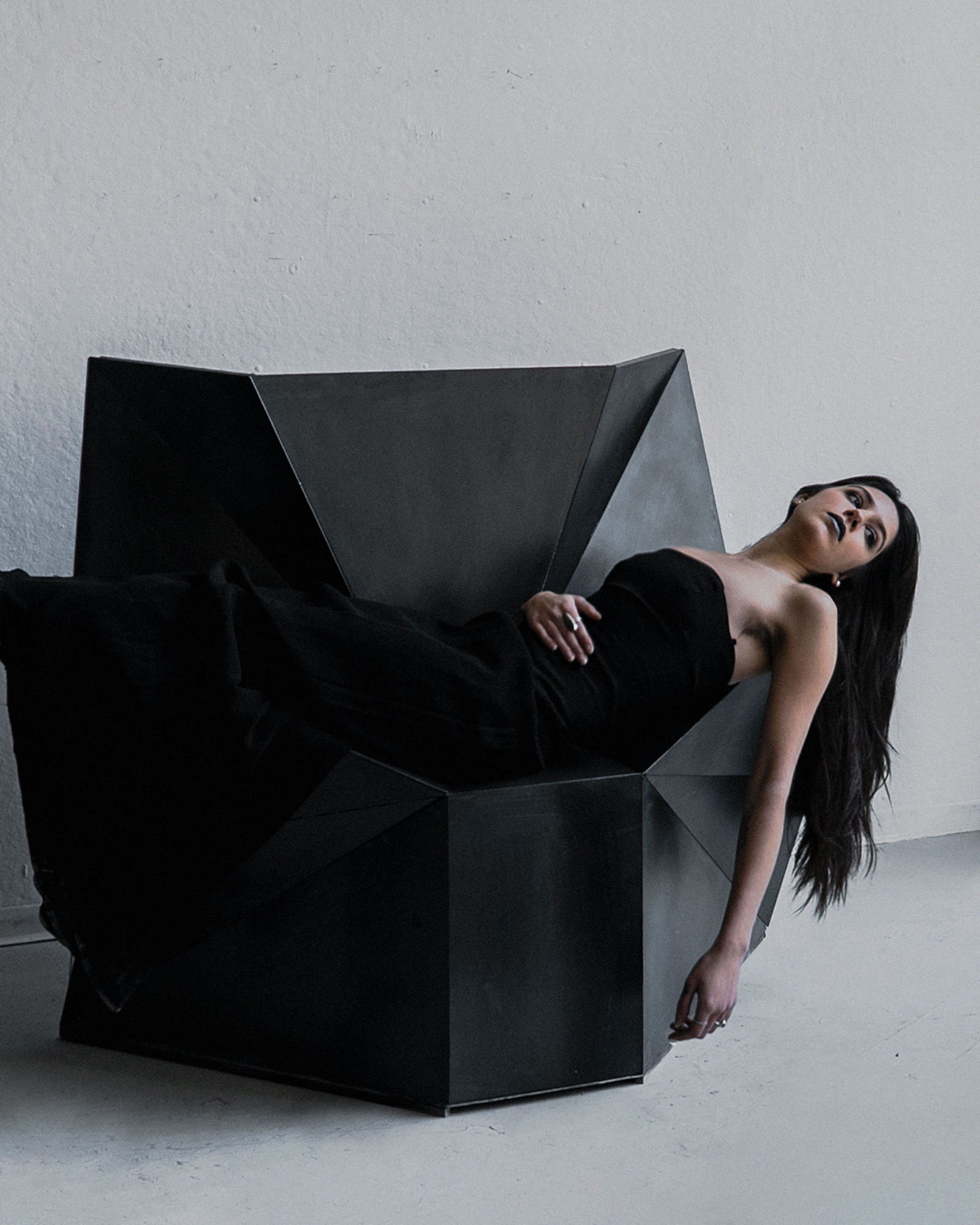
chair
Hot-rolled steel.

This project proposes a simplified working environment built from furniture formed from full sheets of steel. Each object is made by folding the entire sheet, leaving no offcuts. The approach grew from an obsession with paper, not as a passive surface for marks, but as a material whose own form could generate structure.

2022
entropy
Film with the cardboard structures from [ ]. In collaboration with Philipp Groth, Musa Ghaznavi, and Gabe Postle

Moves [ ] from a controlled studio object into a system affected by an external environment. At Lake Michigan, wind altered the structures’ movement, balance and shape, while the cardboard became a source of sound as it shifted against the body and itself.

[ ]
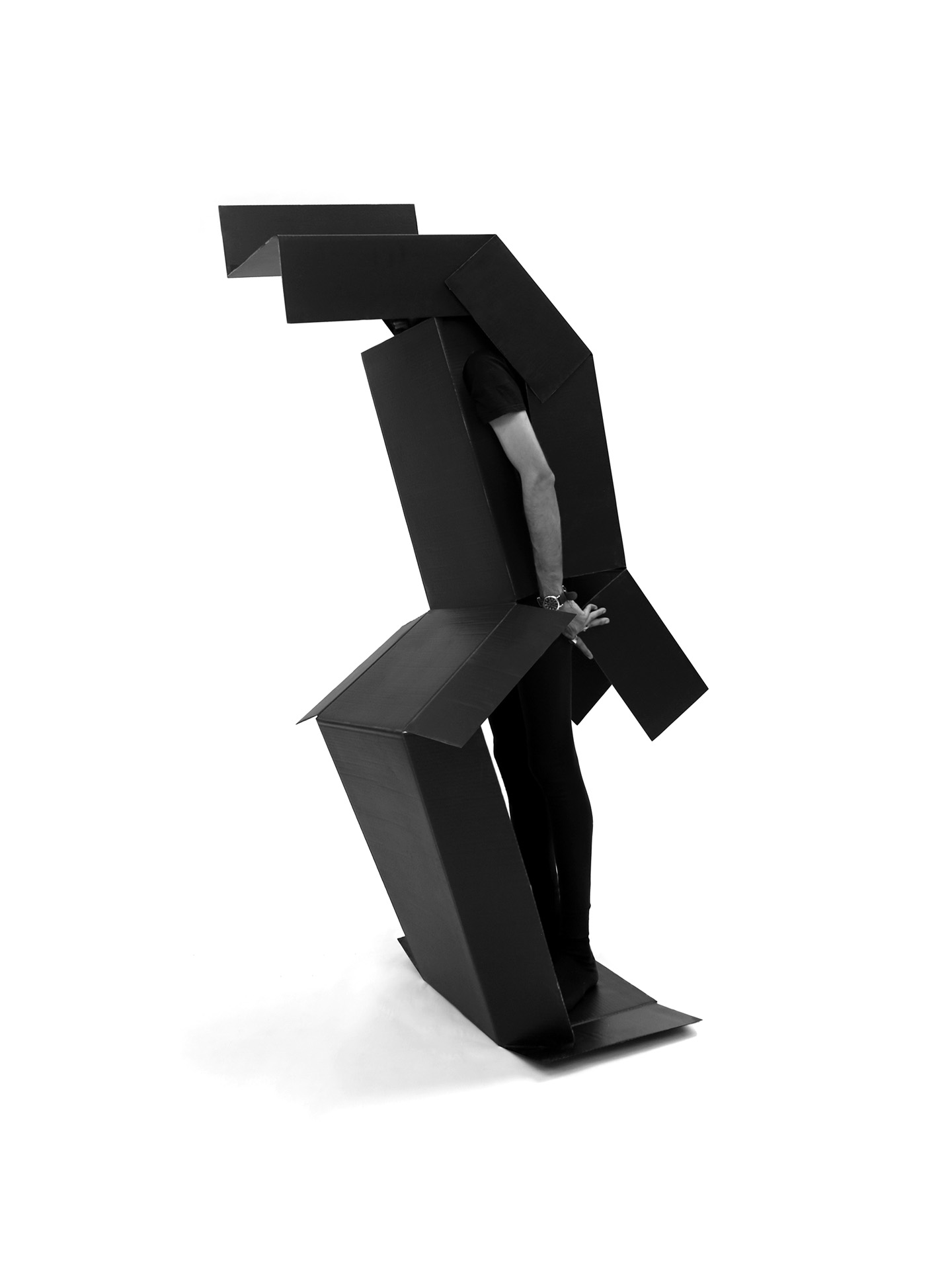
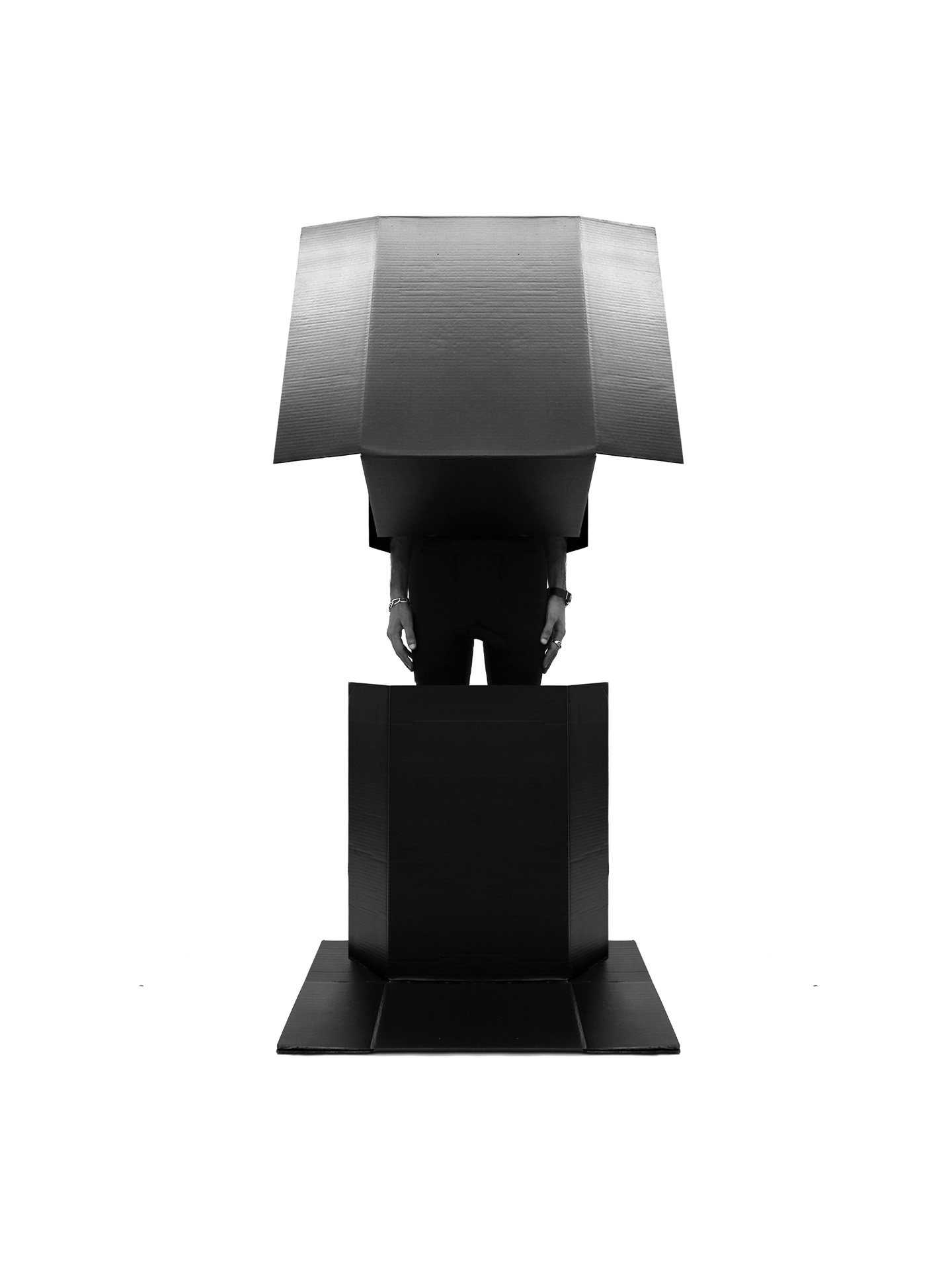
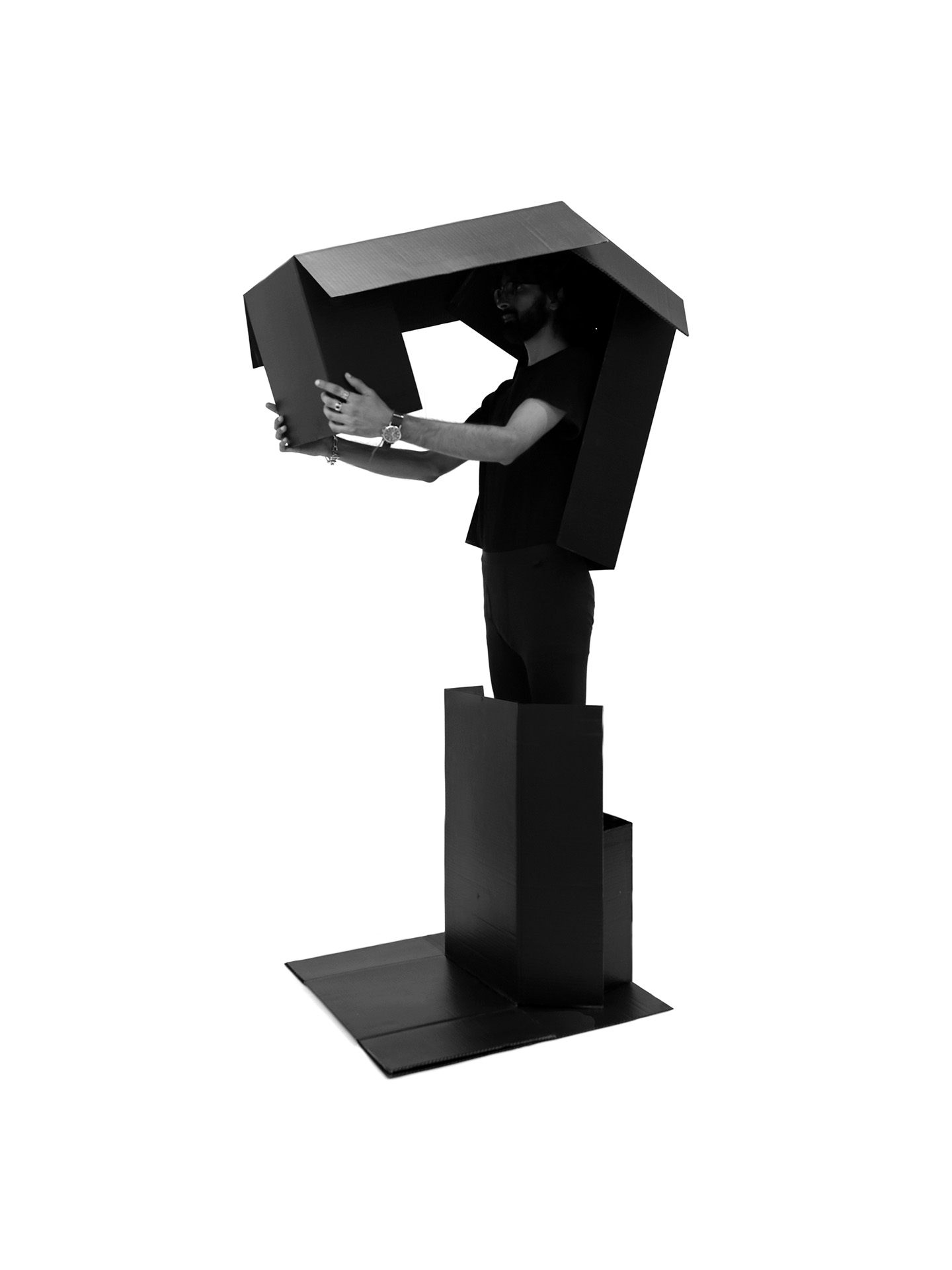
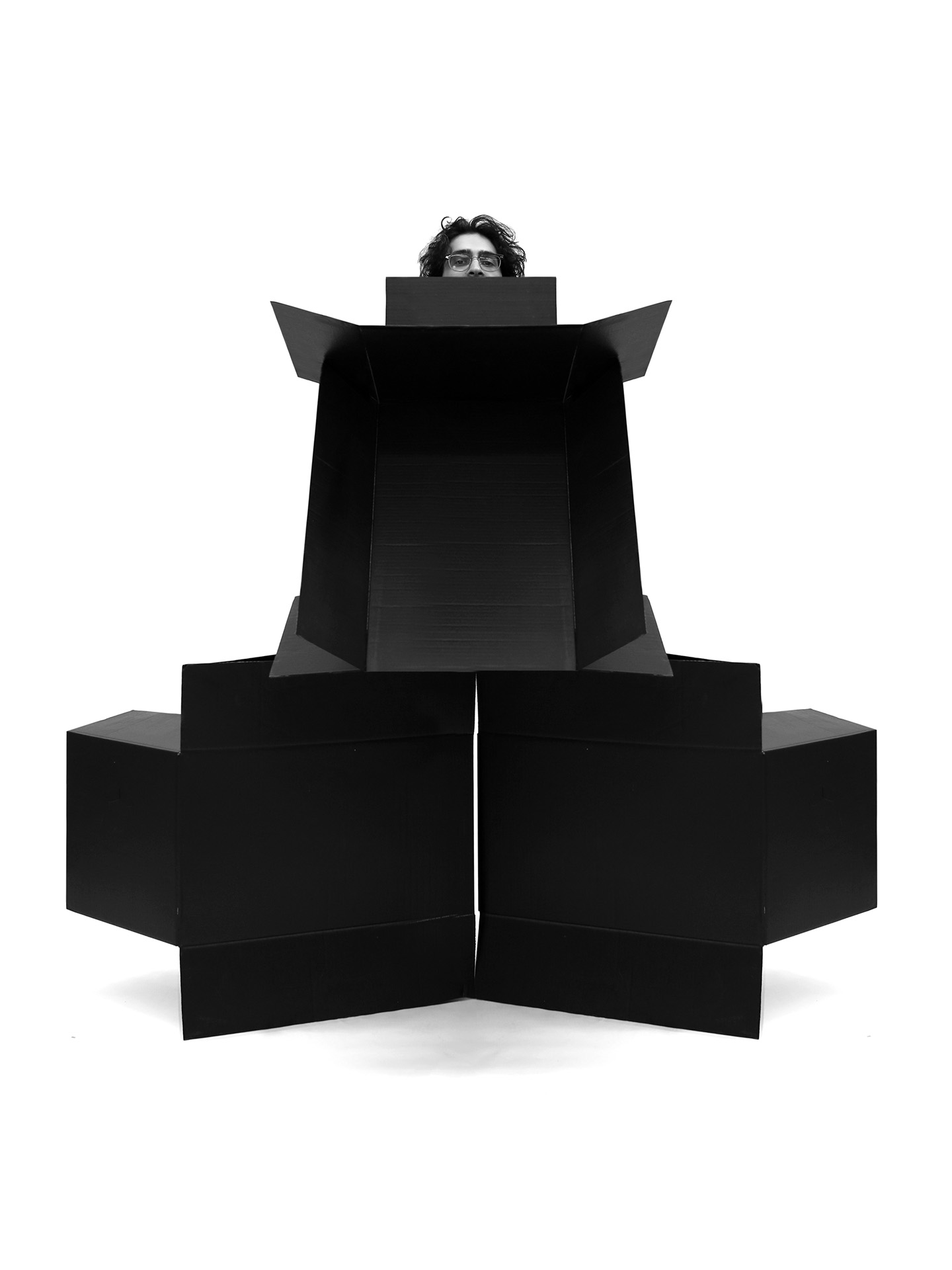
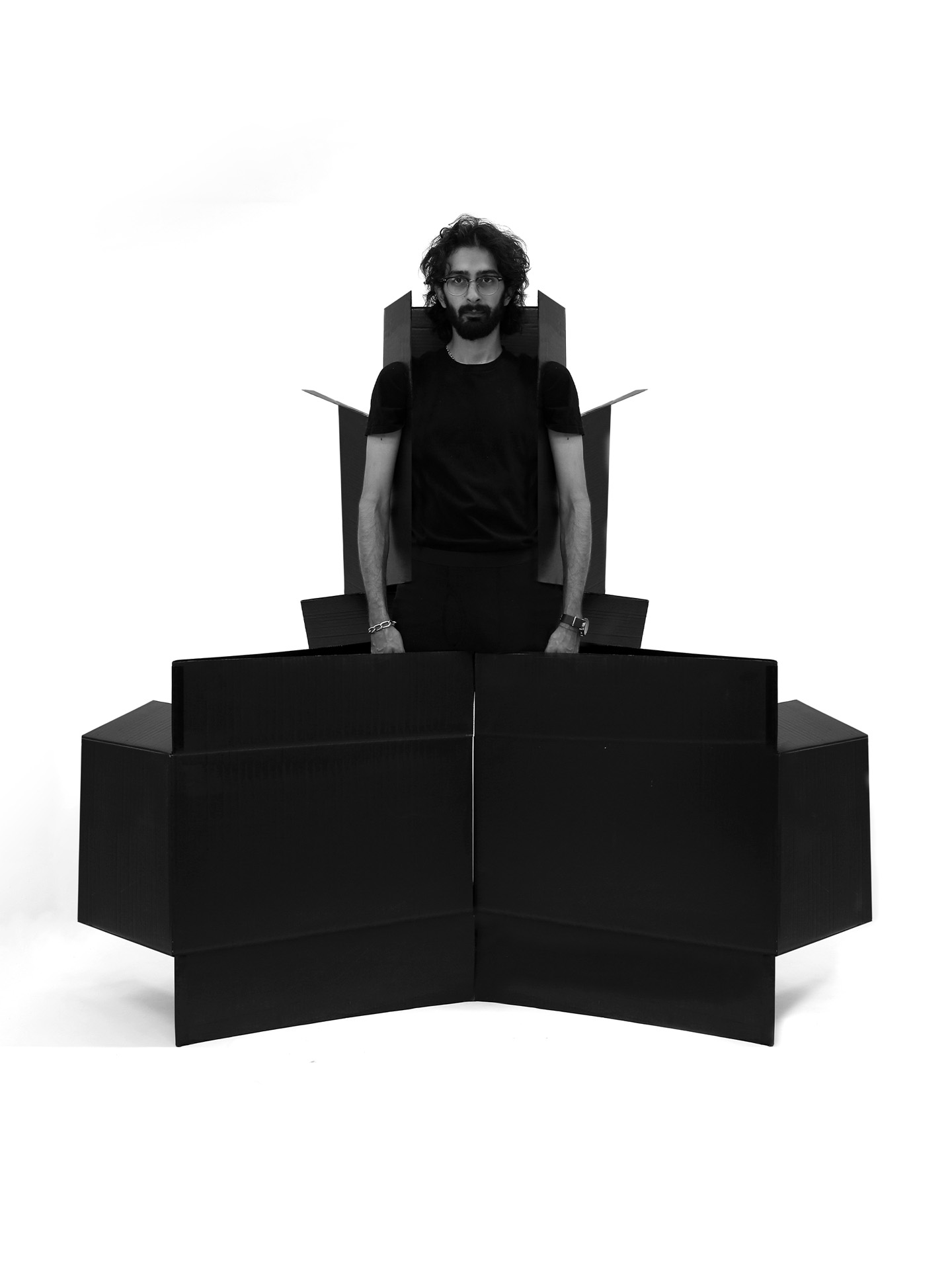
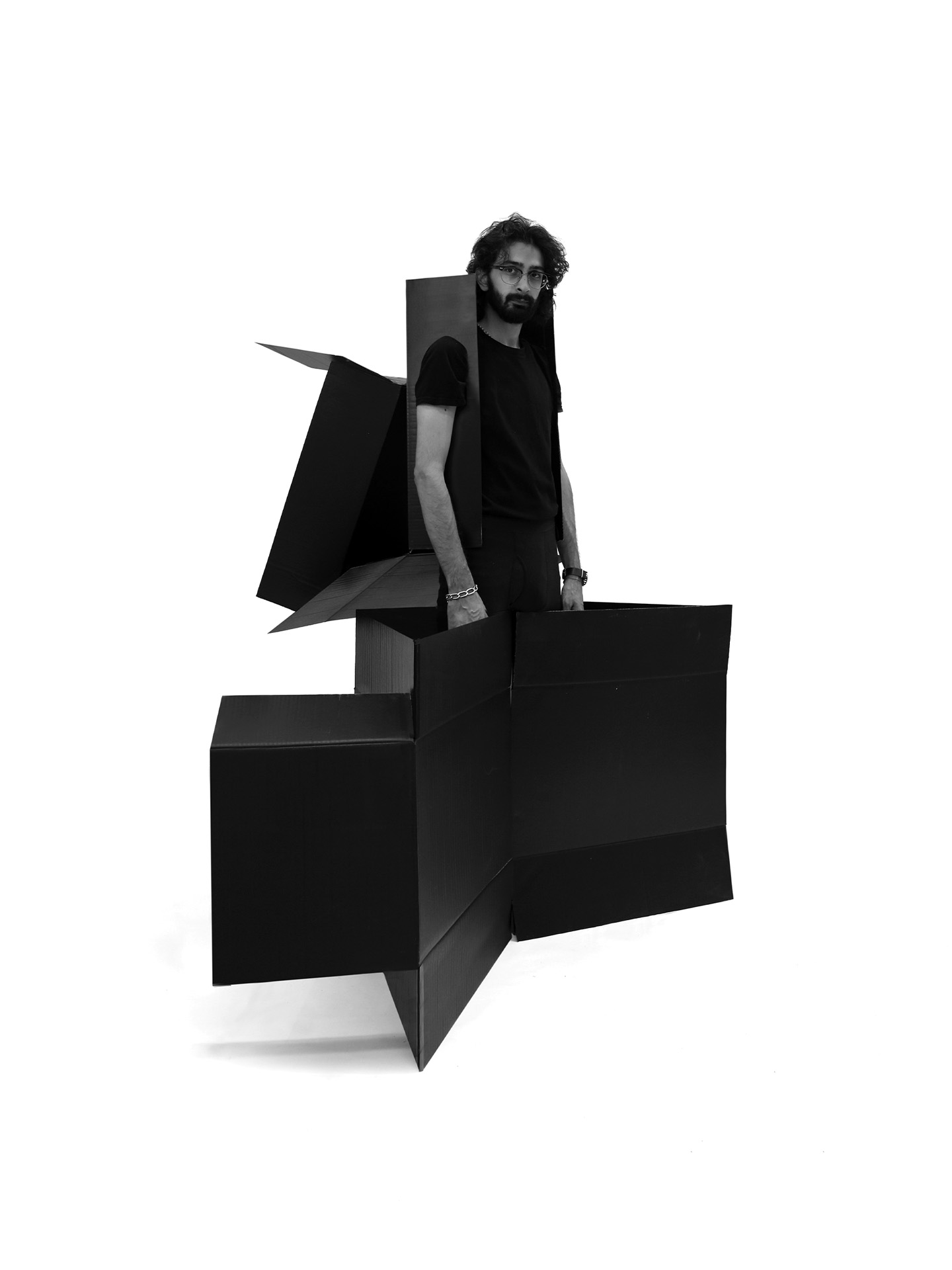
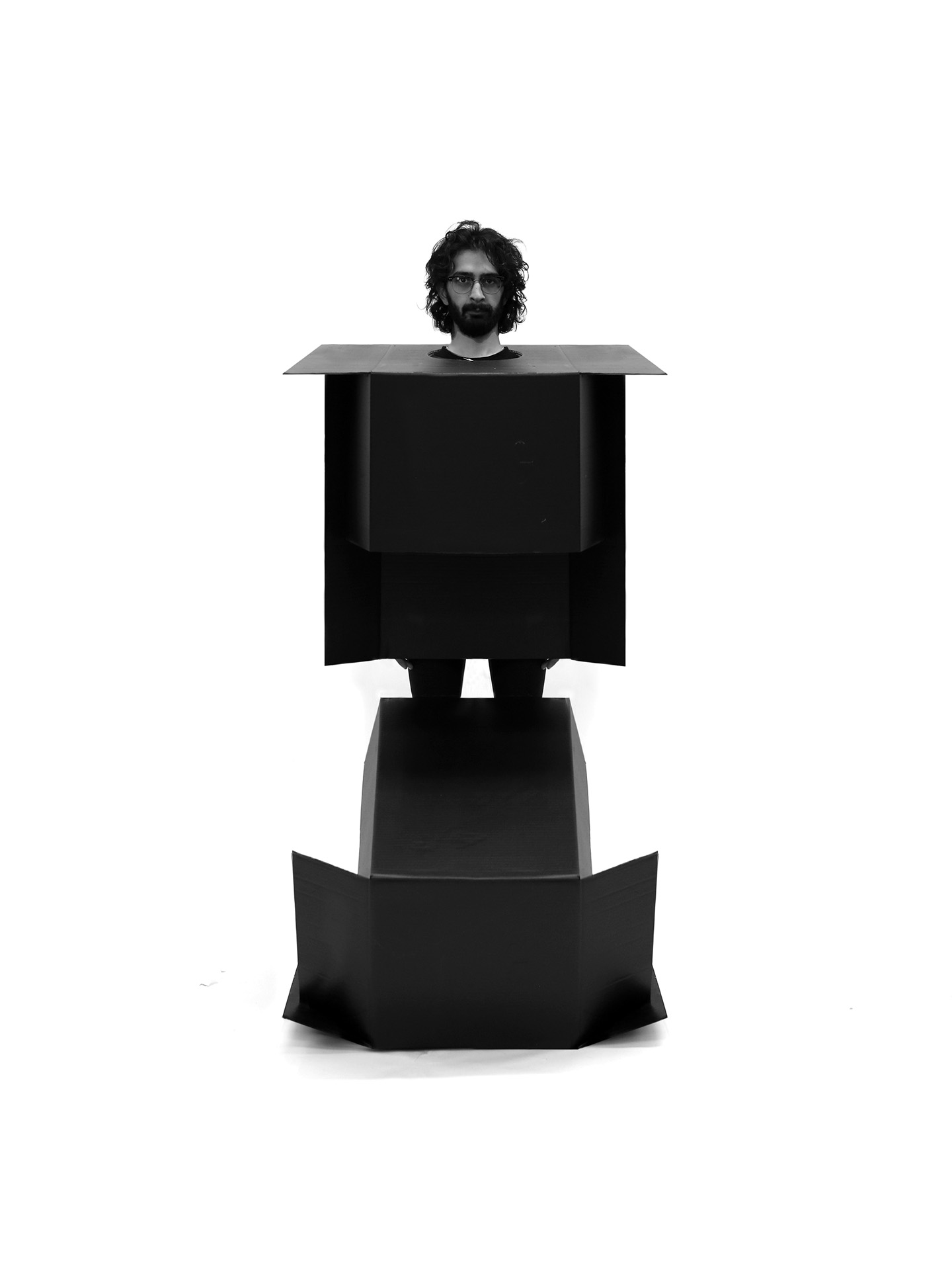
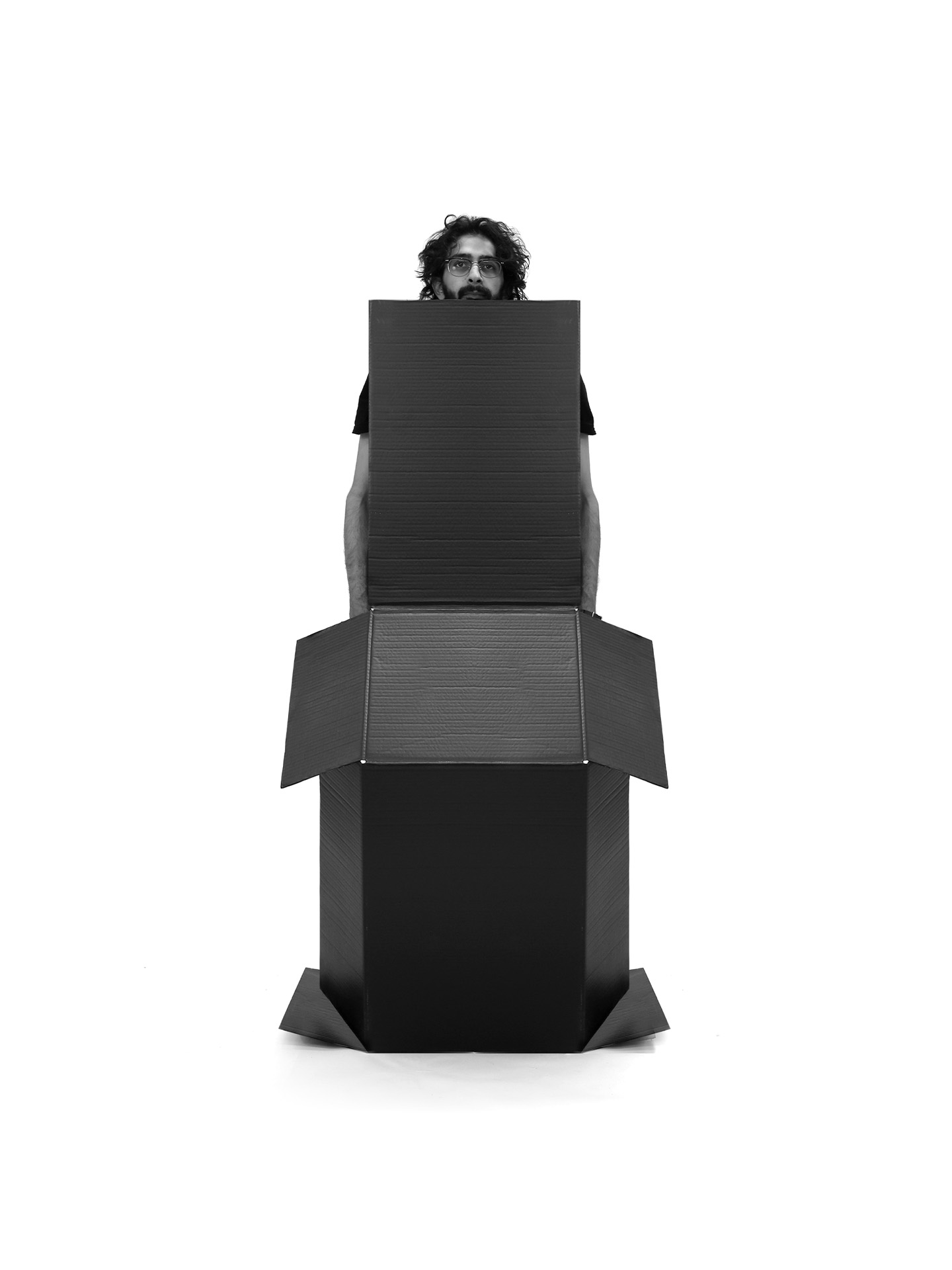
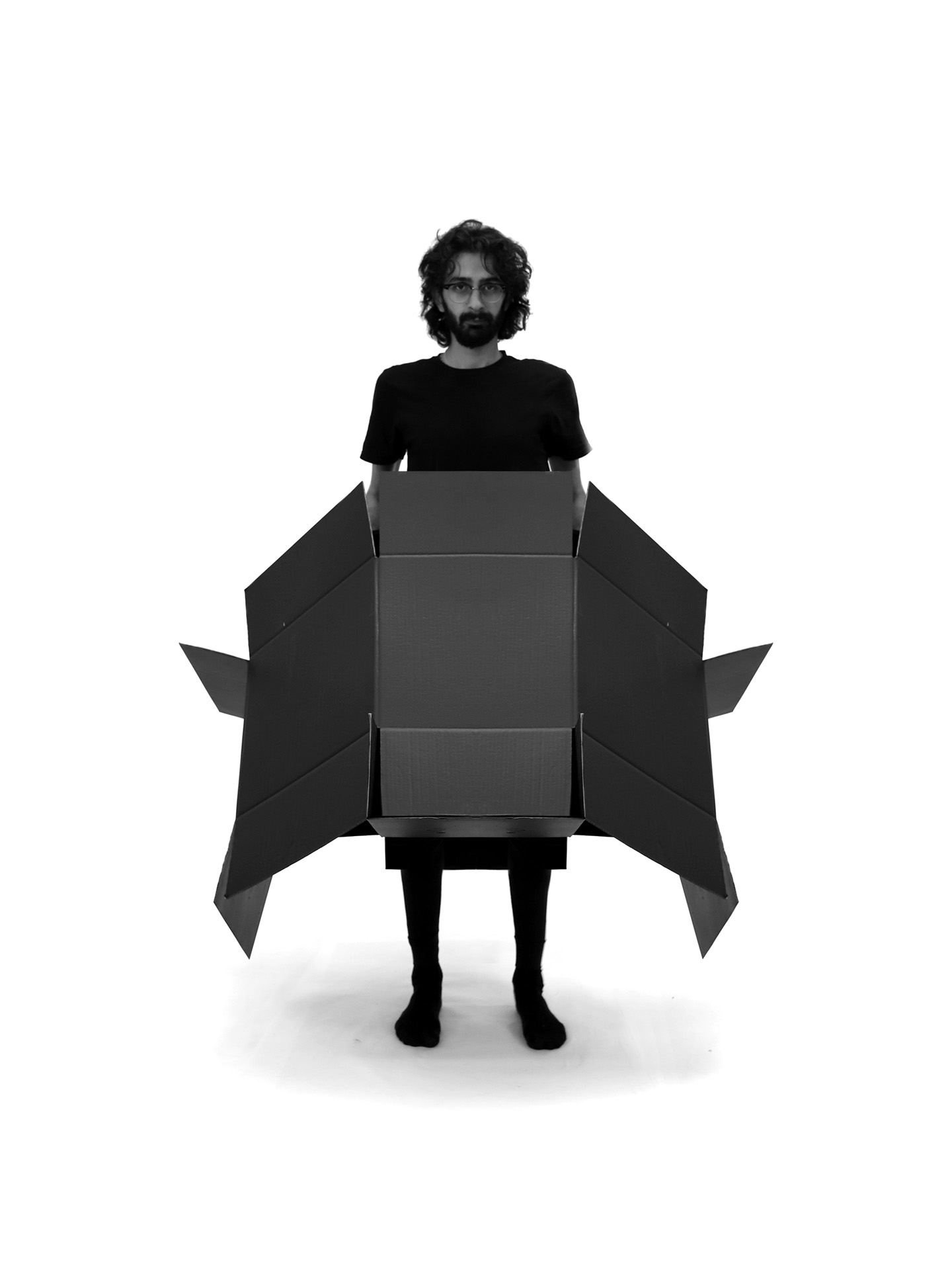
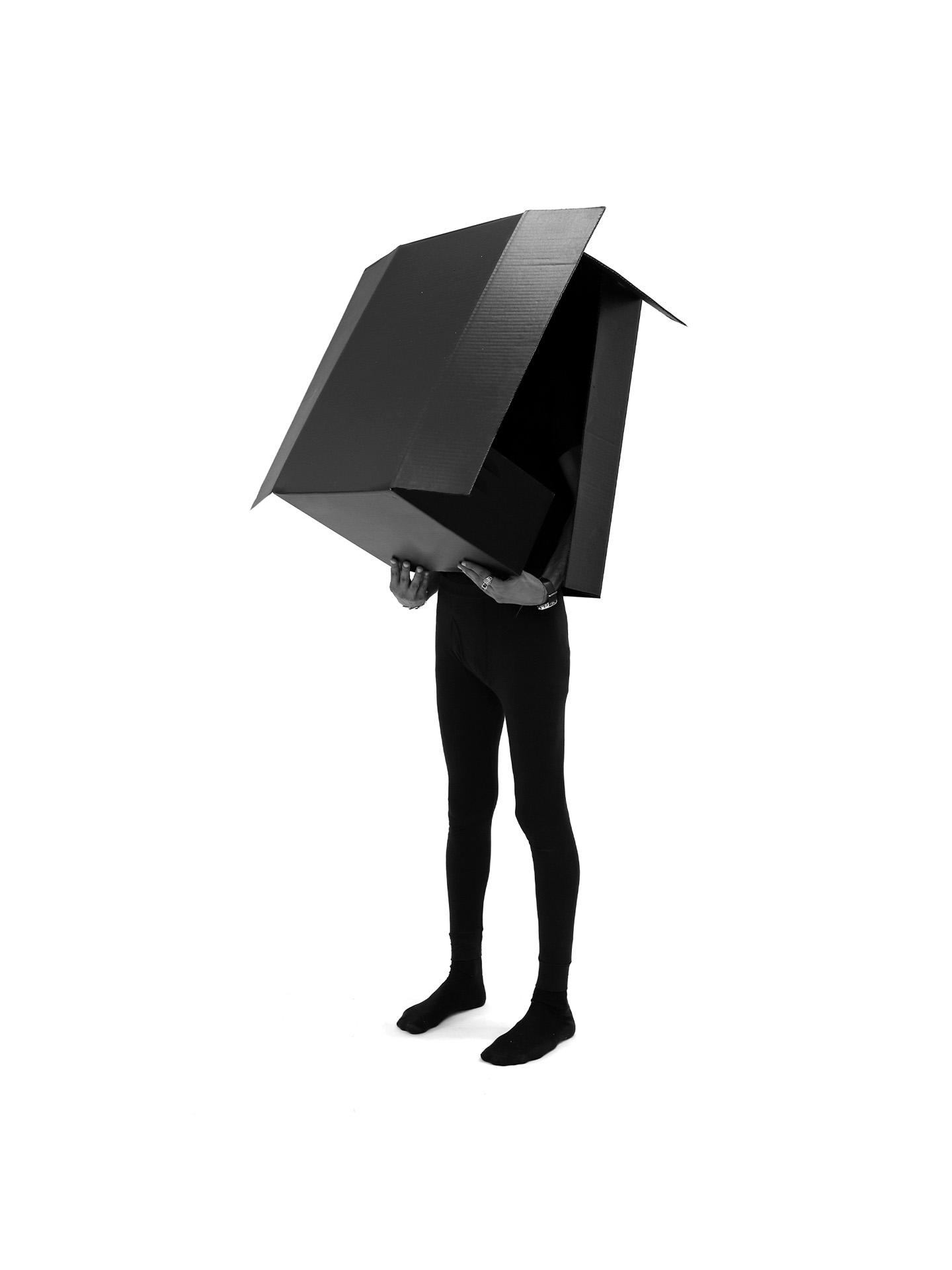
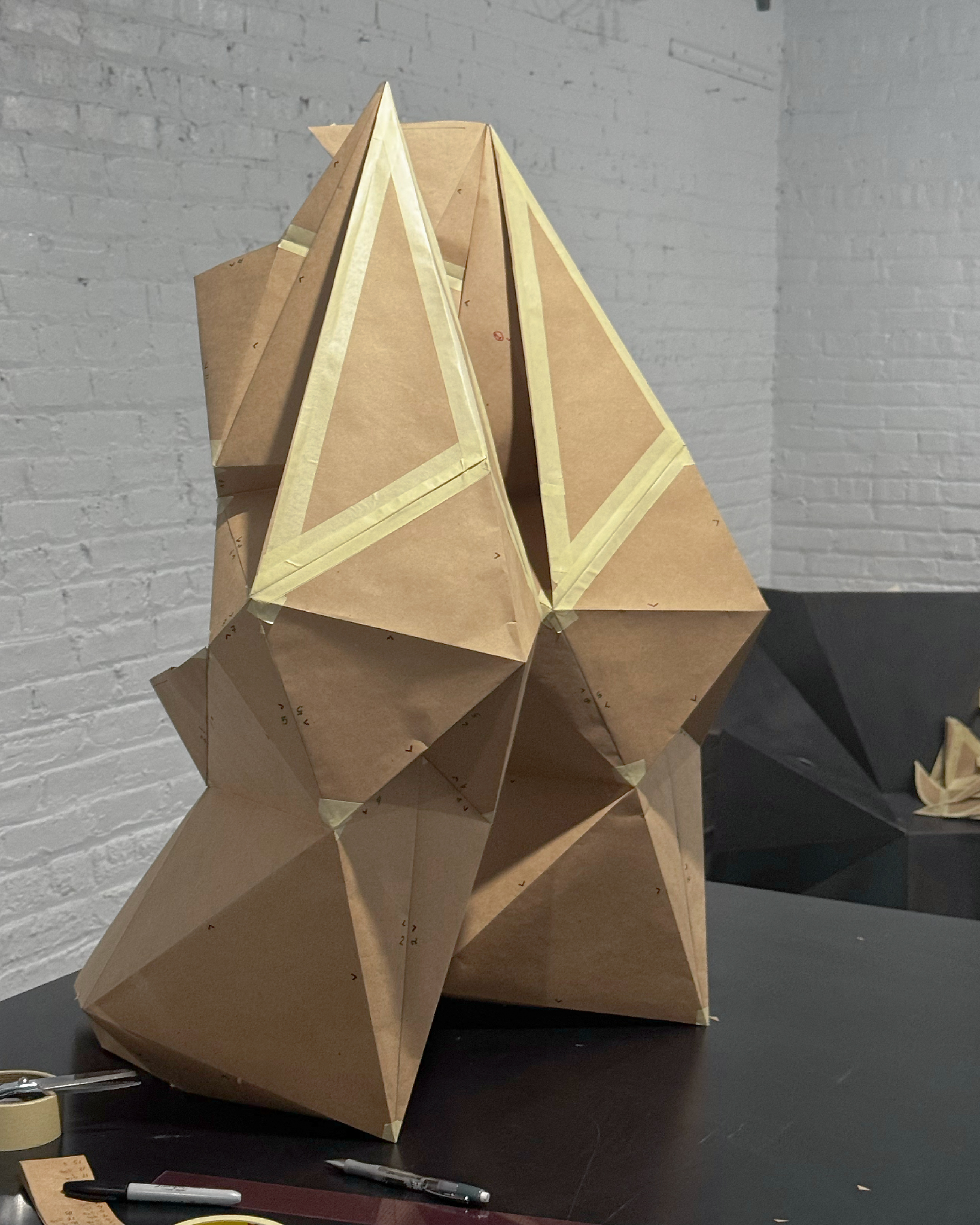
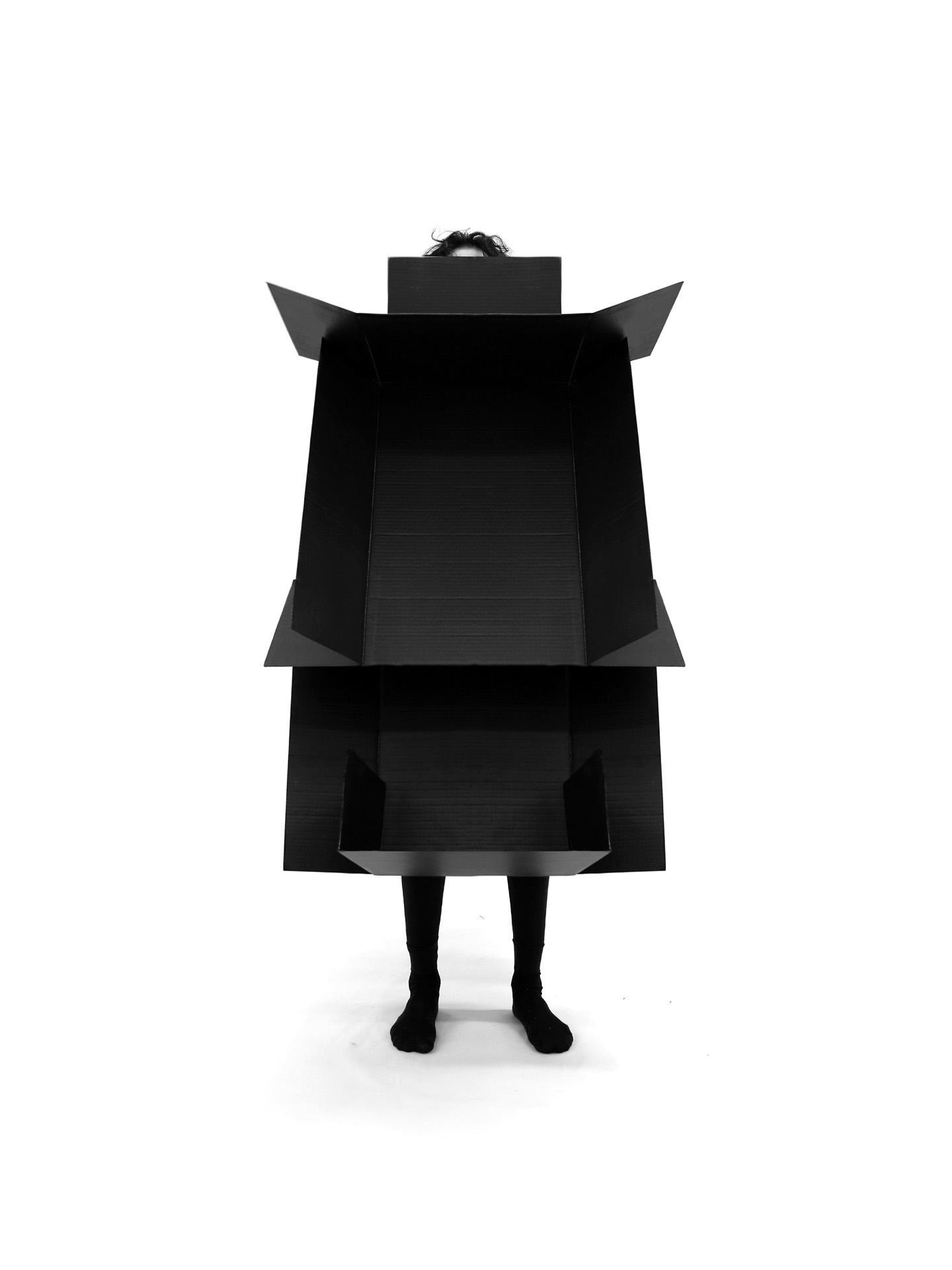
Cardboard. In collaboration with Philipp Groth.

Discarded cardboard was painted black and, through folding, draped around the body, using the wearer as a measure of space. The rigid planes create temporary living spaces, positioning the body between garment and architecture.

lantern pants
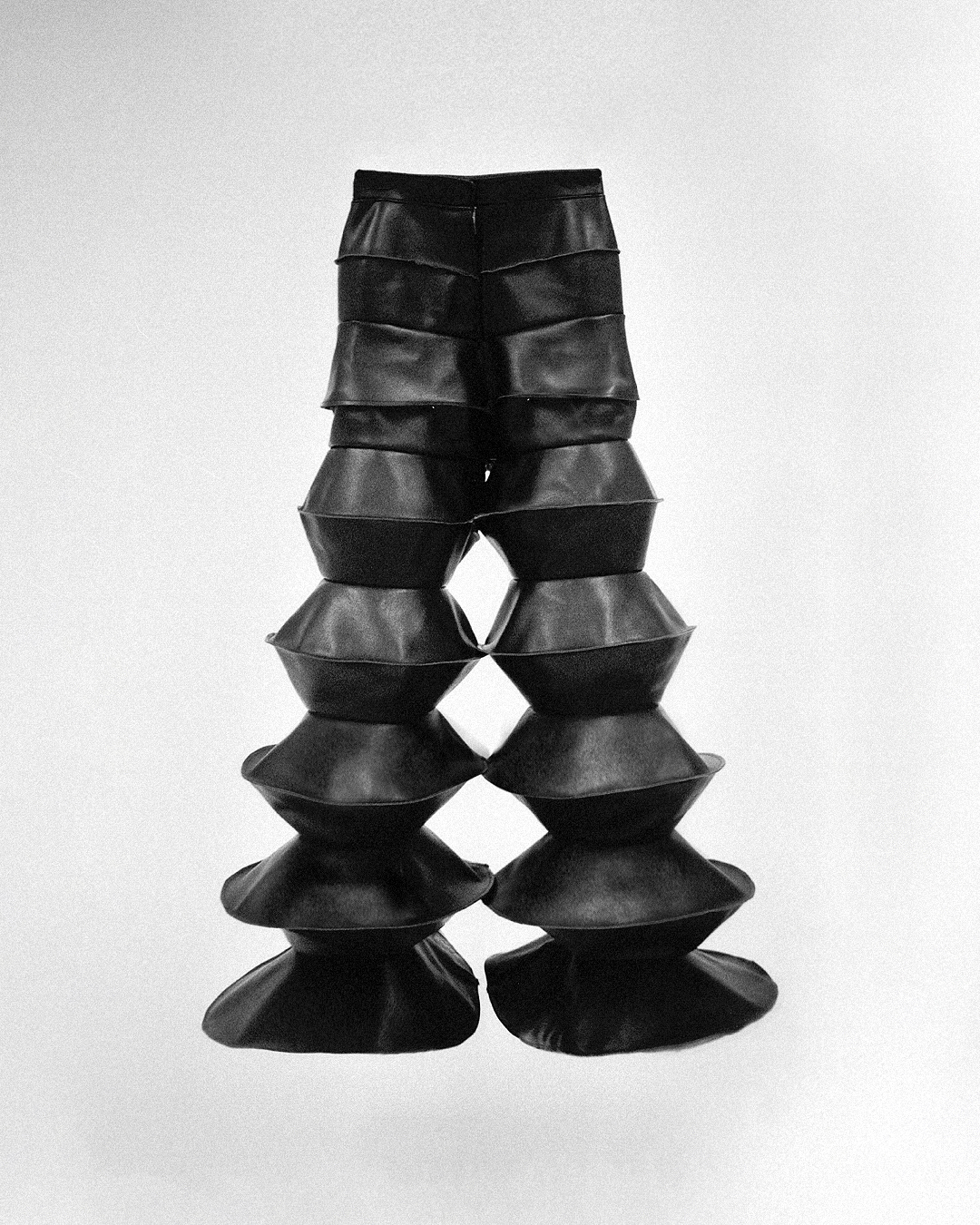
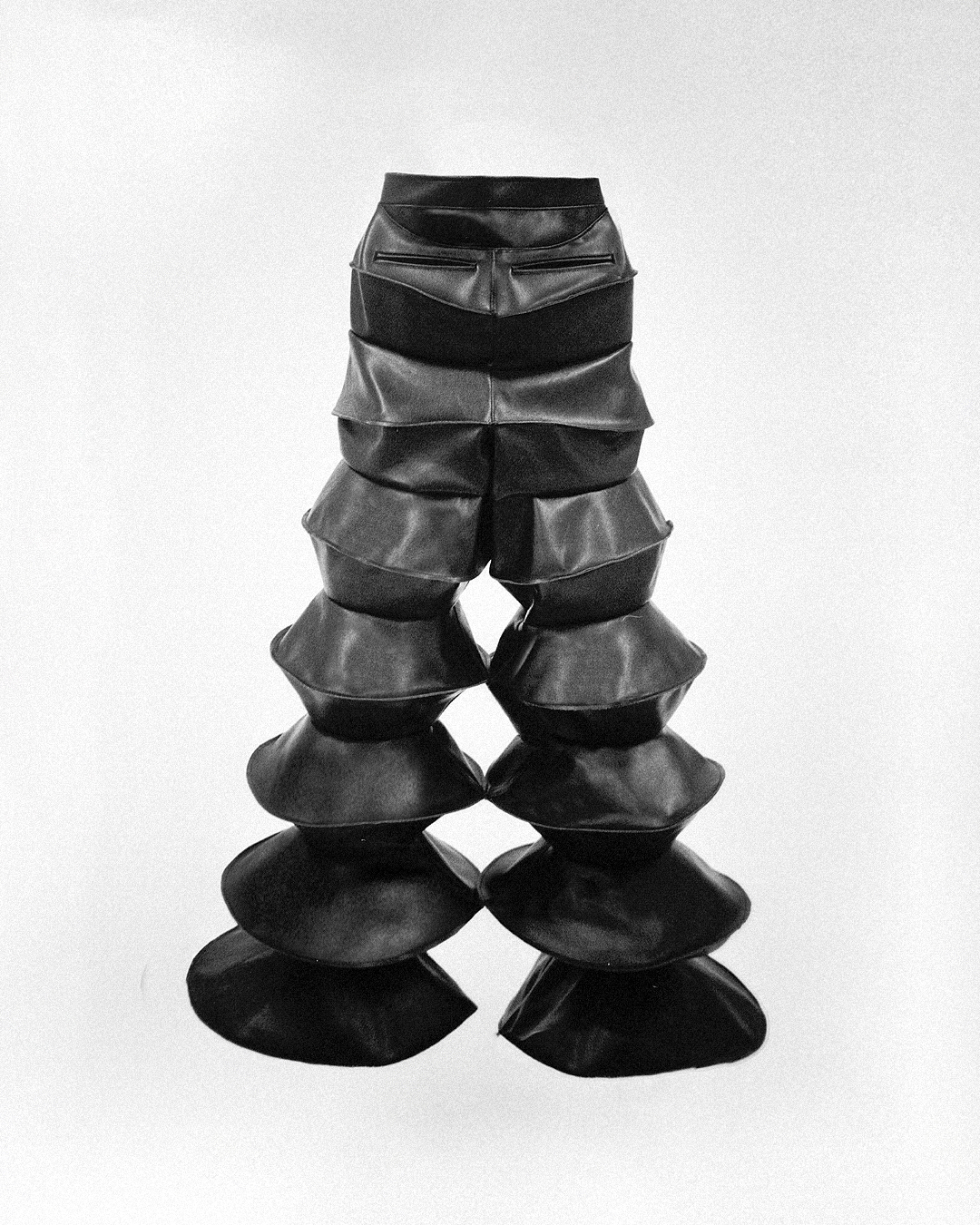
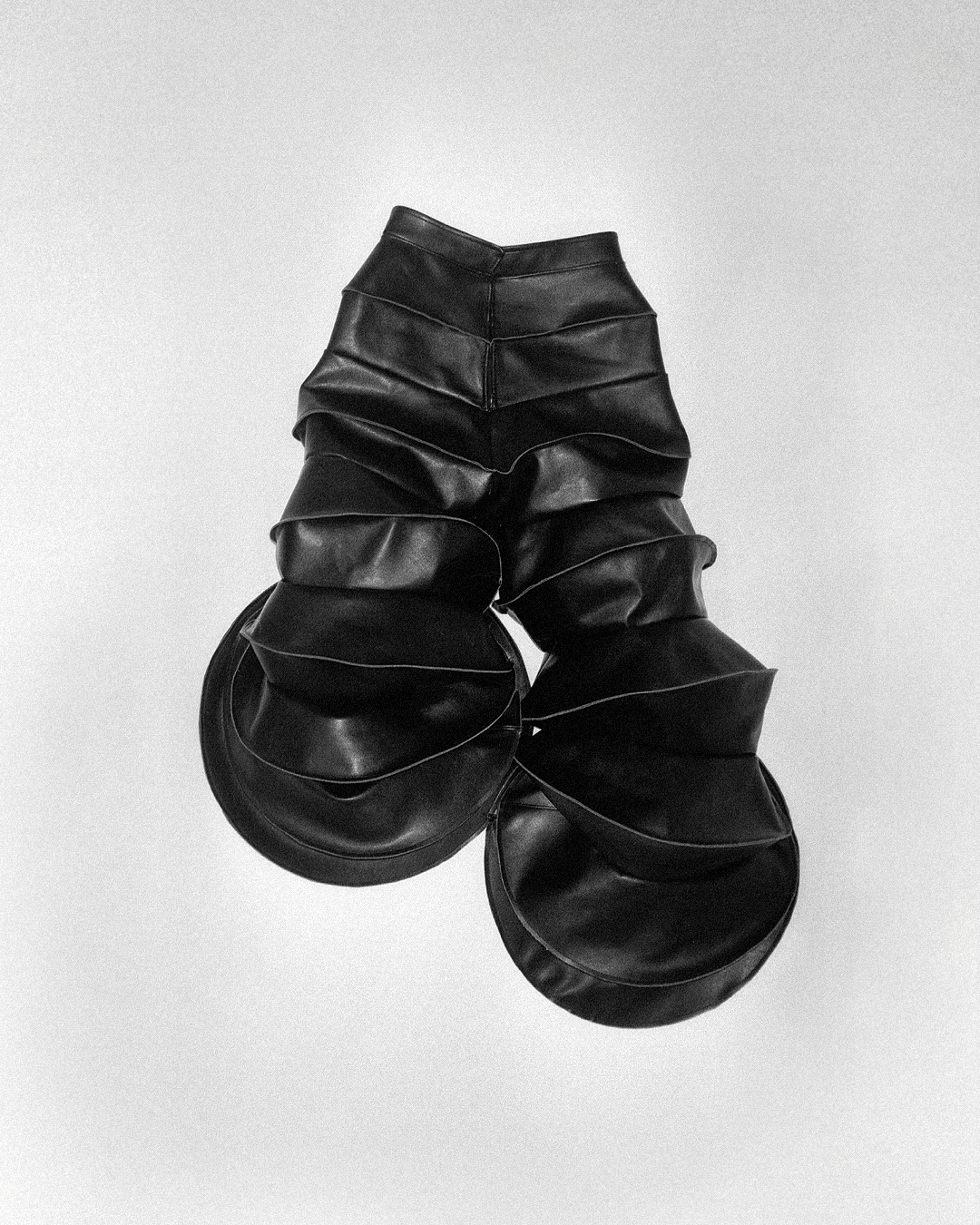
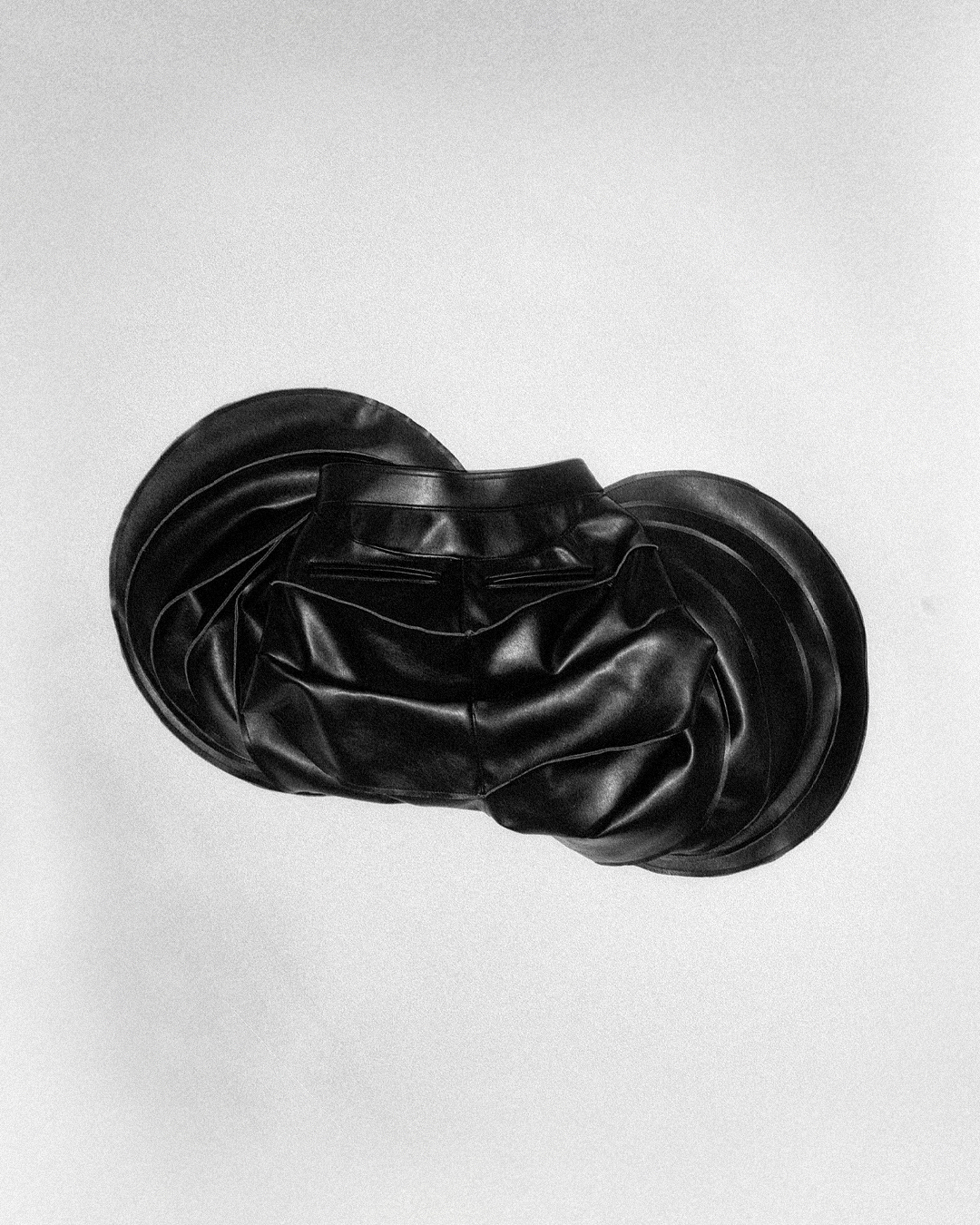
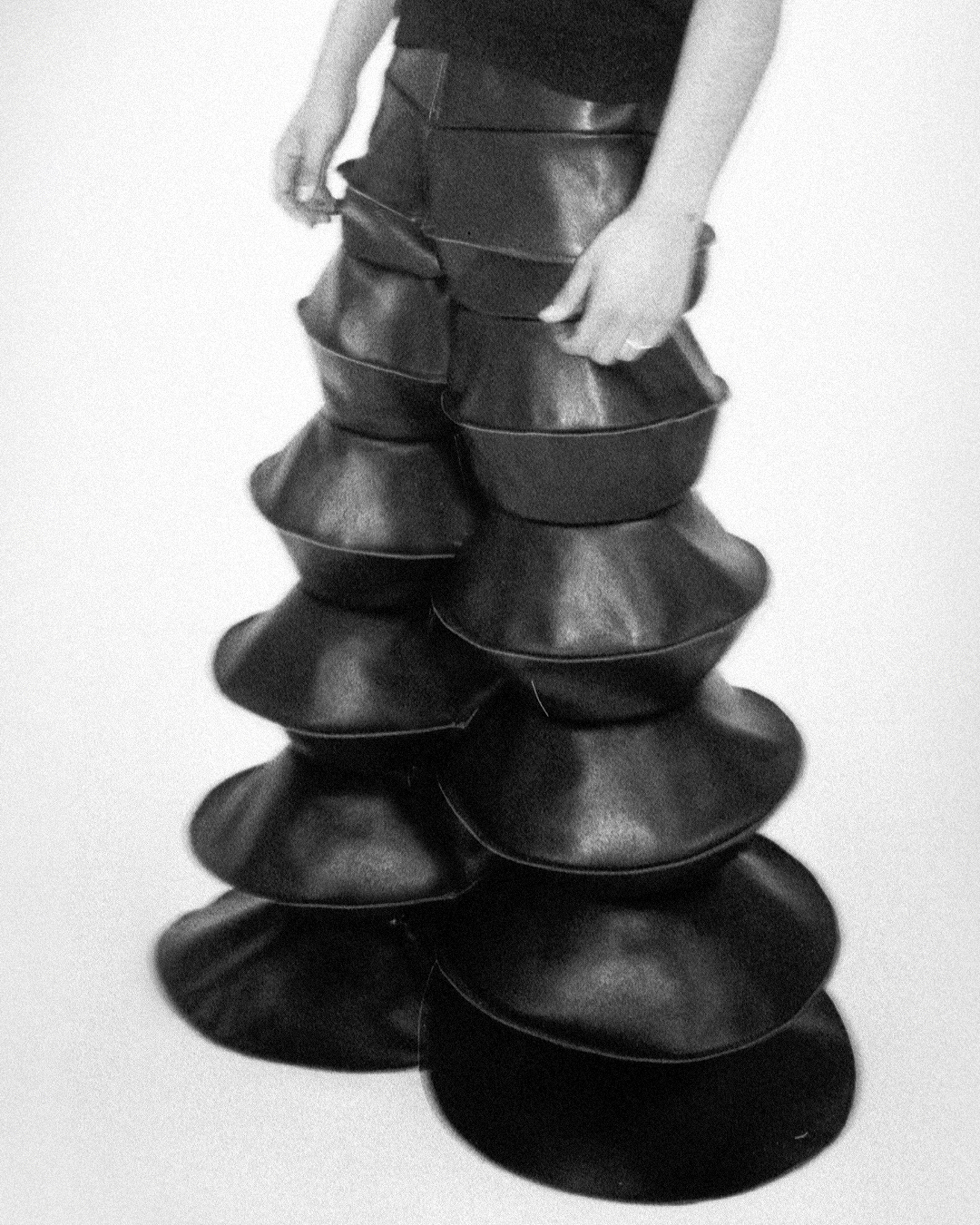
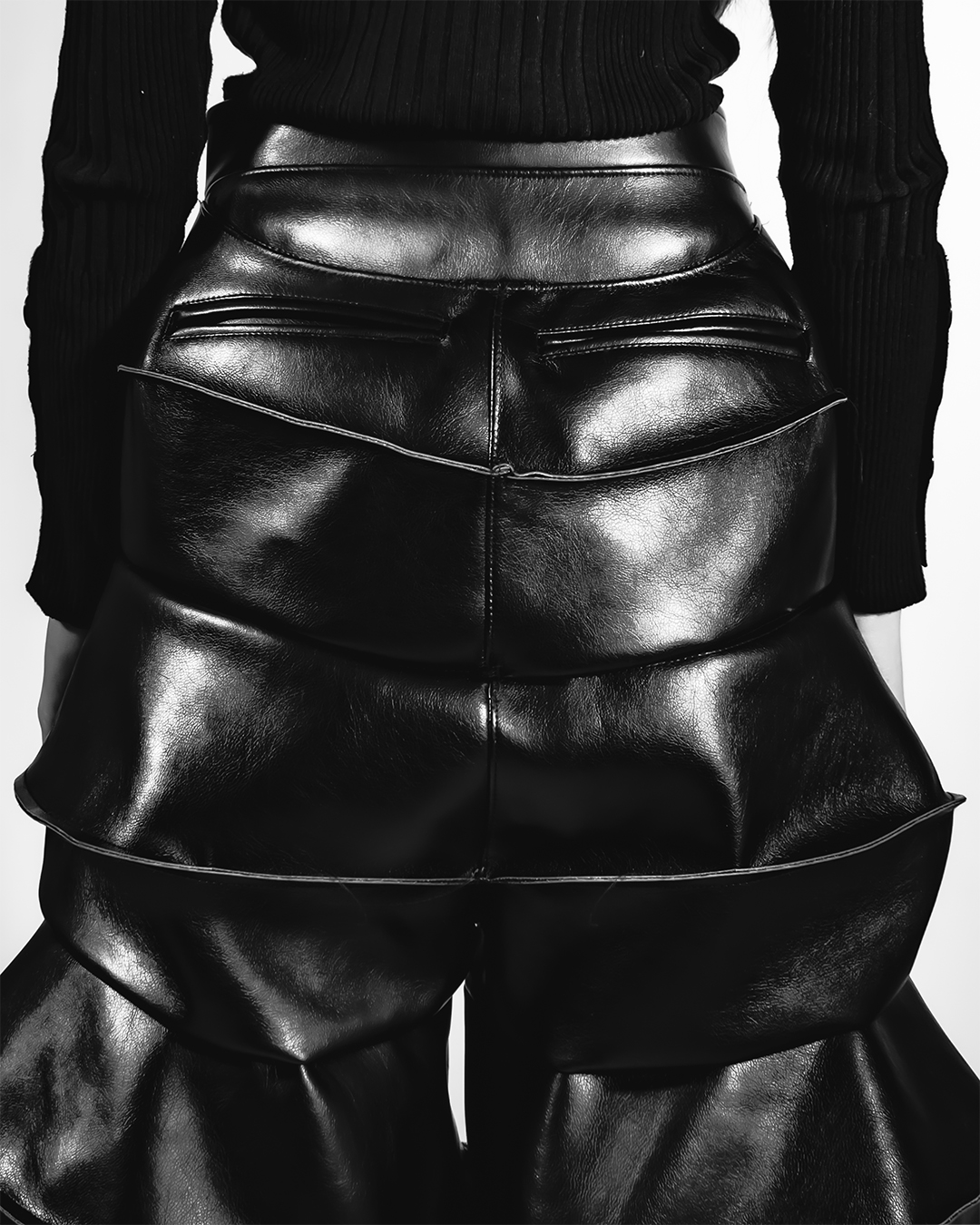
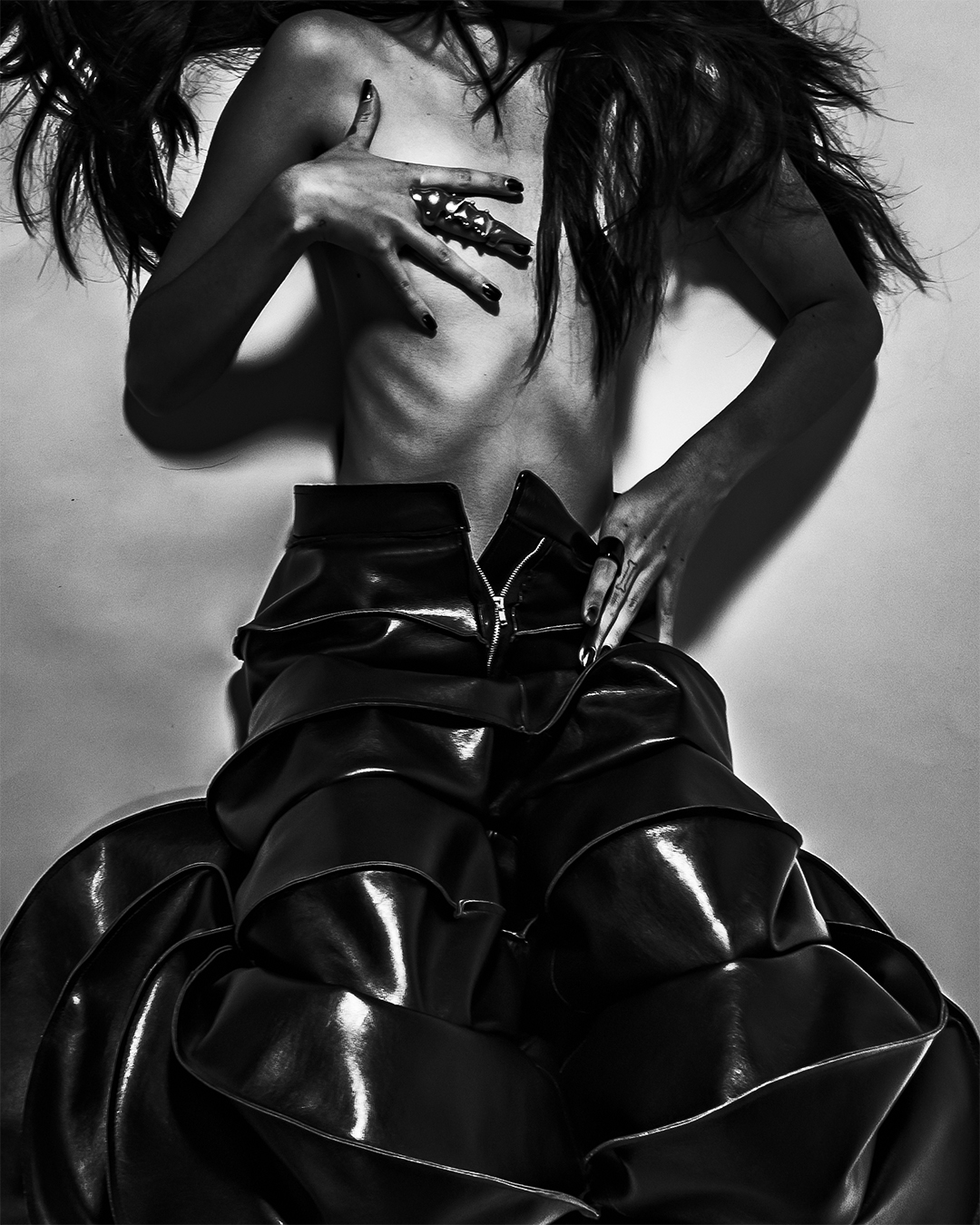
Black leather trousers with silk lining.

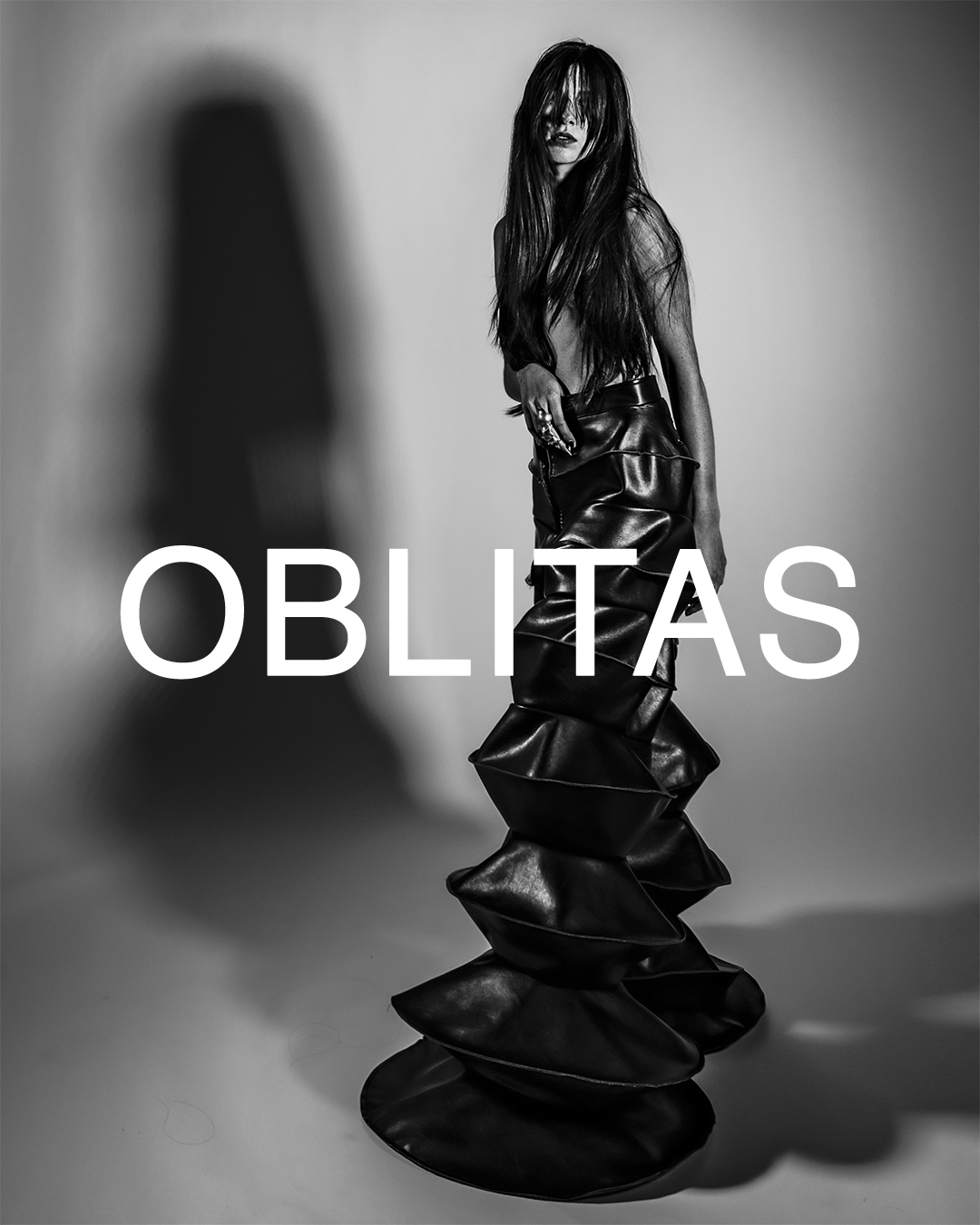
Built from repeated leather lantern segments. Silk lining inside each segment acts as structural support, allowing the forms to hold their volume around the body. Two back pockets use the space created by the construction. When unworn, the trousers collapse flat, considering the wearer as the most essential aspect.
workwear
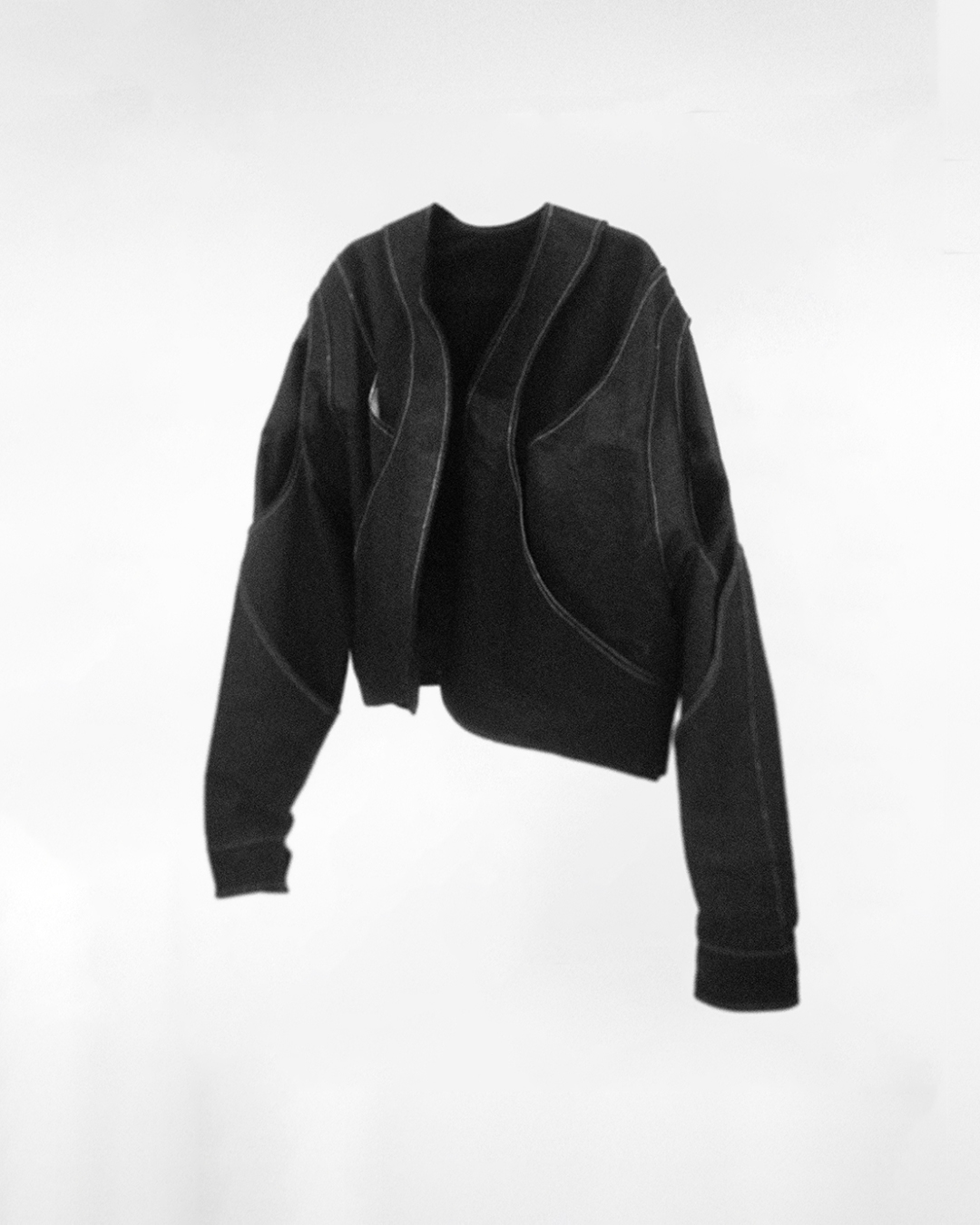
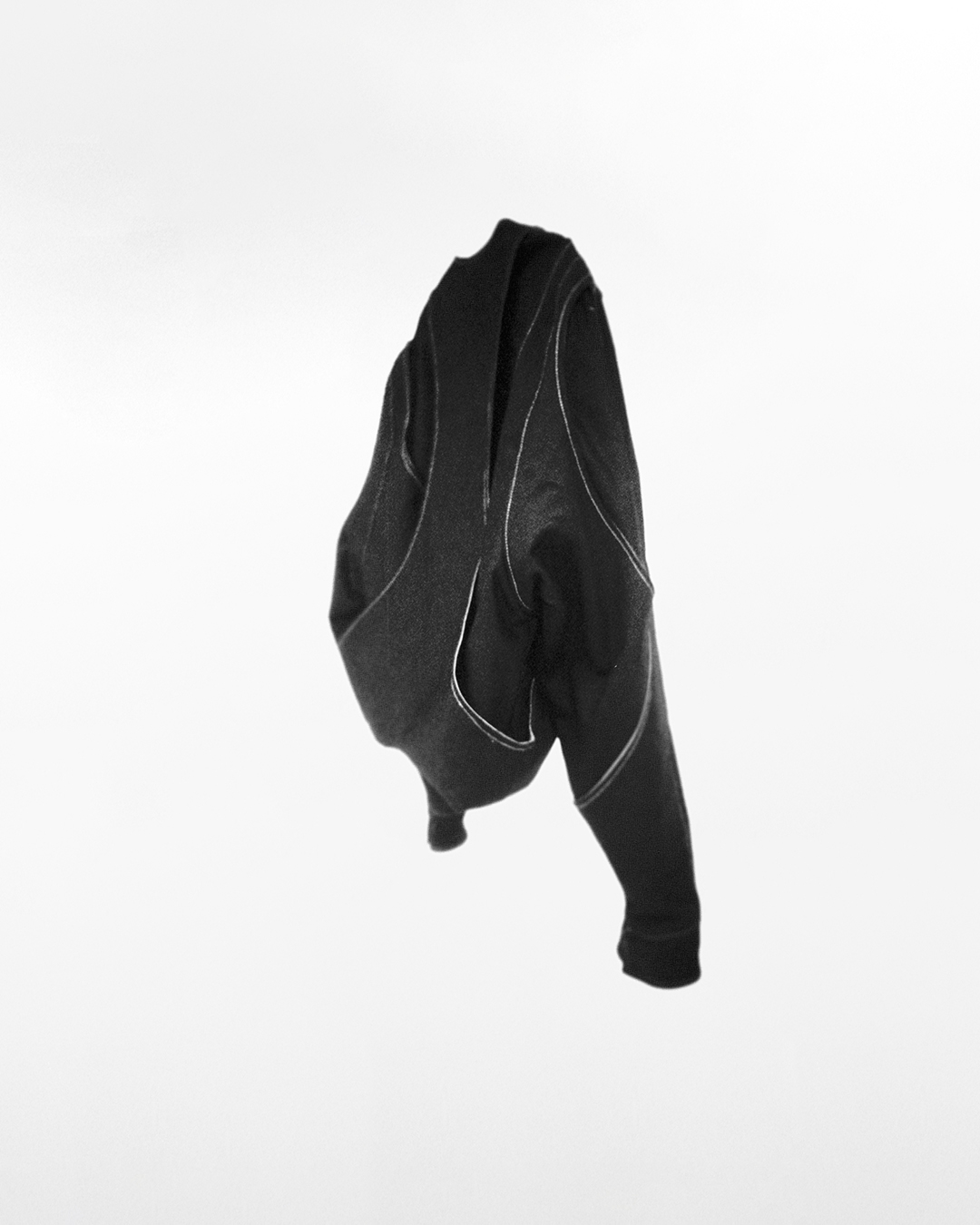
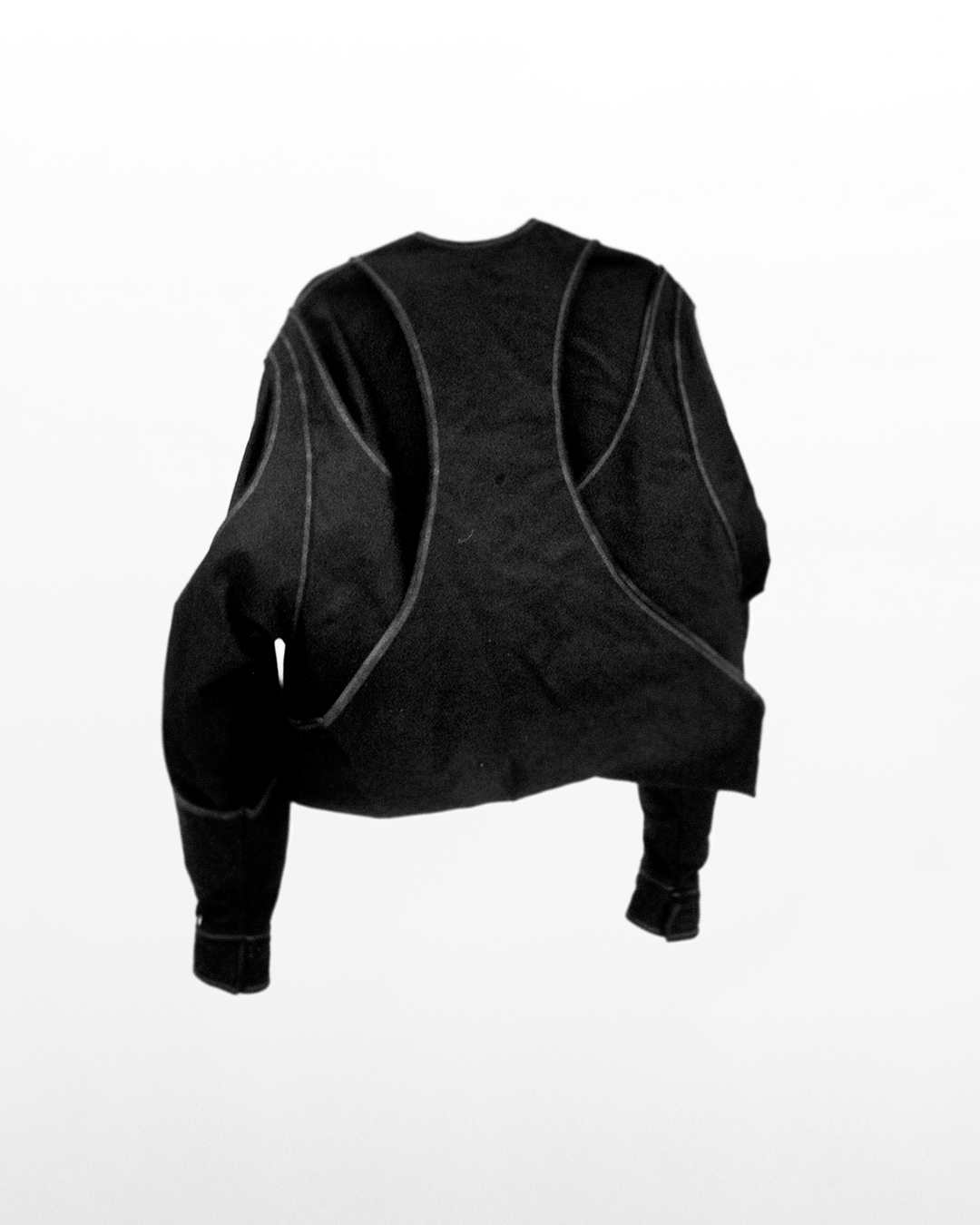
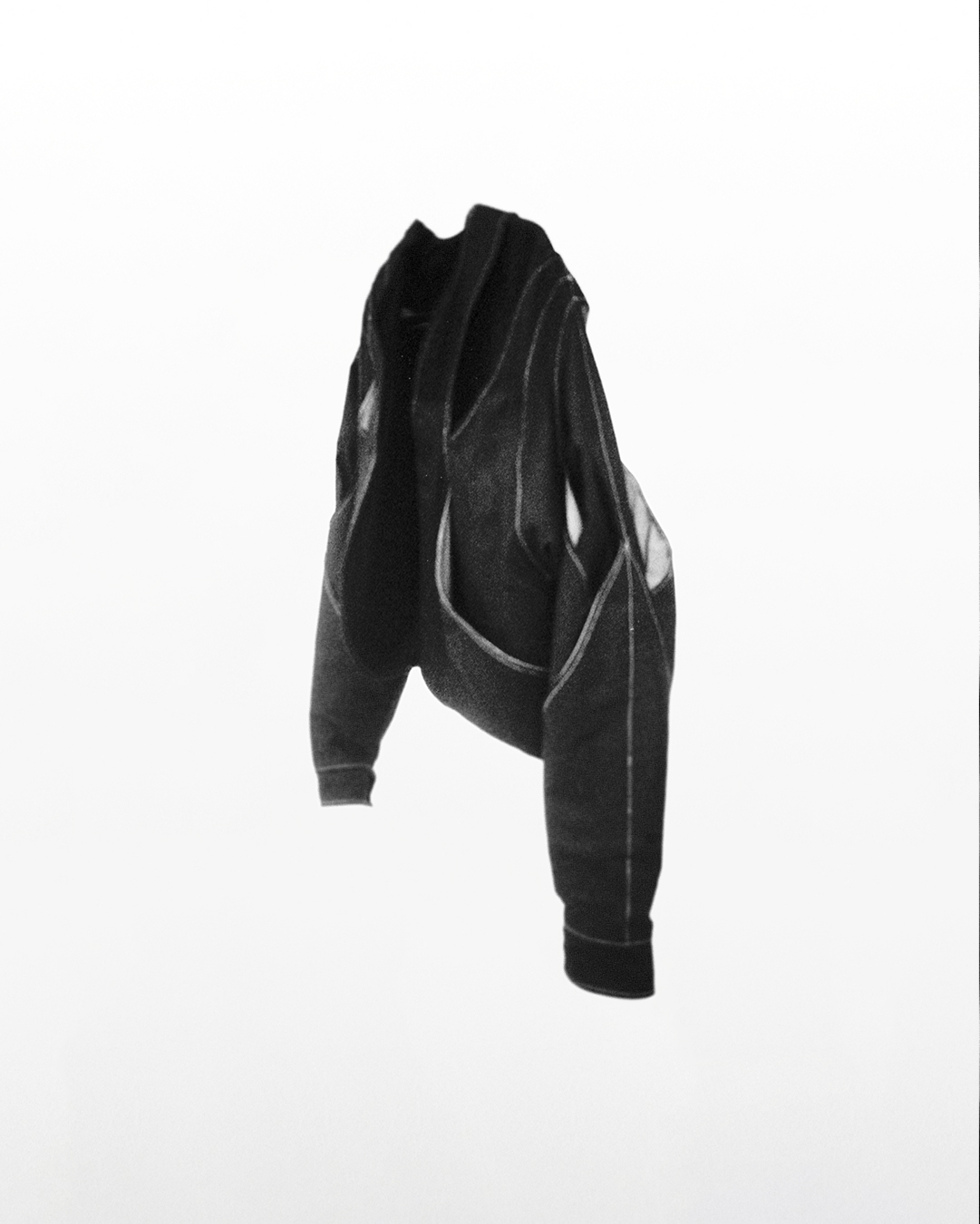
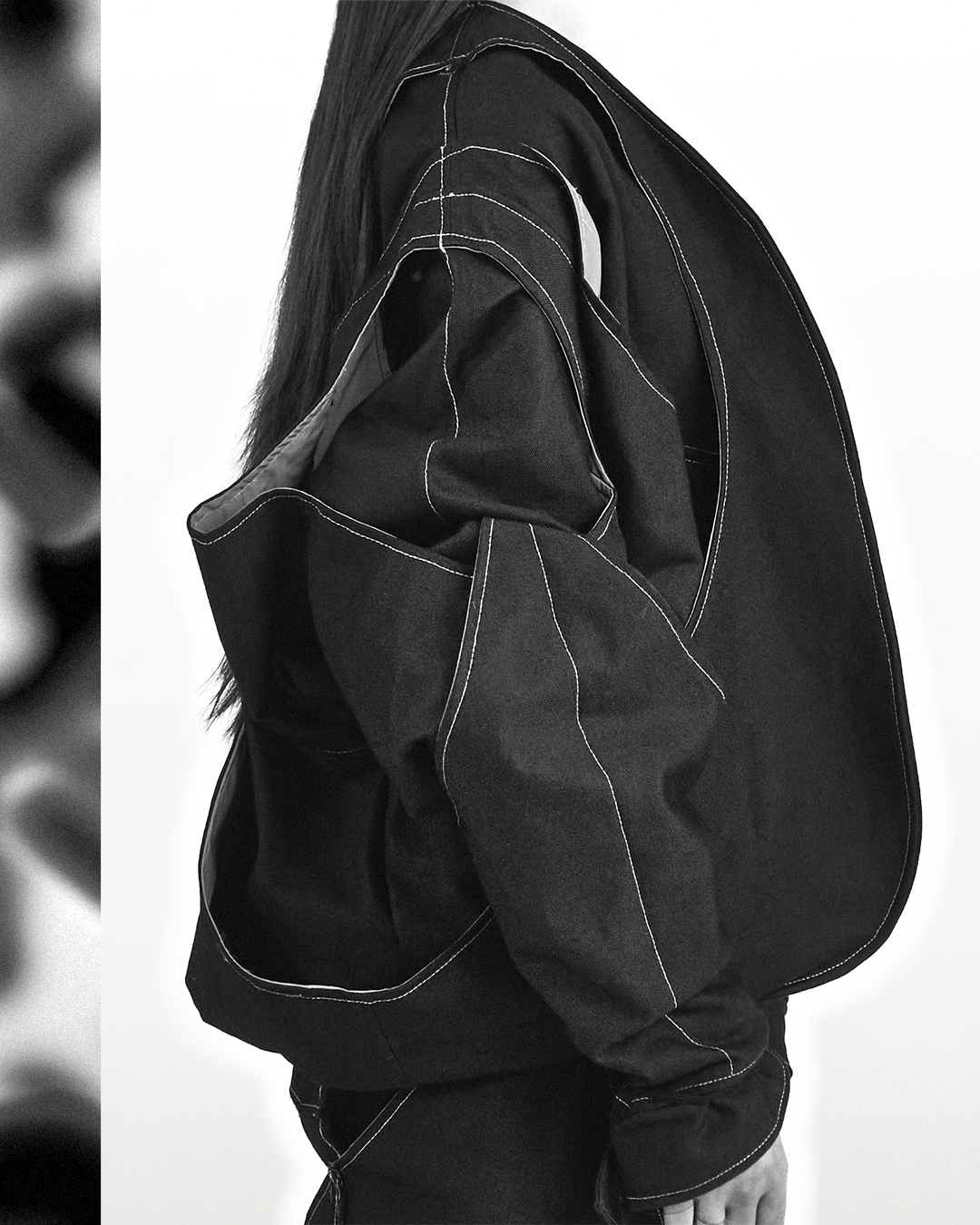
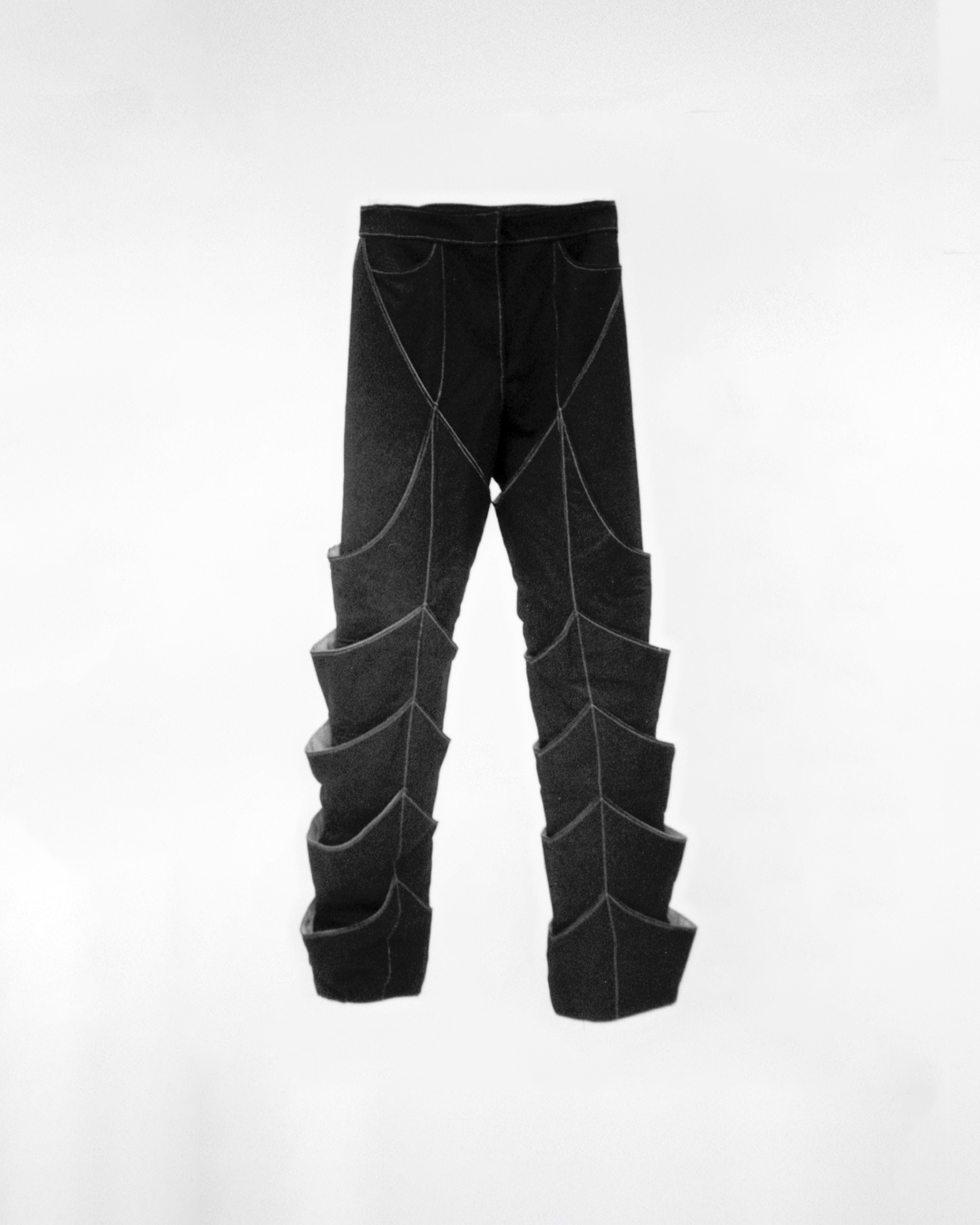
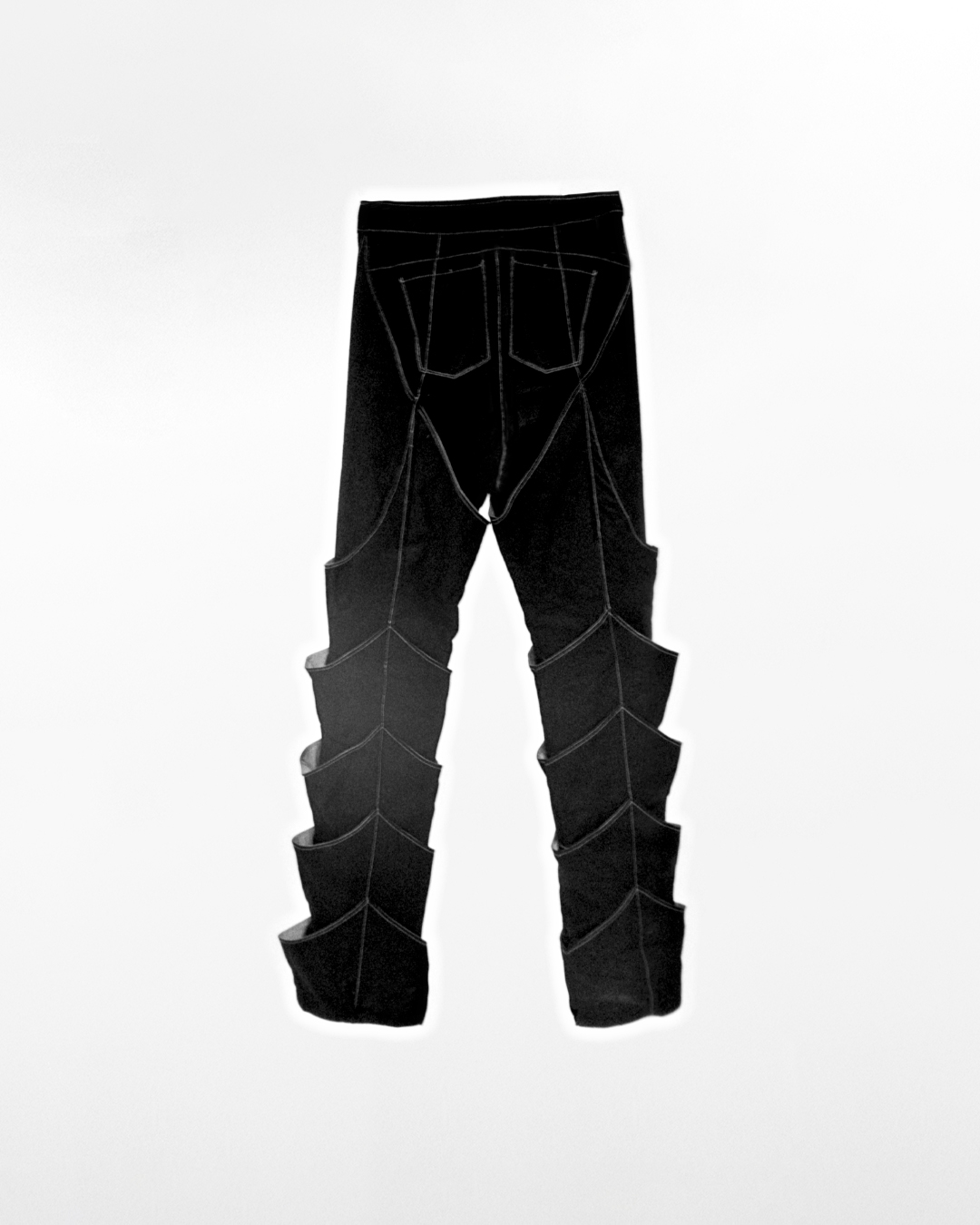
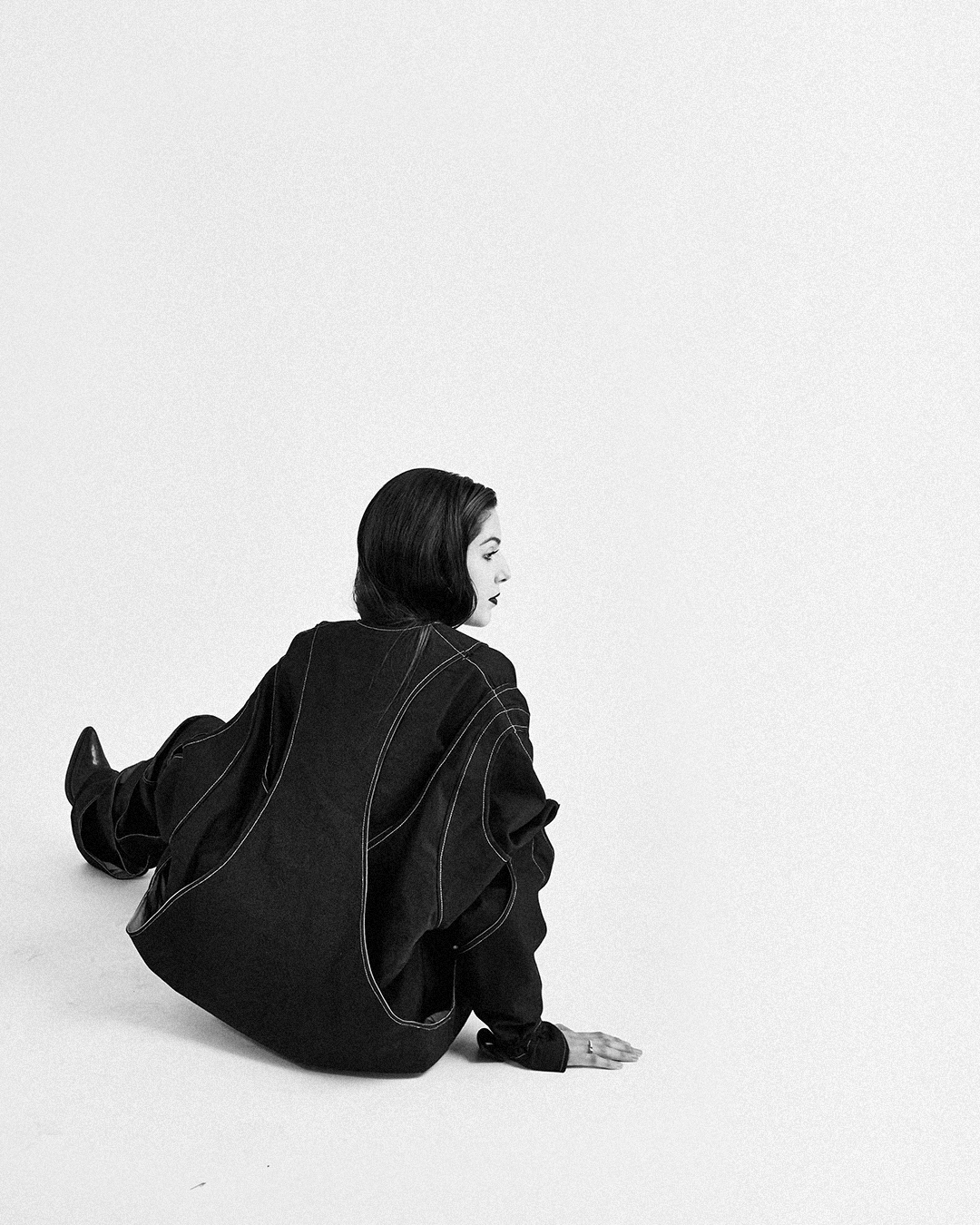
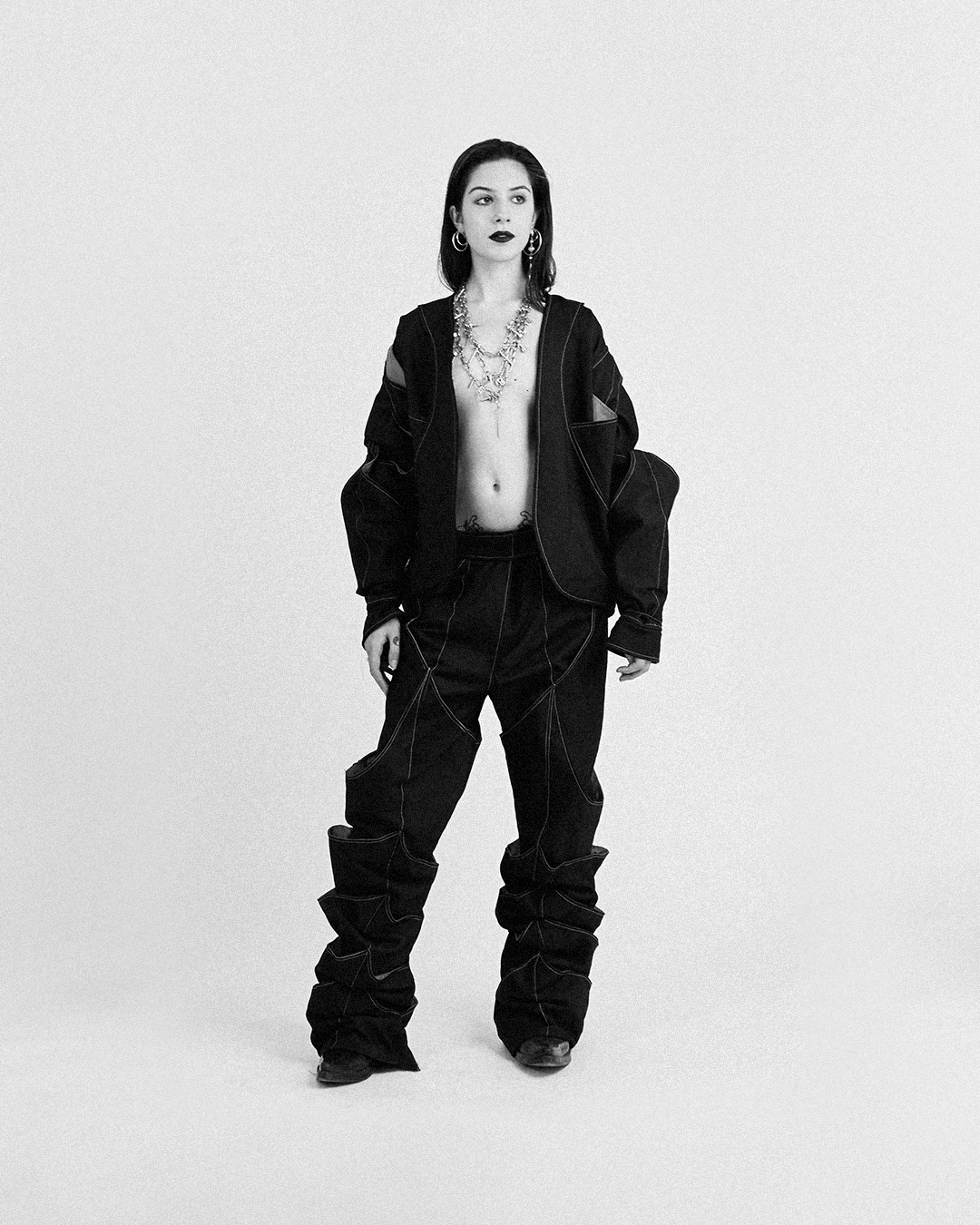
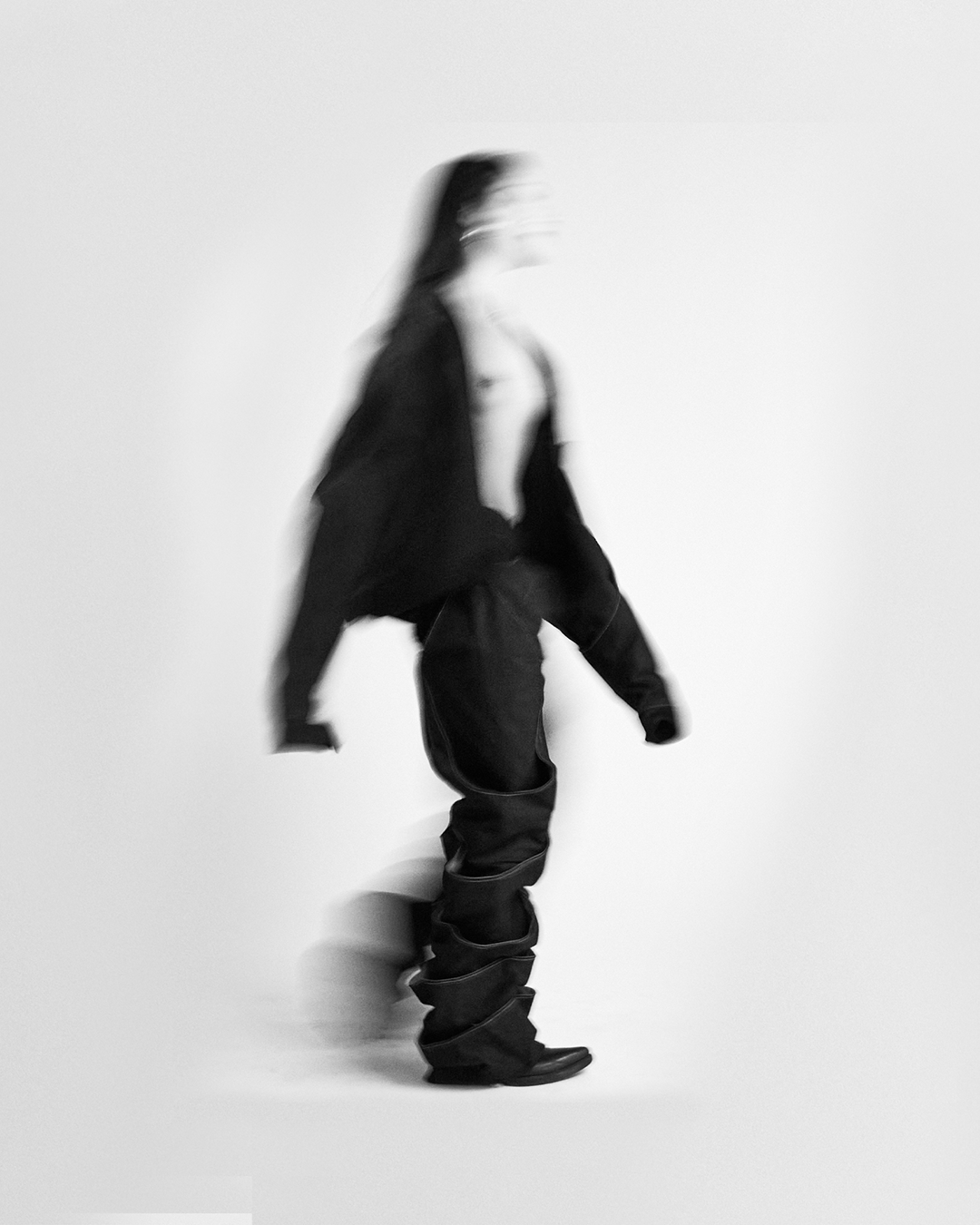
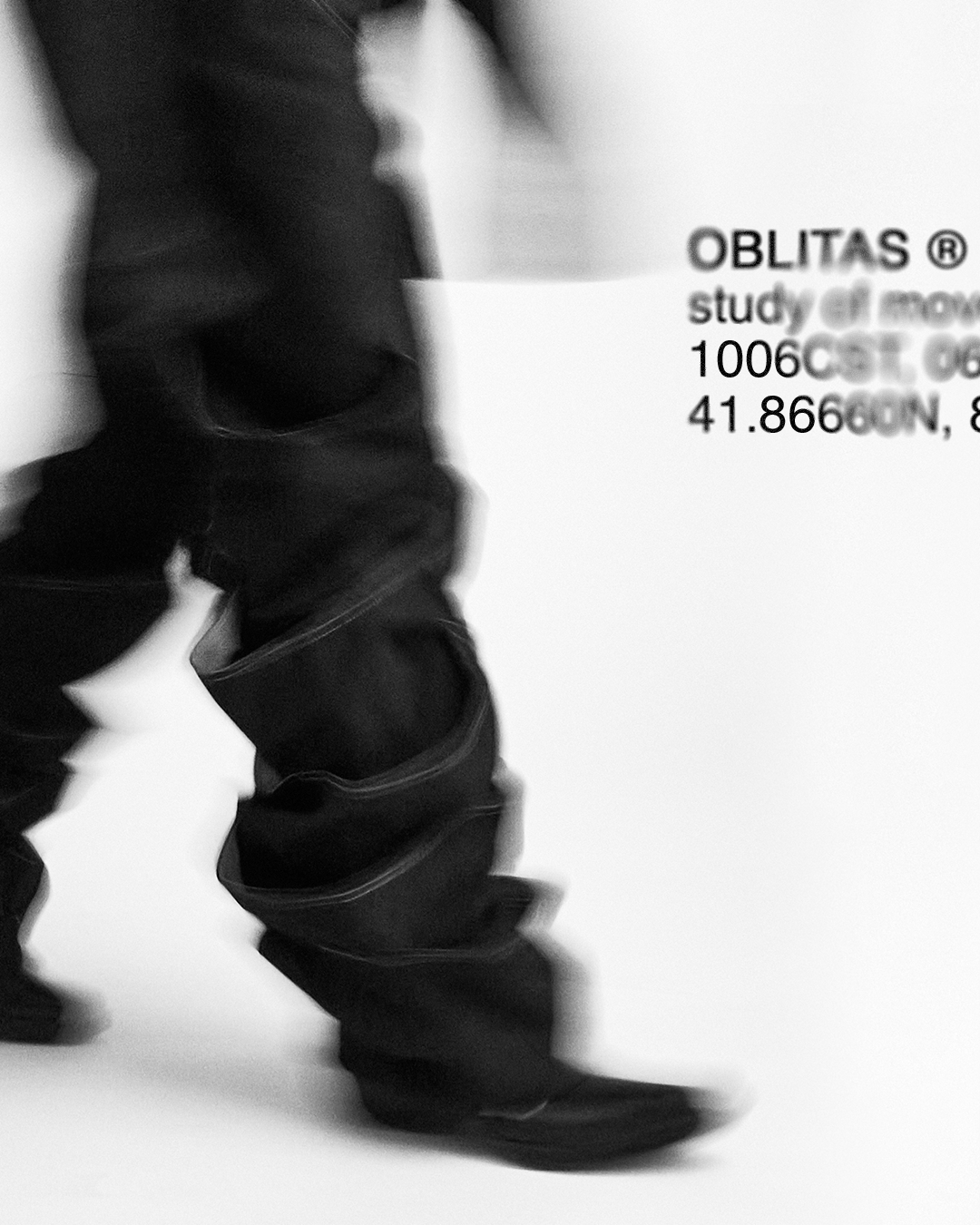
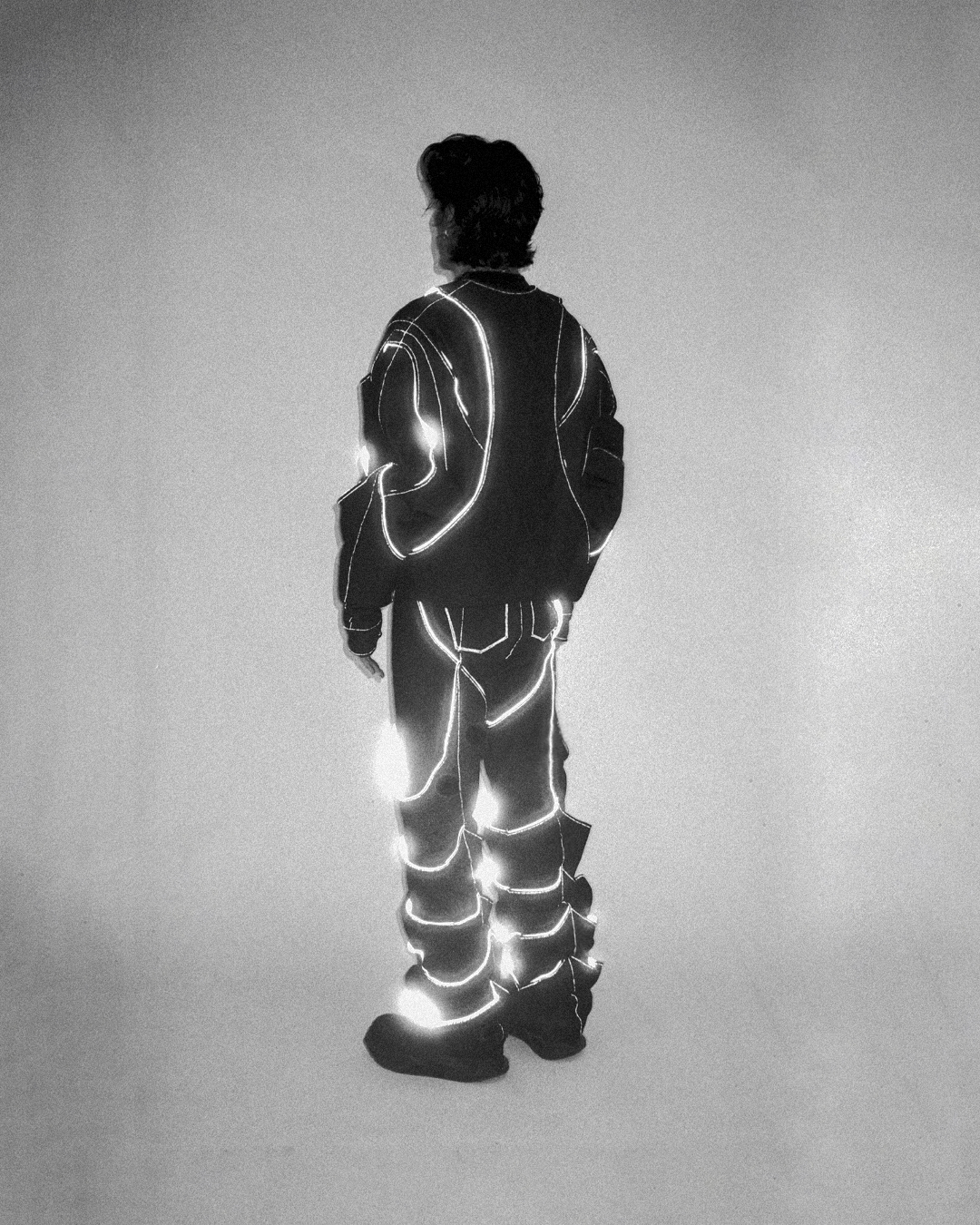
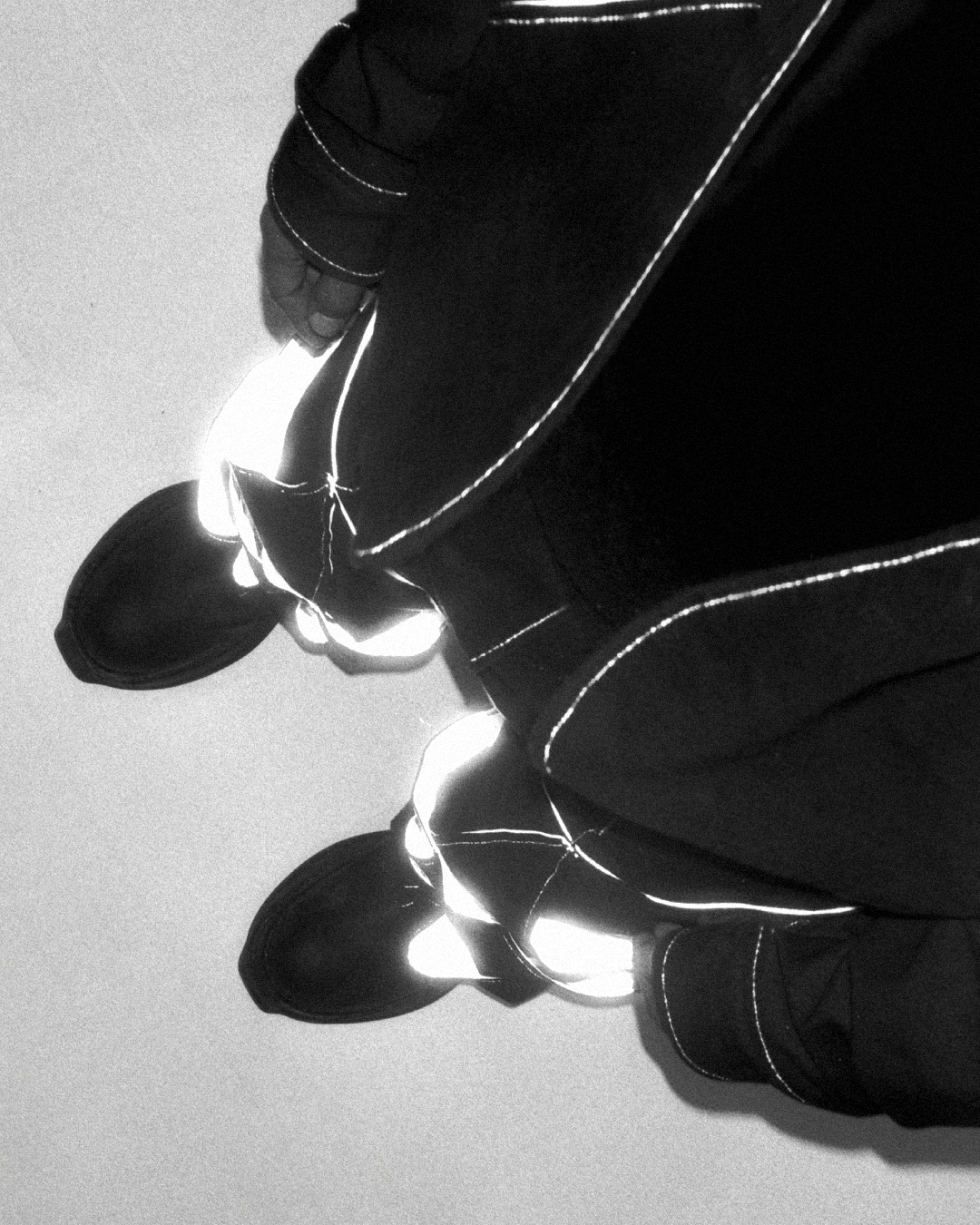
Black denim jacket and trousers, reflective lining & thread.
Constructed from overlapping panels with gradual fullness throughout the body. Each overlap becomes an opening within the garment, making storage part of the construction rather than an added element. Light reflects outward from inside these pockets.

OBLITAS
0000CEST
00000000
48.84090N,
2.36750E